
Overview
At 3,676 metres, Uja (or Uia) di Ciamarella is the highest peak in the Lanzo Valleys. A magnificent mountain with complex terrain, it has a relatively accessible south-west face, a glacial north face overlooking the Sea valley, and an extremely steep south-east face plunging towards Pian della Mussa. The normal route begins on this last face: a physically demanding itinerary that traverses a wide variety of high-mountain environments with breathtaking views. While it presents no significant technical difficulty, it requires crossing a glacier. The ascent, fairly popular, is a tough proposition as a day trip, which is why it is generally broken up with an overnight stay at the nearby Gastaldi Refuge.
Starting point
DirectionsThis itinerary is a stage of: Uja di Ciamarella
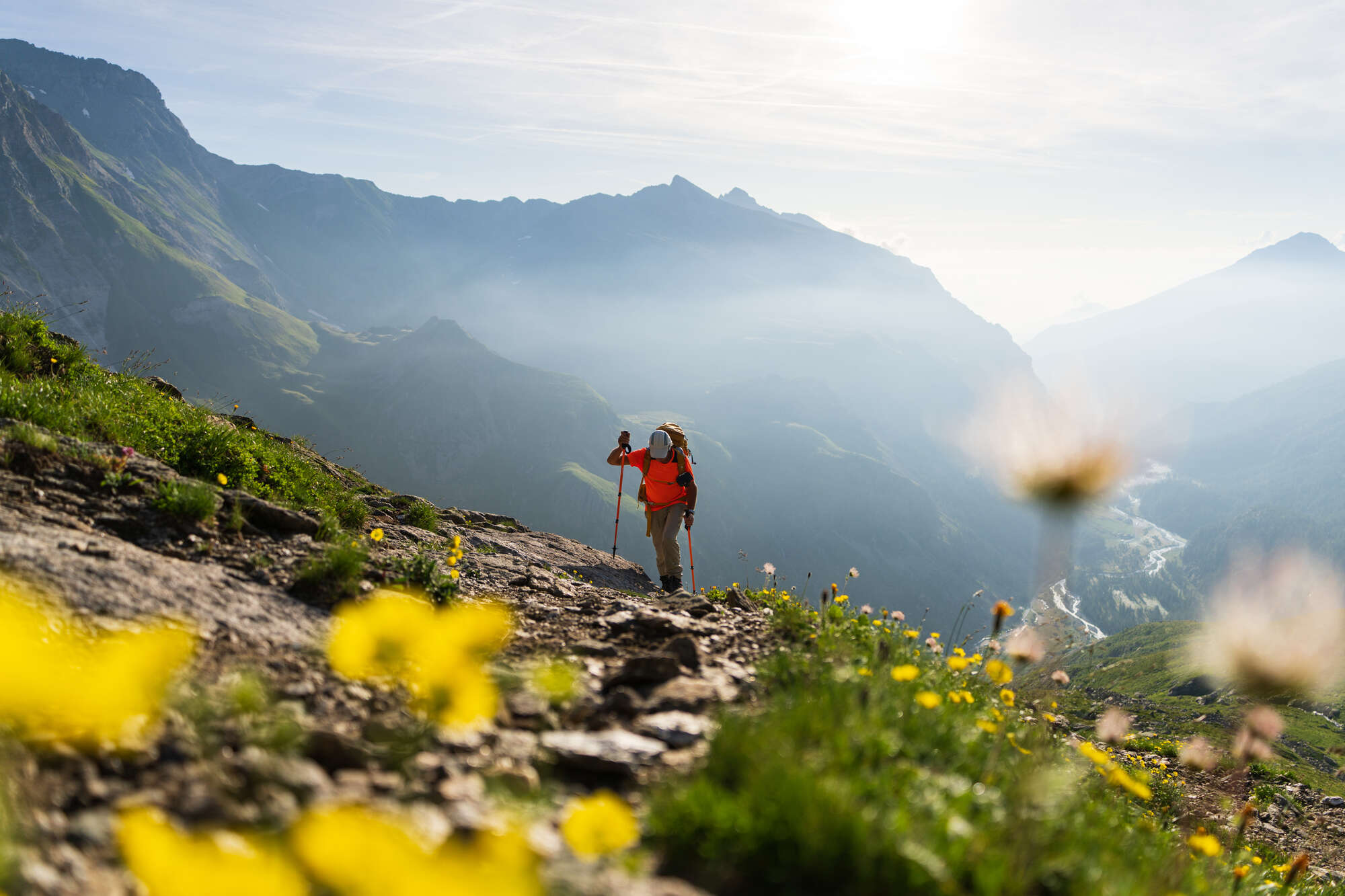
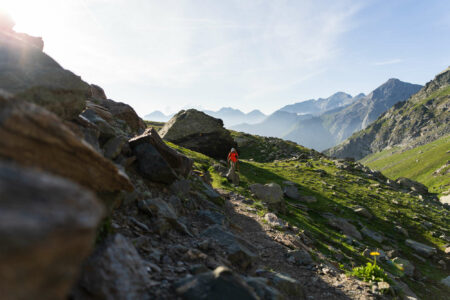
From the Gastaldi Refuge (2,658 m), take the mule path heading north towards the top station of the old cableway, then continue downhill to reach the moraines of Pian Gias (2,594 m), where the path from Pian dei Morti joins from the right.
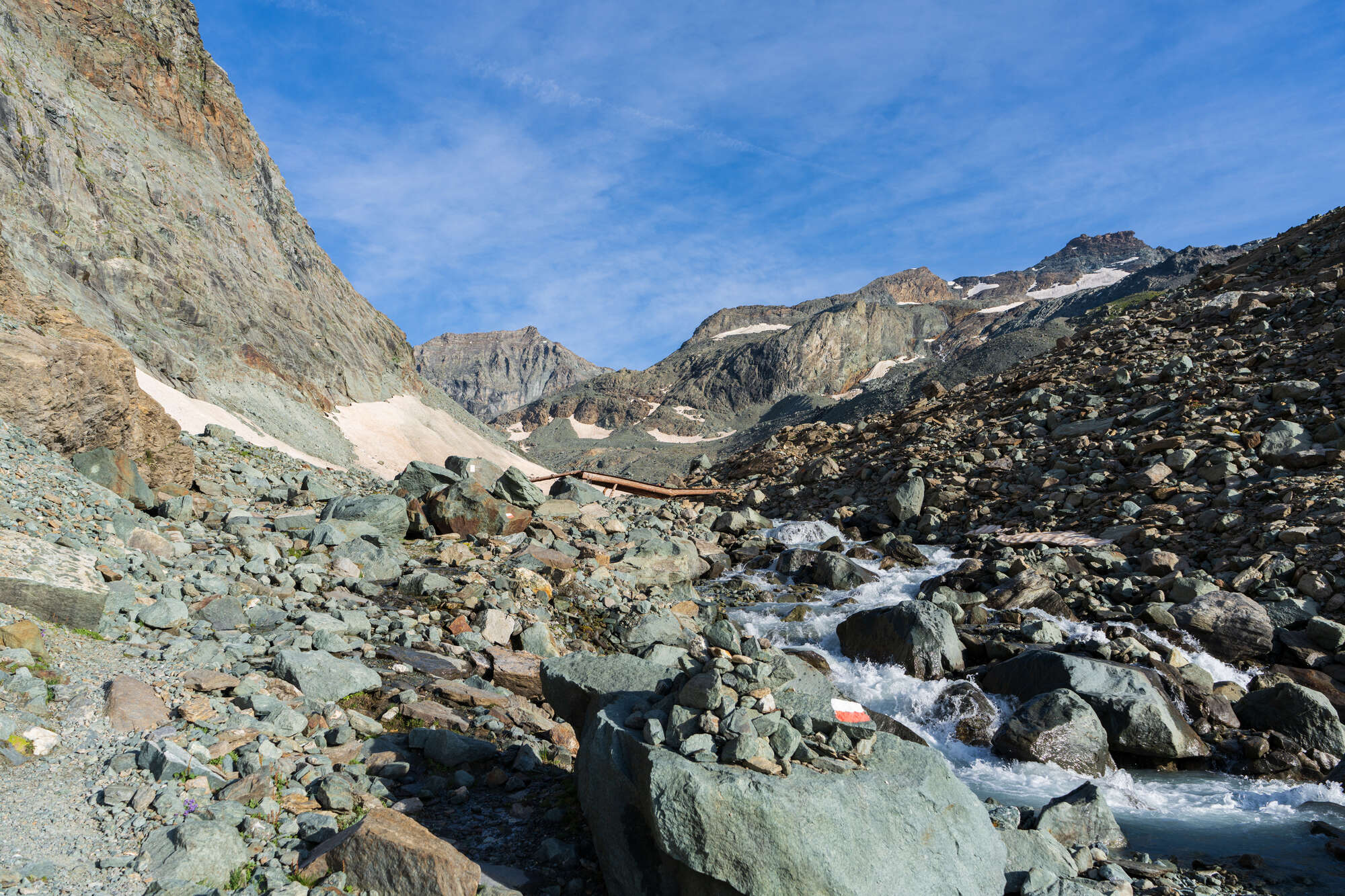
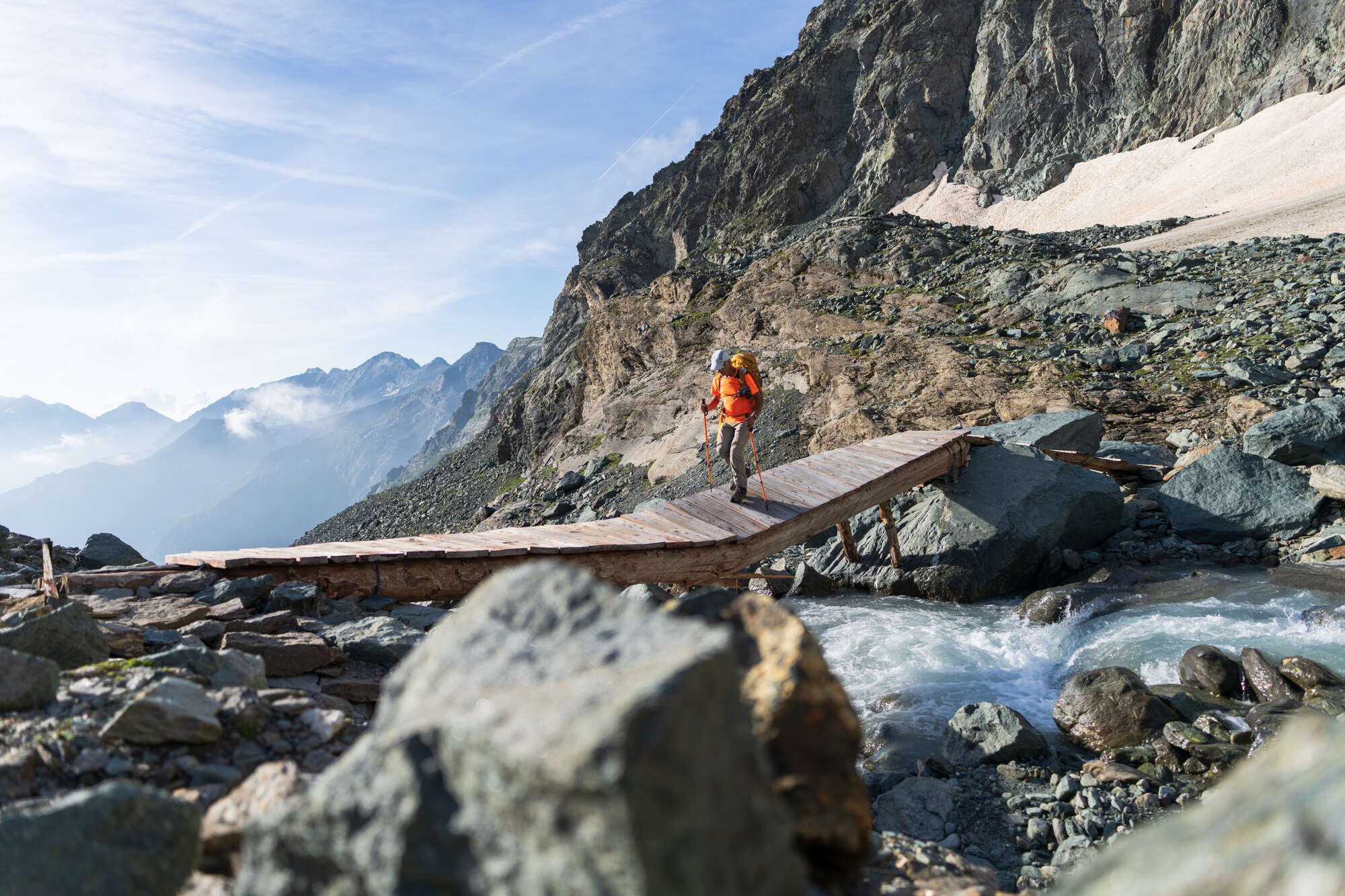
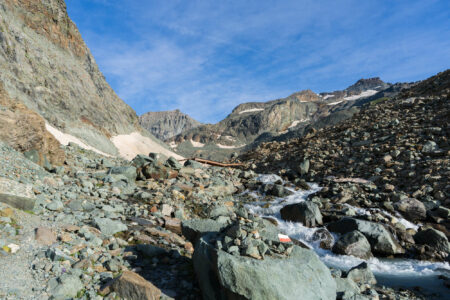
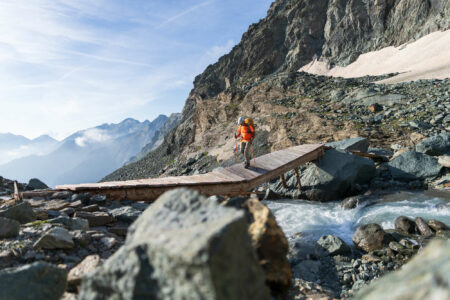
The path continues alongside the rushing Capre Brook, which you need to cross a short way further on via a dilapidated footbridge (take great care).
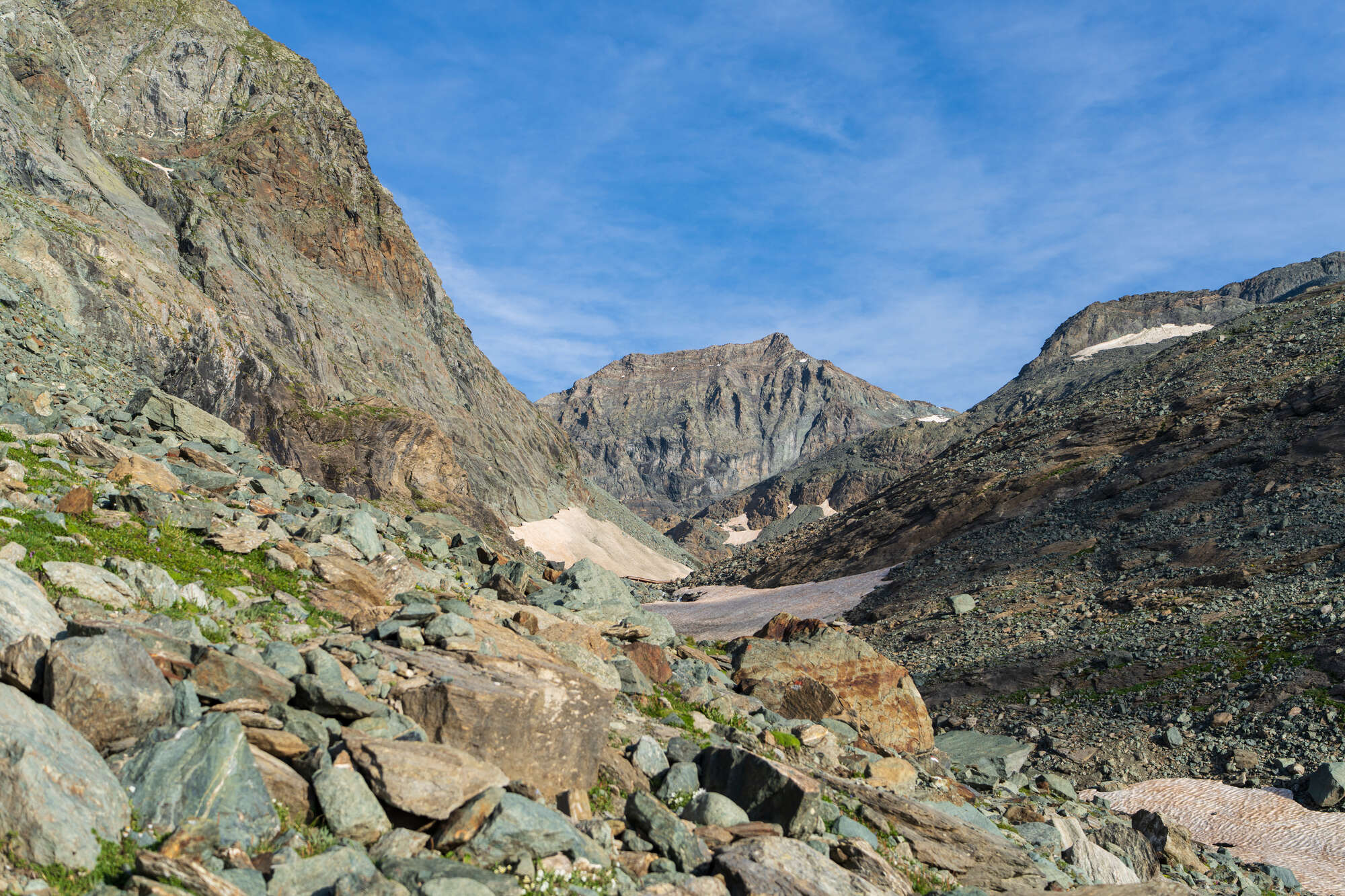
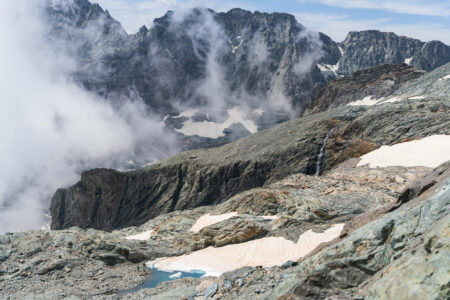
This brings you onto a vast and spectacular high-mountain plateau of Patagonian proportions, studded with snowfields and closed off at its far end by the mighty Monte Collerin.
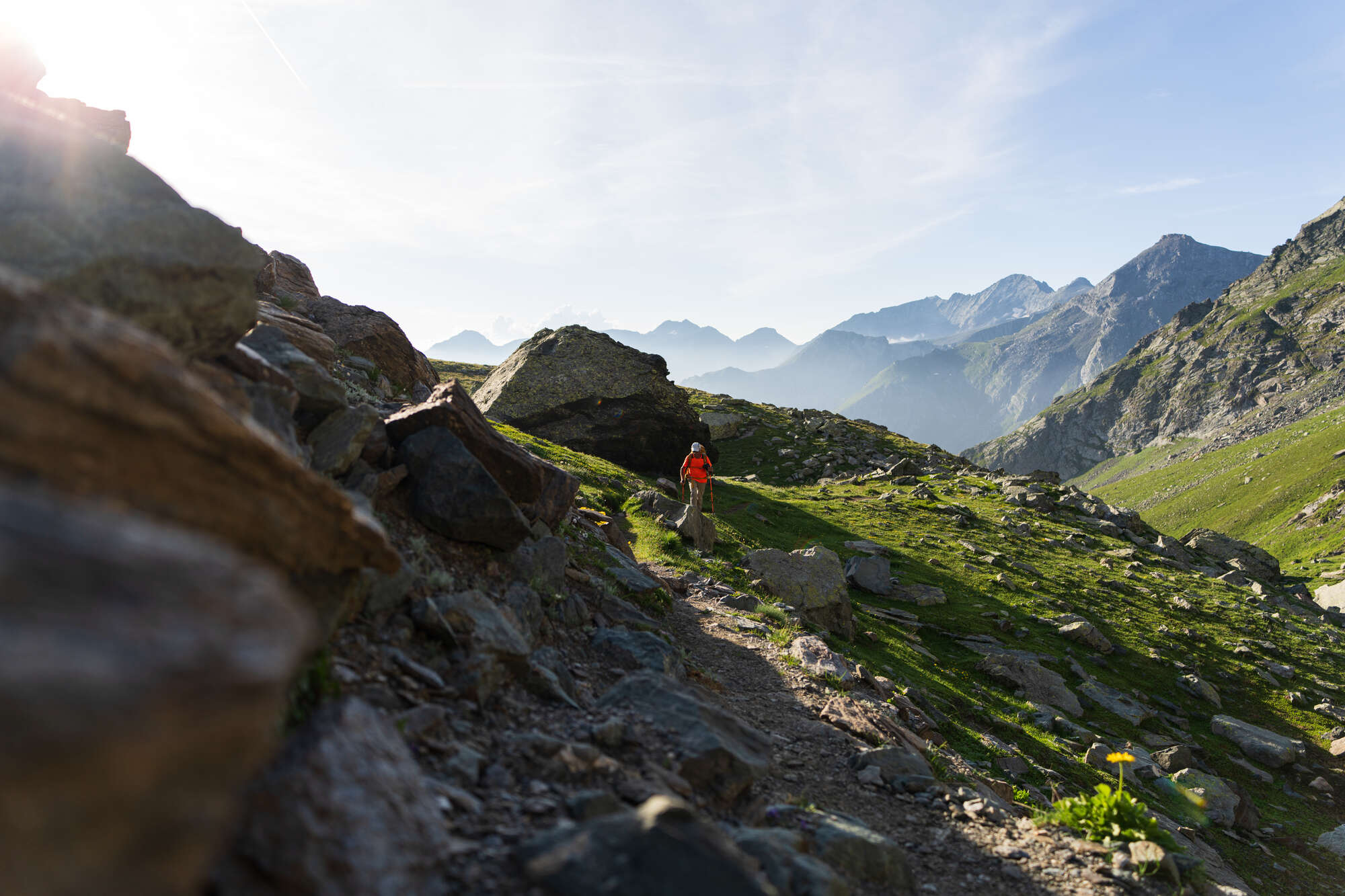
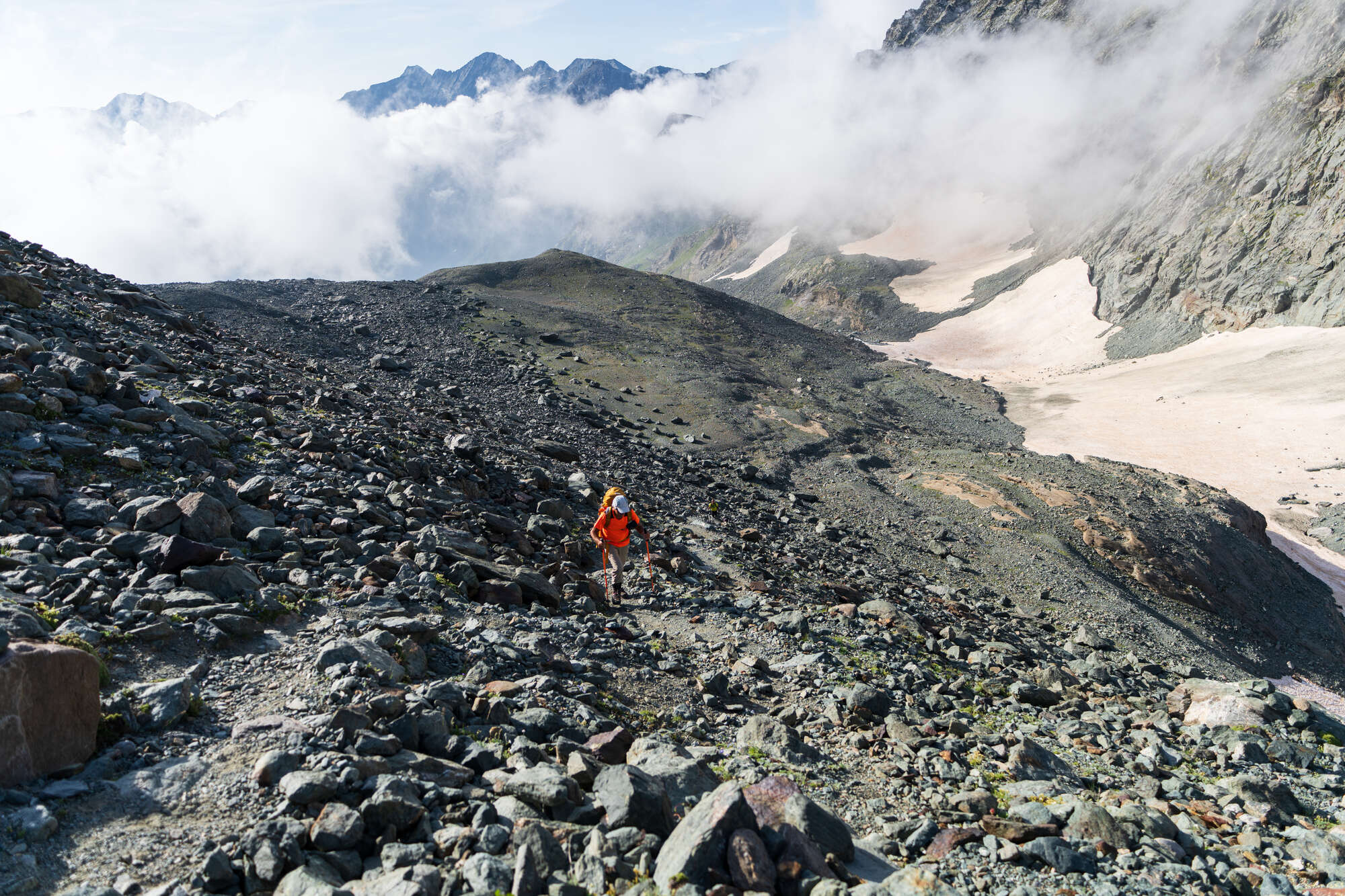
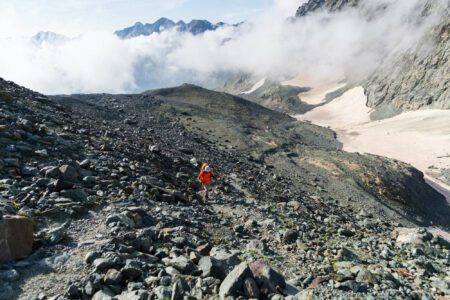
A little further on, the path splits: take the right-hand branch, as the left one fades out just beyond. At a second junction (2,726 m), leave the Tour della Bessanese to the left and continue right, following waymark blazes and cairns through the immense and tiring boulder field.
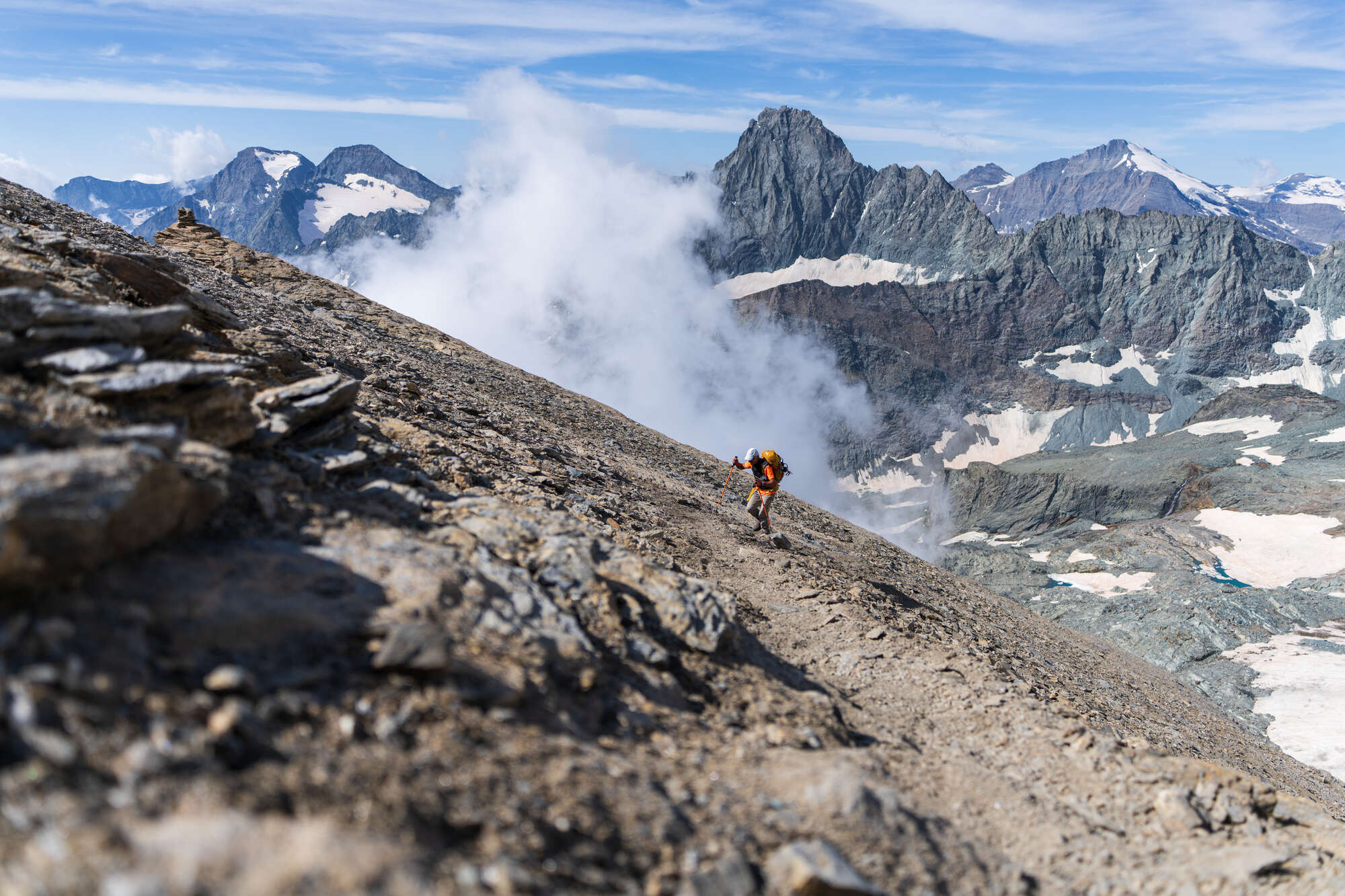
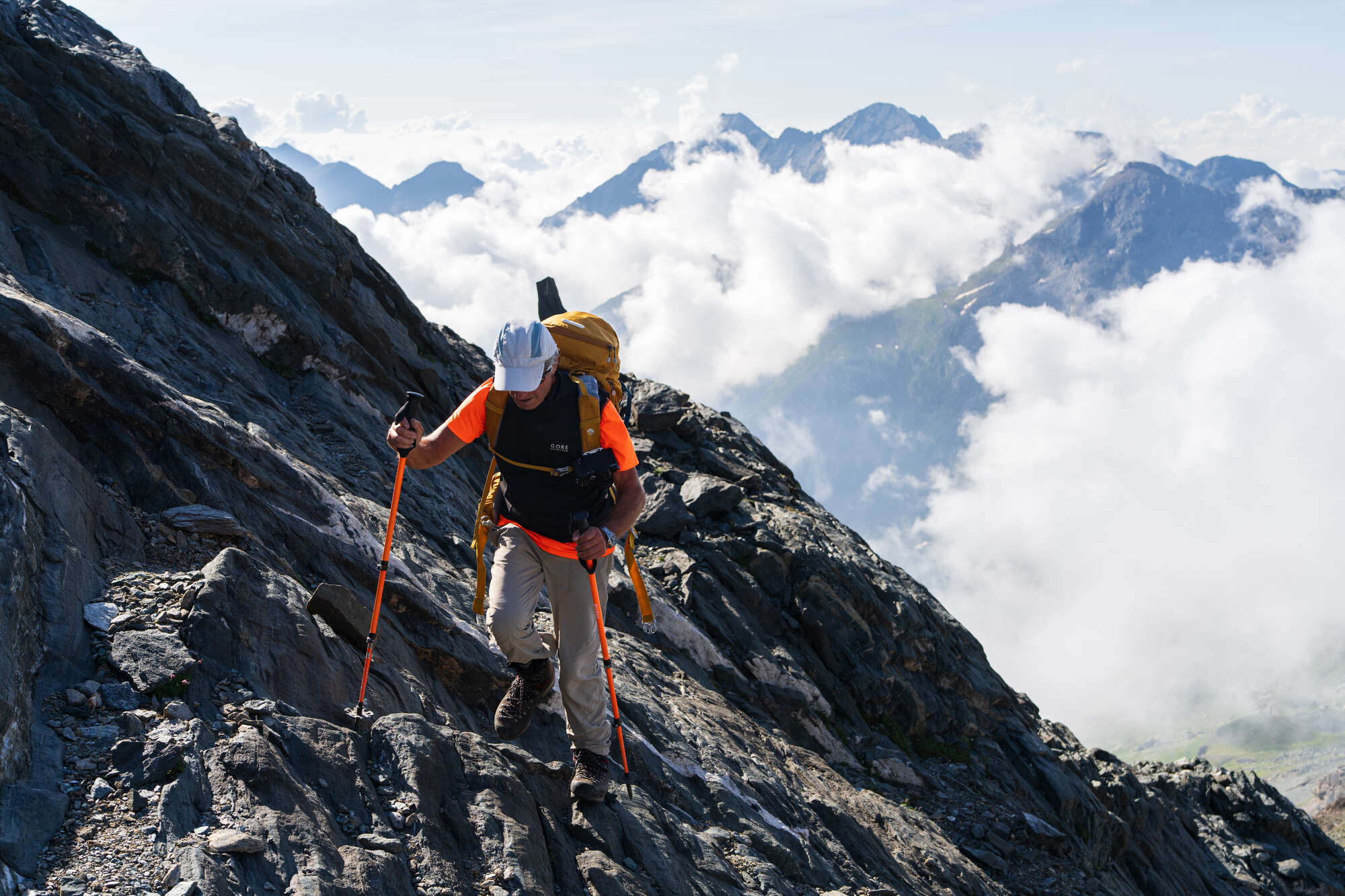
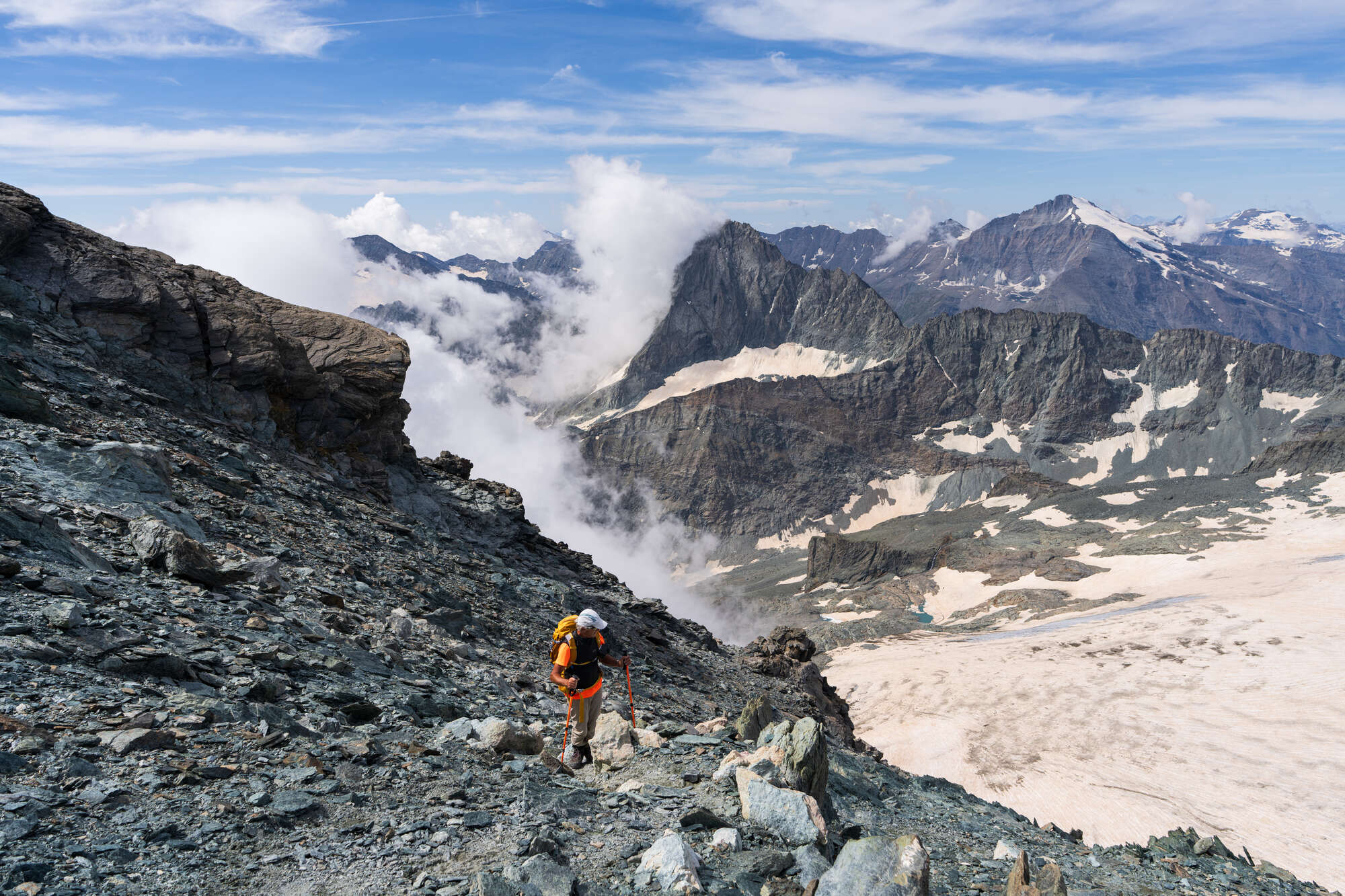
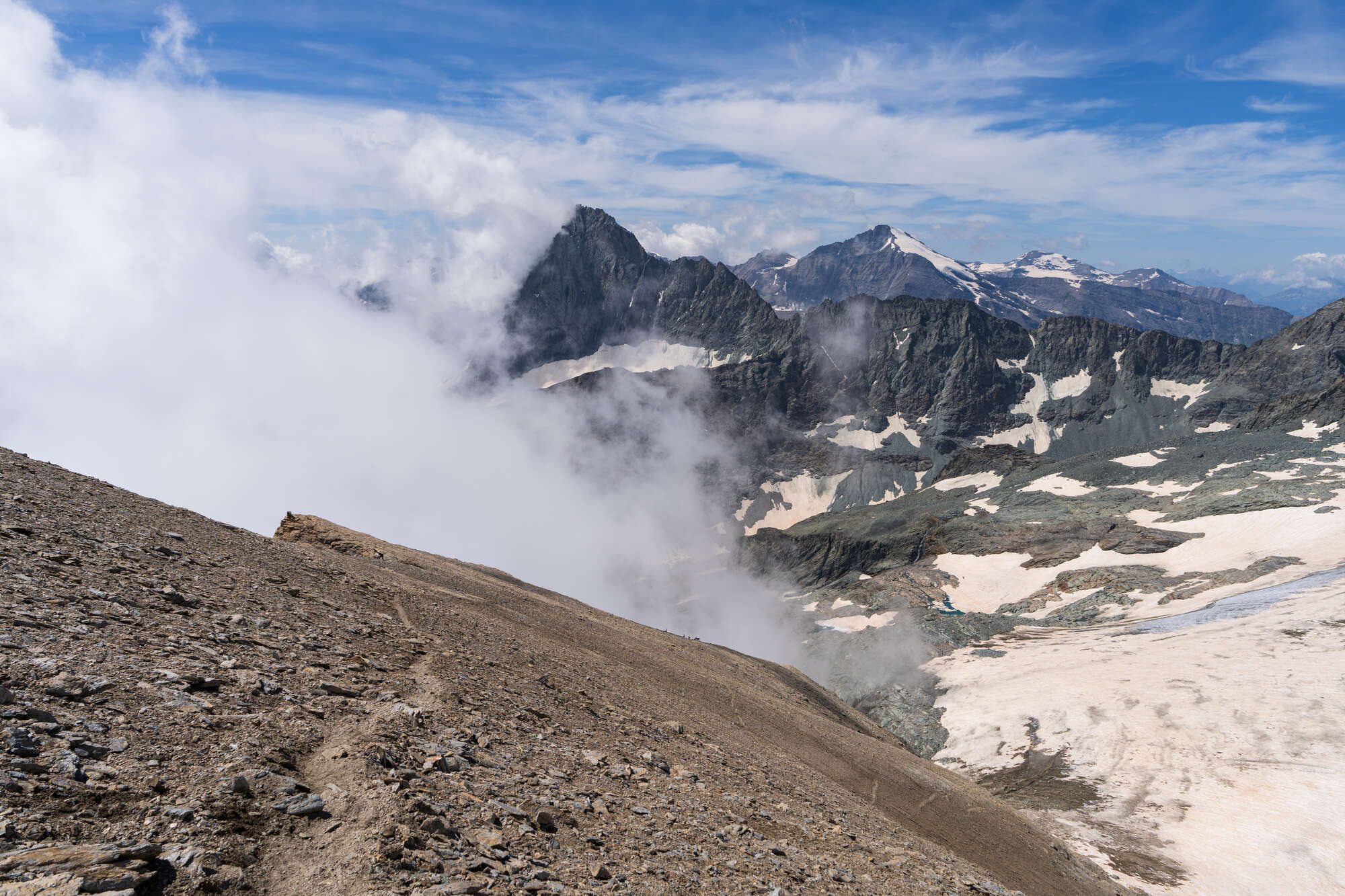
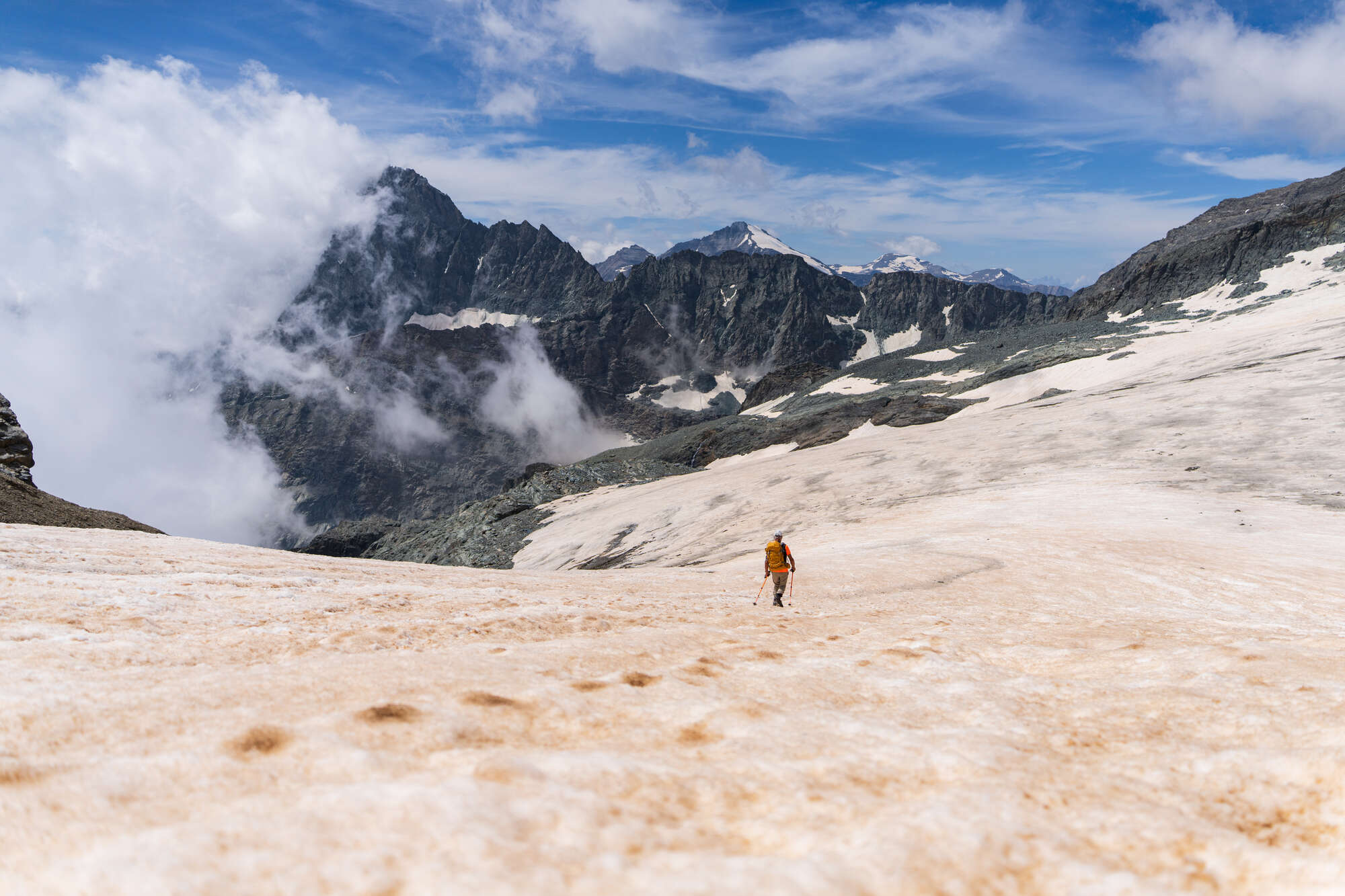
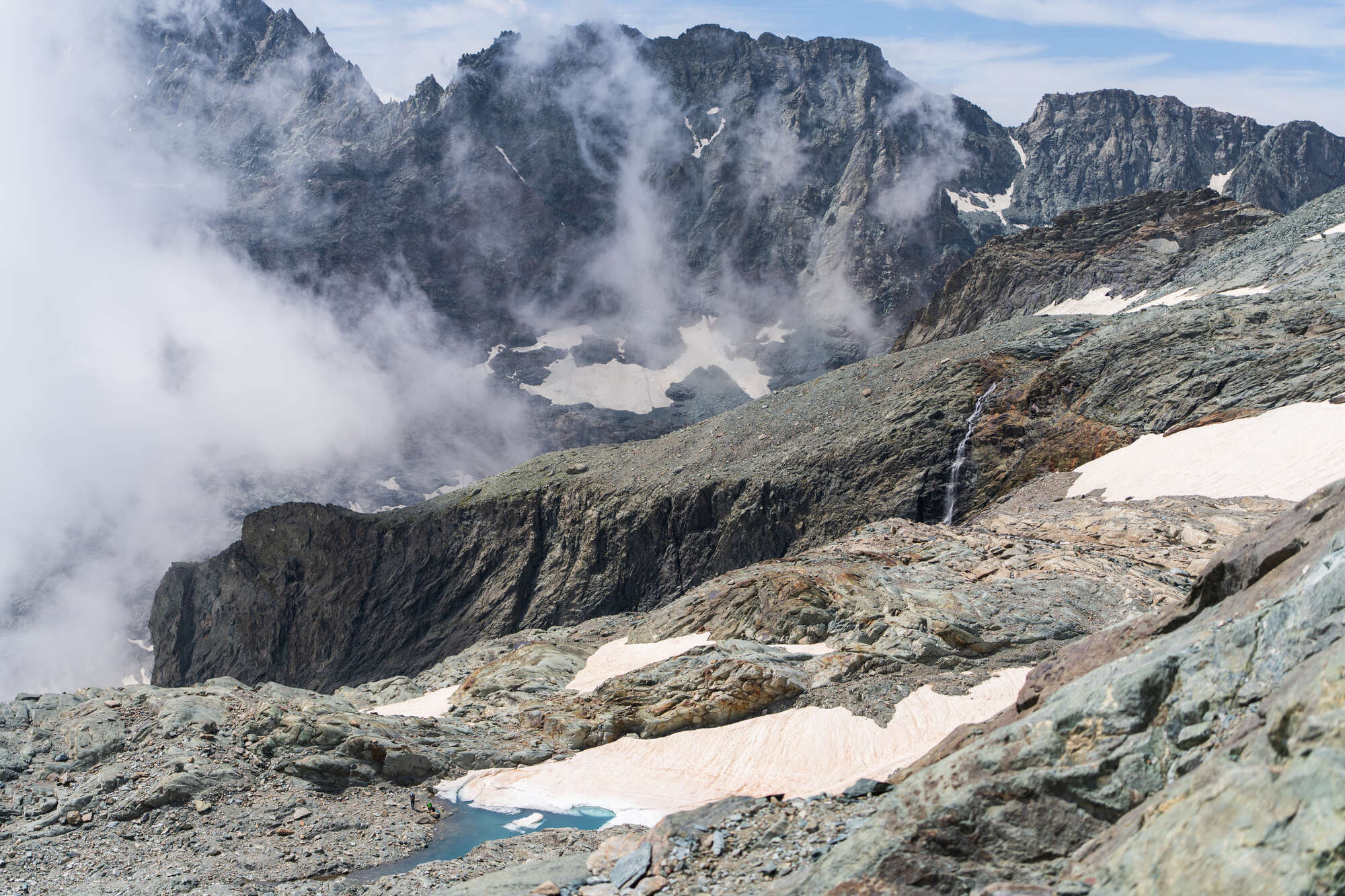
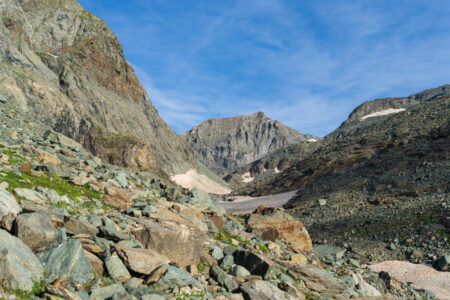
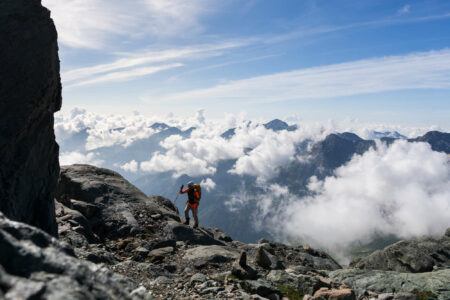
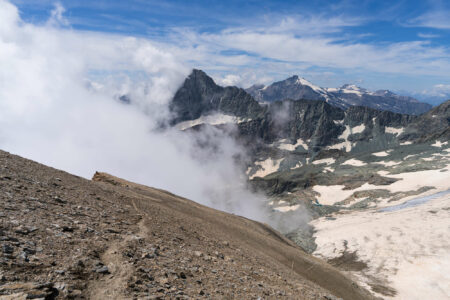
On reaching a panoramic shoulder, continue with numerous zigzags across loose ground. After a band of easy rocks, you arrive at a shelf at the foot of the Ciamarella Glacier, near a small meltwater lake.
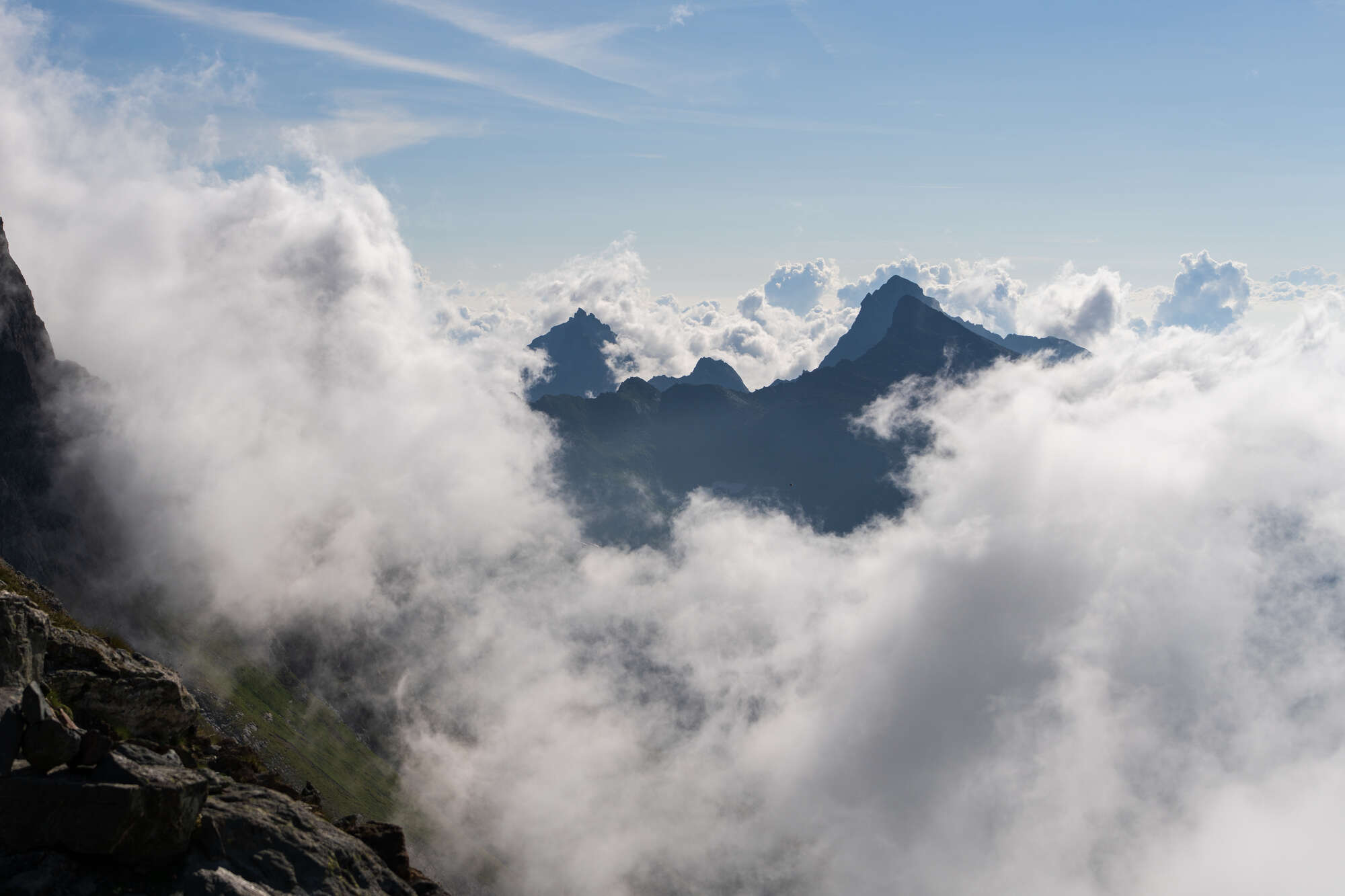
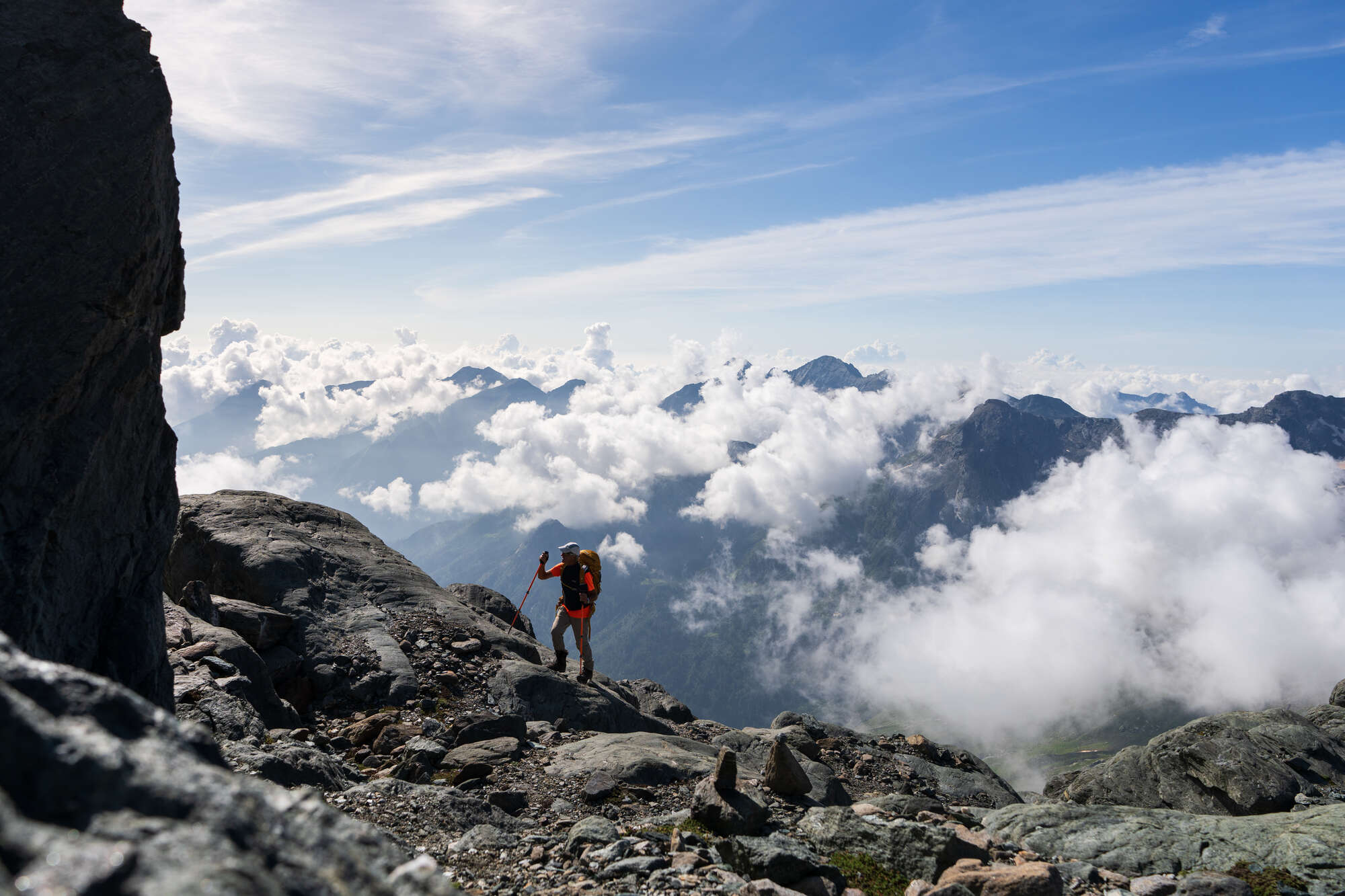
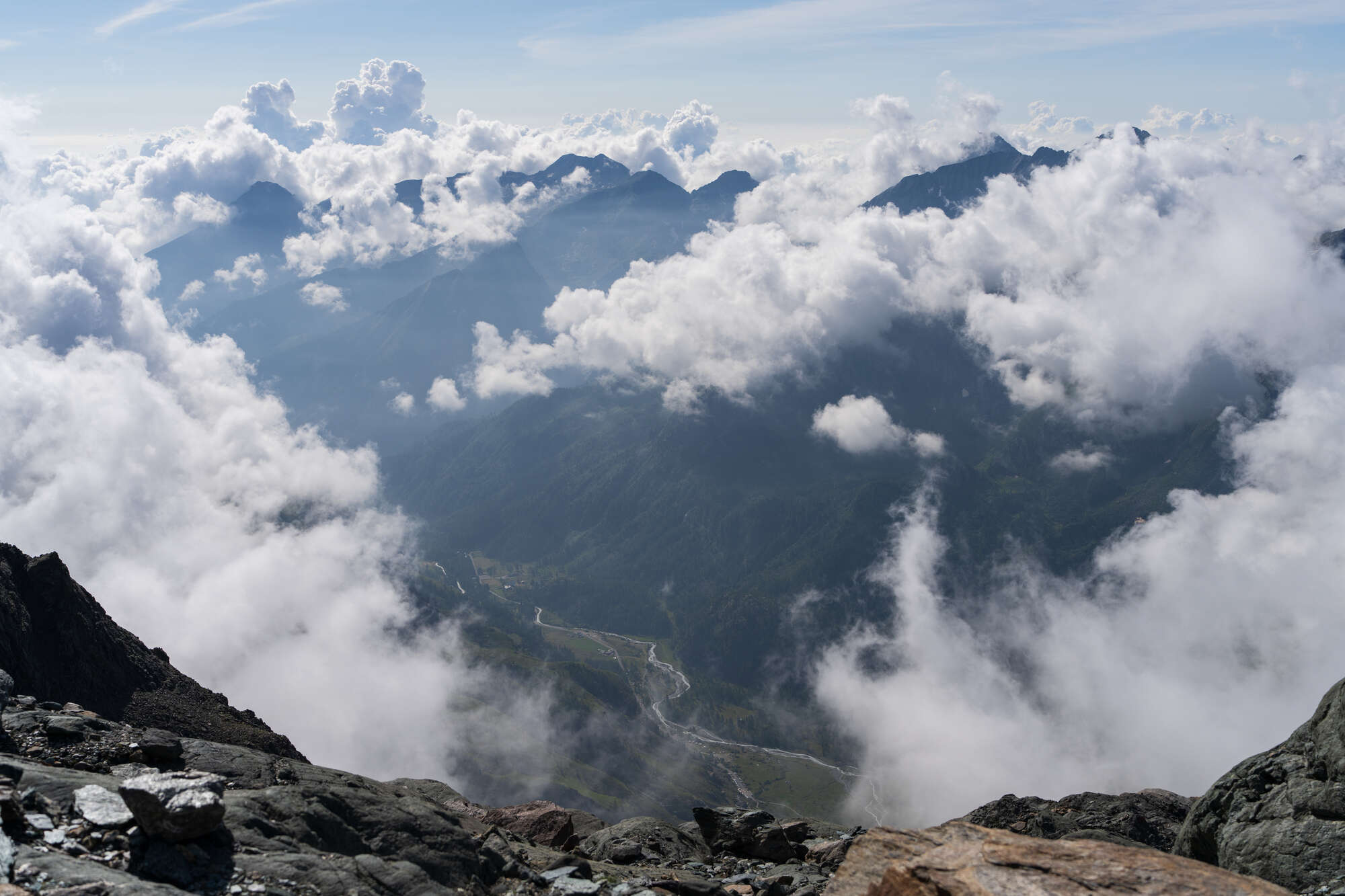
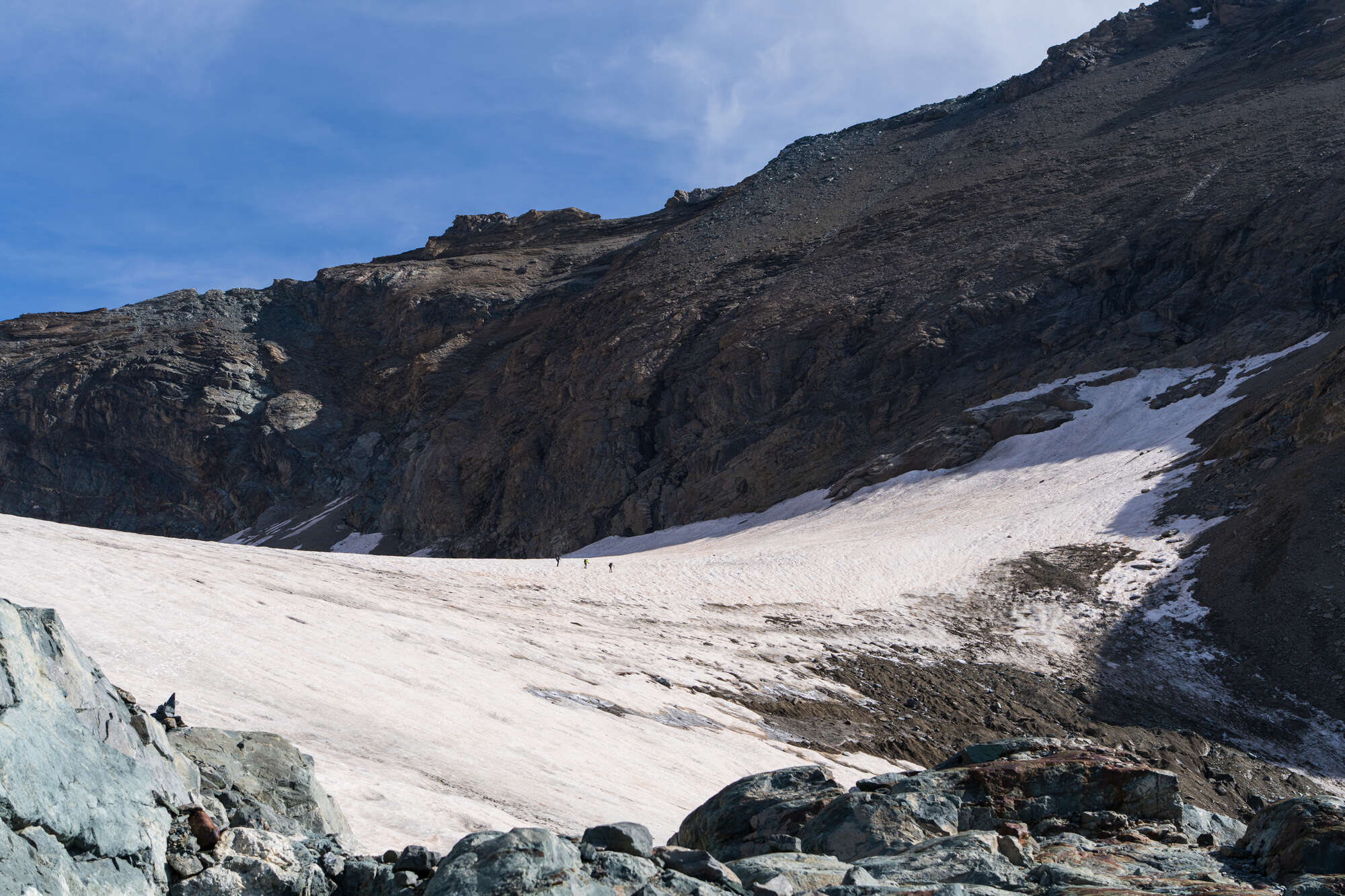
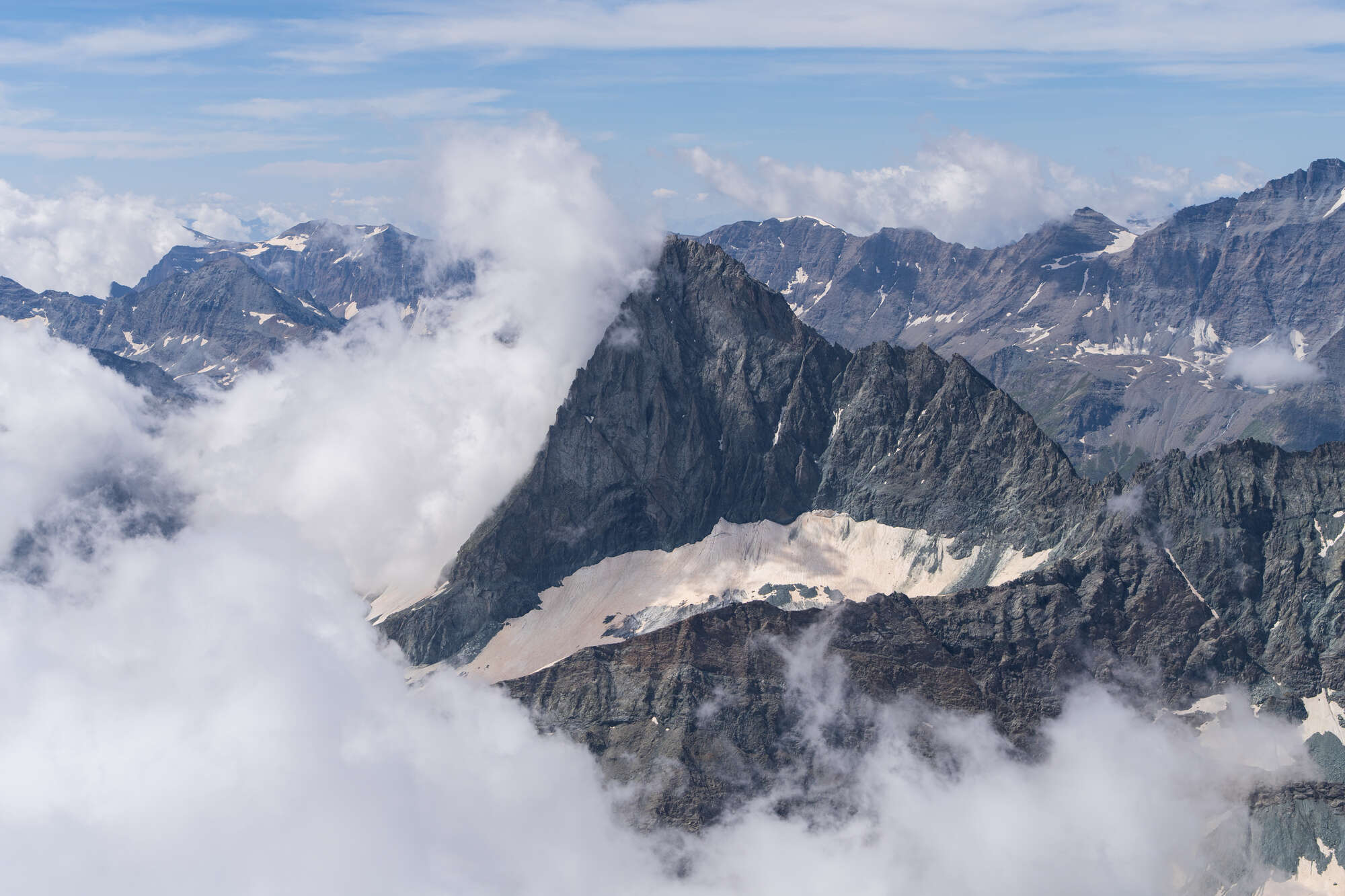
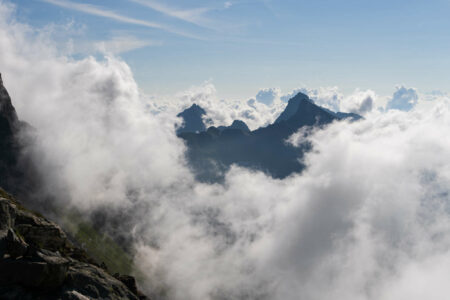
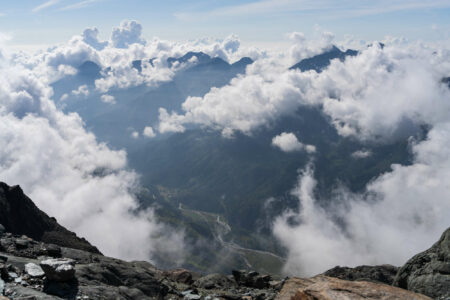
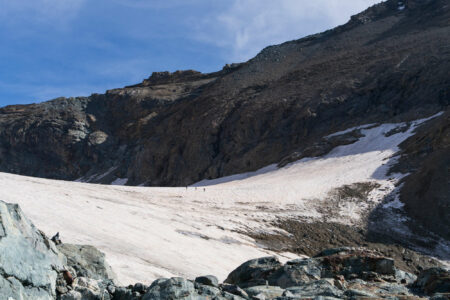
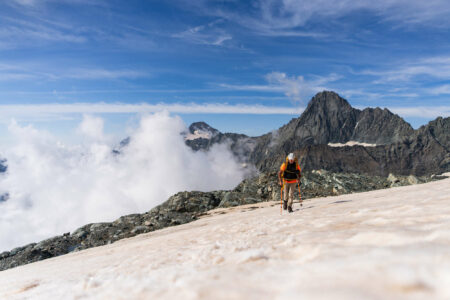
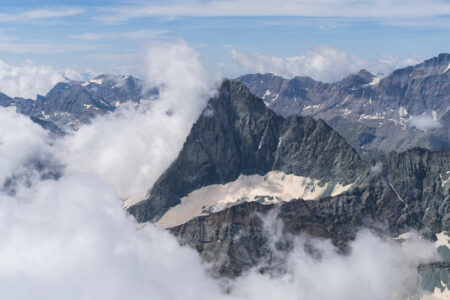
One more steep push over glacier-smoothed rocks, and, following the many cairns, you finally reach the front of the Ciamarella Glacier, which lies at the foot of the amphitheatre, enclosed to the north by Piccola Ciamarella. Looking back, there are sensational views of the Bessanese face and the string of peaks rising well above 3,000 metres, including, to name just a few, Monte Lera, the Croce Rossa, Arnas, and the Charbonnel summits.
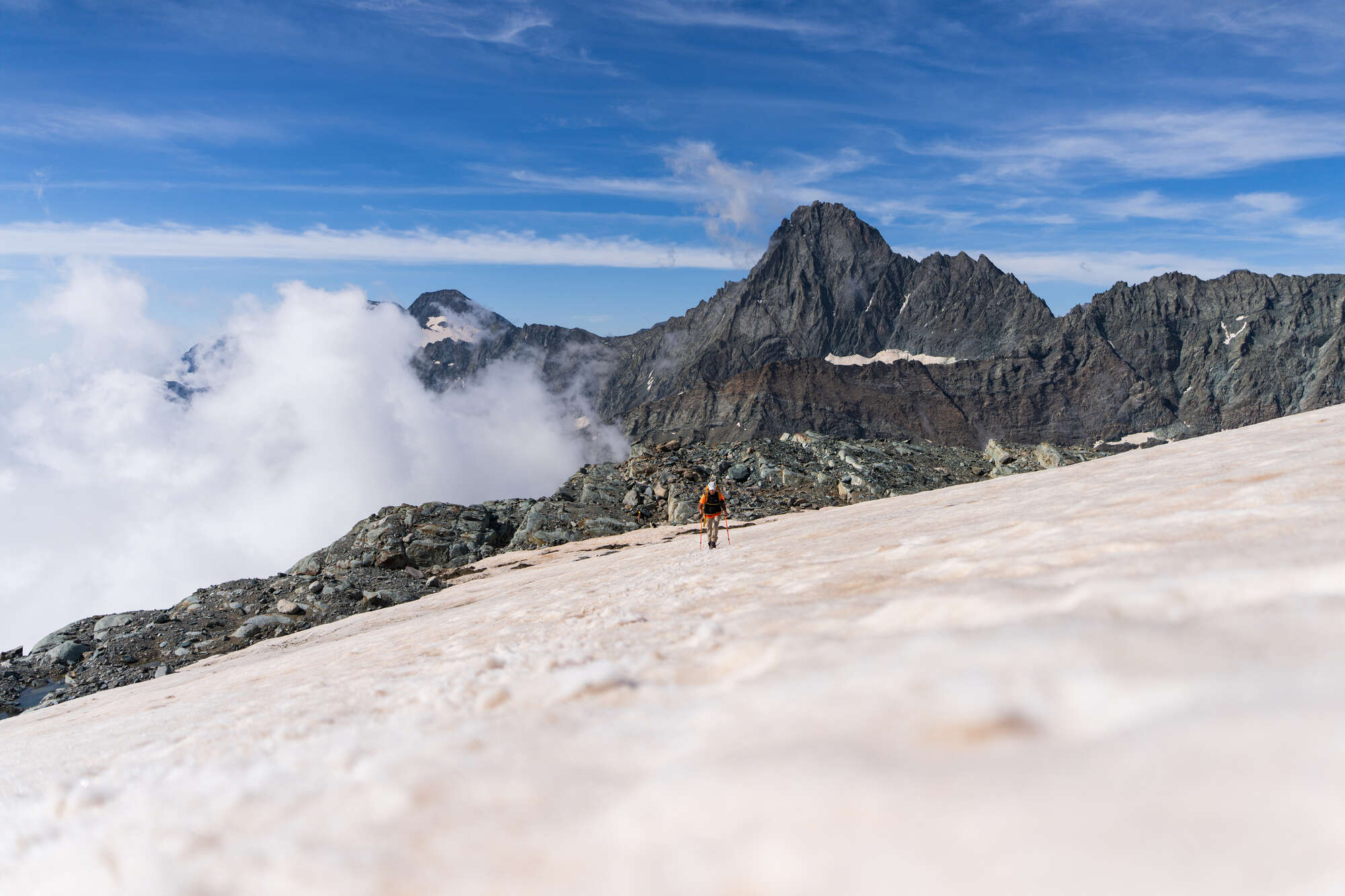
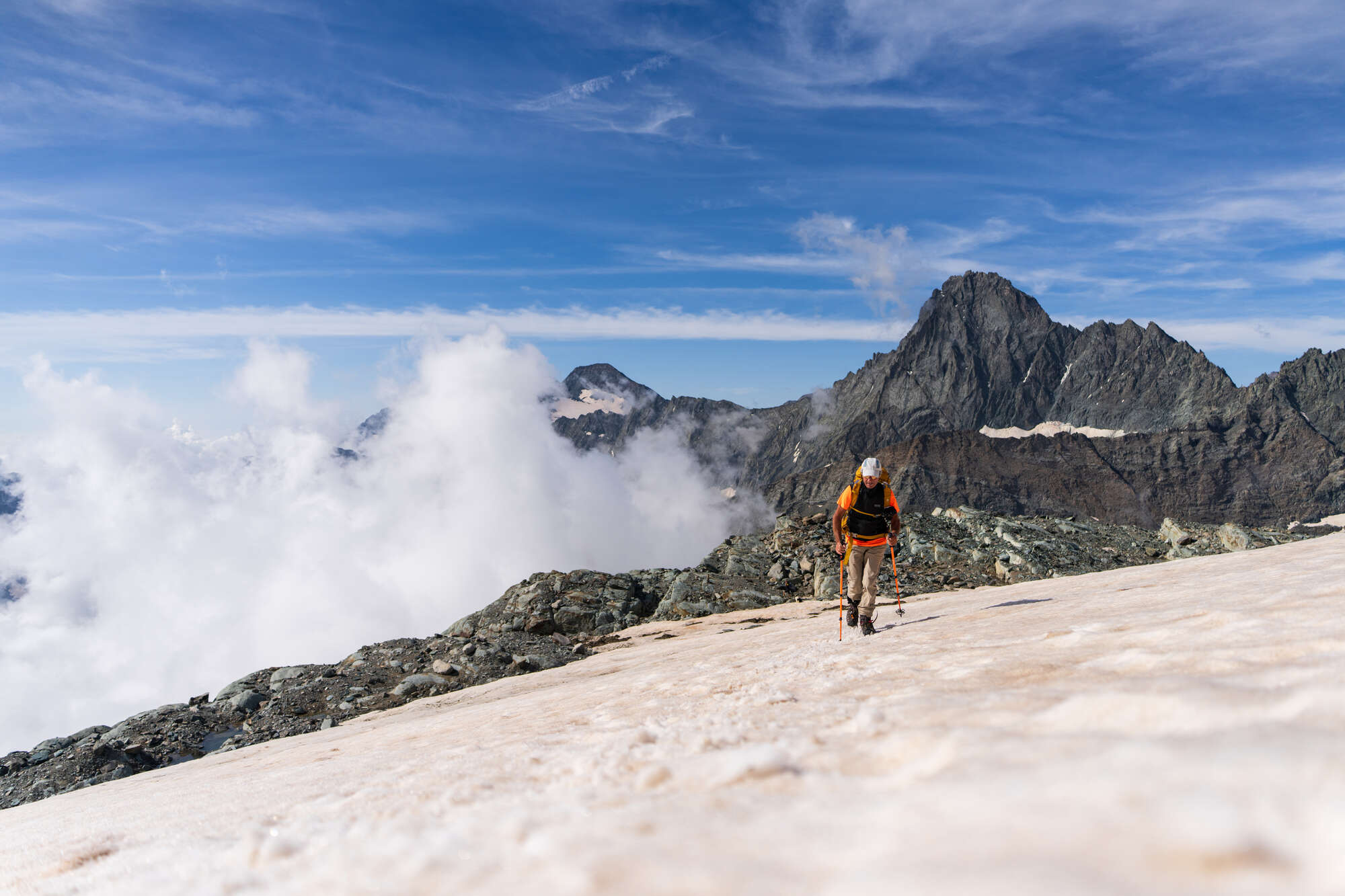
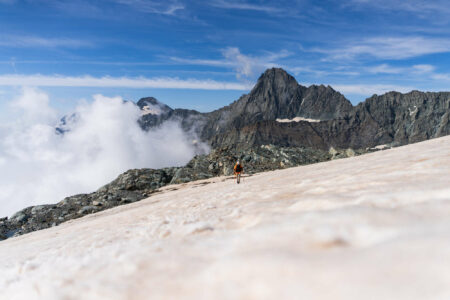
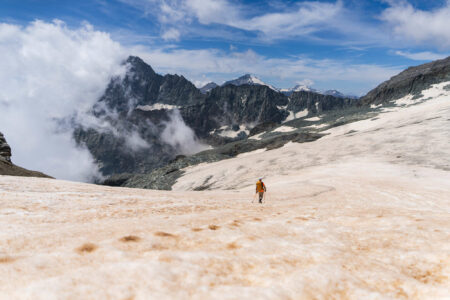
With crampons on (essential even in summer, though in normal conditions no other specialist equipment, such as an ice axe or ropes, is needed), cut across the base of the glacial funnel in a gentle arc from left to right. The gradient is modest, but it steepens briefly towards the top.
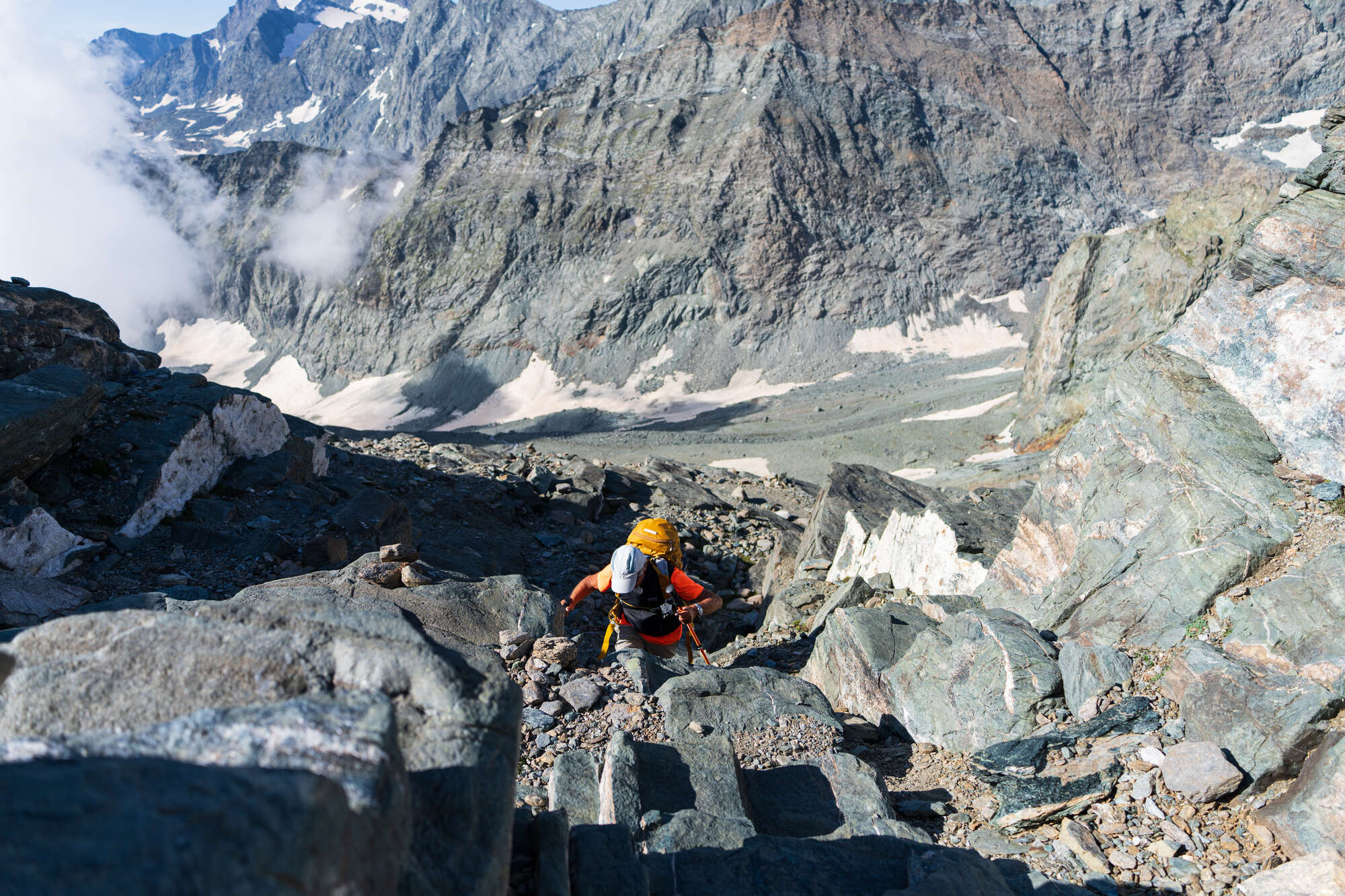
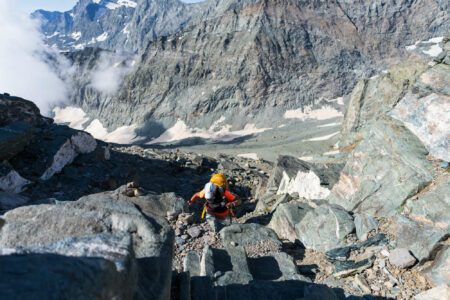
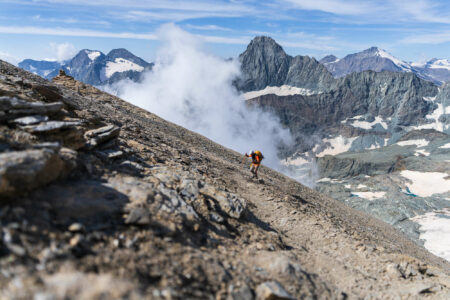
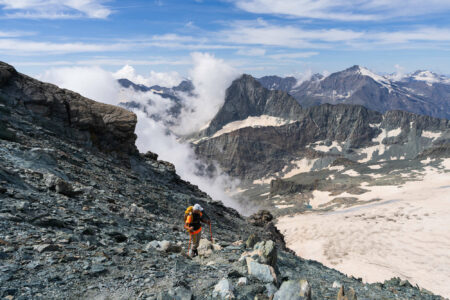
Beyond the glacier, you reach a steep slope of loose ground, where a well-trodden path, slightly exposed and on unstable fine scree, climbs upward. After several switchbacks, make a long traverse beneath a rock formation that vaguely resembles a sphinx, passing to its left.
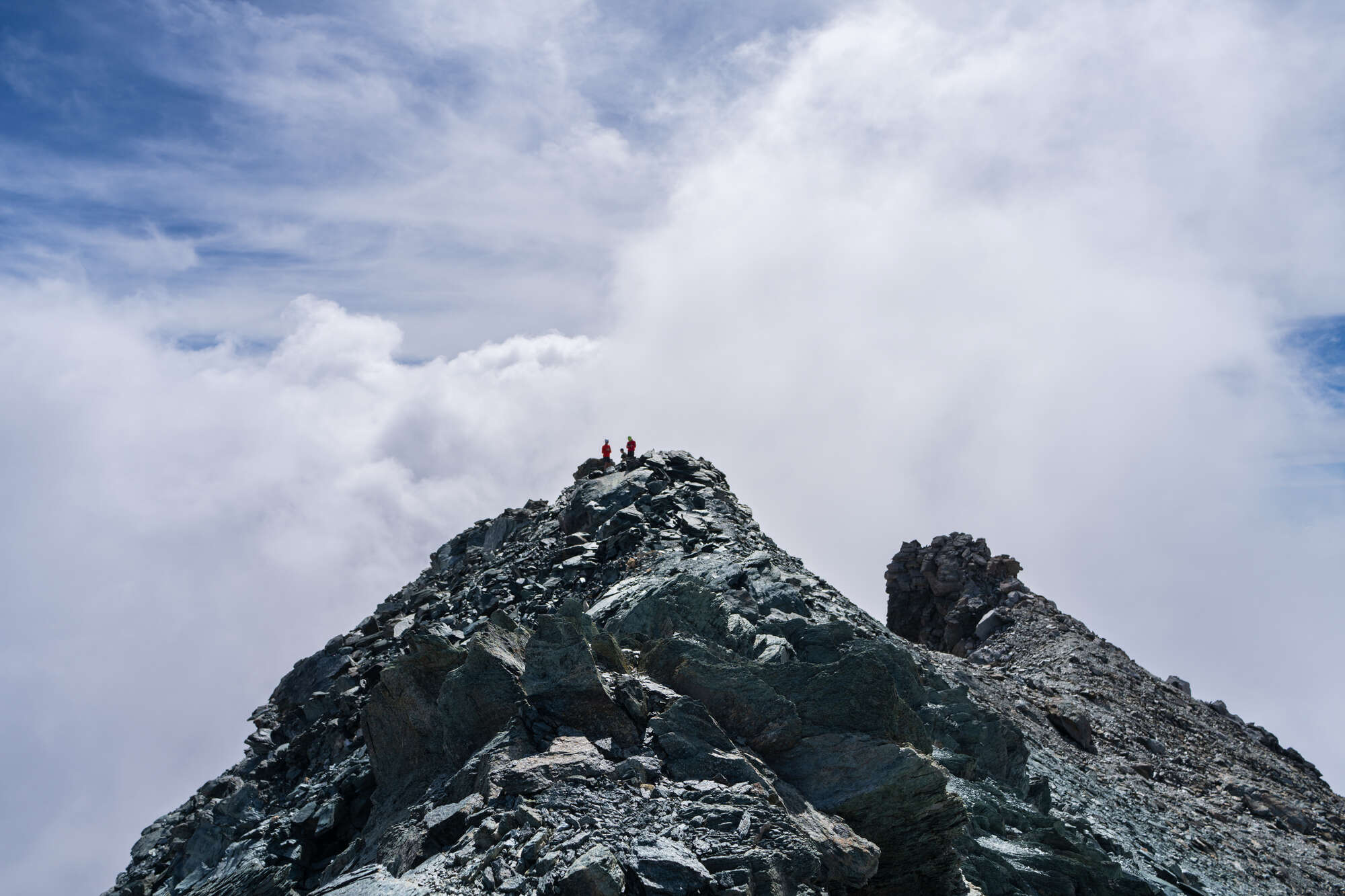
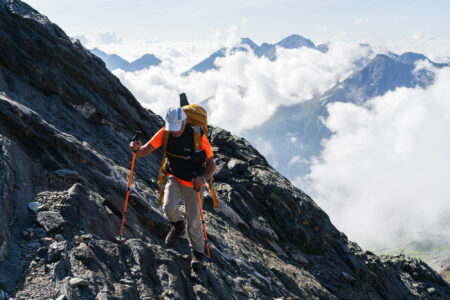
A couple of points where rocky outcrops are covered in fine debris require some care. At the end, the path turns right, threads through easy rock, and reaches the broad north-west ridge of greenish rock on the Ciamarella (snowfields possible until well into summer).
Follow the ridge on the ground, which becomes easier without snow, with breathtaking views to the north-west towards the Mont Blanc massif.
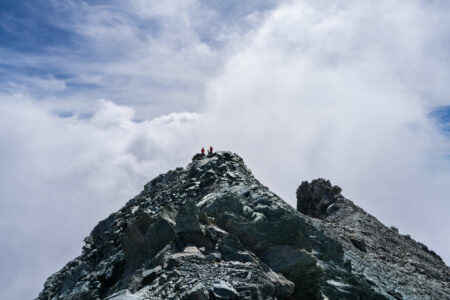
The path continues over loose ground near the upper part of the Tonini Glacier. Following the ridge, you finally reach the summit of Uja di Ciamarella (3,676 m), topped by a small statue of the Madonna and Child.
Needless to say, from such an exceptional vantage point among imposing peaks, the panorama is superb: from the majestic Mont Blanc to the Grandes Jorasses, with the Testa del Rutor, Gran Paradiso, and Monte Rosa in view. The view embraces numerous Swiss 4,000-metre peaks and the great French summits of the Écrins massif.
The return follows the same route, avoiding the detour to the Gastaldi Refuge and descending directly from Pian Gias to Pian dei Morti.
Text by Valerio Dutto of Cuneotrekking.comReport a problem
Did you encounter a problem on this itinerary? Let us know and help us keep all routes safe and accessible for everyone.
Submit report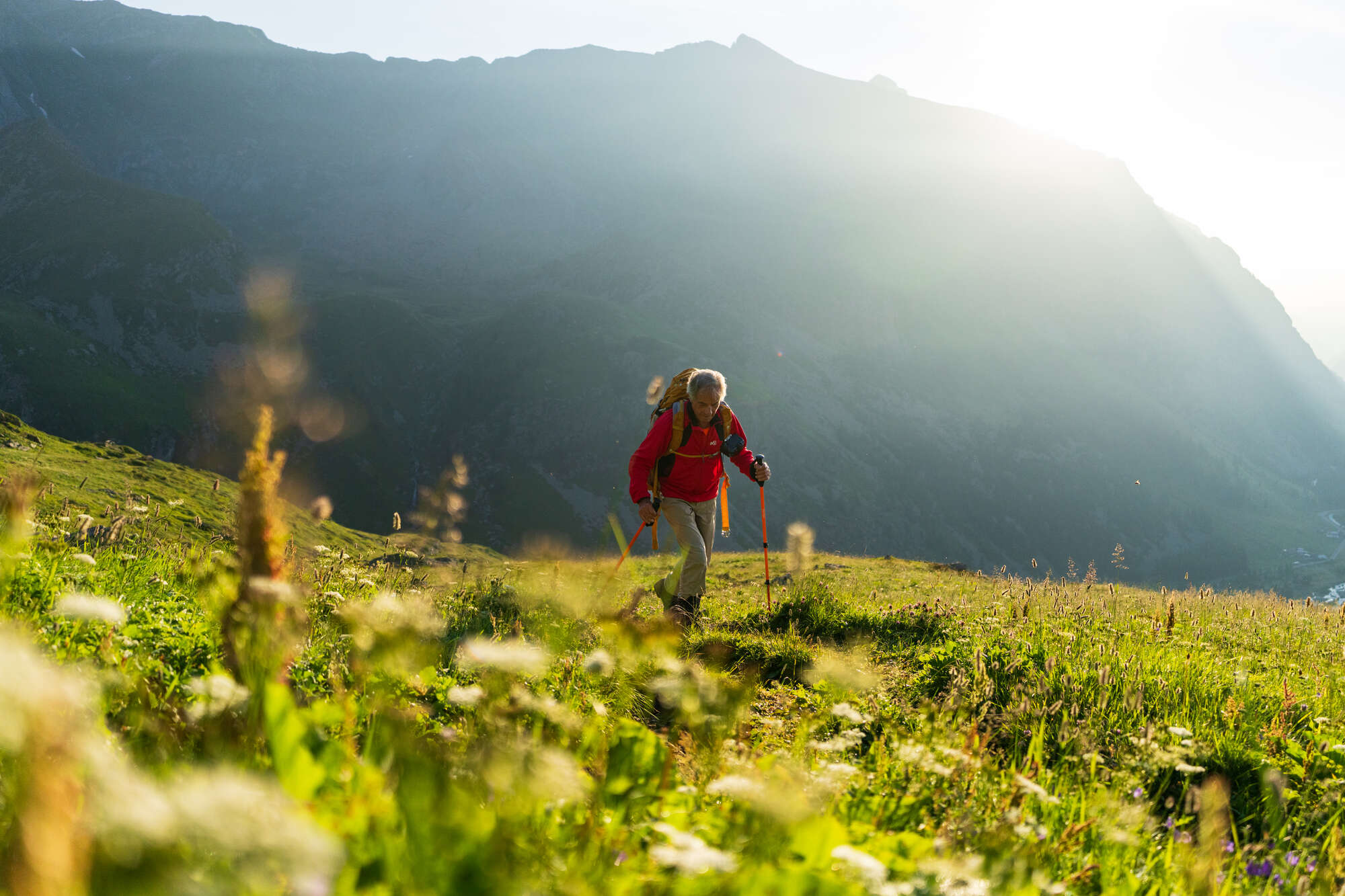
Nearby
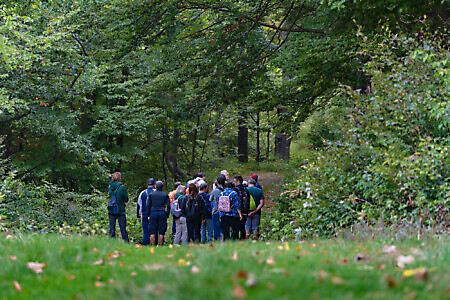
EscursionAble
BalmeEscursionAble (pronounced es-cur-si-on-abl) is a play on words combining the Italian escursionismo (hiking) with the French adjective able, meaning "capable": a name that reflects the aim of creating an itinerary accessible to everyone, regardless of physical ability. Developed as part of a wider initiative to promote accessibility and inclusivity in…
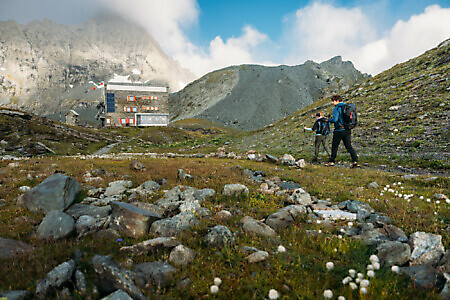
Gastaldi Refuge
BalmeThe approach itinerary to Gastaldi Refuge (2,658 m), named after the geologist Bartolomeo Gastaldi, co-founder of the CAI (Club Alpino Italiano, the Italian Alpine Club), set in the glacial hollow of Crot del Ciaussinè at the foot of the majestic Bessanese.
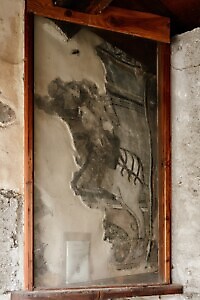
Chapel of the Shroud, or Chapel of Christ Pantocrator
Rivòt di Luis detto anche Via Margutta (Balme)The lanes branching through the old centre of Balme are called quintàness if flat and rivòt if uphill. Narrow and...
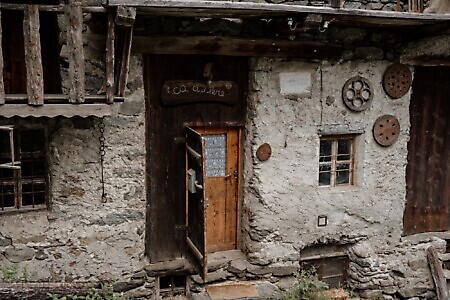
Cornetti Historic Centre
Frazione Cornetti (Balme)Cornetti di Balme (Li Cournàt) is among the highest permanently inhabited settlements in the Lanzo Valleys, sitting at 1,446 metres....
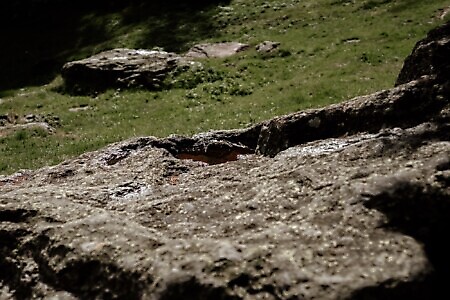
Prehistoric Altar of Bogone
Bogone (Balme)The small hamlet of Bogone was inhabited mainly in spring and autumn, serving as a stopping point during the Alpine...