
Overview
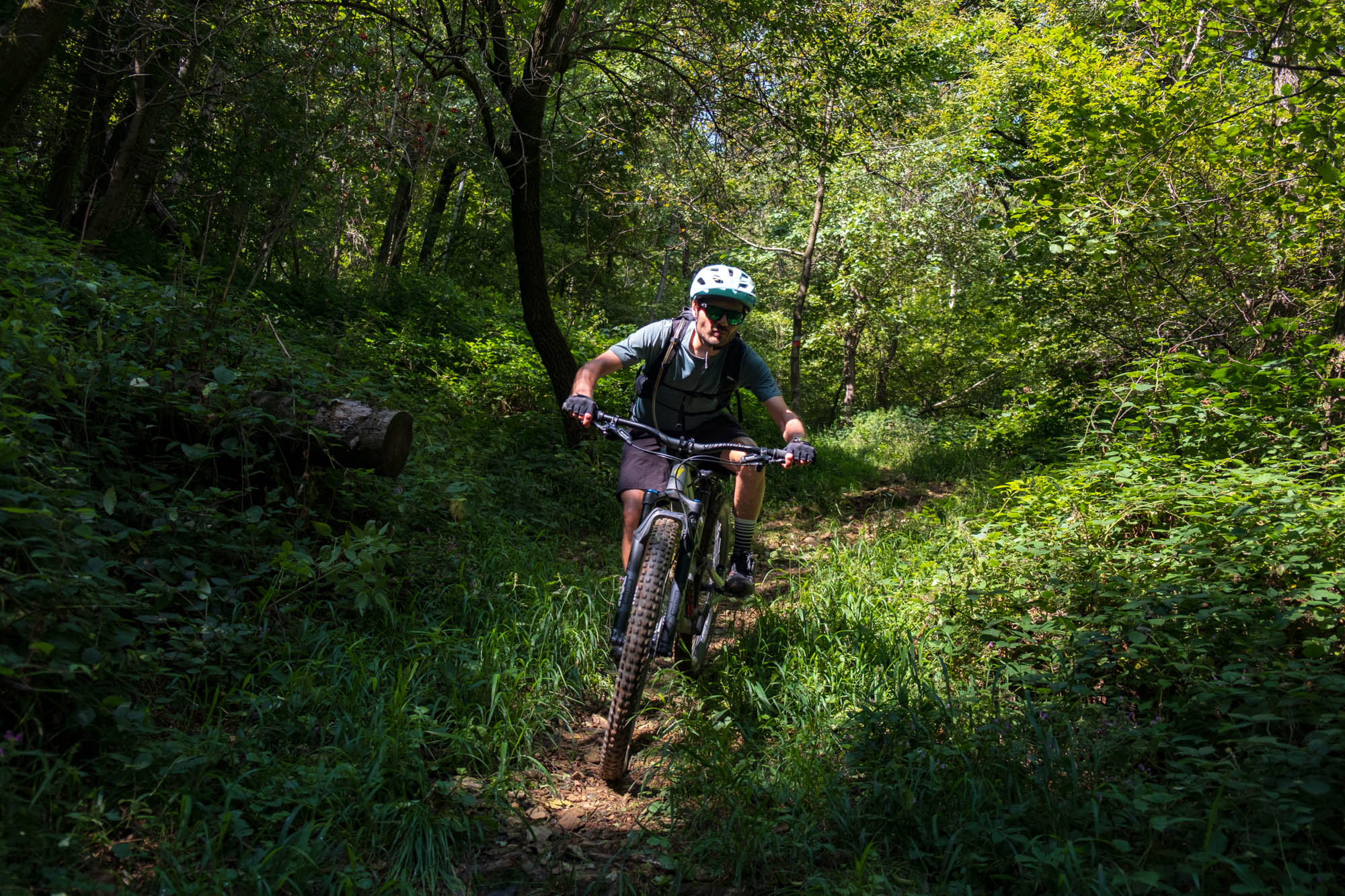
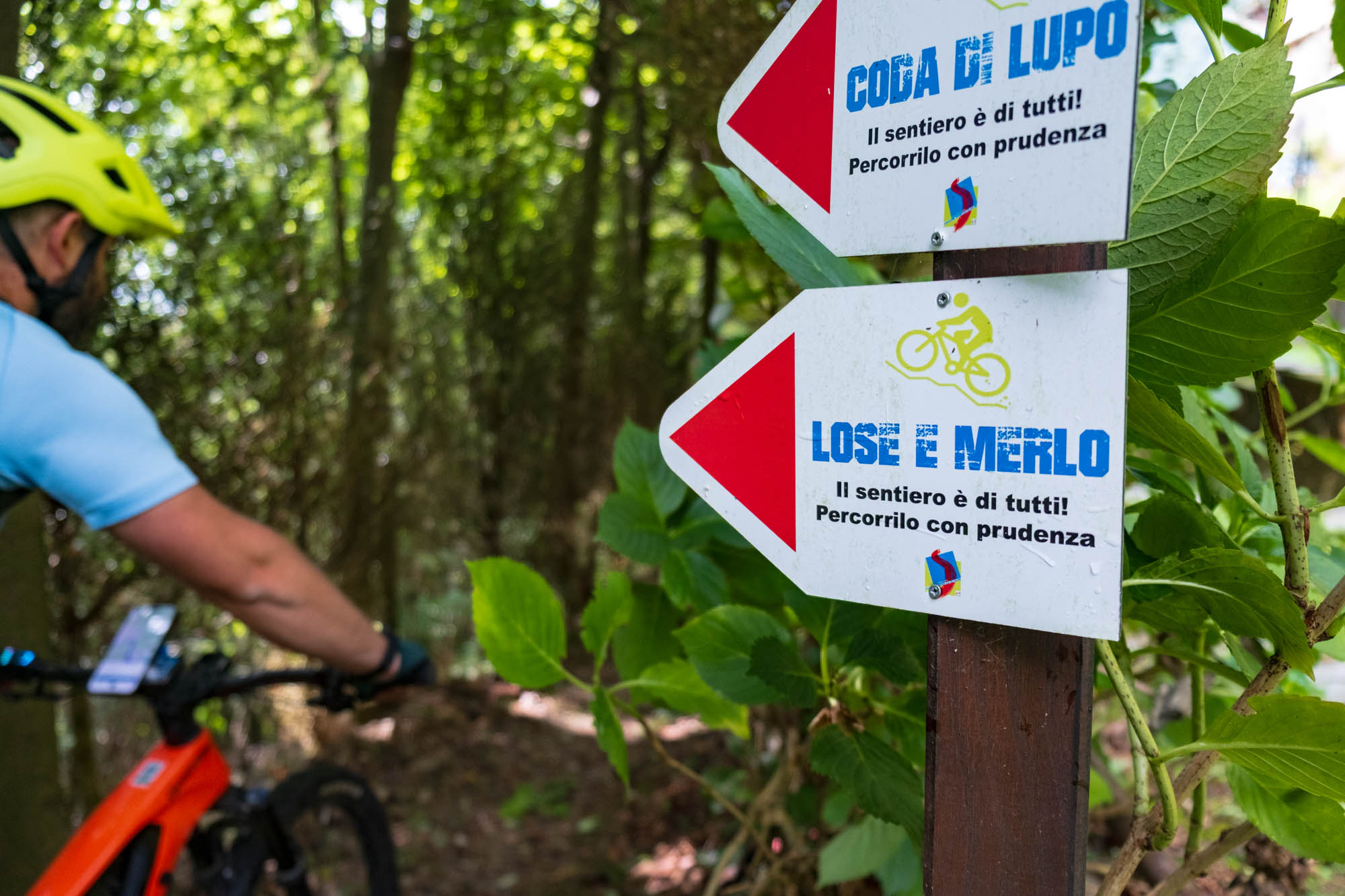
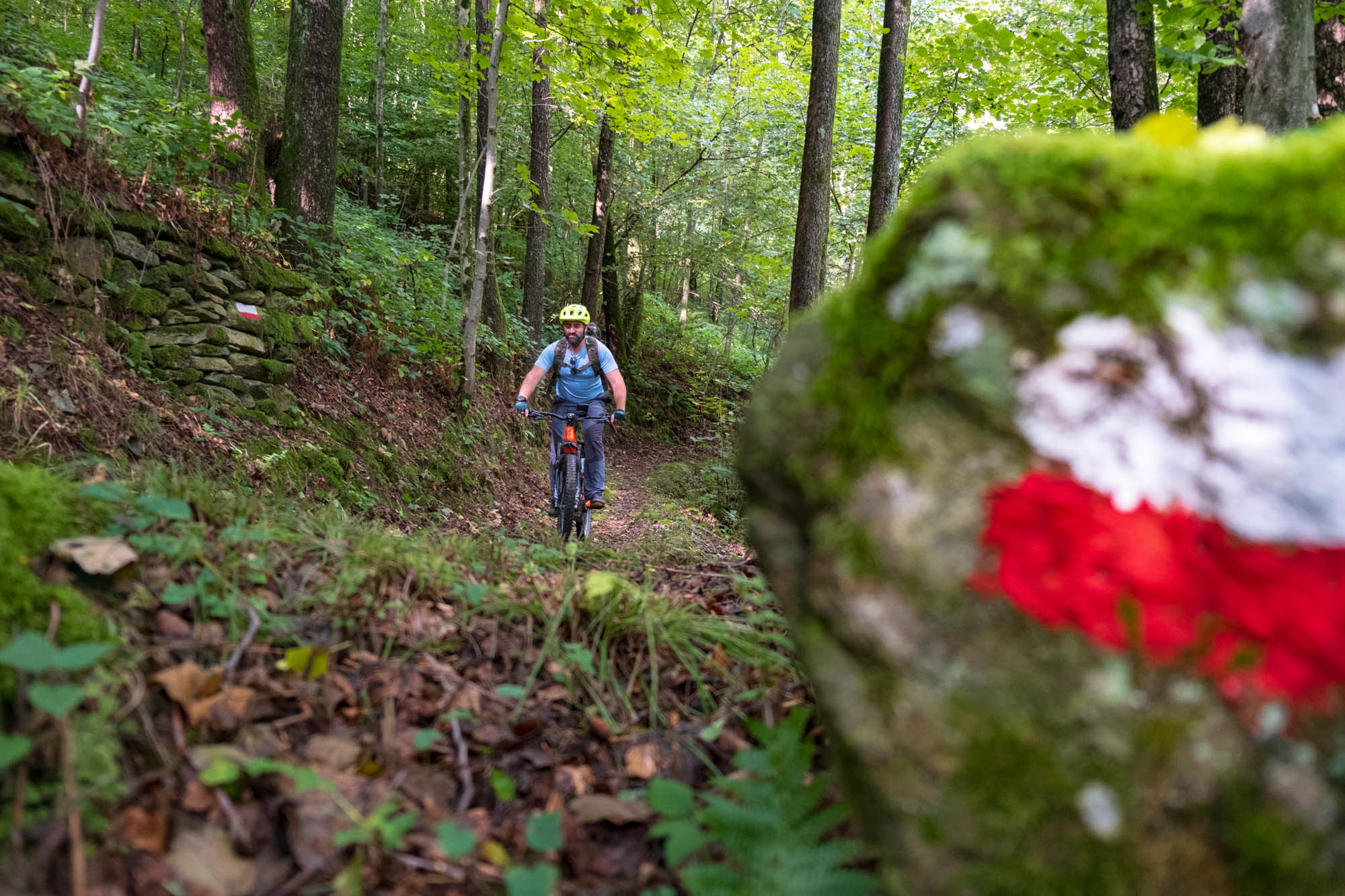
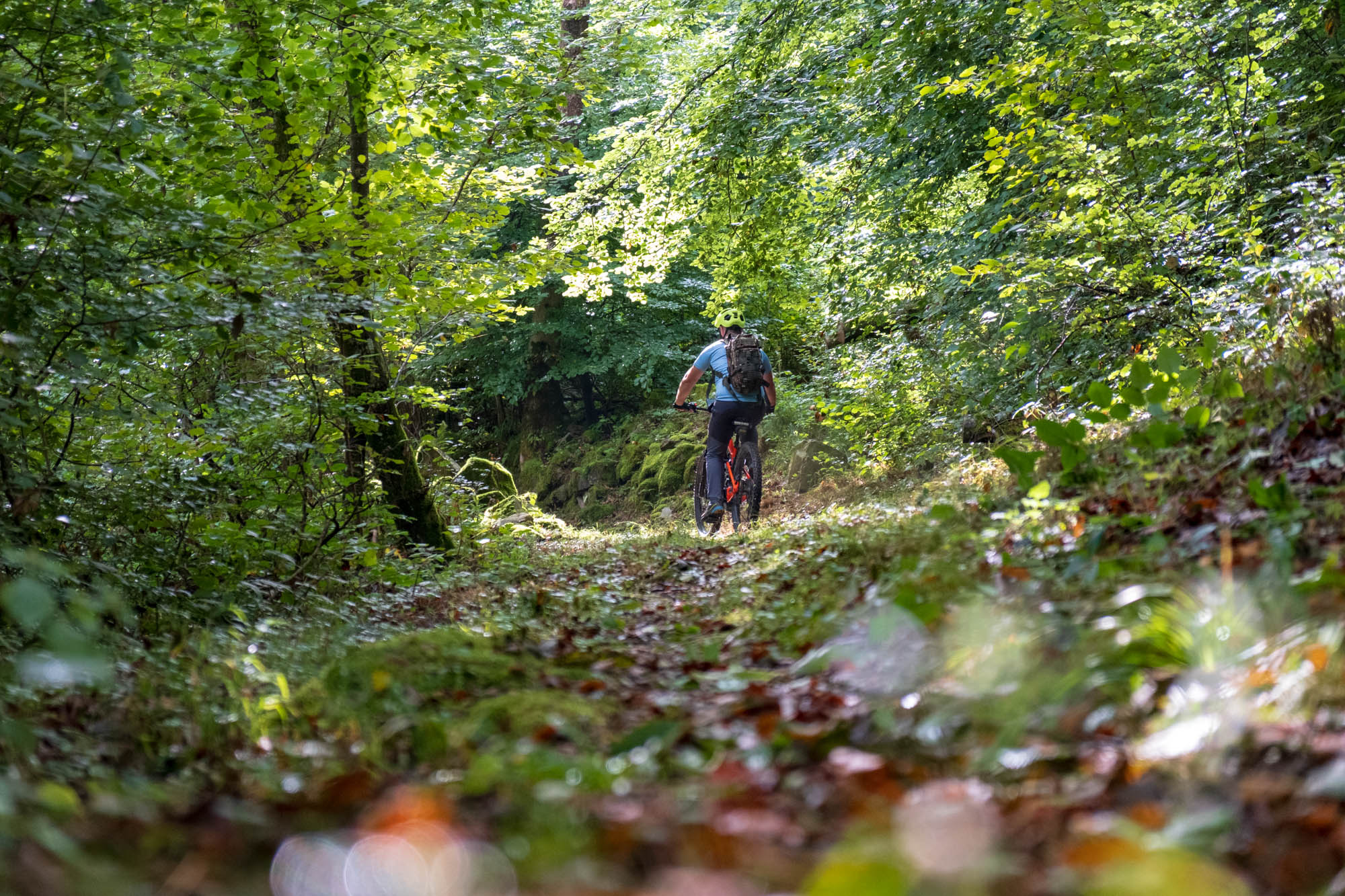
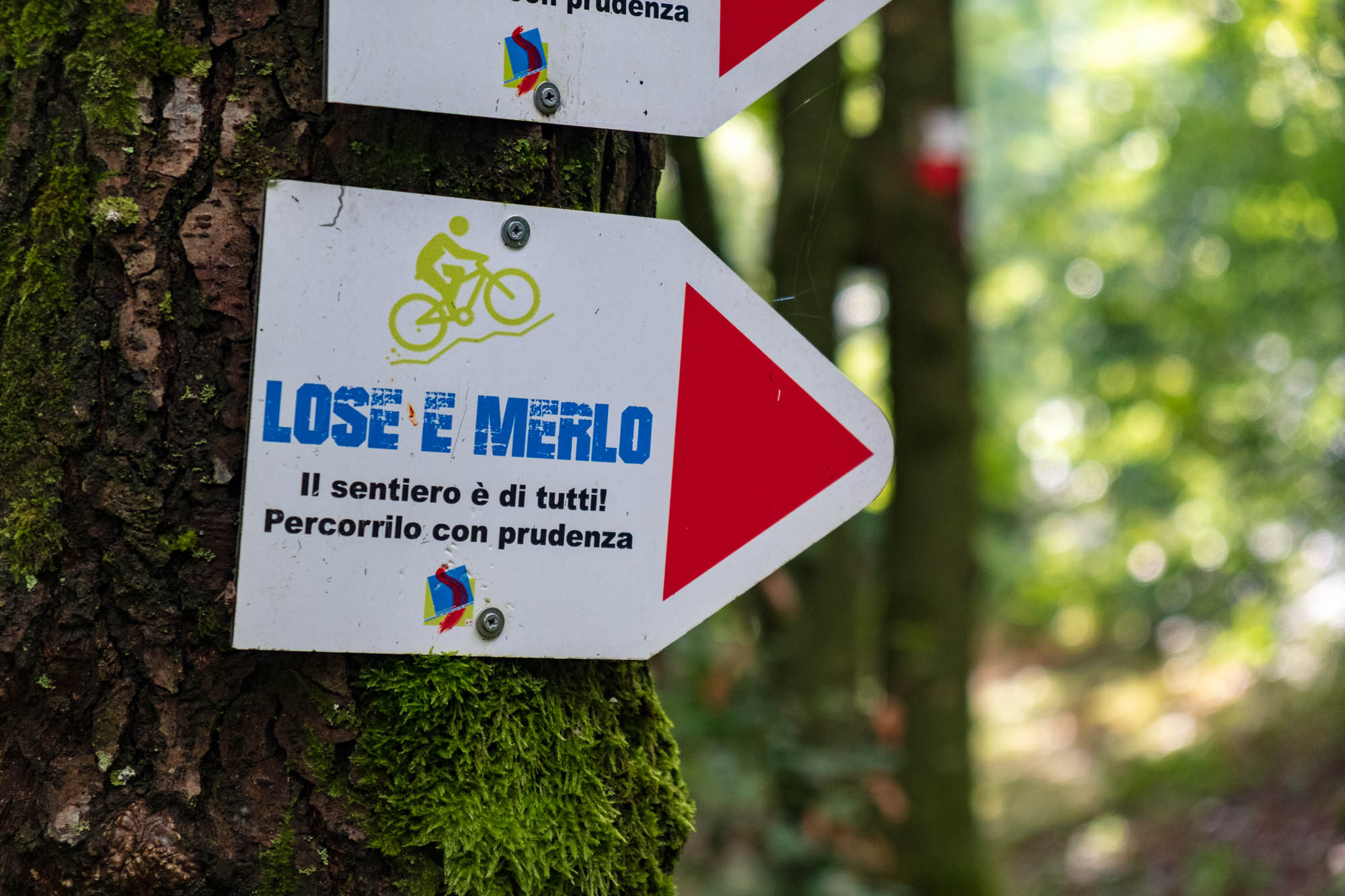
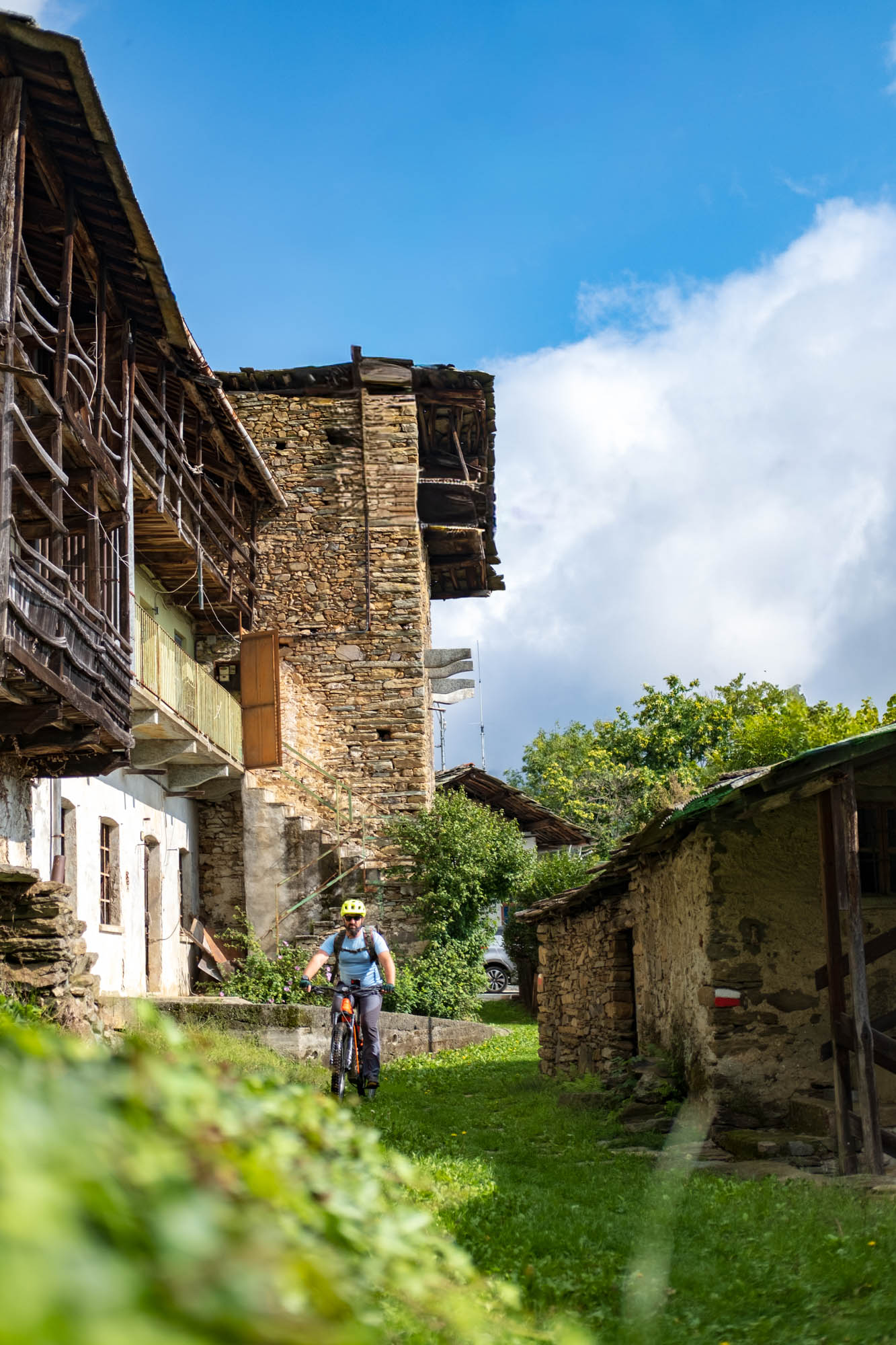
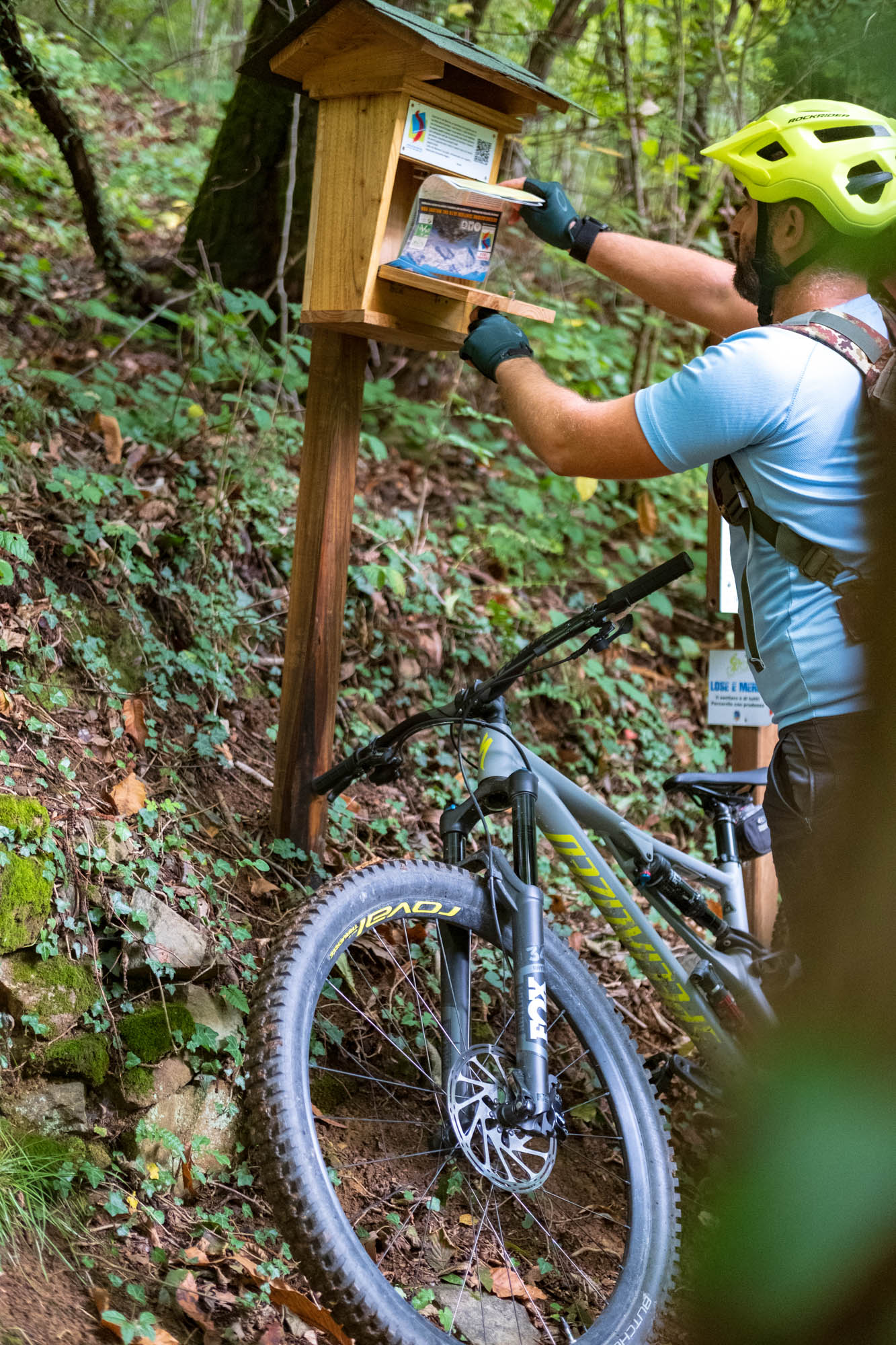
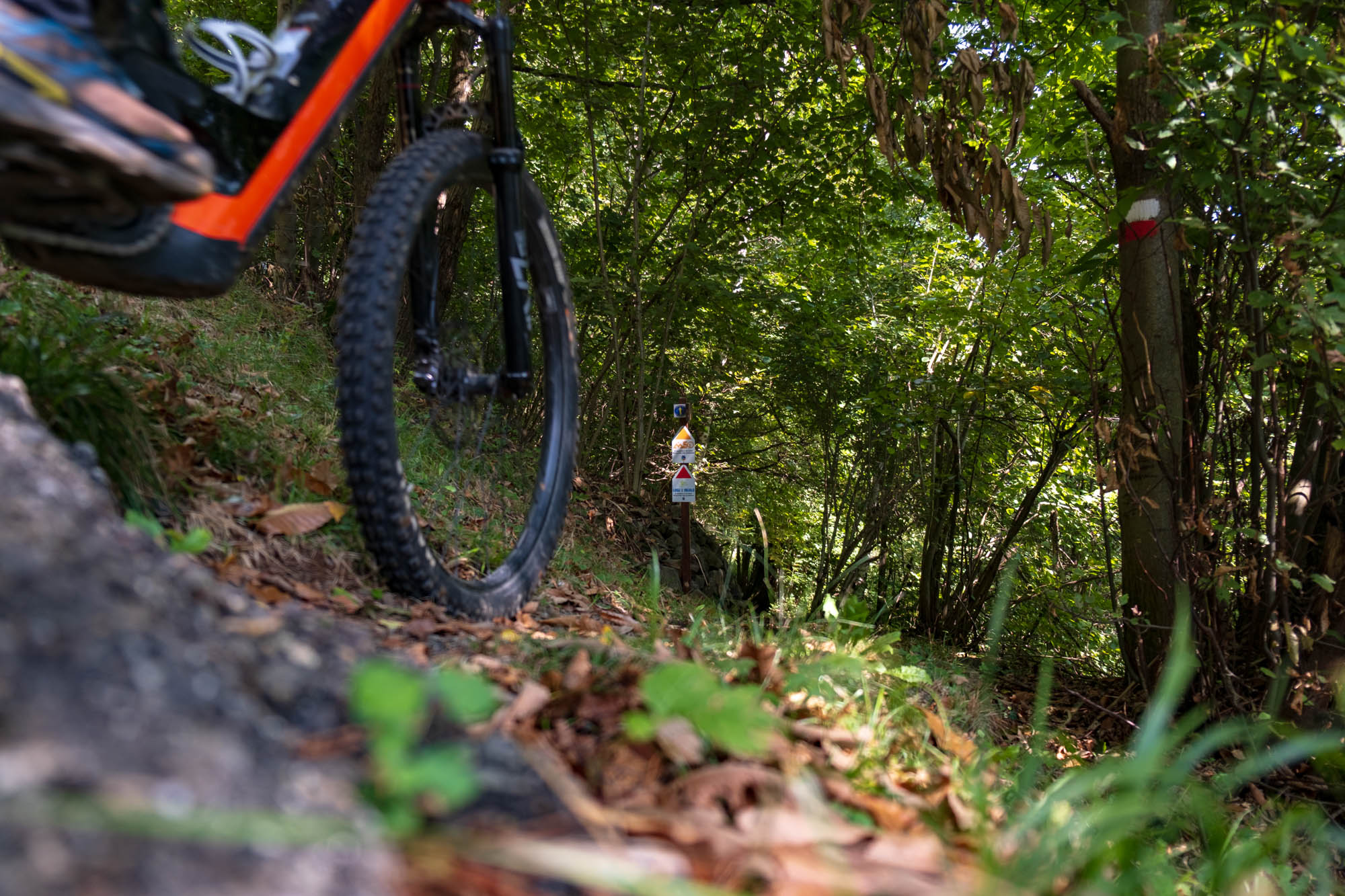
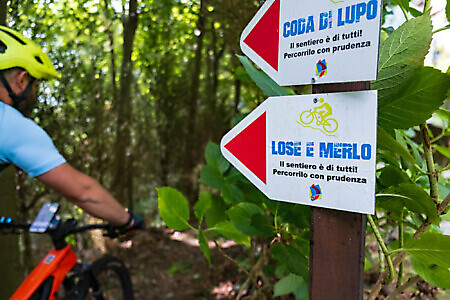
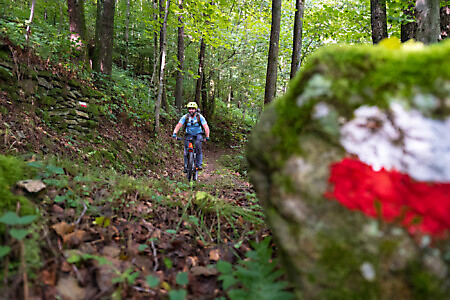
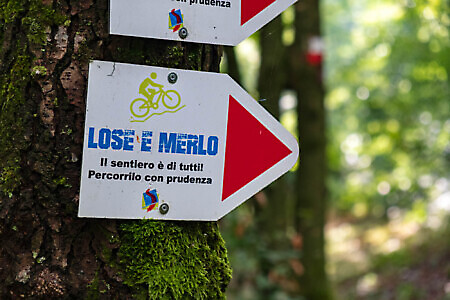
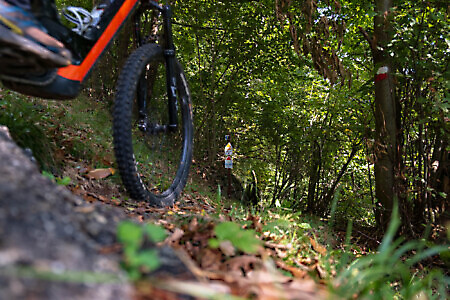
A charming route through the lower valley that snakes between the Tesso and Malone valleys. Its name derives from the slate slabs used on roofs, steps, and balconies in many hamlets along the way, as well as from the scenic Pilone del Merlo. The trail follows a section of the M50, the longest route documented by the Associazione Sentieri Alta Val Malone (Upper Malone Valley Trails Association), and is very well signposted. Enjoyable and diverse, it features a mix of tarmac, dirt tracks, and technical trails.
Starting point
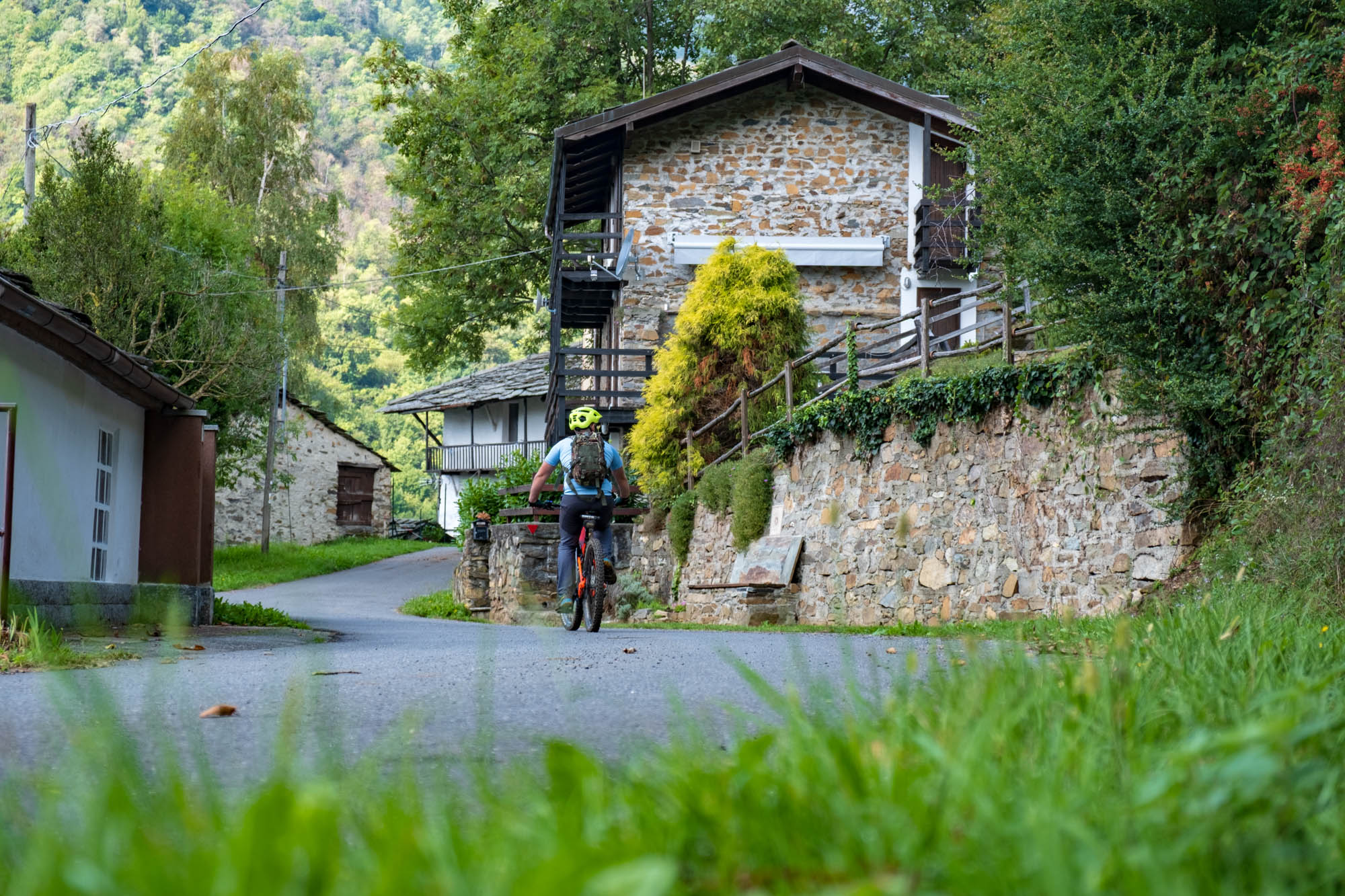
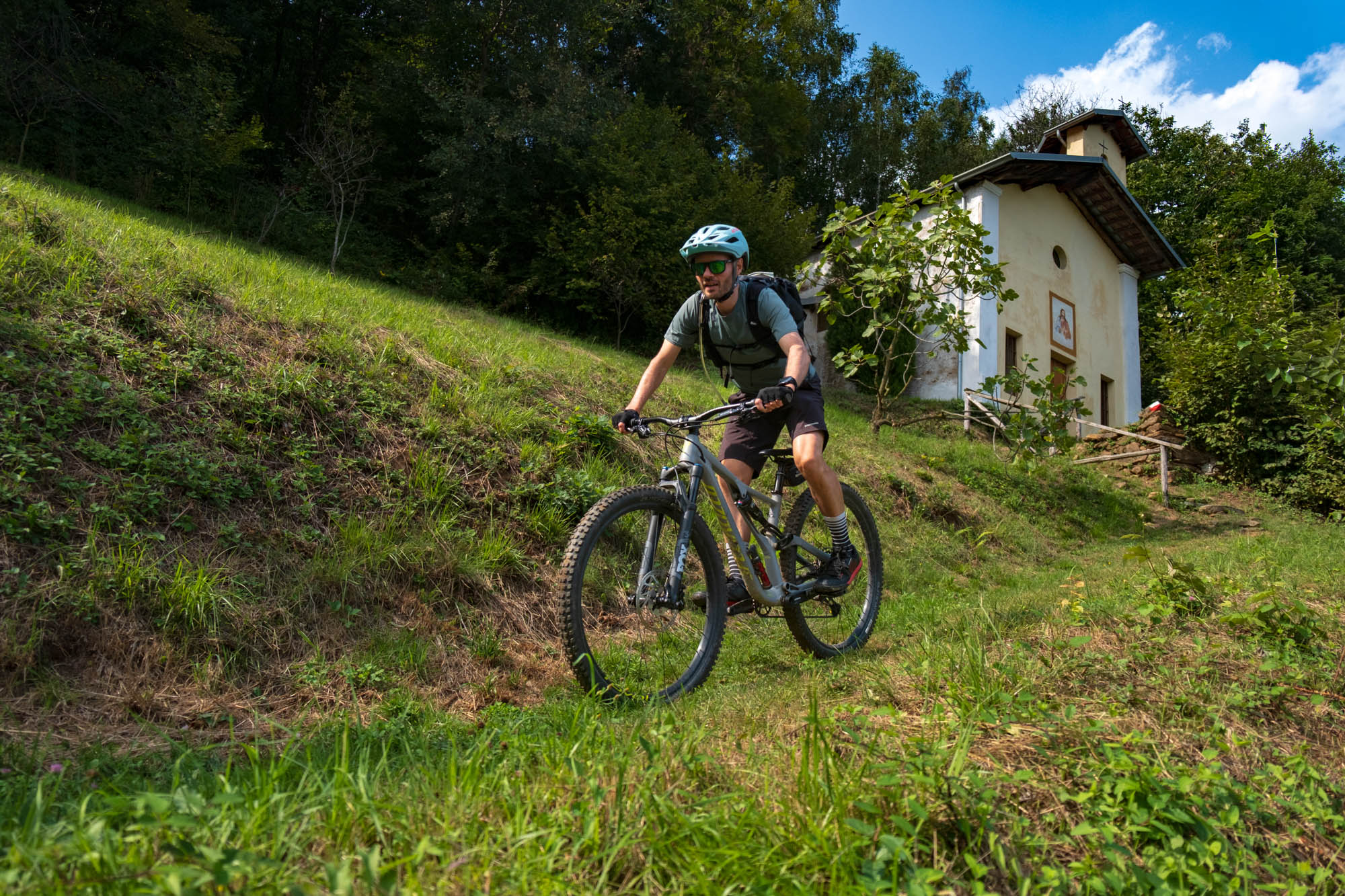
DirectionsFrom the car park, head south. At the roundabout, take the second exit, Via Coassolo, towards the Ritornato hamlet. The road curves right and climbs steadily. Ignore all turnings and ride through Case Bellom, passing the Chapel of Sant’Antonio (750 m). Continue on the main road for a further kilometre, then leave it after a tight bend around a house (good views towards the Turin plain) and take a small tarmacked side road on the left.
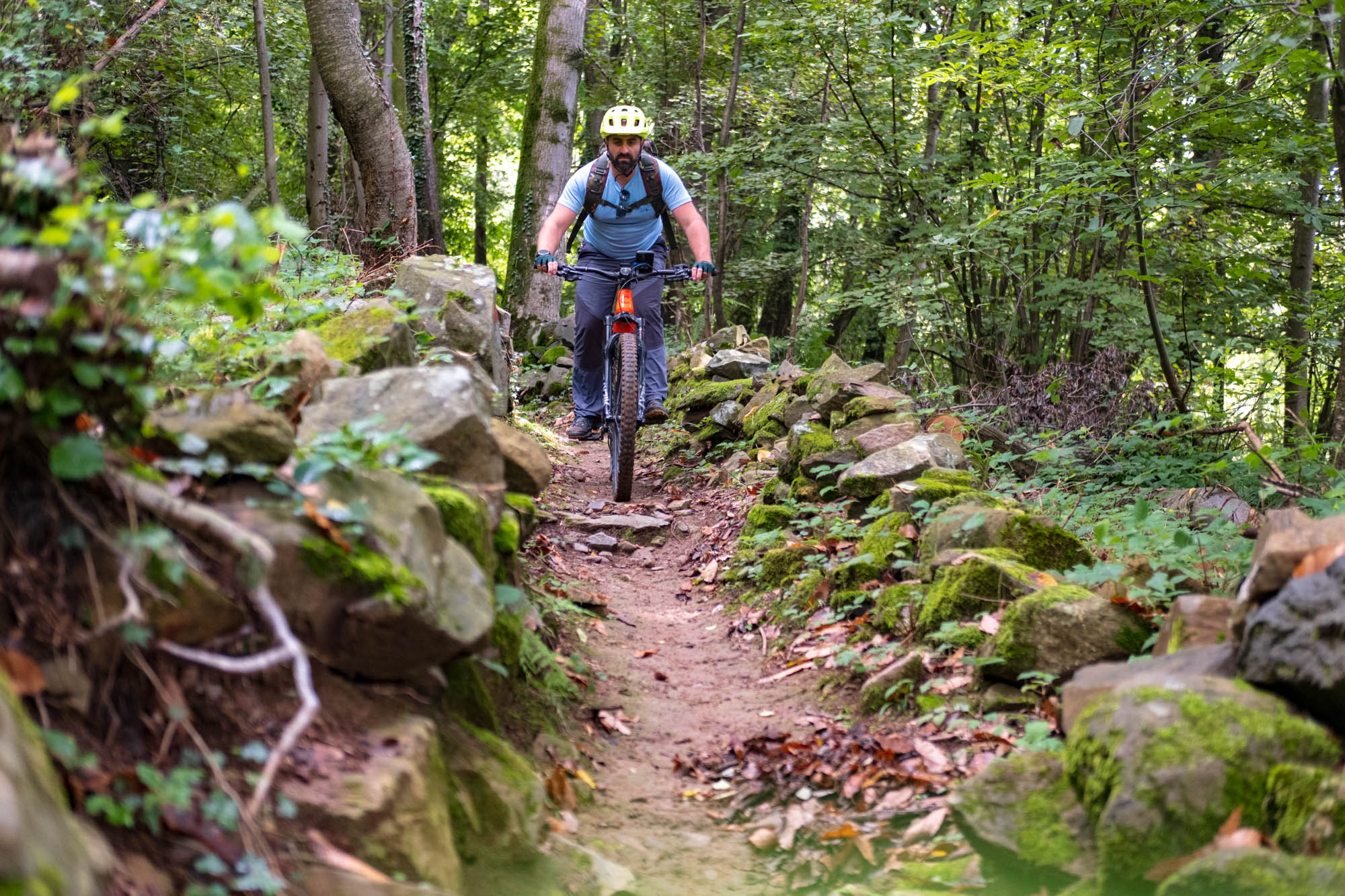
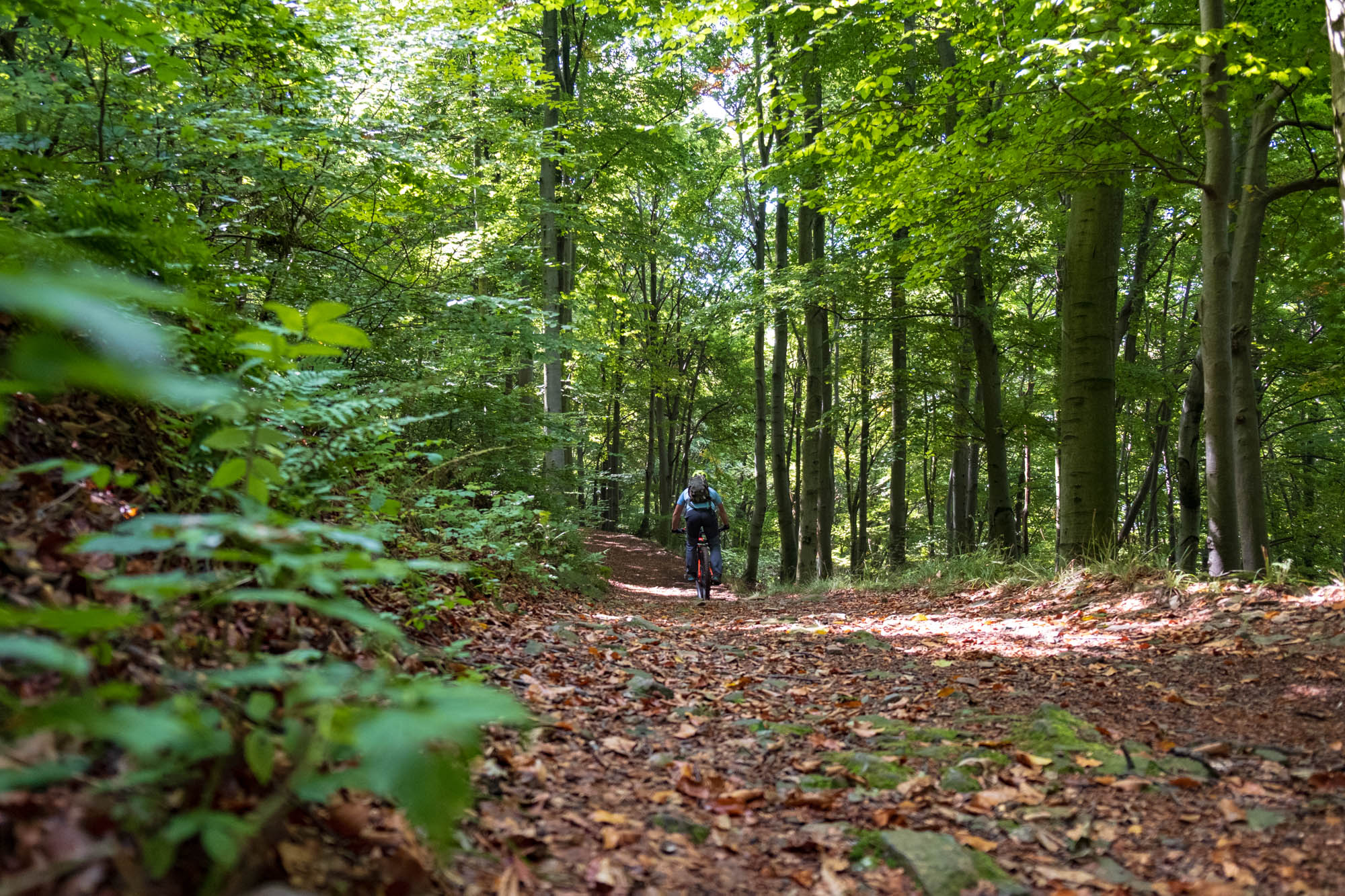
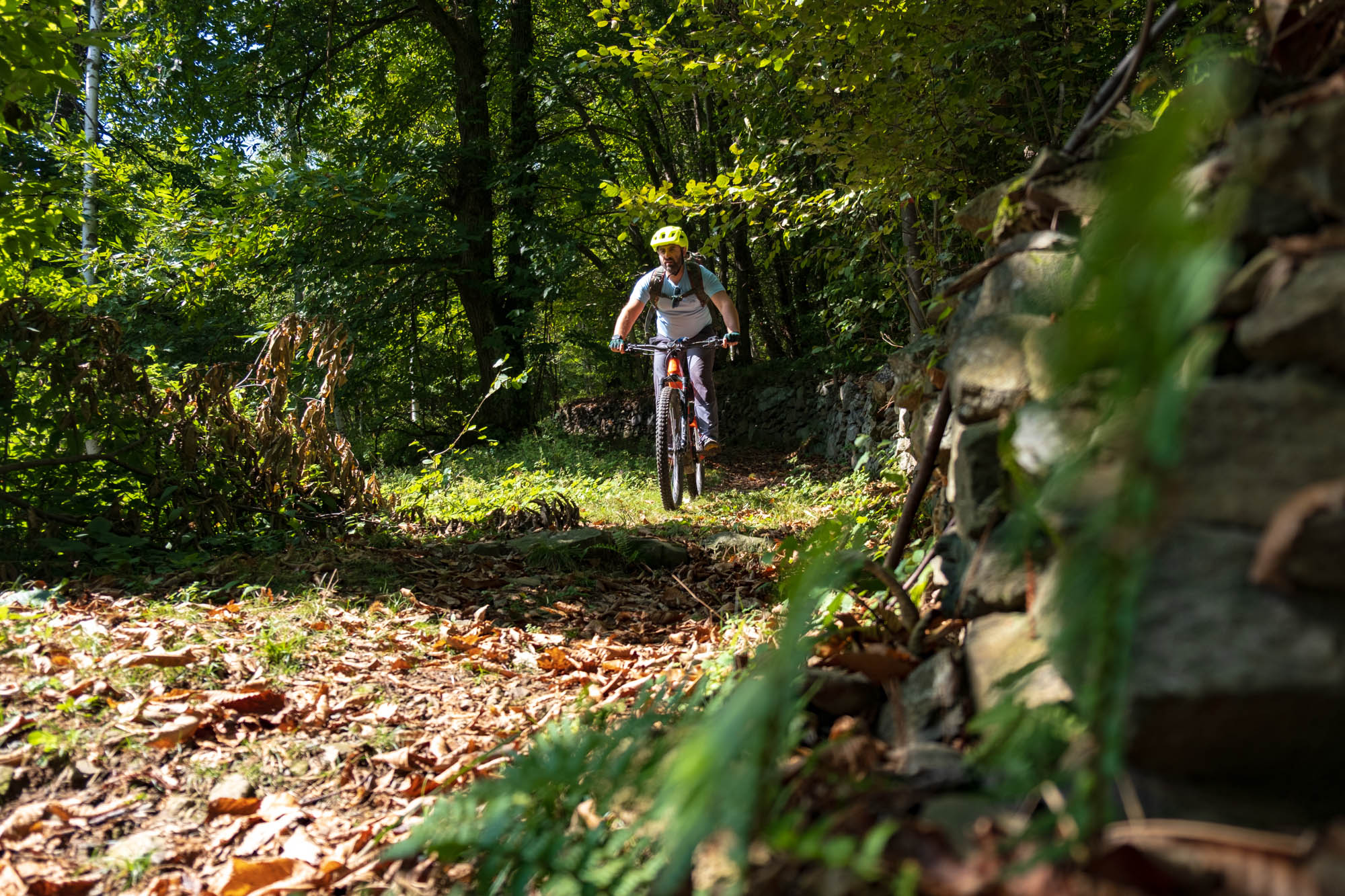
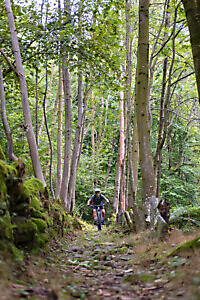
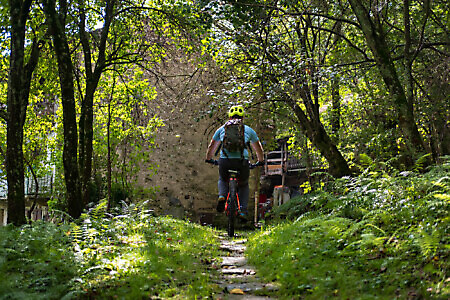
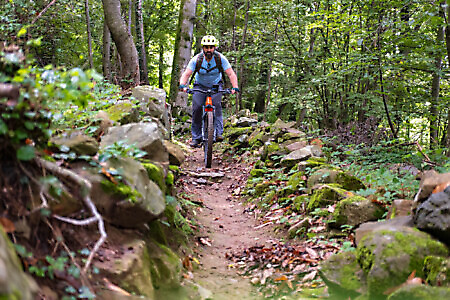
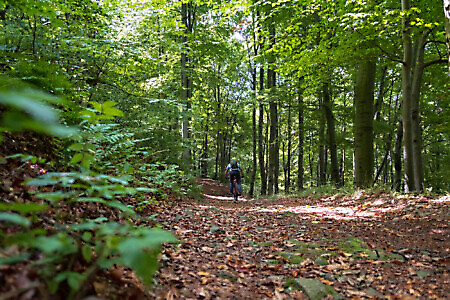
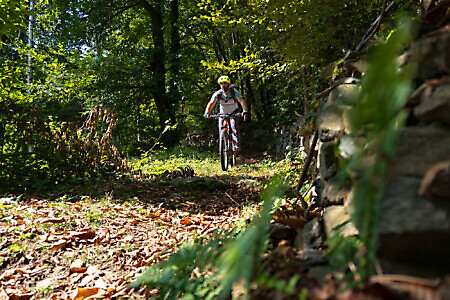
Through a small wood, pass Case Minan. A little beyond, at a switchback, leave the tarmac for a roughly level dirt track on the left. Before it ends at Case Colletto, take a mule track on the left that drops downhill. Take care not to build up too much speed here, as it narrows suddenly into a slightly technical section with a stepped climb at the bottom.
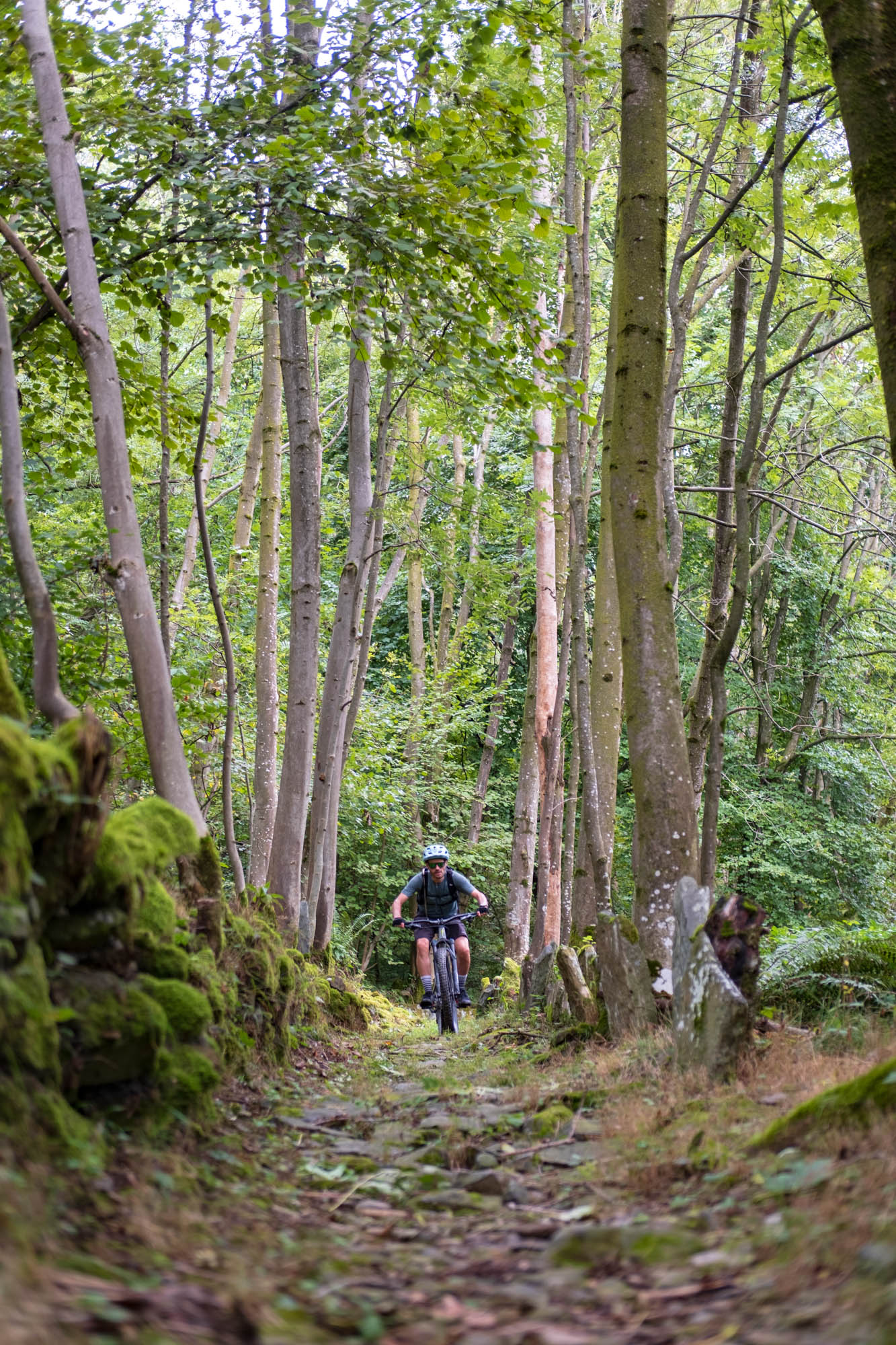
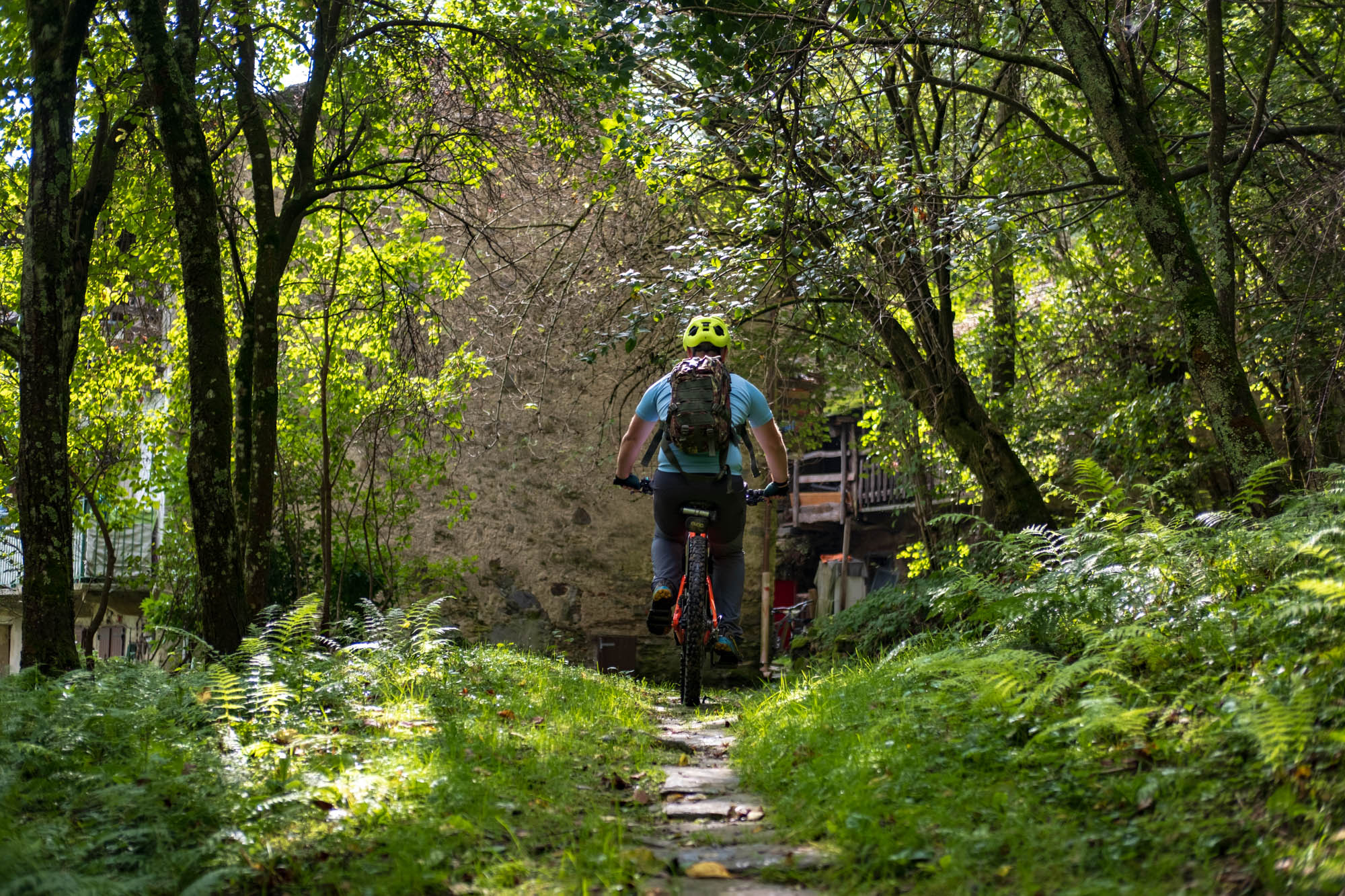
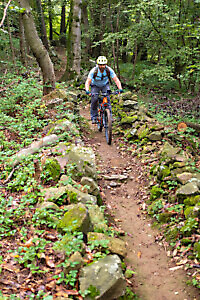
The trail continues with some technical sections. After four hundred metres, you’ll pass by a slate quarry, one of the sources of the flat stone slabs that give this route its name. It’s worth taking a short detour to get a closer look. The path then broadens into a forestry track. Almost right away, leave this to take a mule track on the right, which leads into a distinctive avenue lined with stone slabs set upright in the ground. At the end of this, steps will lead down into the hamlet of Case Macario, with a fountain slightly off to the left.
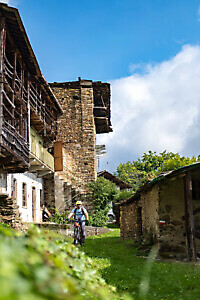
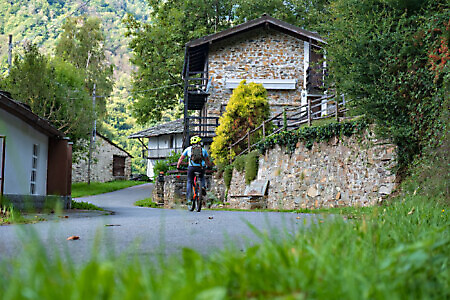
Navigate through the hamlet to reach the tarmacked access road. After approximately two hundred metres, turn onto the small road on your right. This road becomes a dirt track passing through the Case Dottora hamlet. Once back on tarmac, turn right and head uphill into the Case Bertino hamlet. At the next switchback, take the dirt track on your left, which soon narrows into a path leading above the Case Cota.
Stay high without dropping towards them and continue to a junction. Ignore the right turn (you will return this way) and keep left on a stretch shared with the return leg.
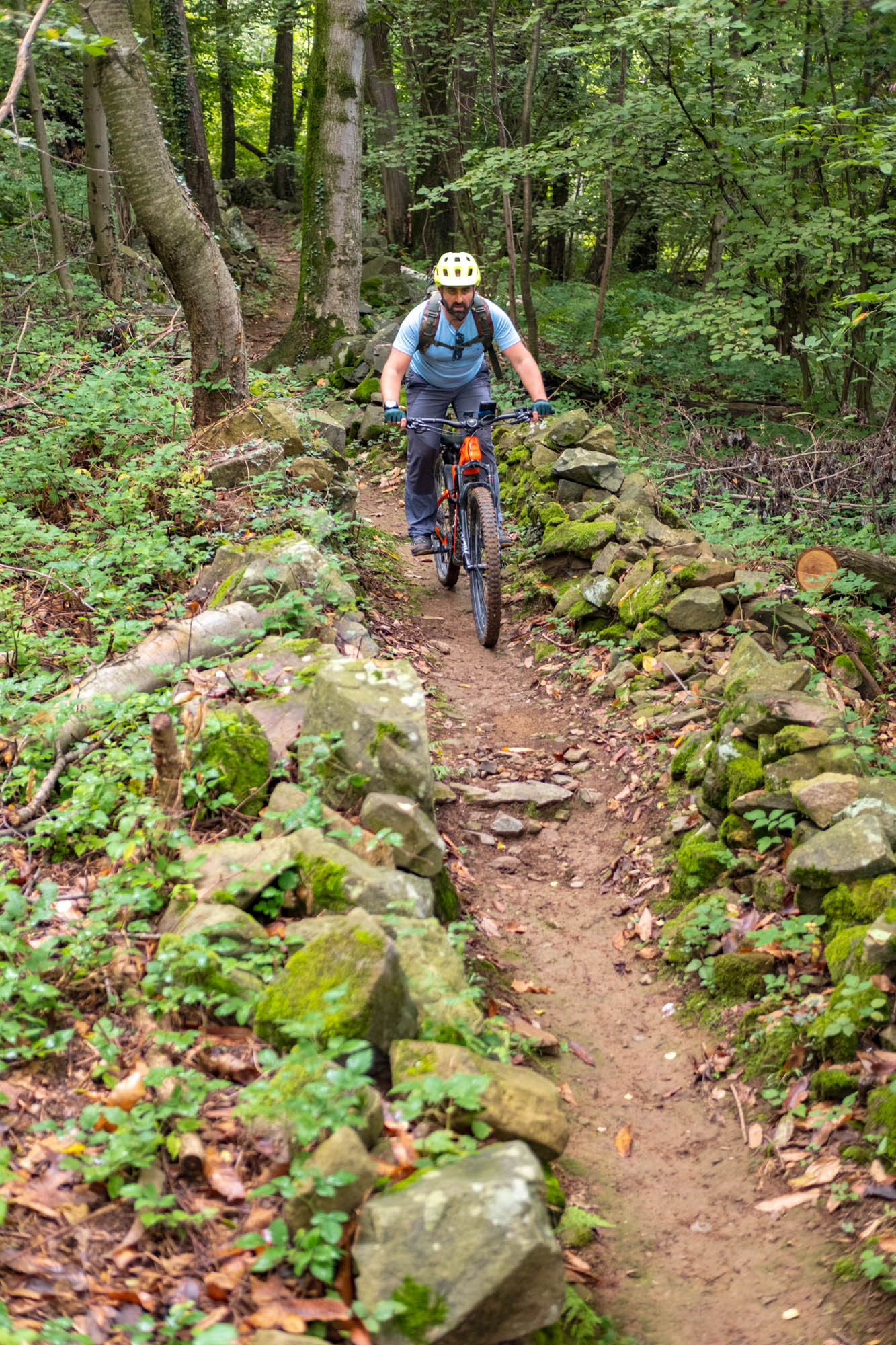
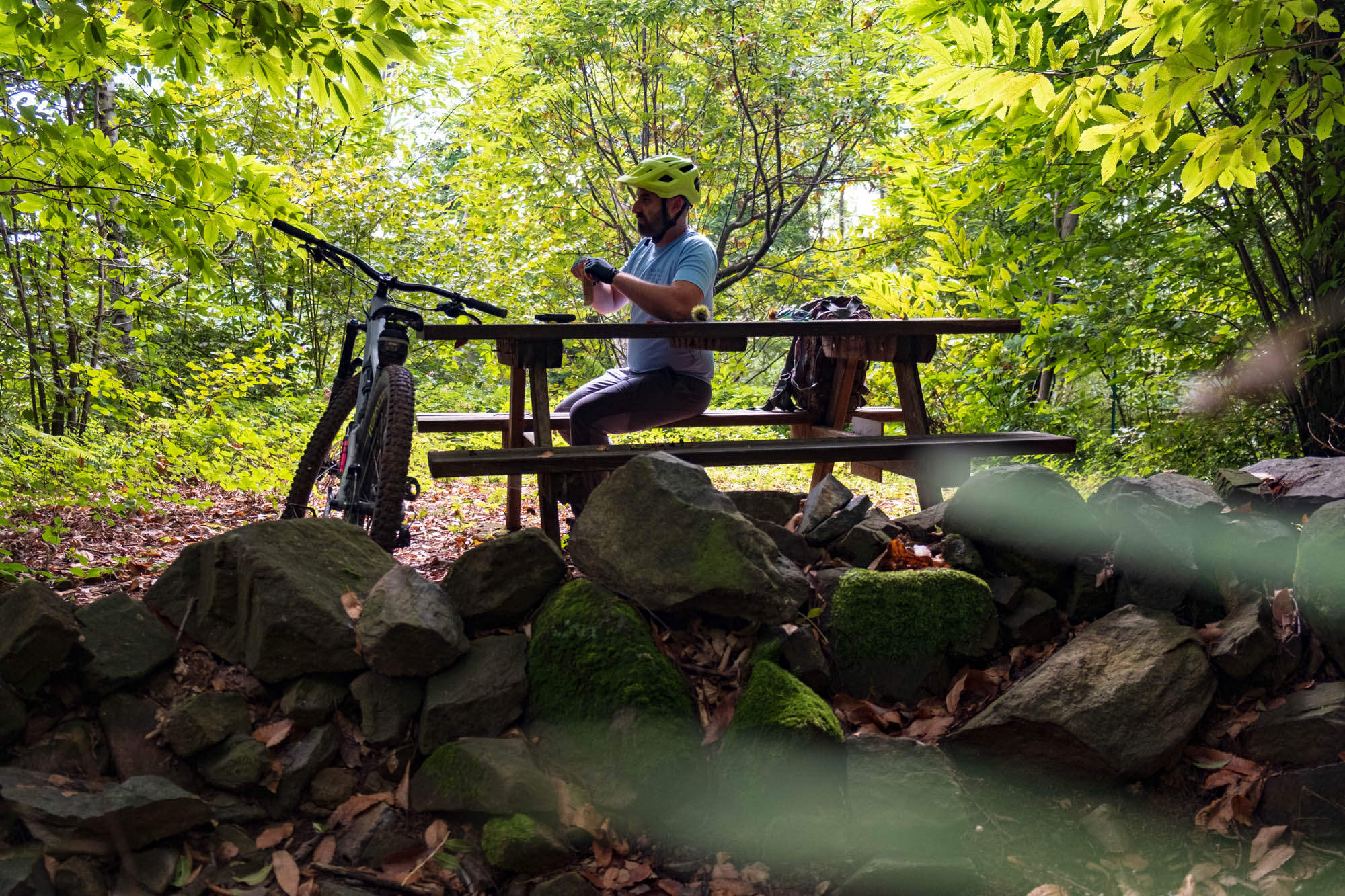
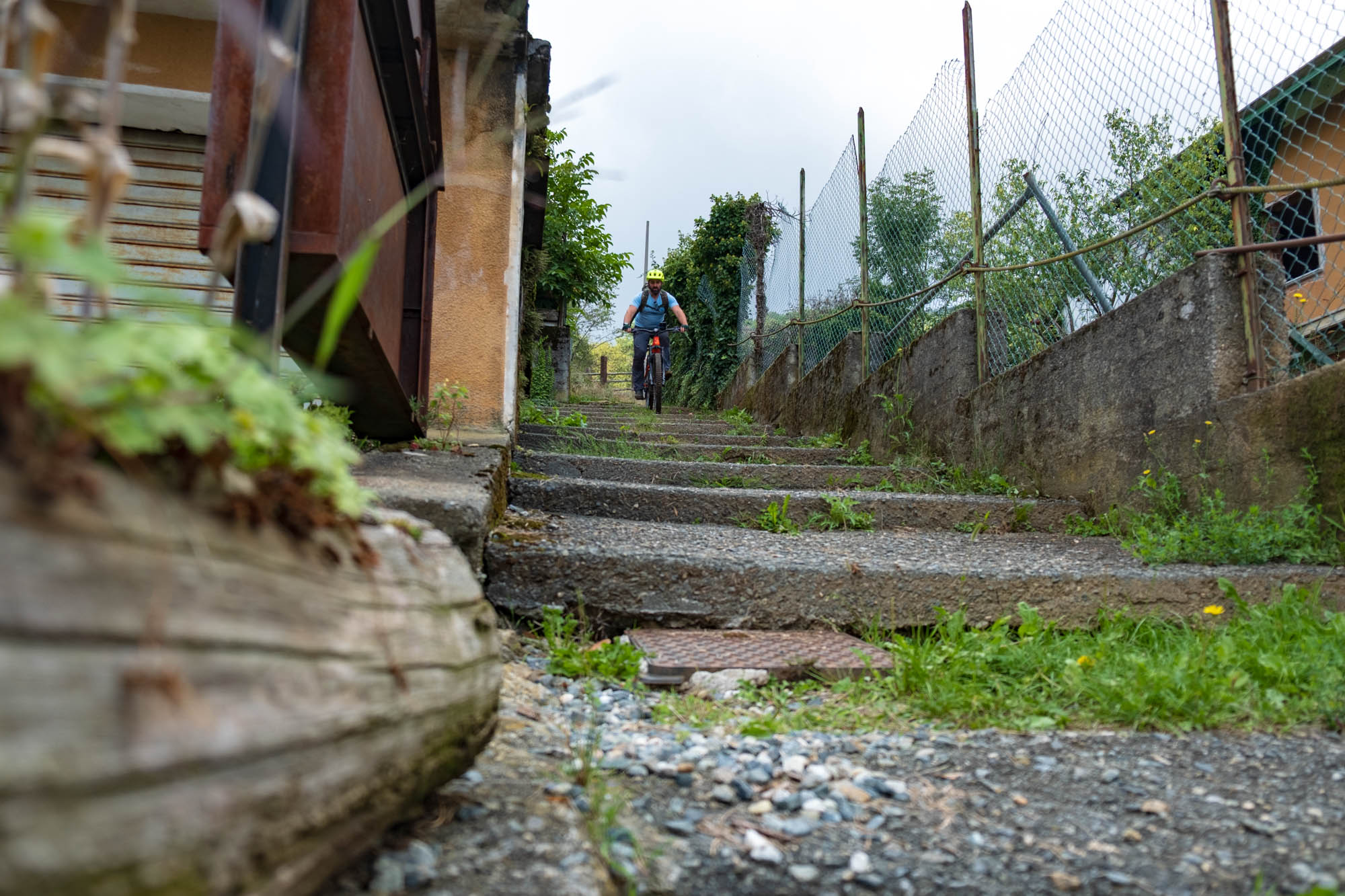
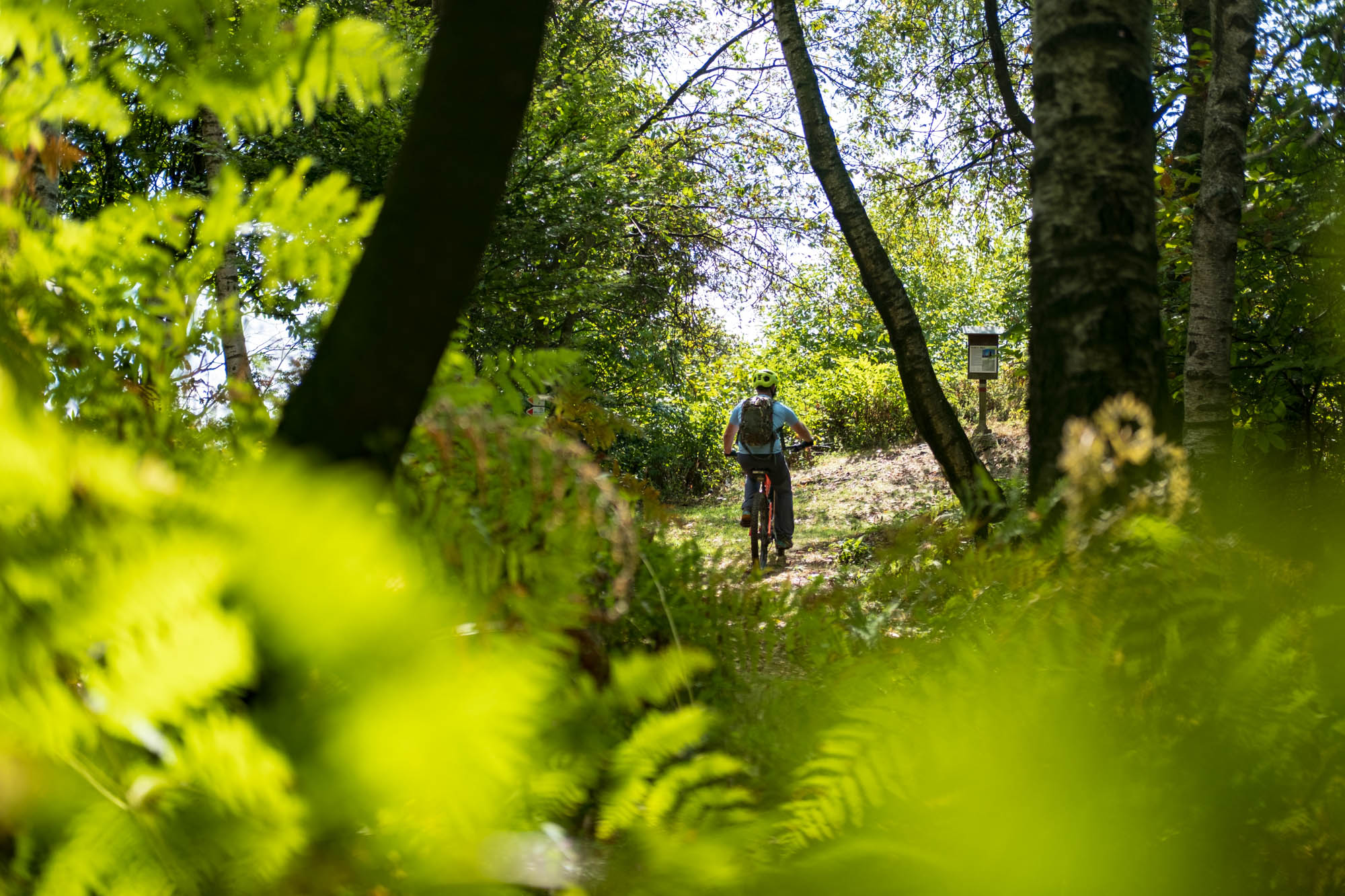
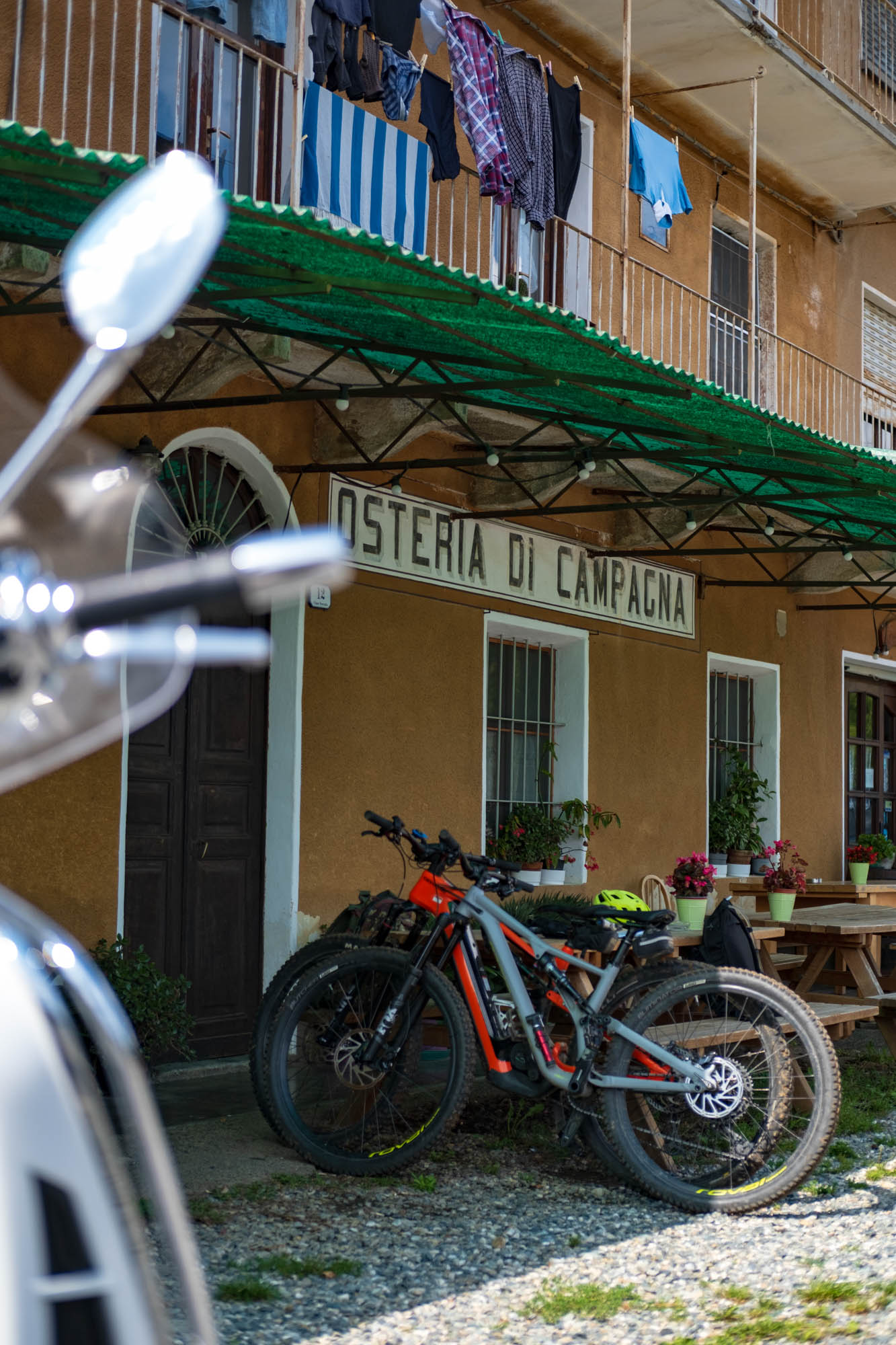
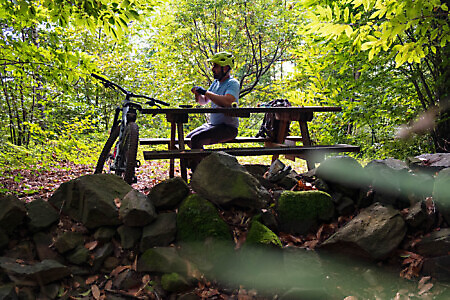
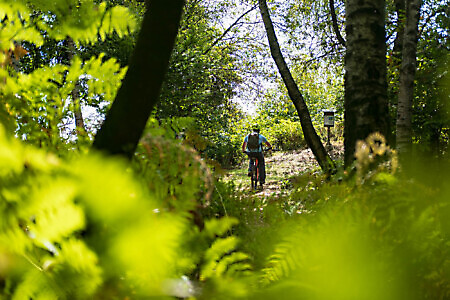
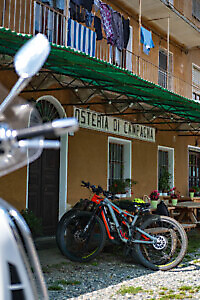
The trail winds between low, atmospheric dry-stone walls, passes a picnic table, and reaches Case Gallo, where it skirts a tarmacked road. Turn left for a few metres, then left again onto a dirt track that soon bends right and becomes a trail. In the final section, you’ll encounter natural steps, then cemented ones, that lead downhill to the tarmacked road at upper Cudine (watch for the water channel at the exit, 791 m). Here you’ll find the Osteria di Campagna, a handy spot for a break.
Nearby is the Balangero asbestos mine, the largest in Europe and one of the largest in the world, which was active until 1990.
Pass by the chapel dedicated to Saint Anthony of Padua, with its bell tower uniquely separated and positioned against another building. Then, see the former primary school built in 1973 to honour those who died in the Cudine massacre, a significant event in partisan resistance. Shortly afterwards, arrive at Colle Forcola (800 m), the dividing point into the Tesso Valley. Enter Coassolo Torinese and descend approximately 800 metres before turning onto a tarmacked ramp on your right.
Ignore all side paths and go through several clusters of houses to arrive at San Grato (858 m). After passing the chapel of the same name, the path gently descends to connect with a wider, paved road. Turn right on this road and head uphill to the Vietti hamlet (835 m), which is before the Chapel of the Holy Trinity.
Ignore the initial turn and ascend to the right between the houses. Then take the next turn, which after a few hundred metres, passes through Borlat (865 m) and reaches Saccona (900 m). This is where the steepest part of the route begins. Keep to the left side of the Chapel of the Holy Trinity.
The road becomes a dirt track with a slightly rough surface and climbs 300 metres at an average gradient of 12%. This is the hardest climb on the itinerary. After two and a half kilometres, you reach the route’s highest point (1,188 m), just below the Grange Prarosso. Without climbing towards them, continue straight ahead, descending into dense, wild woodland. Further down, you pass a few scattered stone huts.
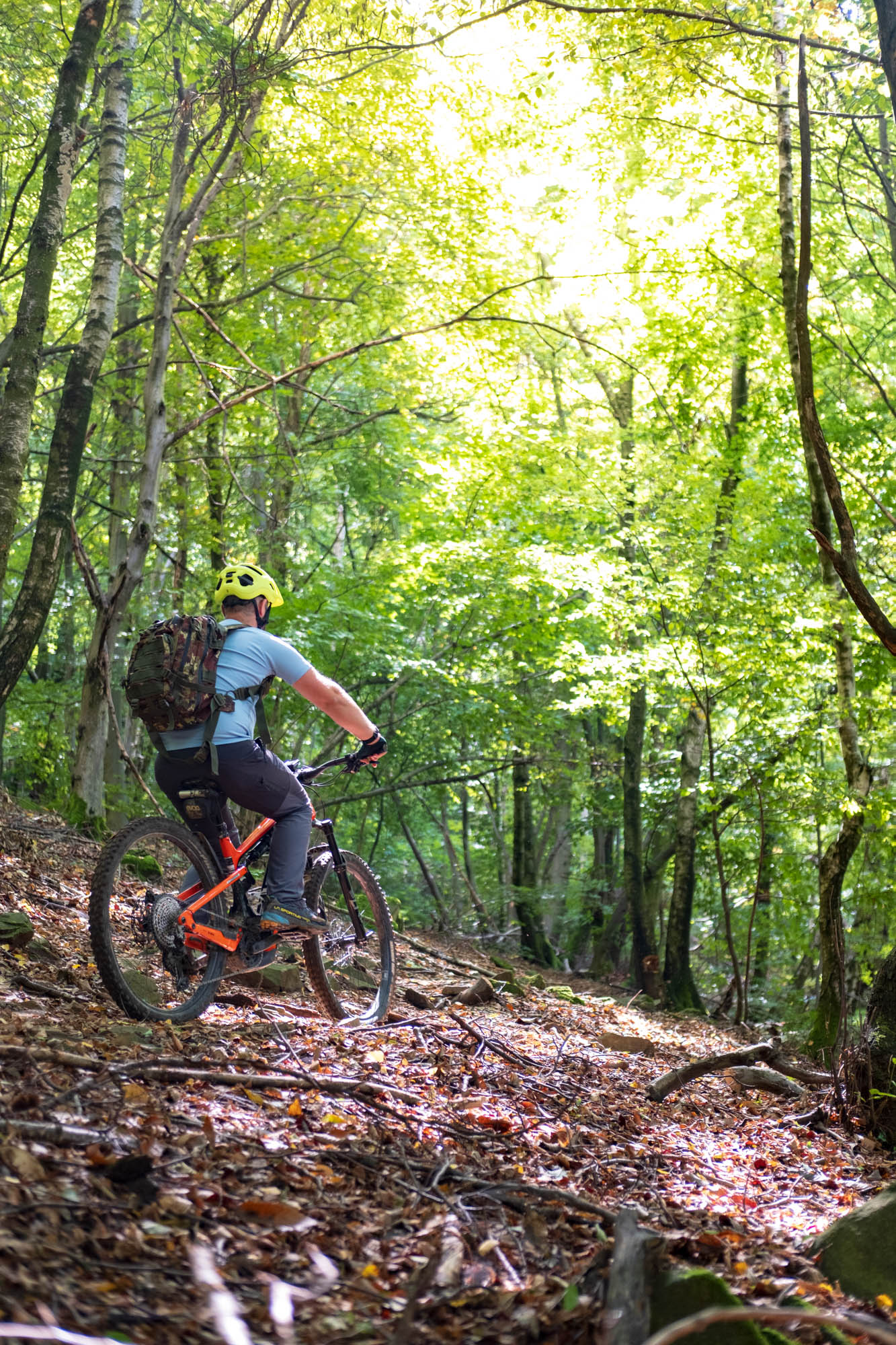
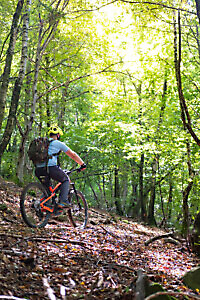
At 990 m, leave the main dirt track (which continues downhill towards San Grato) and take the track on the left through a beech wood. Ignore the first turning, then turn left again onto a very steep trail with roots and rocks, where you will need to push your bike. Back in the saddle, pass the Fontana Curnaa, usually dry.
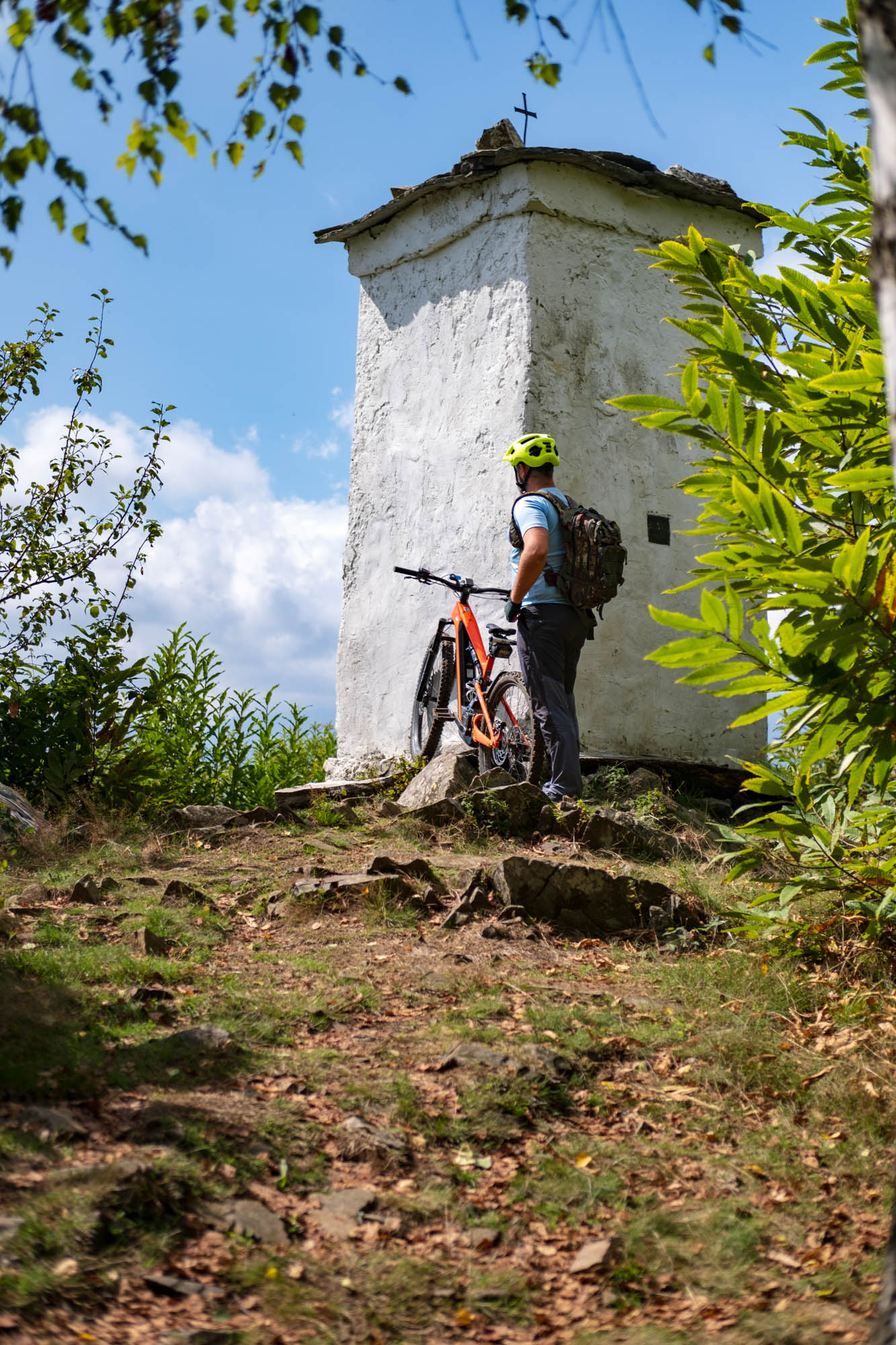
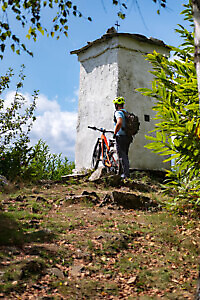
Continue, ignoring side trails, to join a wider forestry track with a loose surface. Turn left and climb the very steep ramp to a crossroads near the Pilone del Merlo (1,044 m). The spot is very scenic, though the vegetation partly blocks the view. In the background to the west, even the Uja di Ciamarella comes into view.
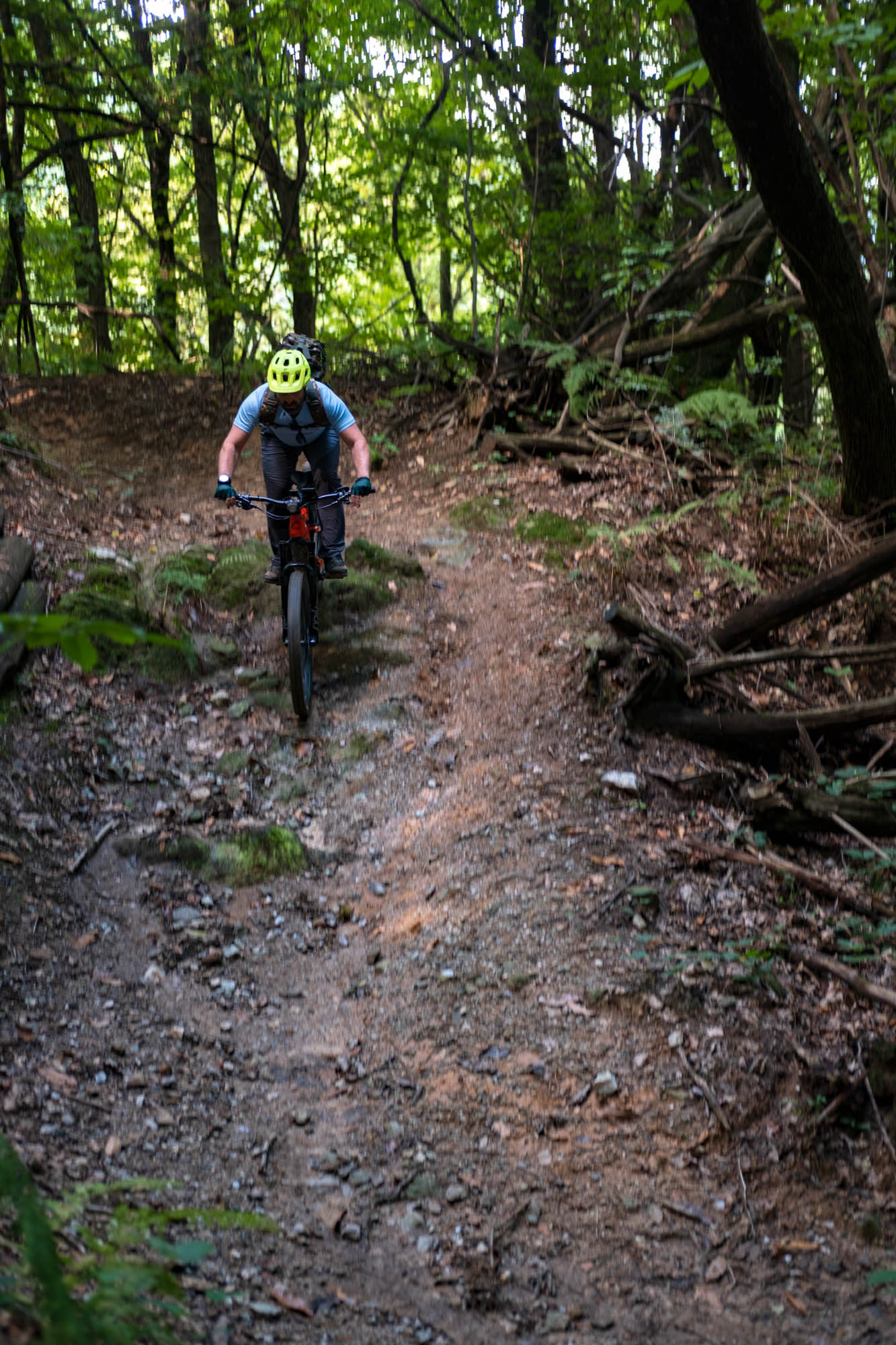
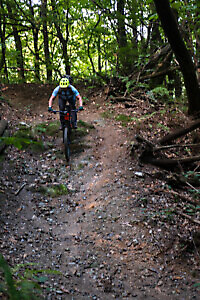
Take the trail heading downhill to the east, passing a group of ruins, then push your bike up a short but steep ramp. Following the waymarks, enjoy some fun technical singletrack before emerging onto a dirt track.
Follow the path downhill to Garigliet hamlet at 908 m, where you will encounter a tarmacked road (watch out for the chain). Turn left down the small access road, then take a shortcut on the right shortly after. Cross the tarmacked road again and find a trail on the other side that quickly leads back to the junction near Case Cota, which you passed on the way out. From there, follow the same section back to the right, heading up to upper Cudine.
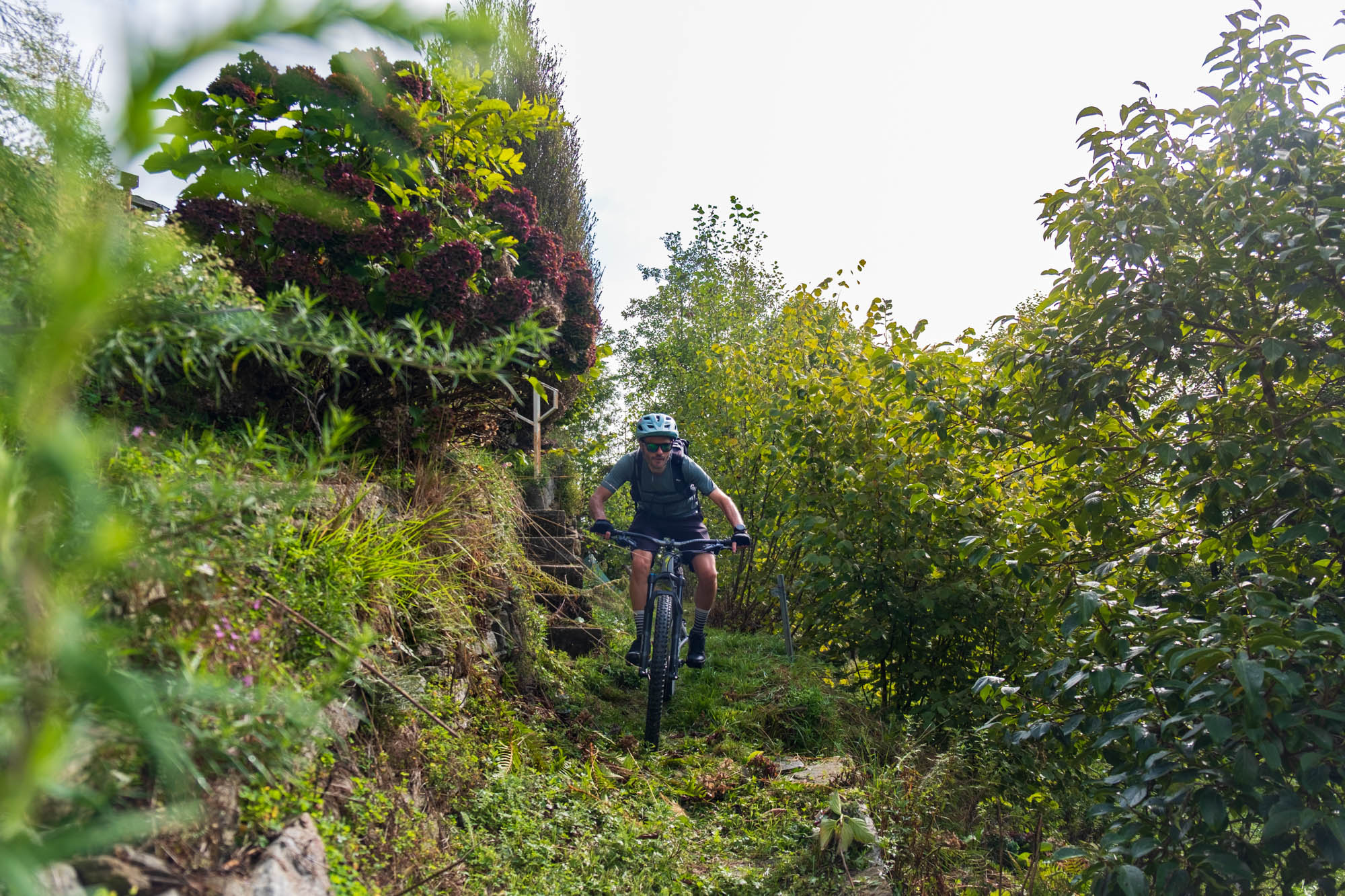
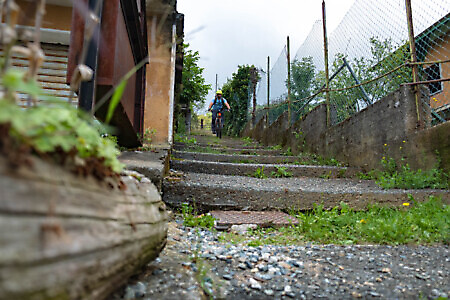
Between the bell tower and the Chapel of Saint Anthony of Padua, turn left onto a short, technical stone-stair shortcut. Skirt the tarmac and take another left onto a trail that drops down to Cudine (729 m).
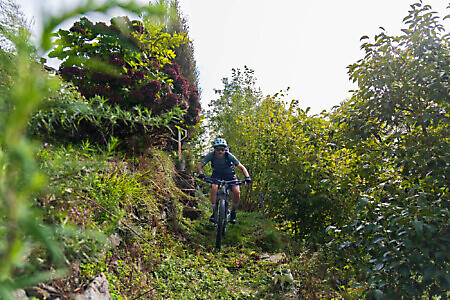
Before reaching the houses, take the small dirt road on the left. Shortly after, you reach a junction: keep left to begin a fun stretch of banked curves forming a kind of natural toboggan run. The route ends near the Chapel of the Sacred Heart. A steep flight of steps leads up to a tarmacked road, where the difficulties end.
All that remains is to follow it left, with several ups and downs and one last climb, and return to Corio near the roundabout and car park, where the route ends.
Text by Valerio Dutto of Cuneotrekking.comReport a problem
Did you encounter a problem on this itinerary? Let us know and help us keep all routes safe and accessible for everyone.
Submit report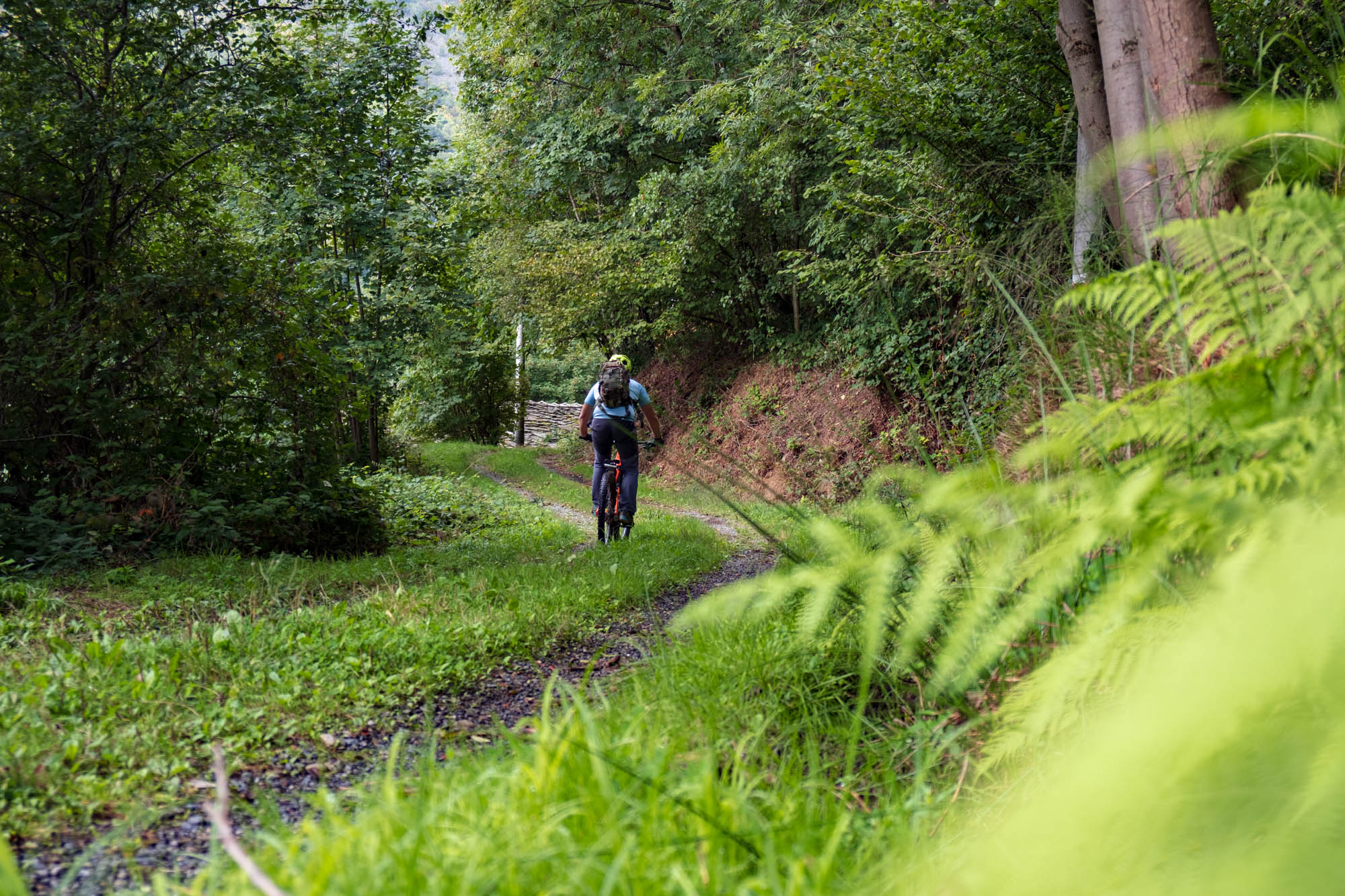
Nearby
Bune Pere Route
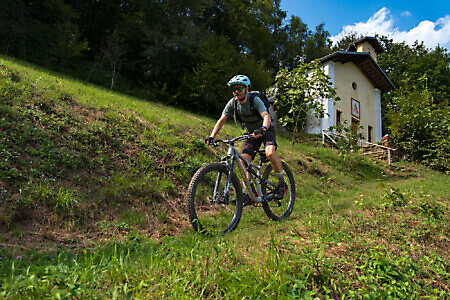
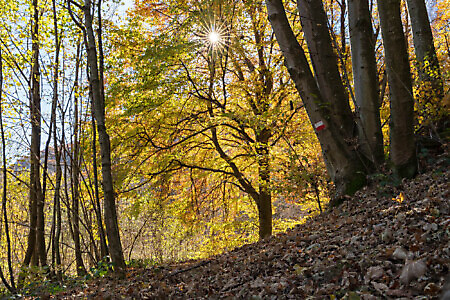
CorioA woodland itinerary on the slopes of Bric Castello di Corio leads to the discovery of the slate quarries where flat stone slabs were extracted for use on roofs, steps, and balconies. These are important sites in local history, particularly from the second half of the 19th century to the…
Chapel of the Holy Cross
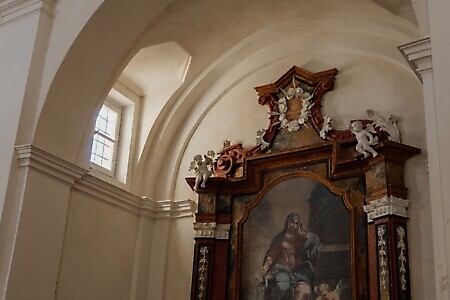
Piazza della Chiesa, 4 (Corio)The building is open on three sides, with the north side adjacent to a private residence. Its façade faces northeast....
Church of San Genesio Martire
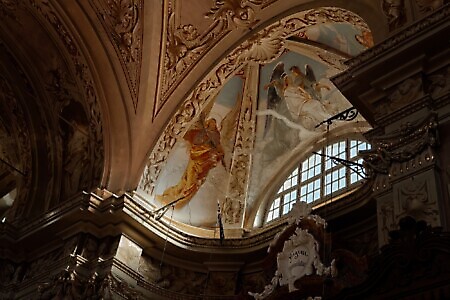
Piazza della Chiesa 2 (Corio)The church features a rectangular single nave divided into three bays with groined barrel vaults, ending in a semicircular apse...