
Overview
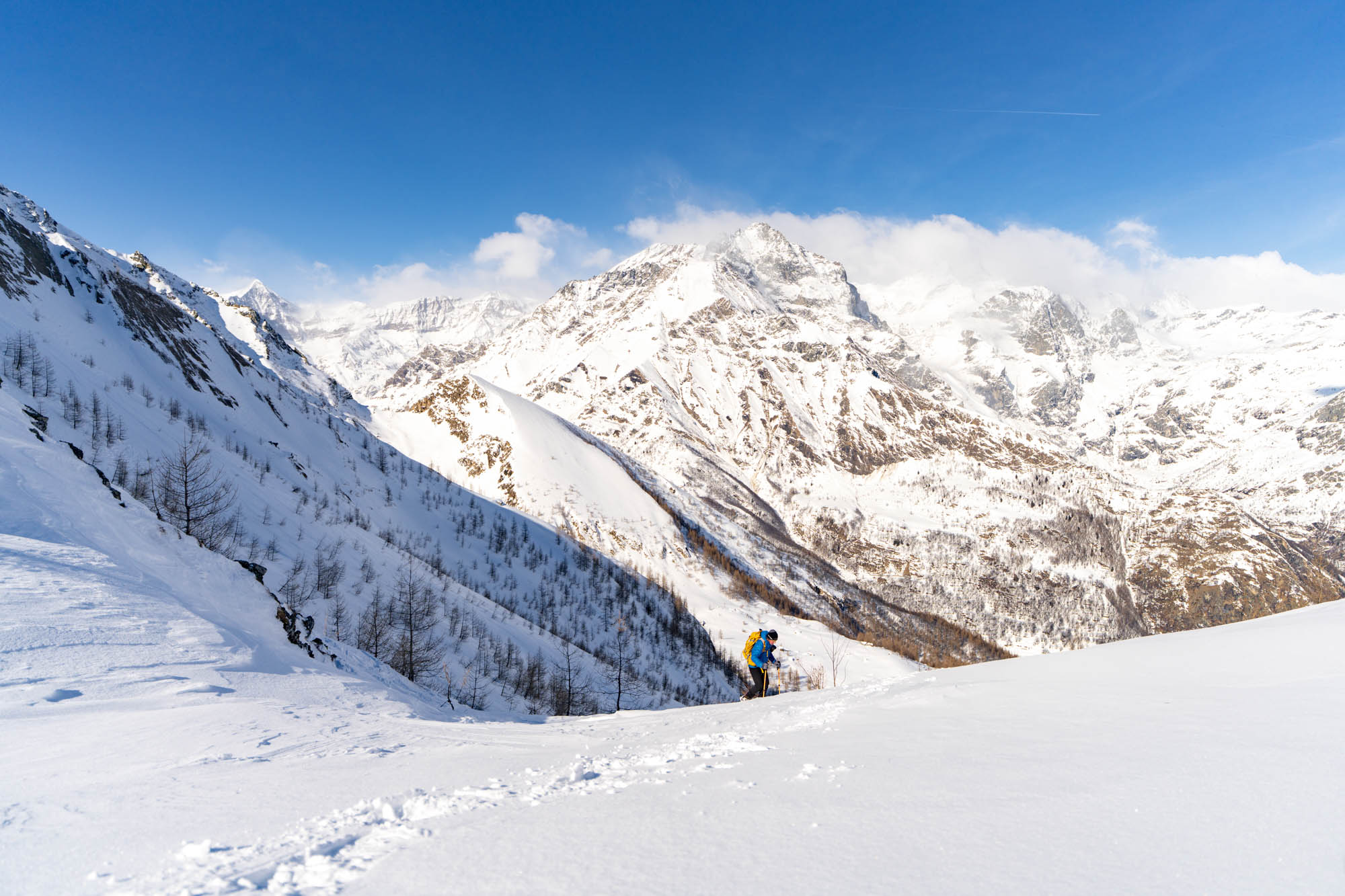
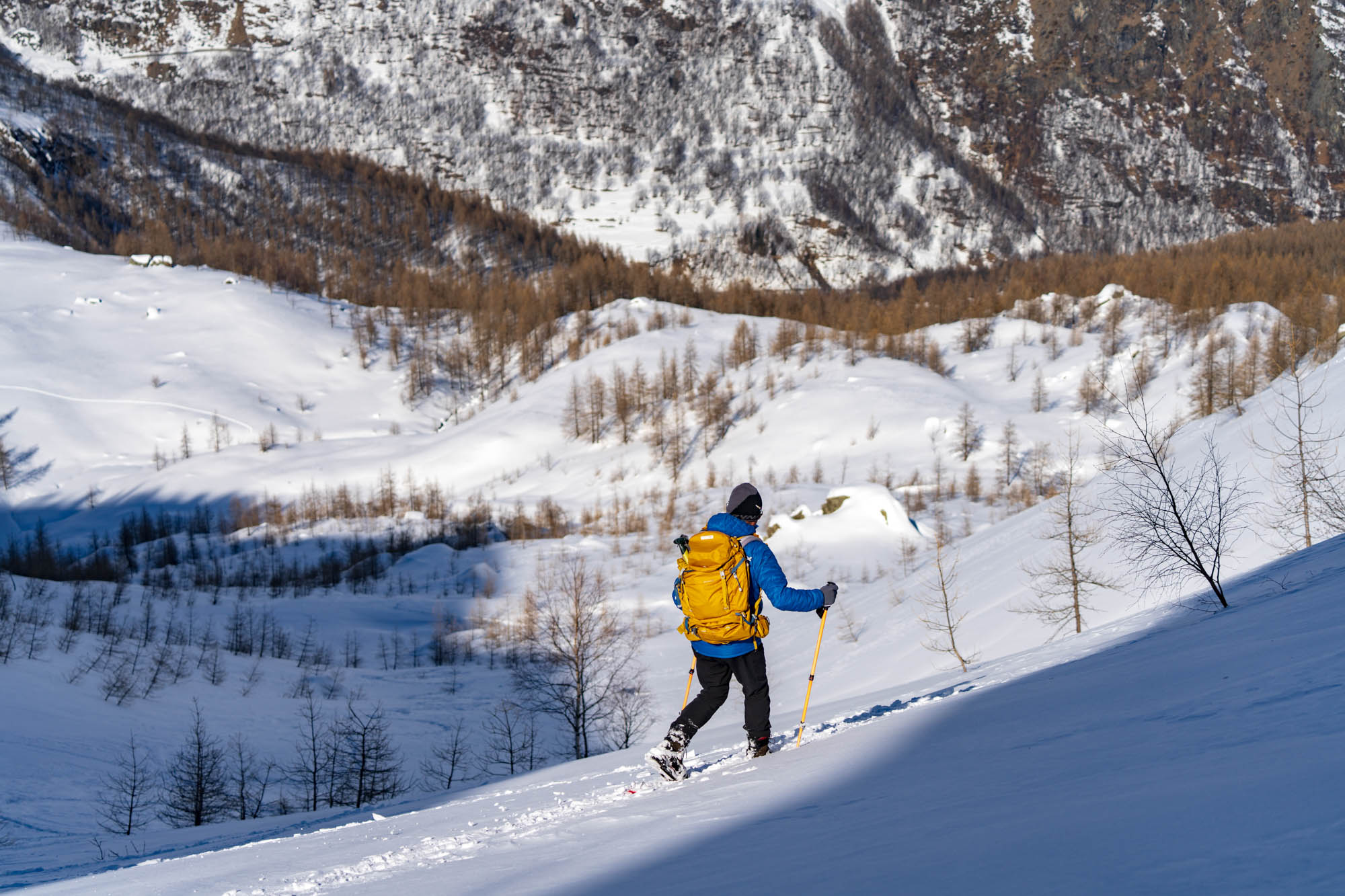
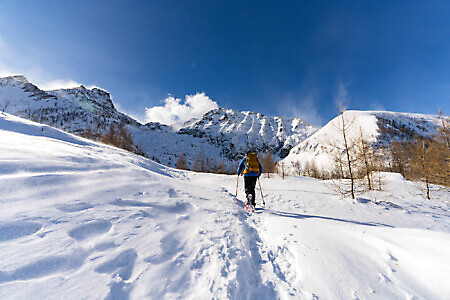
Lusera Pass is located between Monte Crestas and the rugged Lusera peak, whose name recalls the ancient “losere” of the area — the quarries from which stone slabs were extracted for roofing, steps, and balconies. The route to reach it begins in the hamlet of Perinera and winds through a scenic larch forest. Upon reaching Pian Lunella, a vast and panoramic plateau, the path continues by ascending a steep small valley, a section recommended only when the snowpack is well consolidated. An enjoyable winter route suitable both for ski mountaineers and for snowshoers.
Starting point
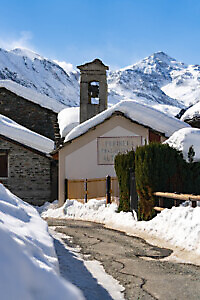
DirectionsCross the large hamlet of Perinera (1,422 m, with several fountains), passing the 17th-century chapel of San Michele and the communal oven. From here, two options are available: follow the trail marker for Pian Lunella on the opposite side of the road, or take via Barmasse to the left and, at its end, turn right past a small chalet to intercept shortly above a snow-covered track that curves in a semicircle to the right.
The two routes reunite slightly higher on a slope dotted with a few ash trees. Looking north, excellent views open up over the rooftops of Perinera, framed by notable mountains: Monte Lera, the rocky spur of Punta Corna, and Torre d’Ovarda.
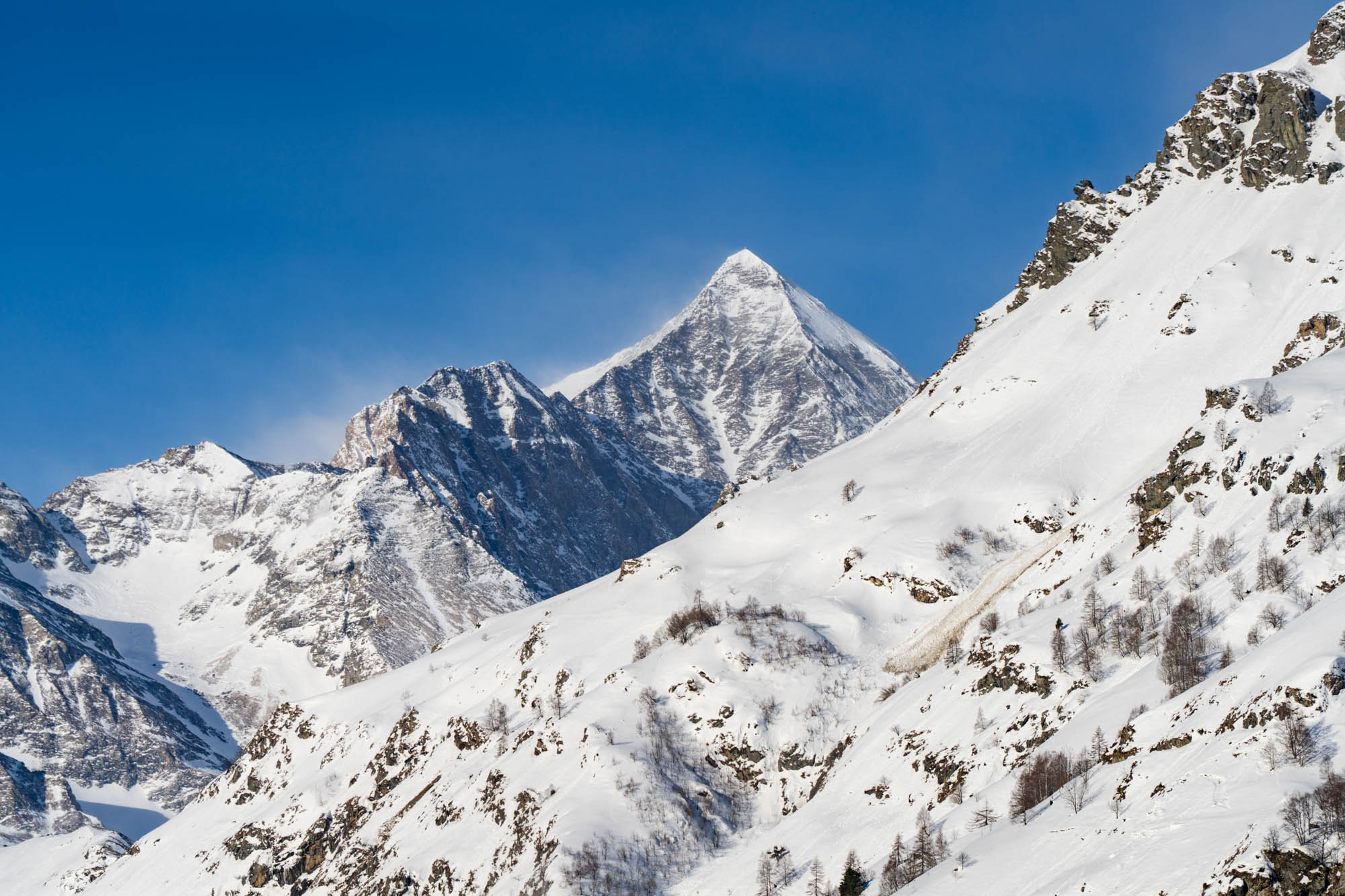
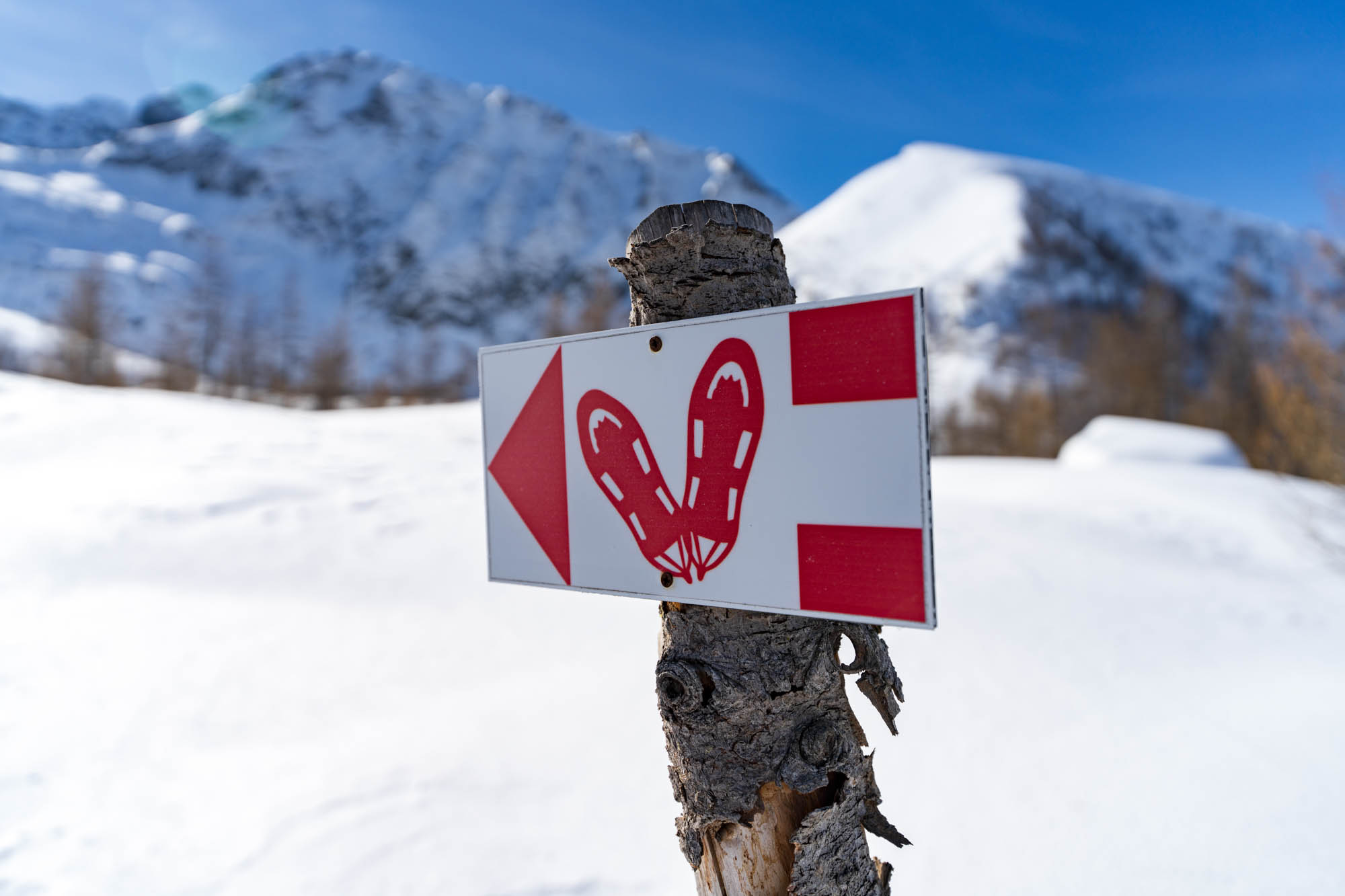
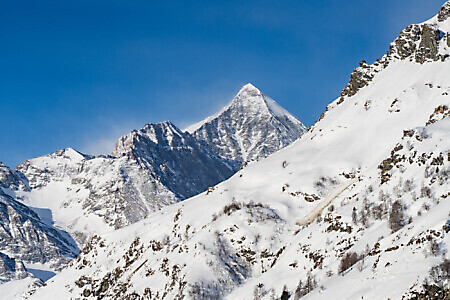
Continuing along the summer mule track, well marked with white-and-red blazes on the trees, the path enters an ash forest, passing an isolated hut. At a junction near a second hut, keep to the left. Rising up, the elegant pyramid of Rocciamelone comes into view to the east.
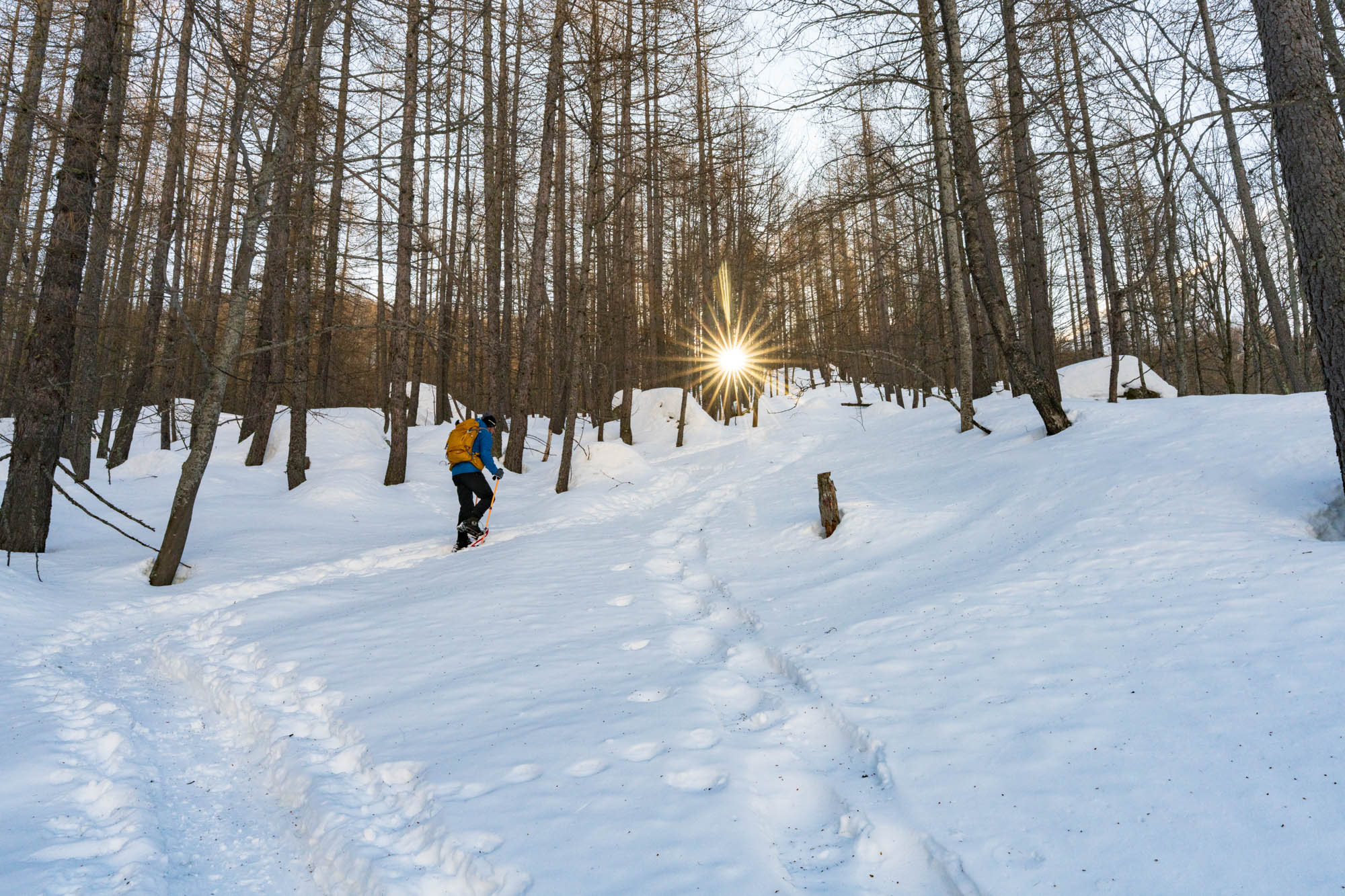
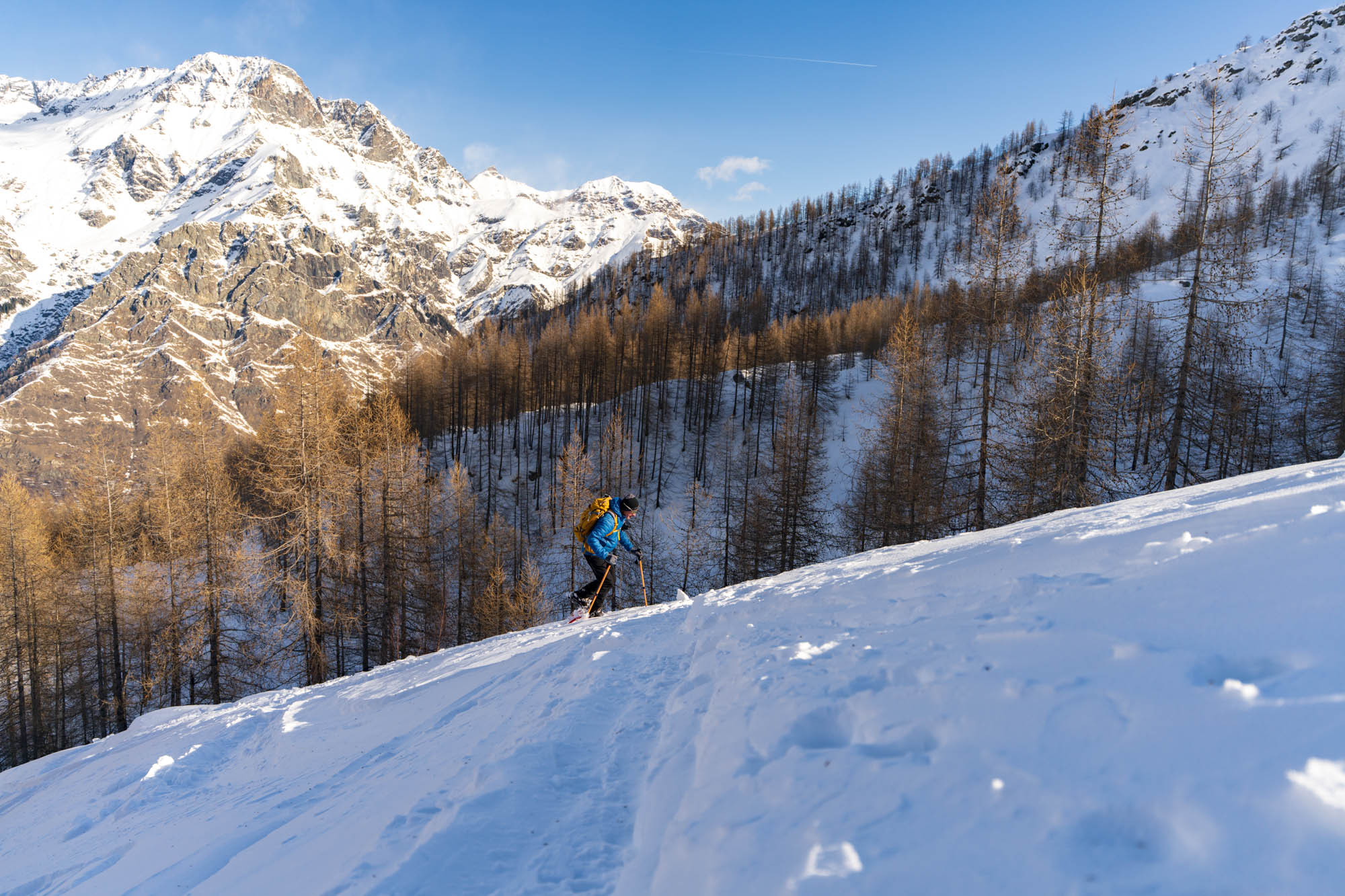
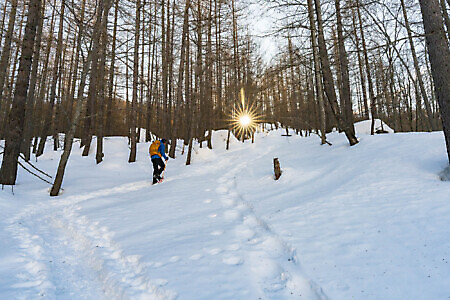
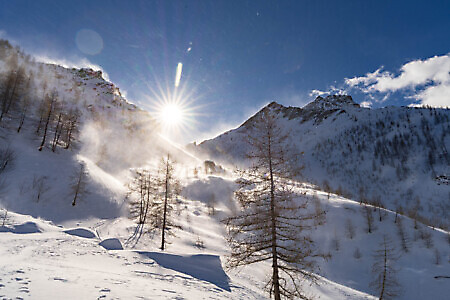
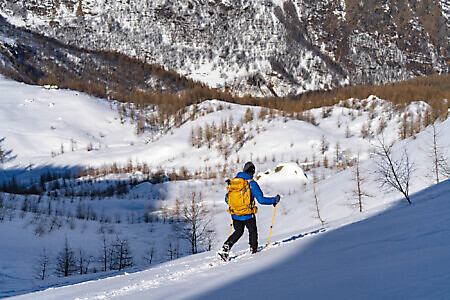
The route then crosses the huts of the Alpe Puntaset (1,550 m) and shortly above intercepts a snow-covered track that must be crossed. Returning into the forest—first among larches and beeches, then only larches—the ascent continues, never too steep, with excellent views of Rocciamelone, which gradually disappears from view higher up. Behind, other peaks progressively appear, including Punta Fortino, Bessanese, Punta d’Arnas, and Croce Rossa.
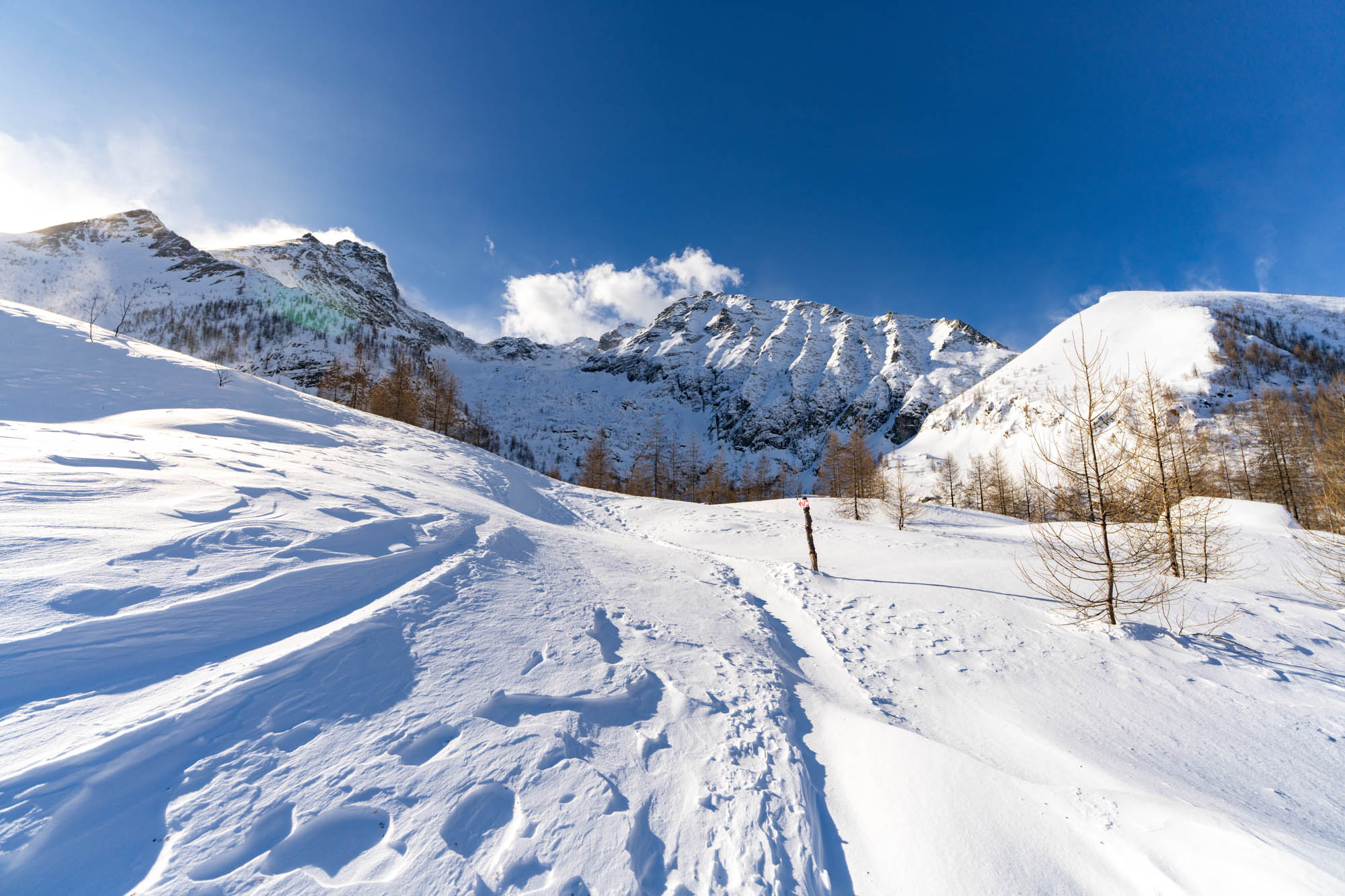
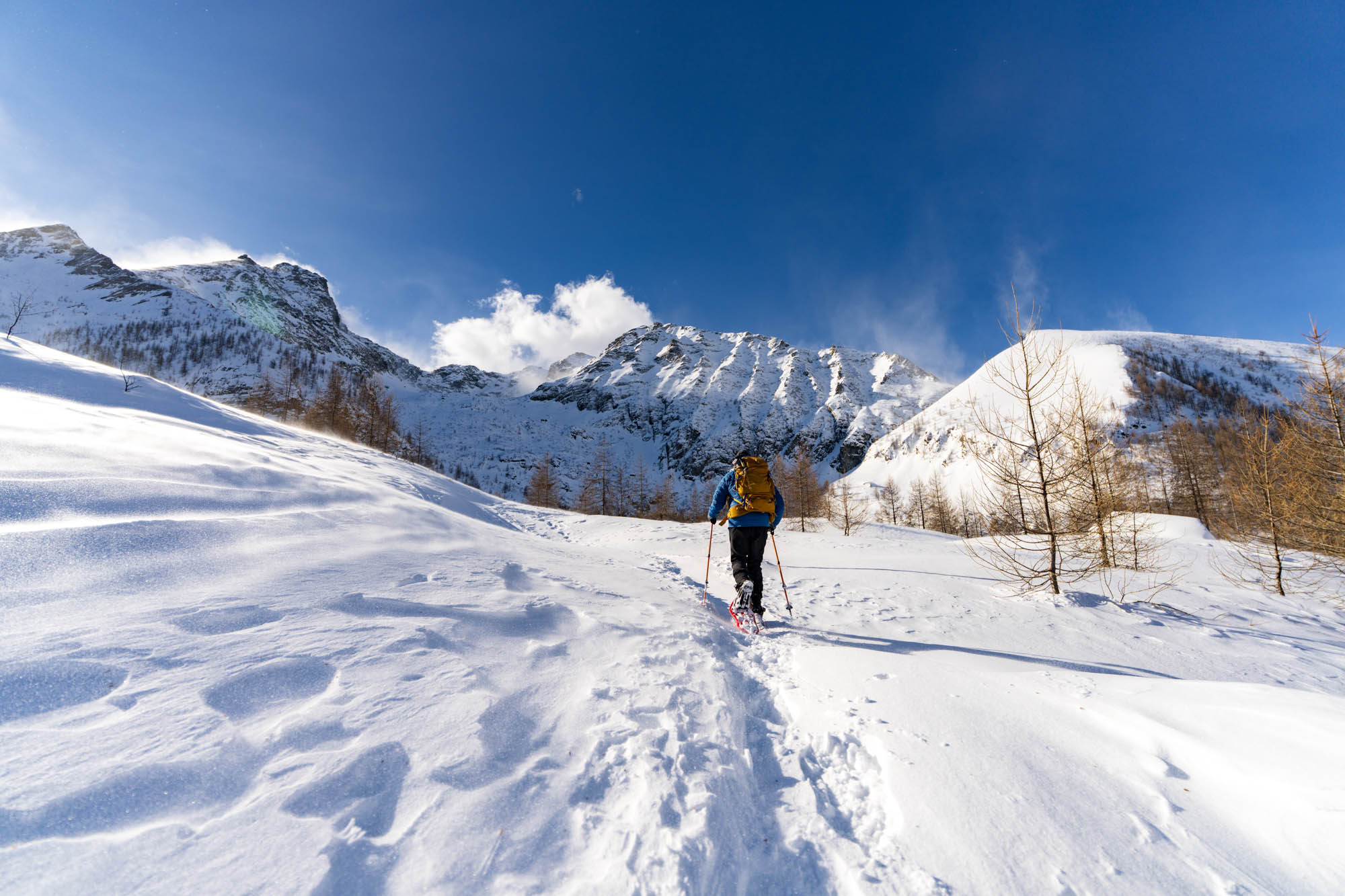
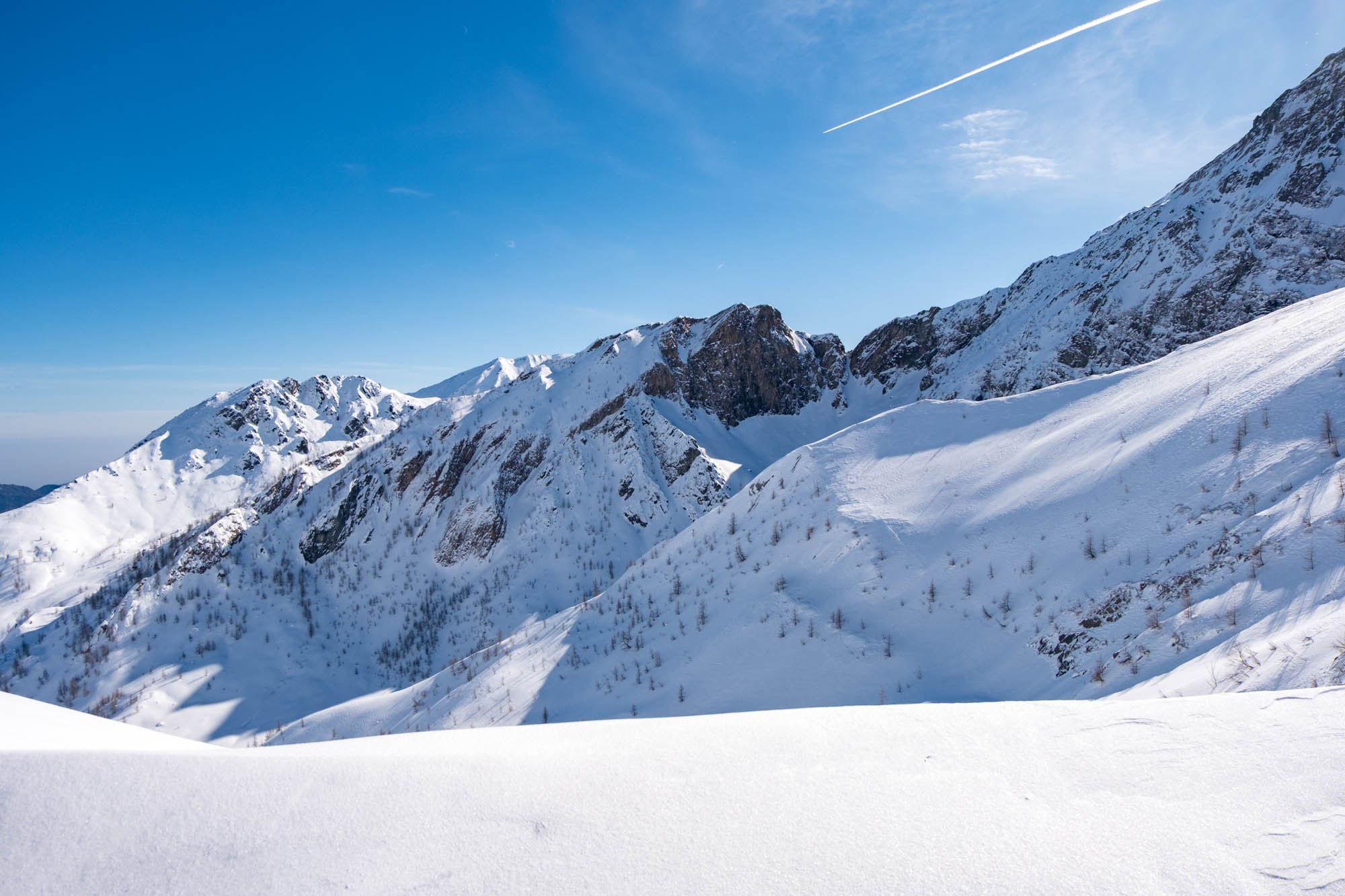
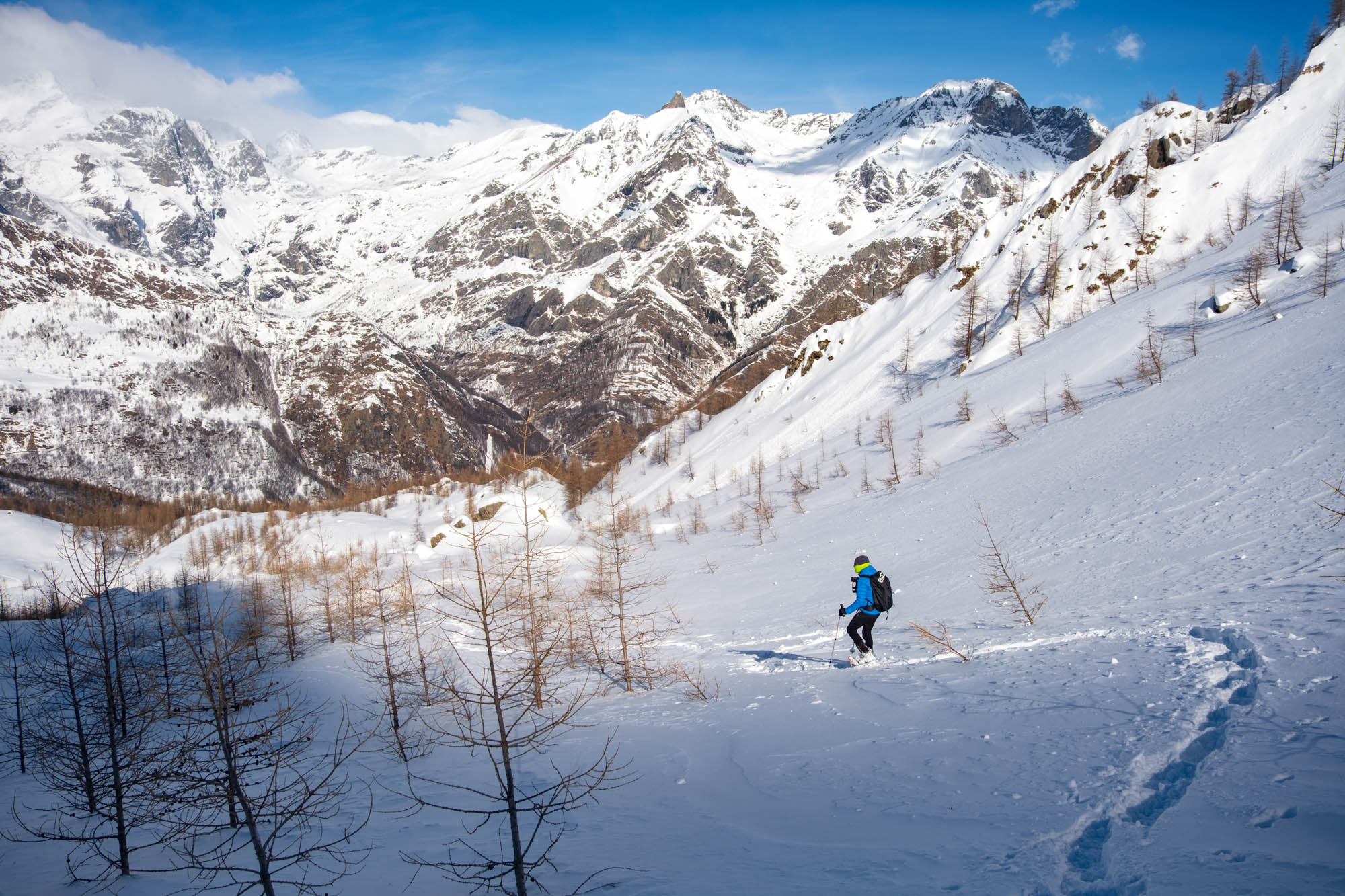
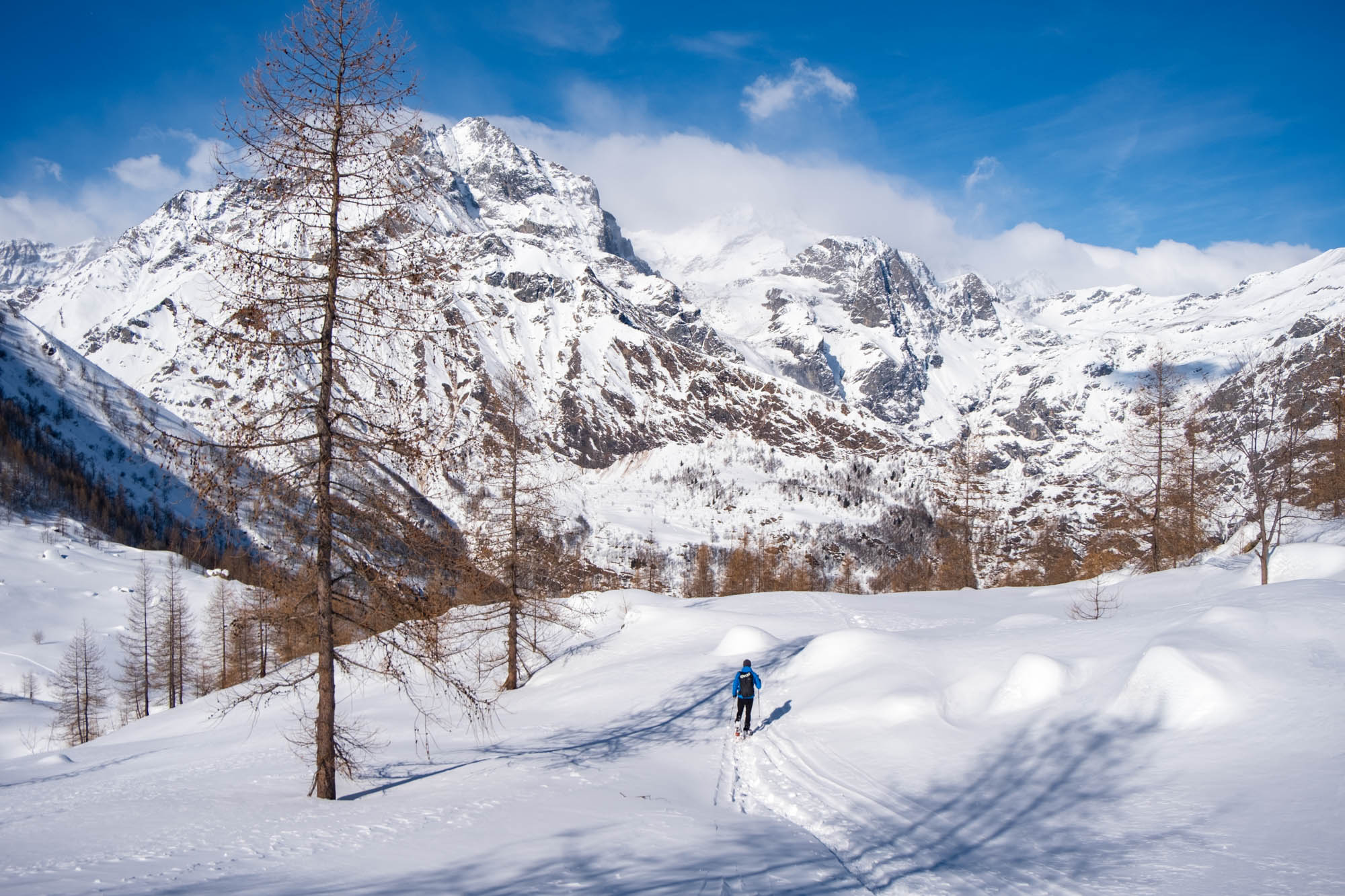
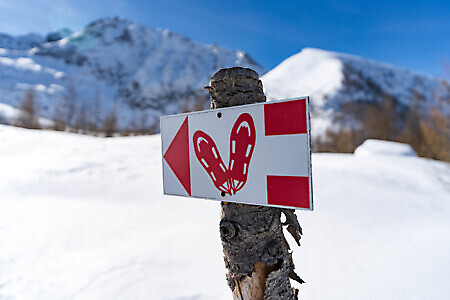
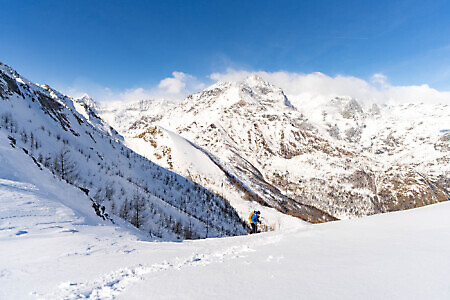
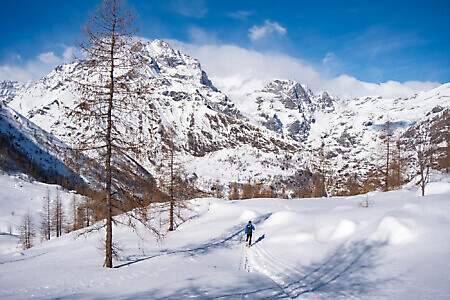
The mule track, also marked with signs for snowshoers, passes through some clearings and, with a short steep section, reaches the entrance to Pian Lunella (1,864 m), a wide and striking plateau suspended at the foot of Truc Panè (commonly called “Panettone”), Punta Lunella, Cima Lusera, and Monte Crestas.
In this area there were several quarries for extracting “lose”. The work, extremely demanding, was carried out almost entirely by hand: slabs were transported downhill on sledges and, once unloaded, carried back up to the quarries on the shoulders. Only in the last years was a cableway installed.
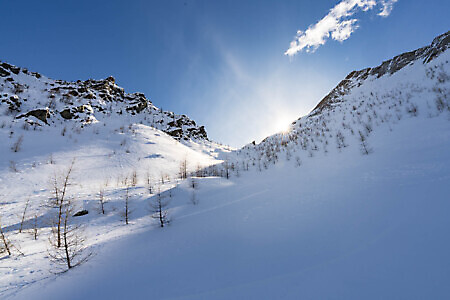
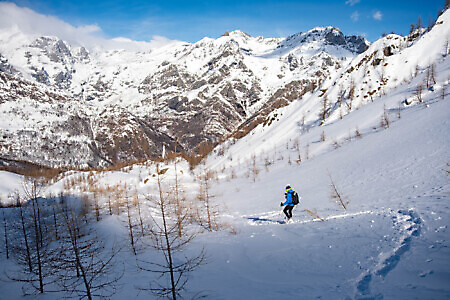
From the plateau, the valley divides into three branches: the route climbs the branch heading southeast, easily recognizable by the sharp rocky spur near the pass.
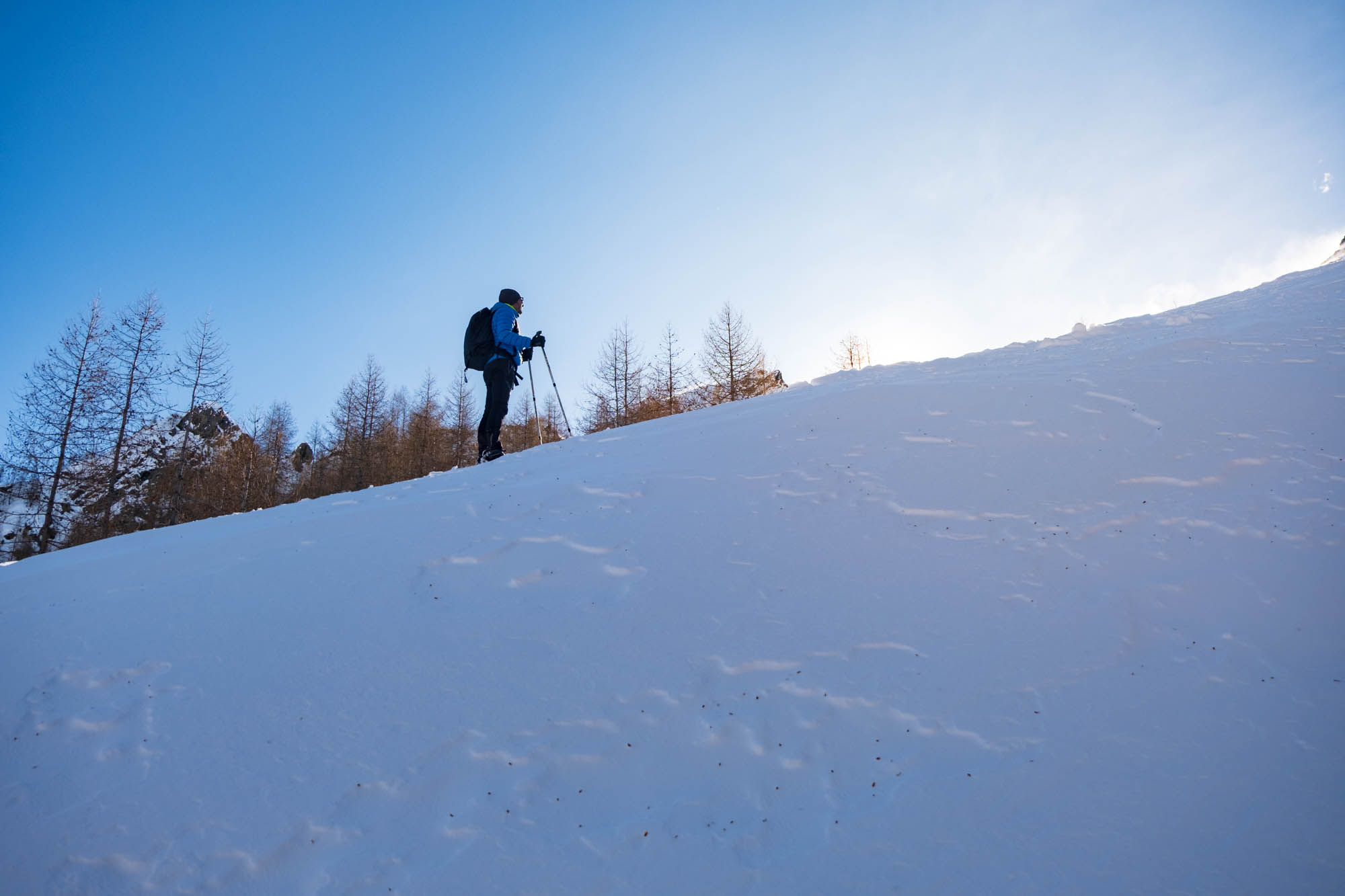
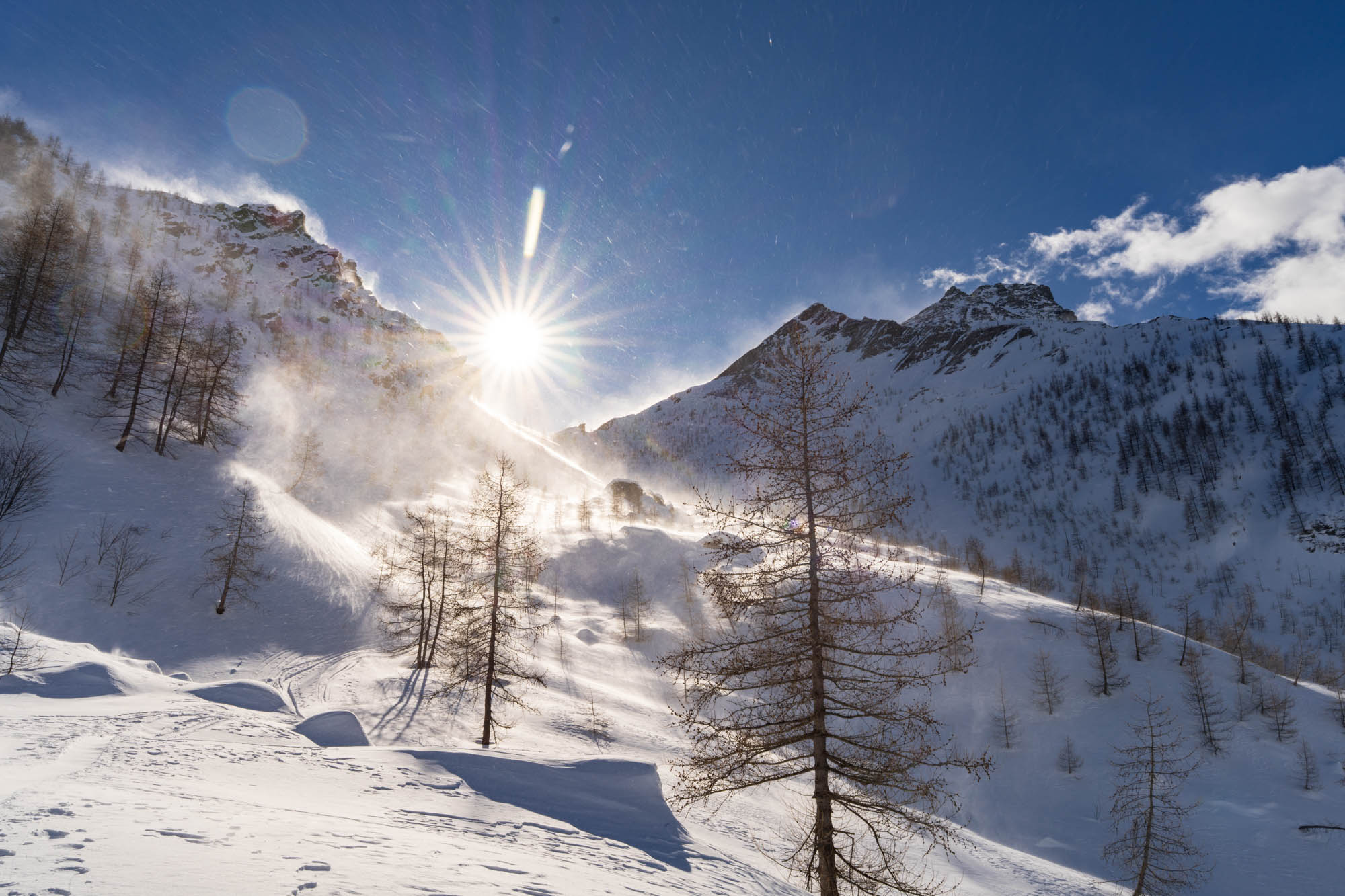
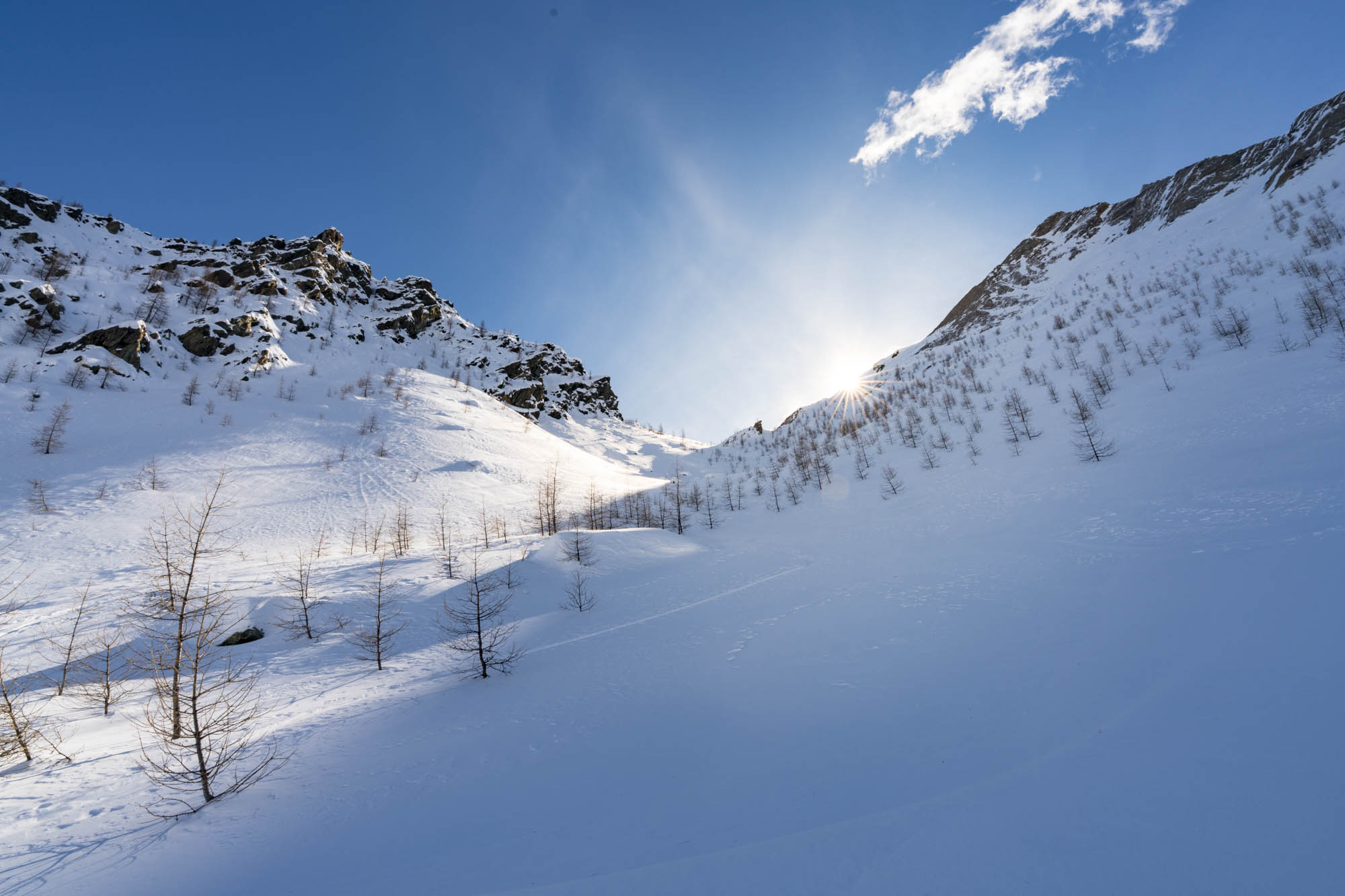
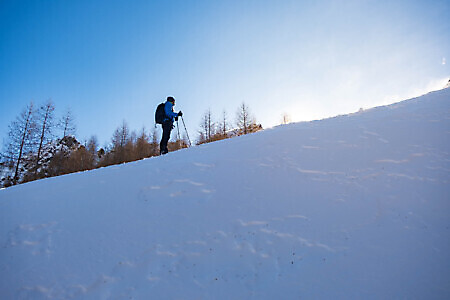
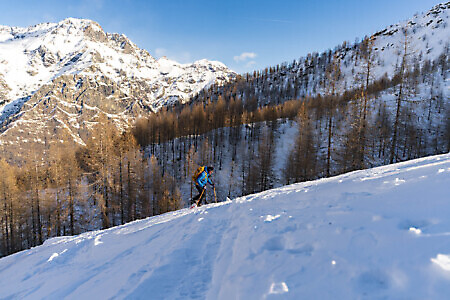
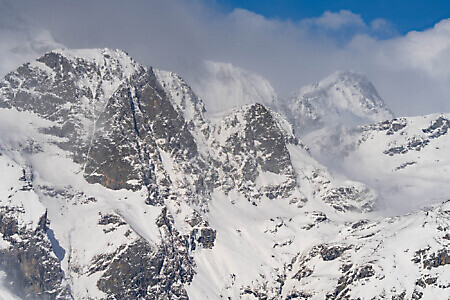
As the ascent continues, the larches become sparser and the small valley steepens. This section, located between the steep slopes of Monte Crestas (to the left) and Punta Lusera (to the right), is avalanche-prone and should only be attempted on well-consolidated or already settled snow.
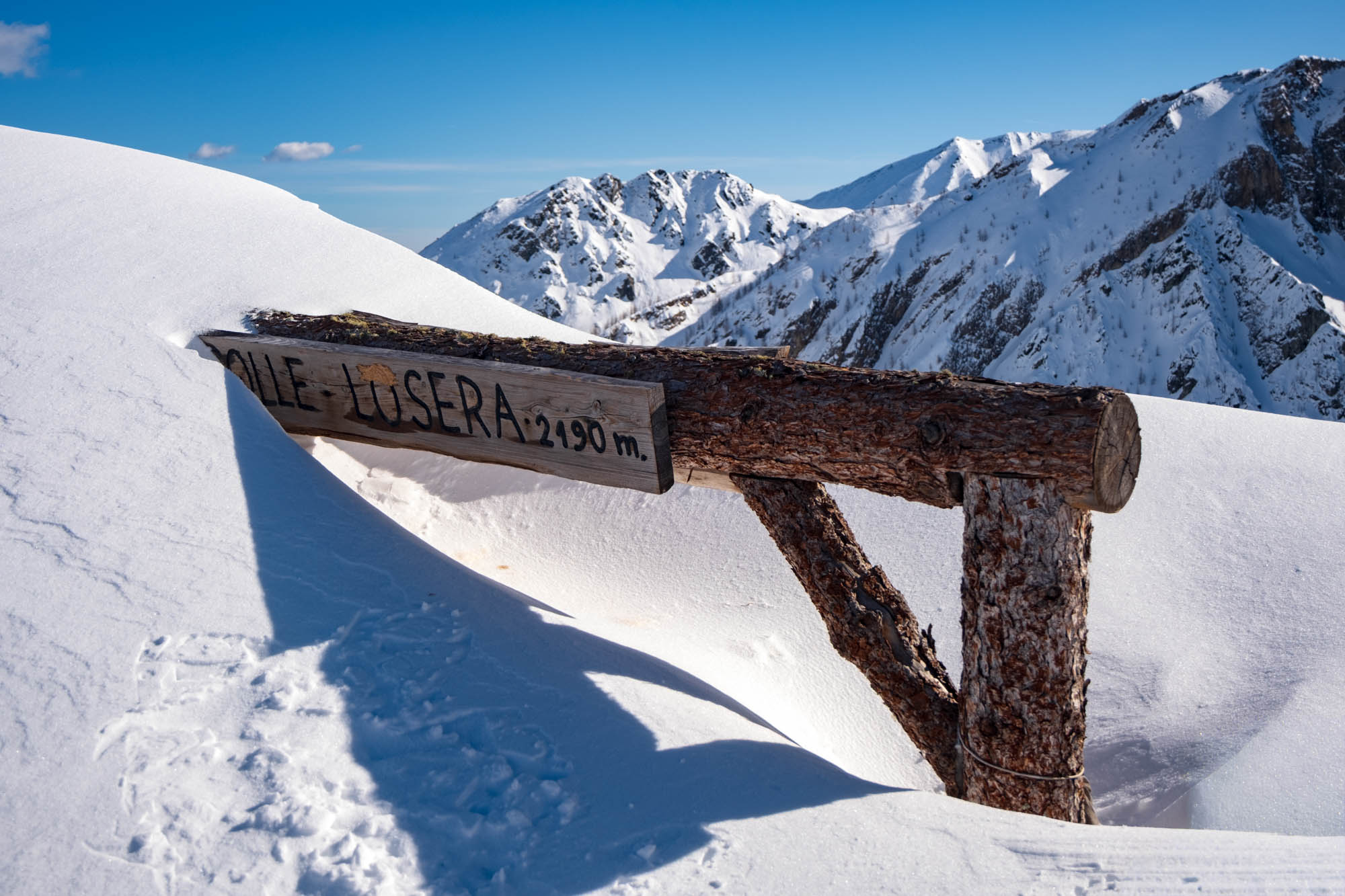
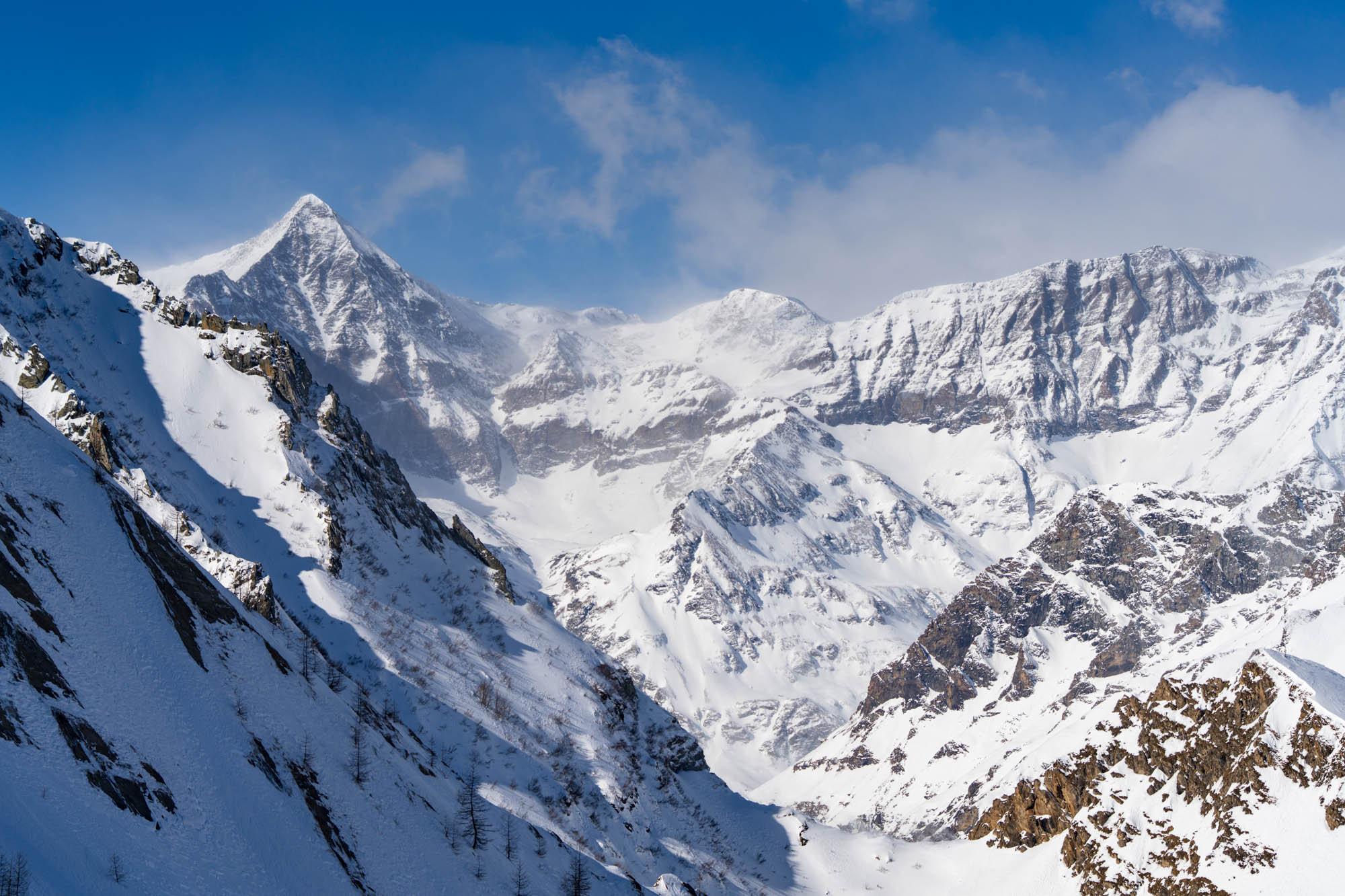
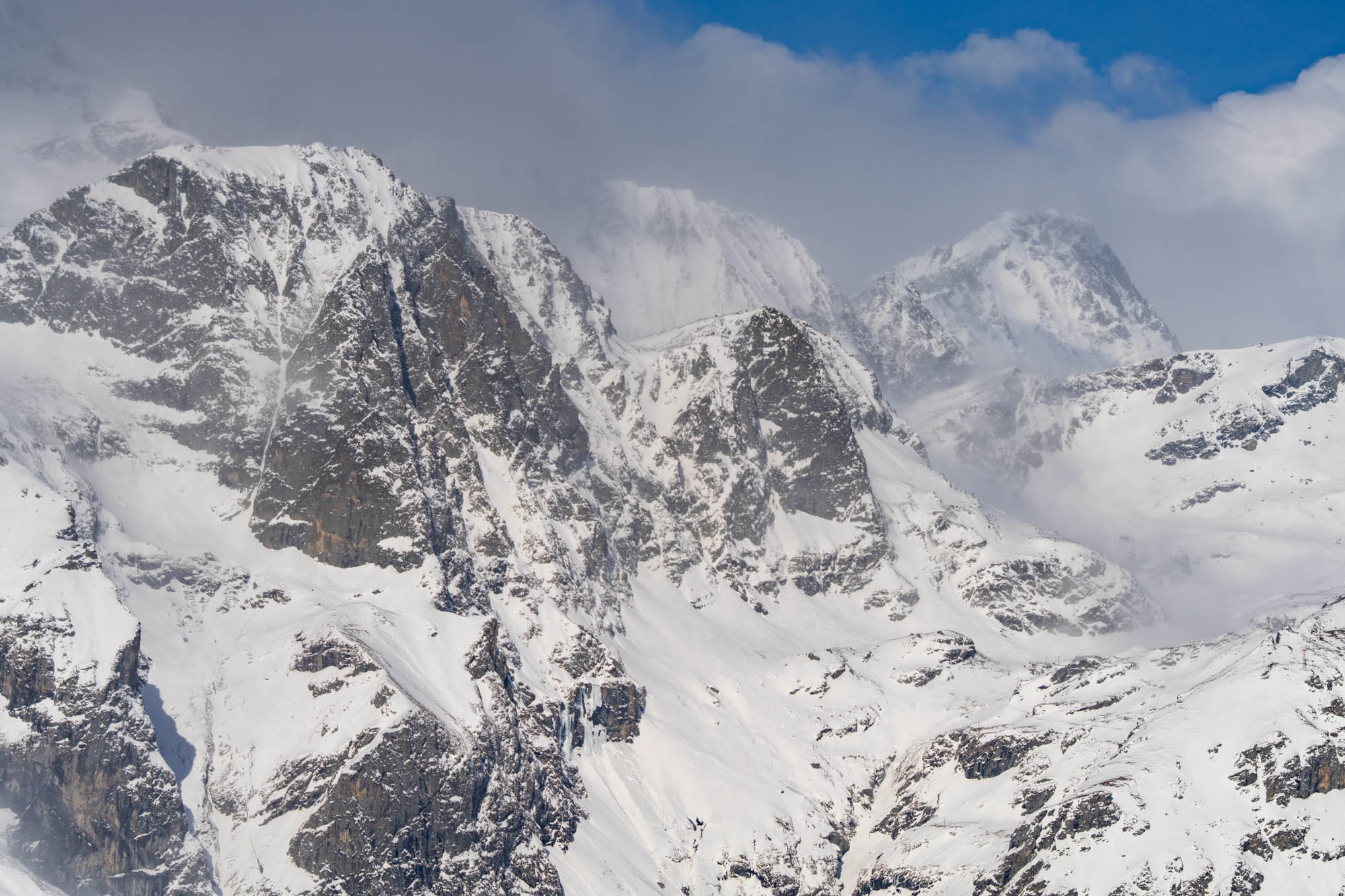
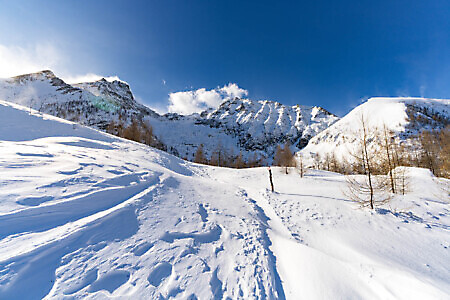
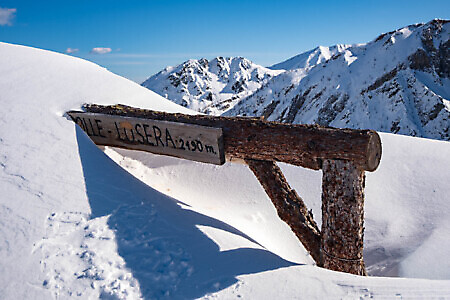
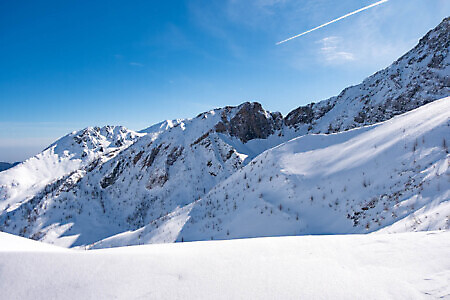
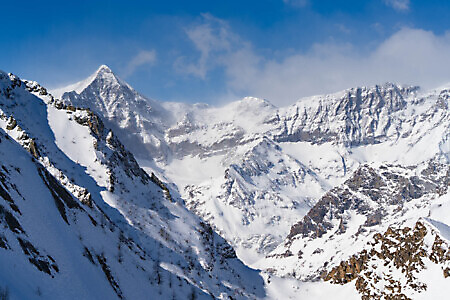
The climb proceeds with numerous switchbacks, staying roughly in the center. After the long ascent, Lusera Pass (2,156 m) is reached, an excellent viewpoint toward the opposite peaks of Punta delle Lance and Punta Pala Rusà. To the northeast, on the far side of the Viù Valley, Montù can be seen, locally known as Crest Montù. Even more striking is the view back, a remarkable panorama over the three-thousand-meter peaks stretching from Rocciamelone to Monte Servin.
The descent follows the same route taken on the ascent.
Text by Valerio Dutto of Cuneotrekking.comReport a problem
Did you encounter a problem on this itinerary? Let us know and help us keep all routes safe and accessible for everyone.
Submit report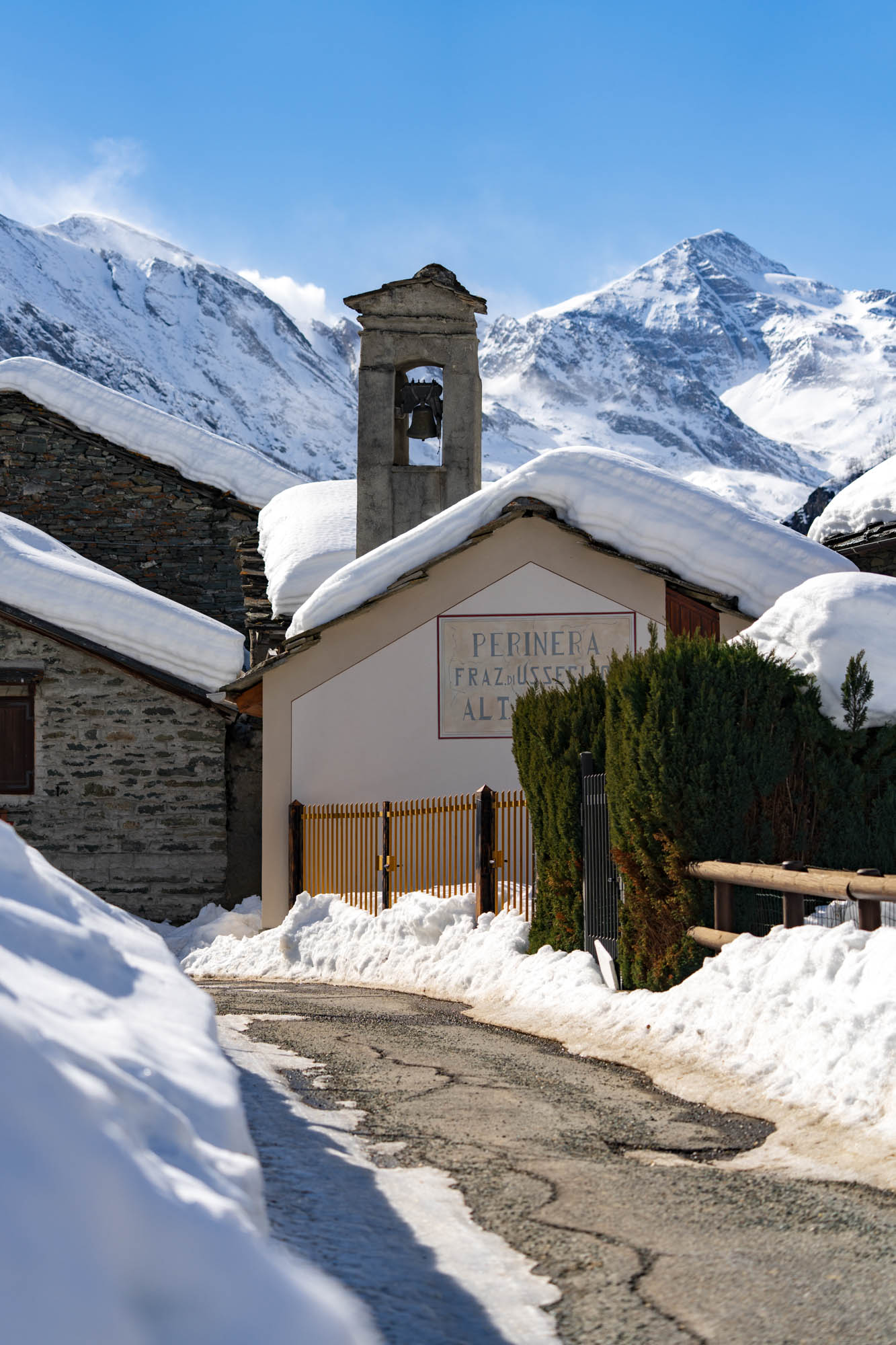
Nearby
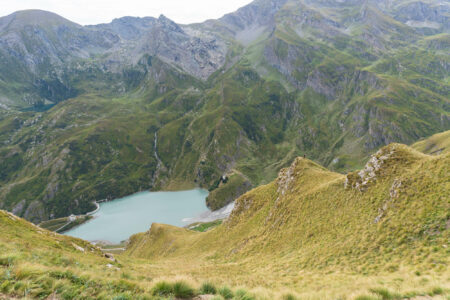
Cibrario Refuge to Lake Malciaussia via the Colle Autaret
UsseglioA stunning traverse from the Cibrario Refuge that crosses three high-altitude passes, two of them above 3,000 metres: the Colle Sulè, the Autaret, and the Spiol. The first part of the route follows the Tour della Bessanese, with breathtaking views of the imposing and severe surrounding peaks, before descending towards…

Luigi Cibrario Refuge at Peraciaval
UsseglioThe Cibrario Refuge is a historic building that has been extended several times over the years. It sits on the beautiful Pian Sabiunin plateau, at the foot of towering peaks that rise well above 3,000 metres. A key stopping point on the Tour della Bessanese and for the ascent of…
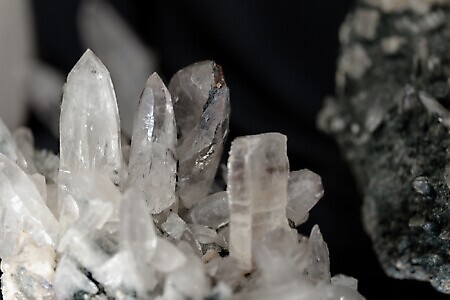
Ecomuseum of Minerals and Local History
Via Rocciamelone 5, Margone (Usseglio)The ecomuseum was born from the passion for mineralogy shared by a group of volunteers and friends, driven by the...
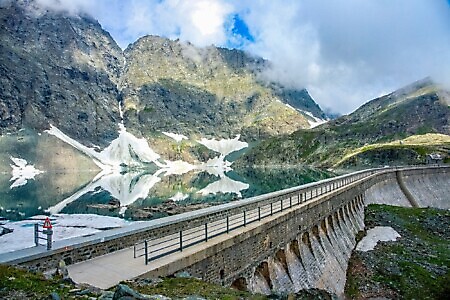
Lago della Rossa
Lago della Rossa (Usseglio)Lago della Rossa is an artificial lake, as it is blocked by a high dam, and it is the largest...
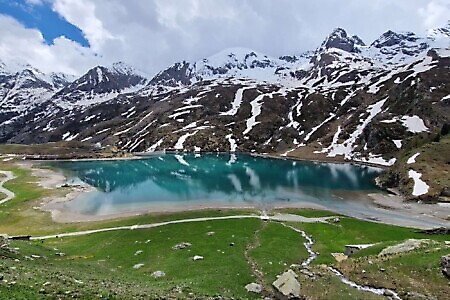
Lago di Malciaussia and Lago Nero
Località Malciaussia (Usseglio)Lago di Malciaussia is an artificial lake created with the construction of the dam between the late 1920s and early...