
Overview
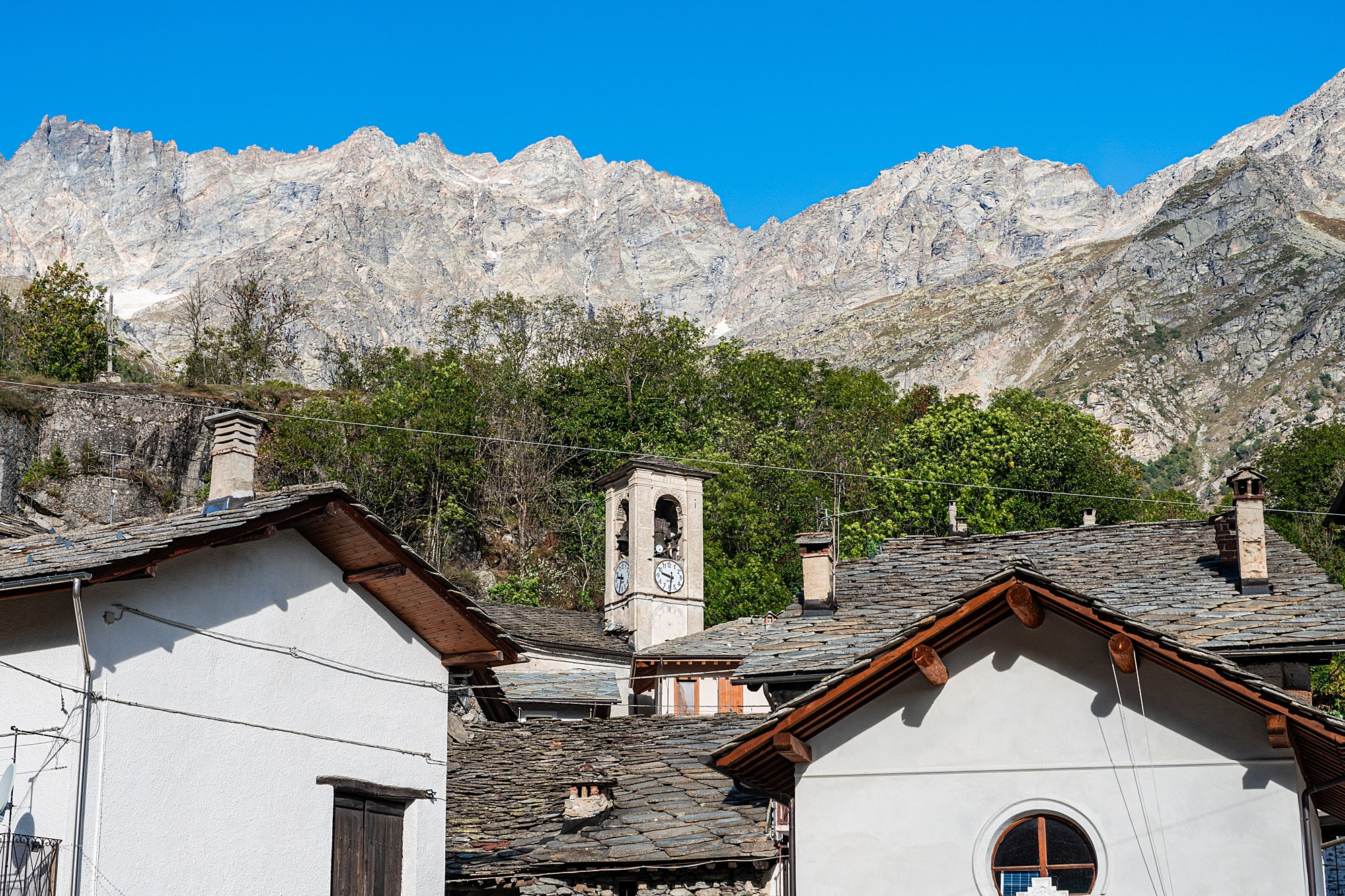
La quarta tappa è quella che conduce da Forno Alpi Graie fino a Balme o al bivacco Molino.
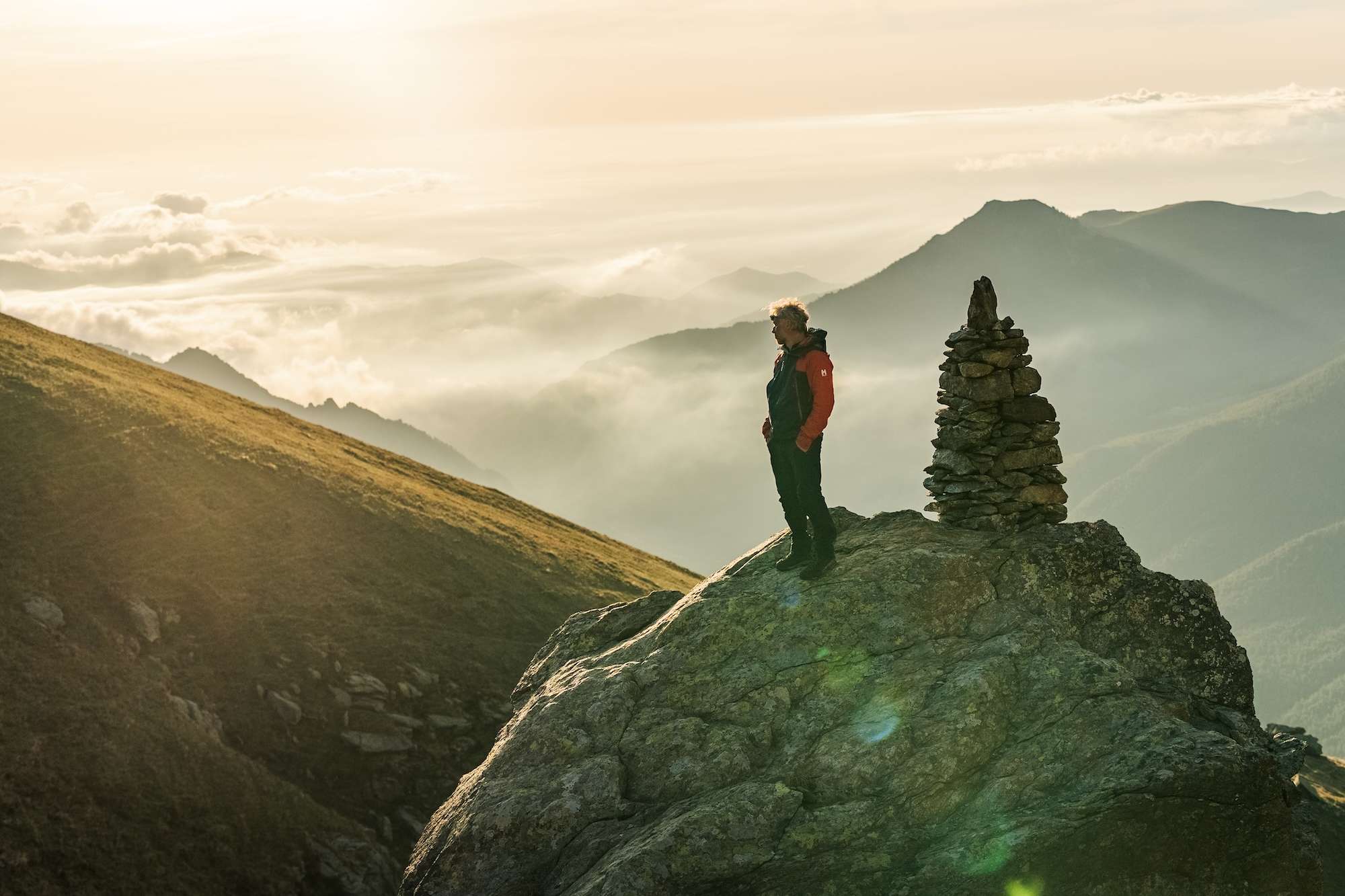
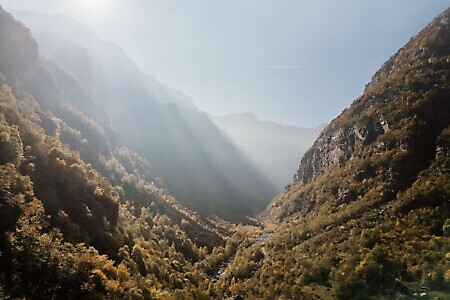
Tappa impegnativa per lunghezza e dislivello, che consente di transitare dalla Val Grande alla Val d’Ala percorrendo la prima parte del suggestivo Vallone di Sea, area di pregio naturalistico in procinto di entrare a far parte del vicino Parco Nazionale del Gran Paradiso.
Starting point
DirectionsFrom the village of Forno Alpi Graie, enter the Vallone di Sea, initially along a dirt road and then following trail 308, which alternates between flat stretches and short, steep inclines.
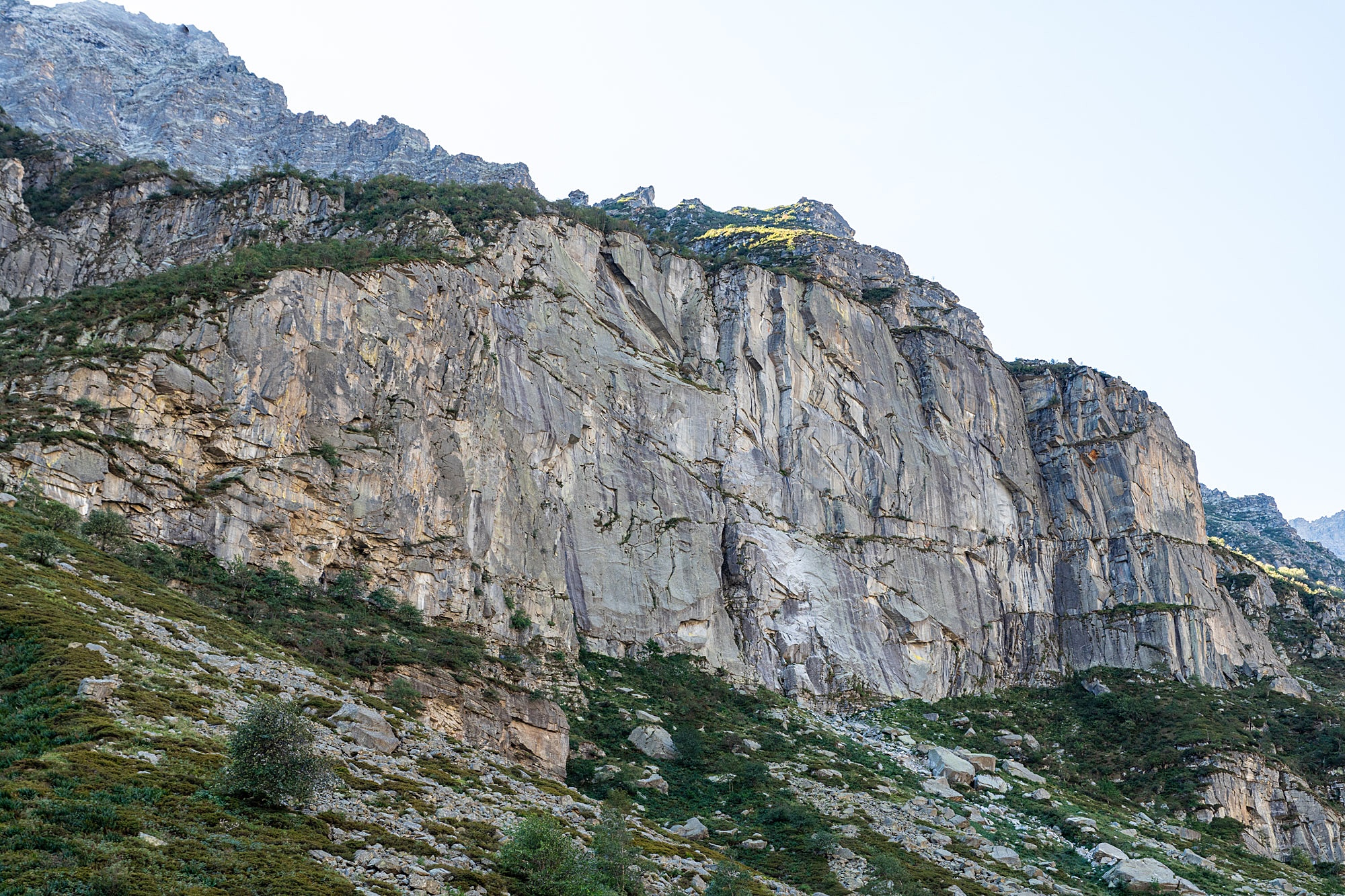
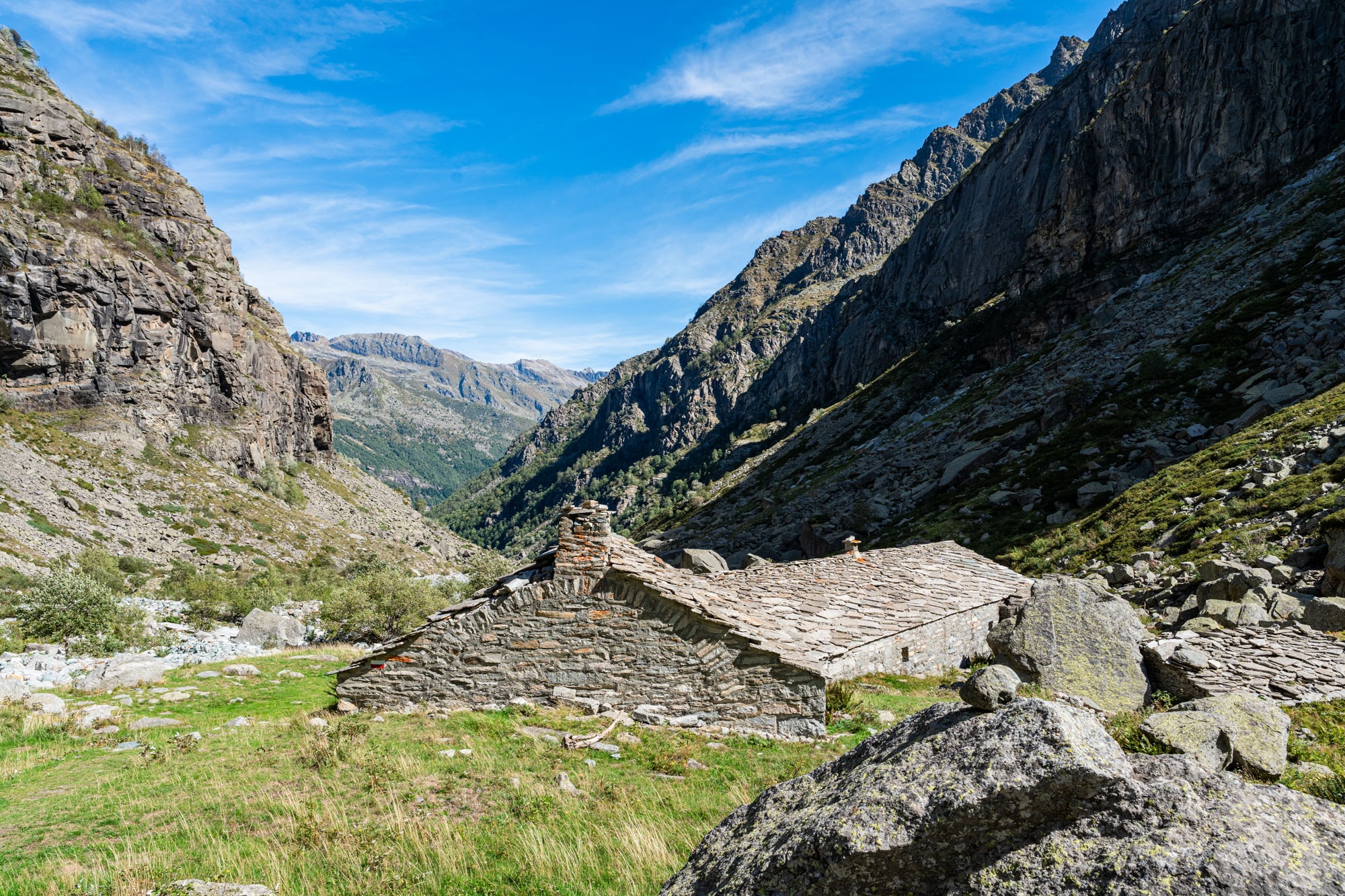
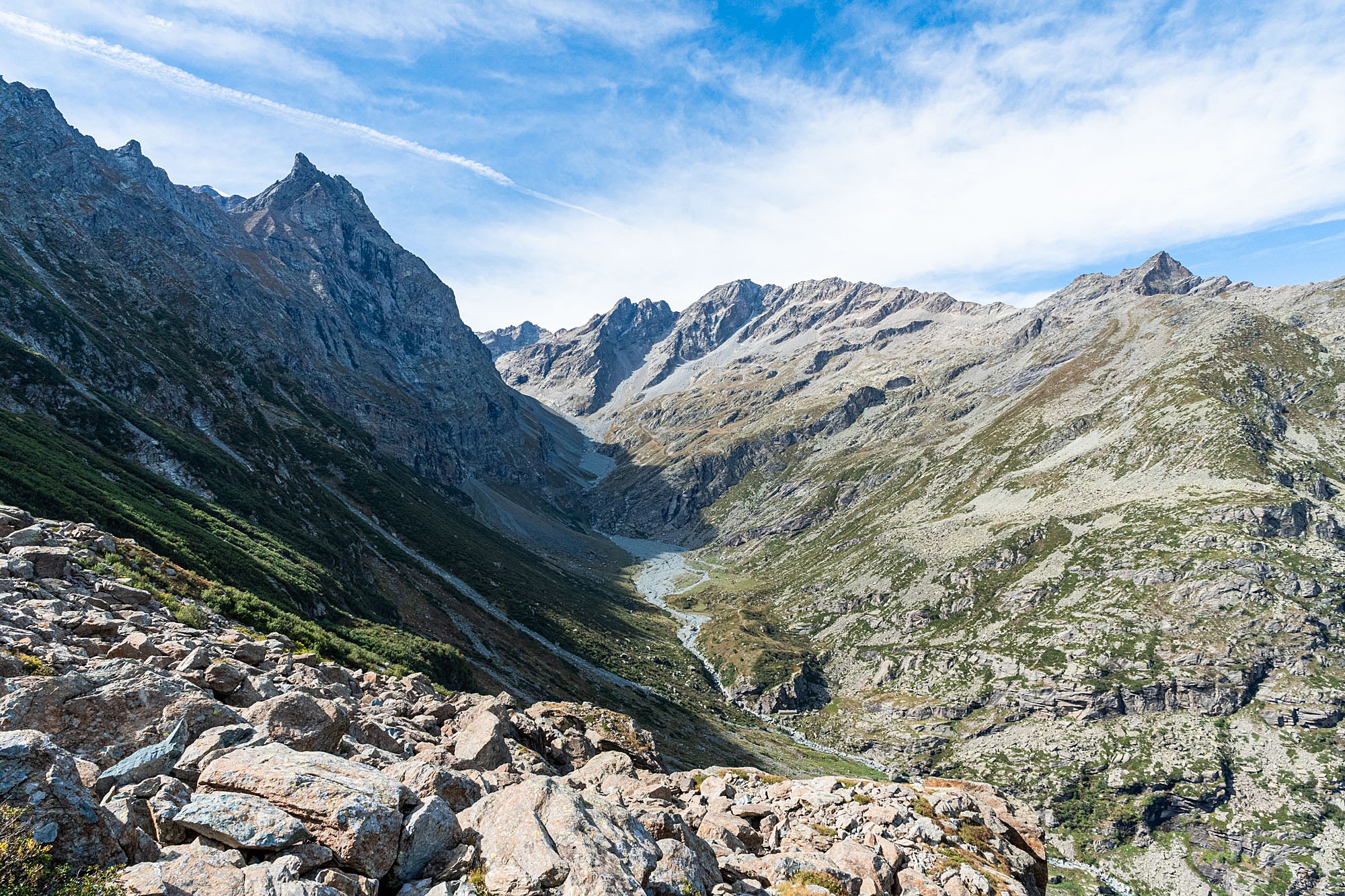
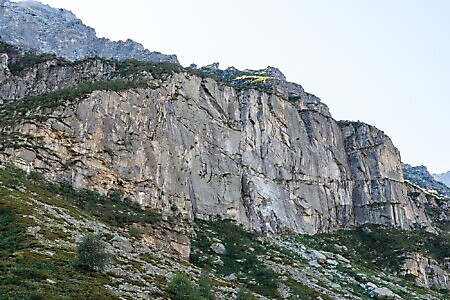
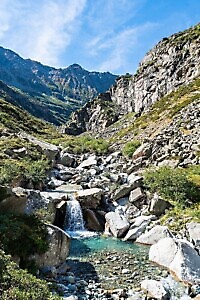
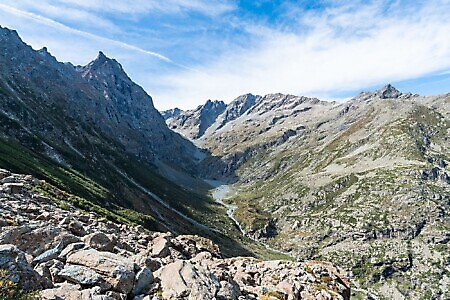
The trail follows the orographic left bank of this long valley, where you can admire the granite walls that saw the birth of the “Nuovo Mattino” climbing movement, eventually reaching a scenic plain scattered with massive boulders.
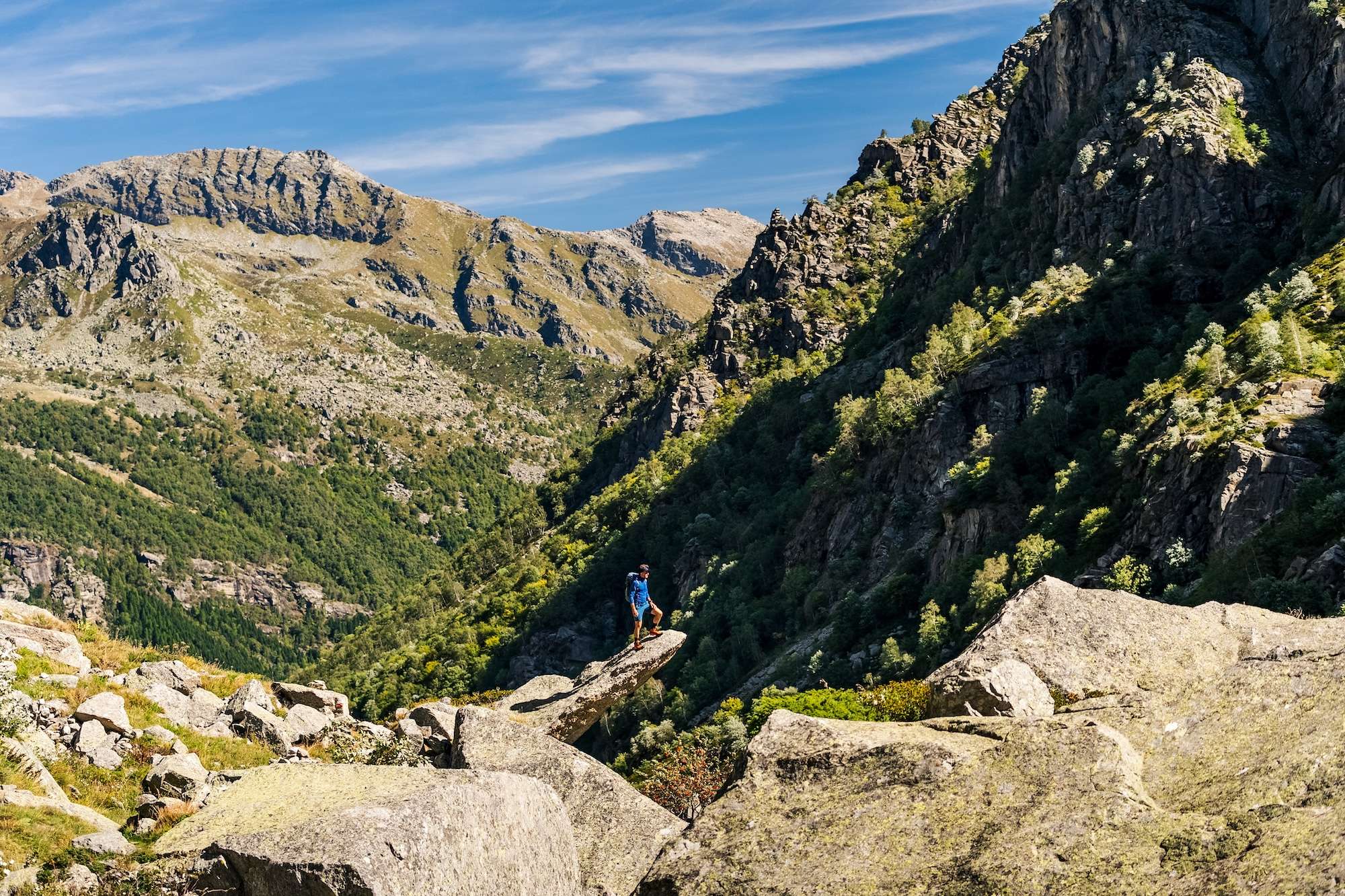
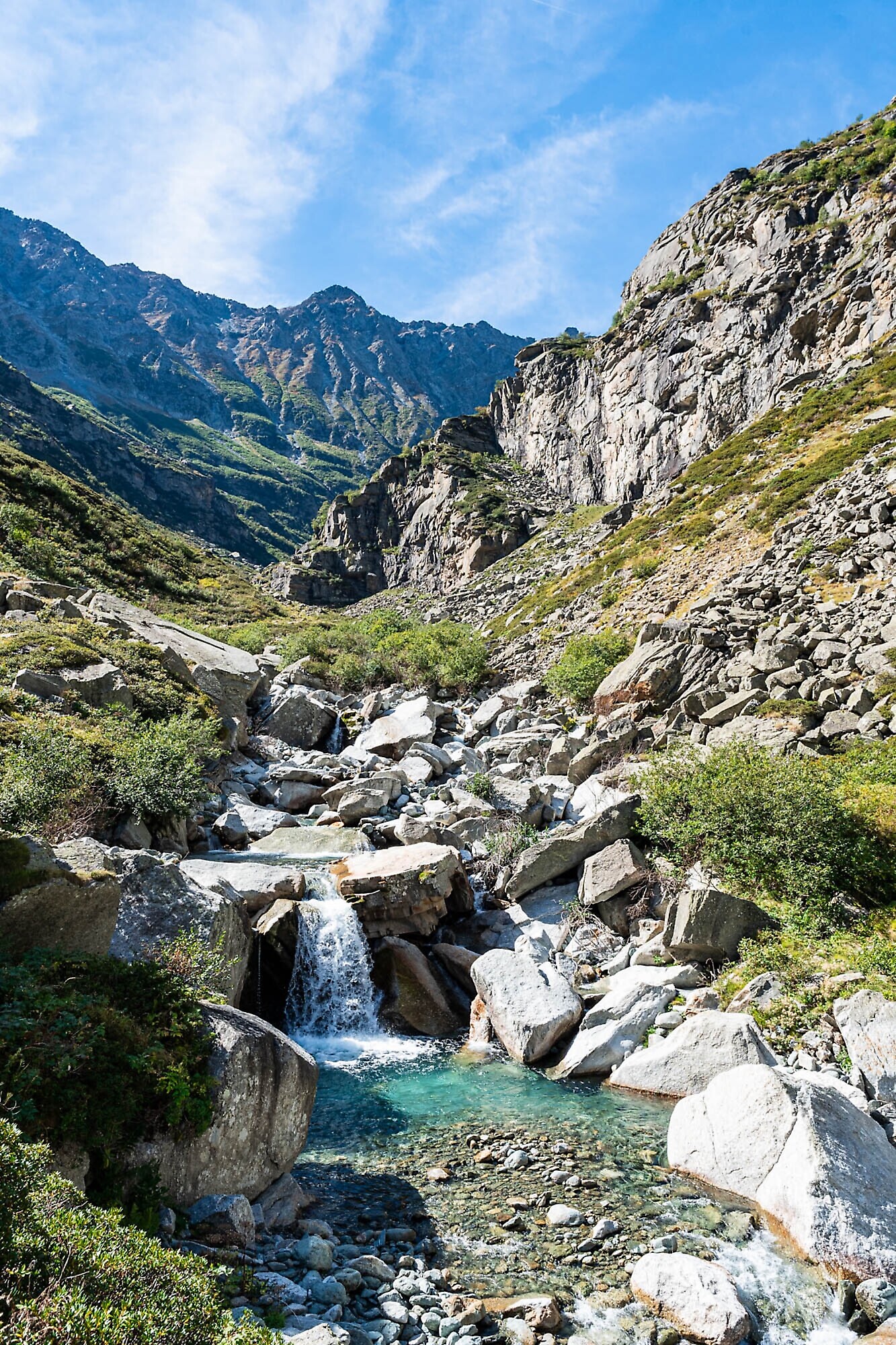
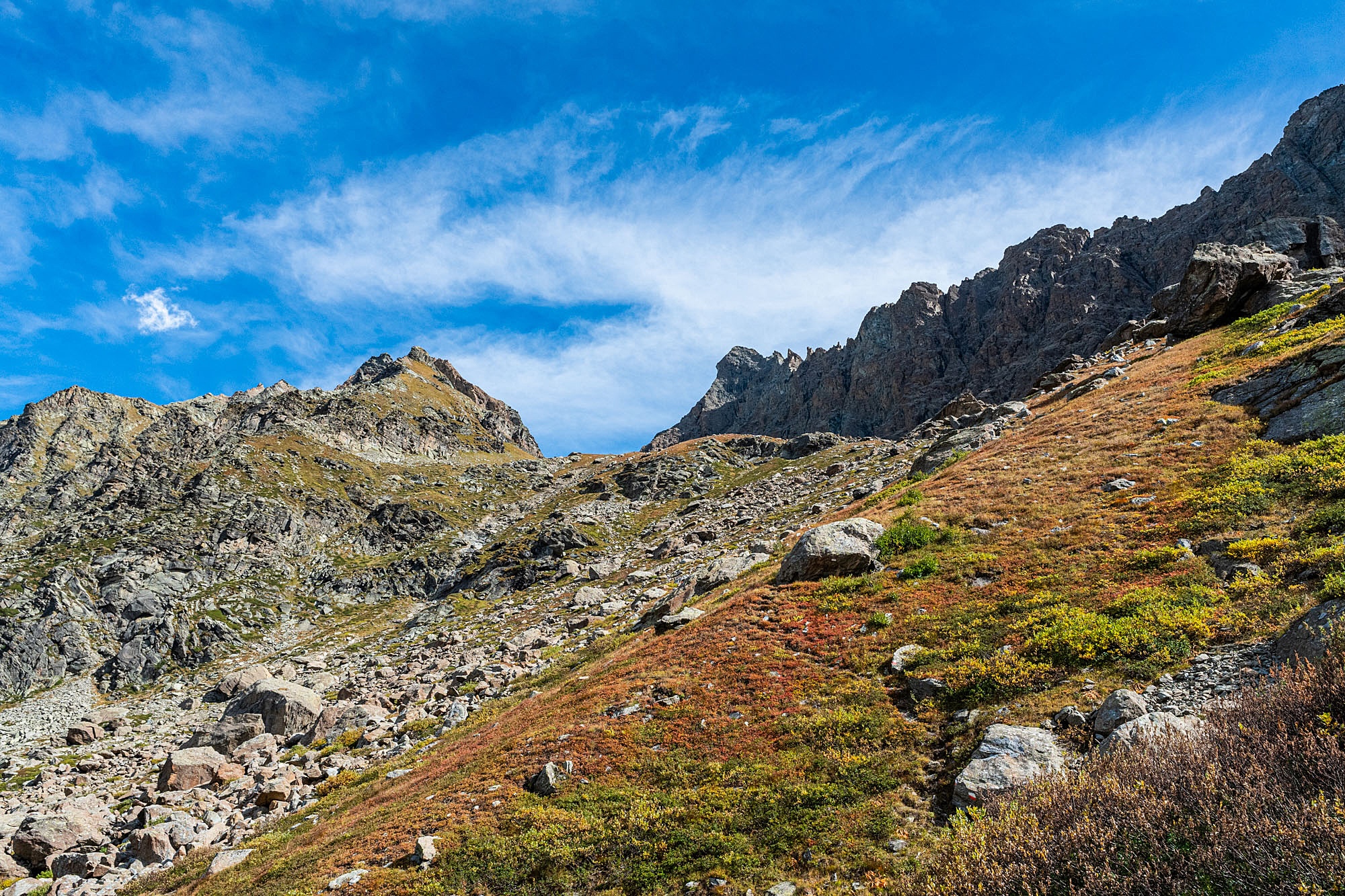
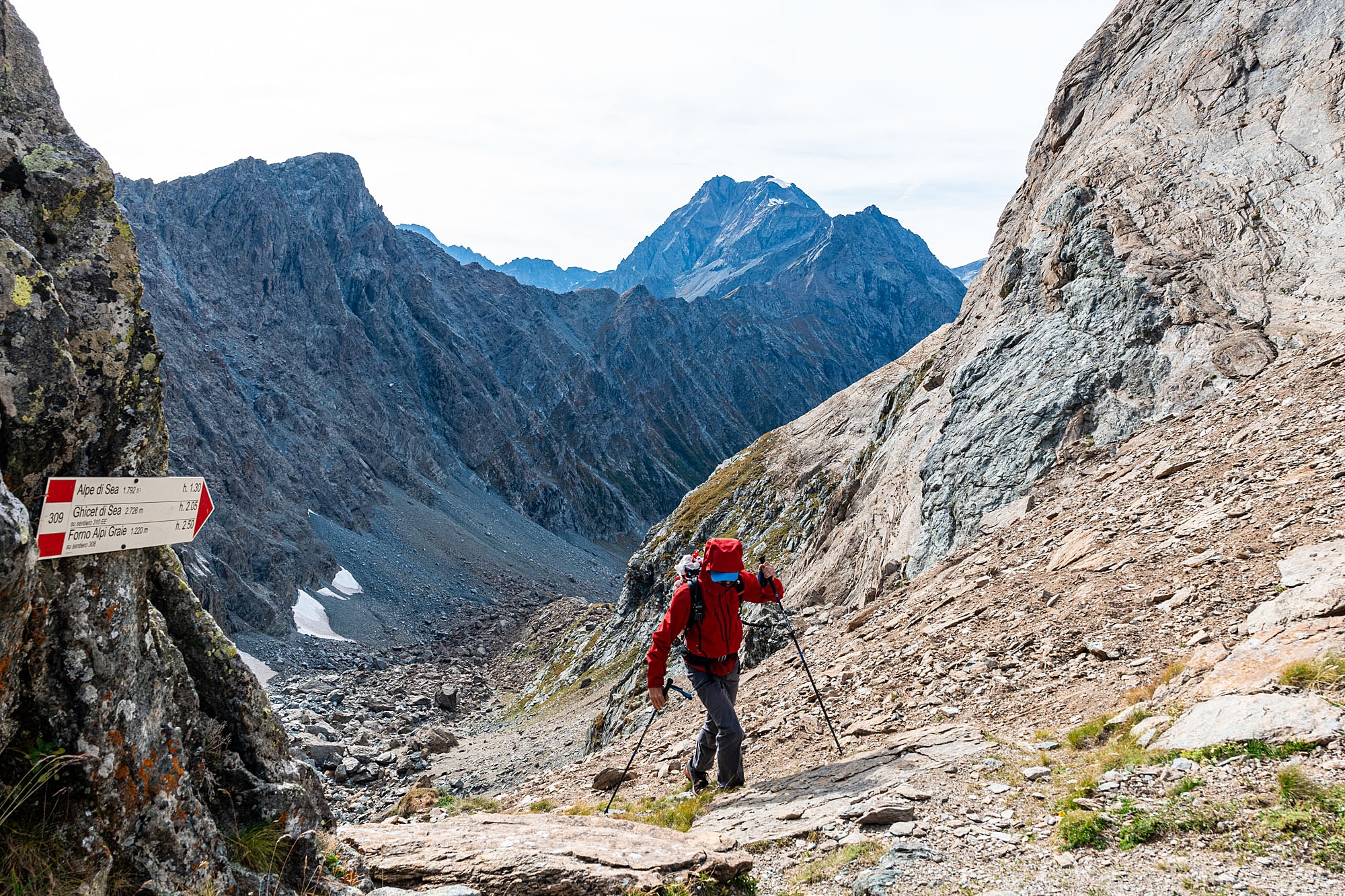
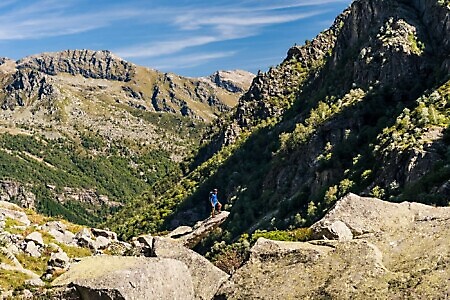
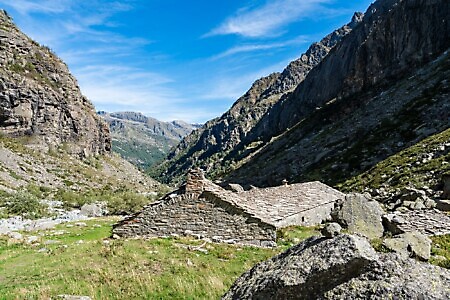
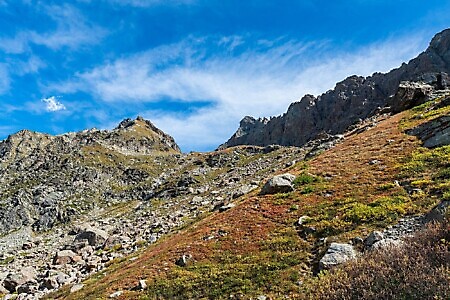
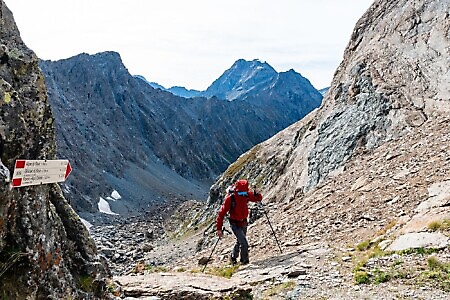
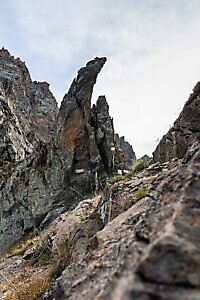
A little further on, cross the stream near the Balma Massiet alpine pasture to the opposite bank. Continue until you reach a junction near a wooden footbridge connecting to Alpe di Sea. Here, leave the main path that heads into the upper valley and take the trail to the left (marked 309) to climb towards Passo dell’Ometto (2,614 m). This section can be challenging in its lower part due to dense vegetation, while the final ascent to the pass is steep and over scree slopes.
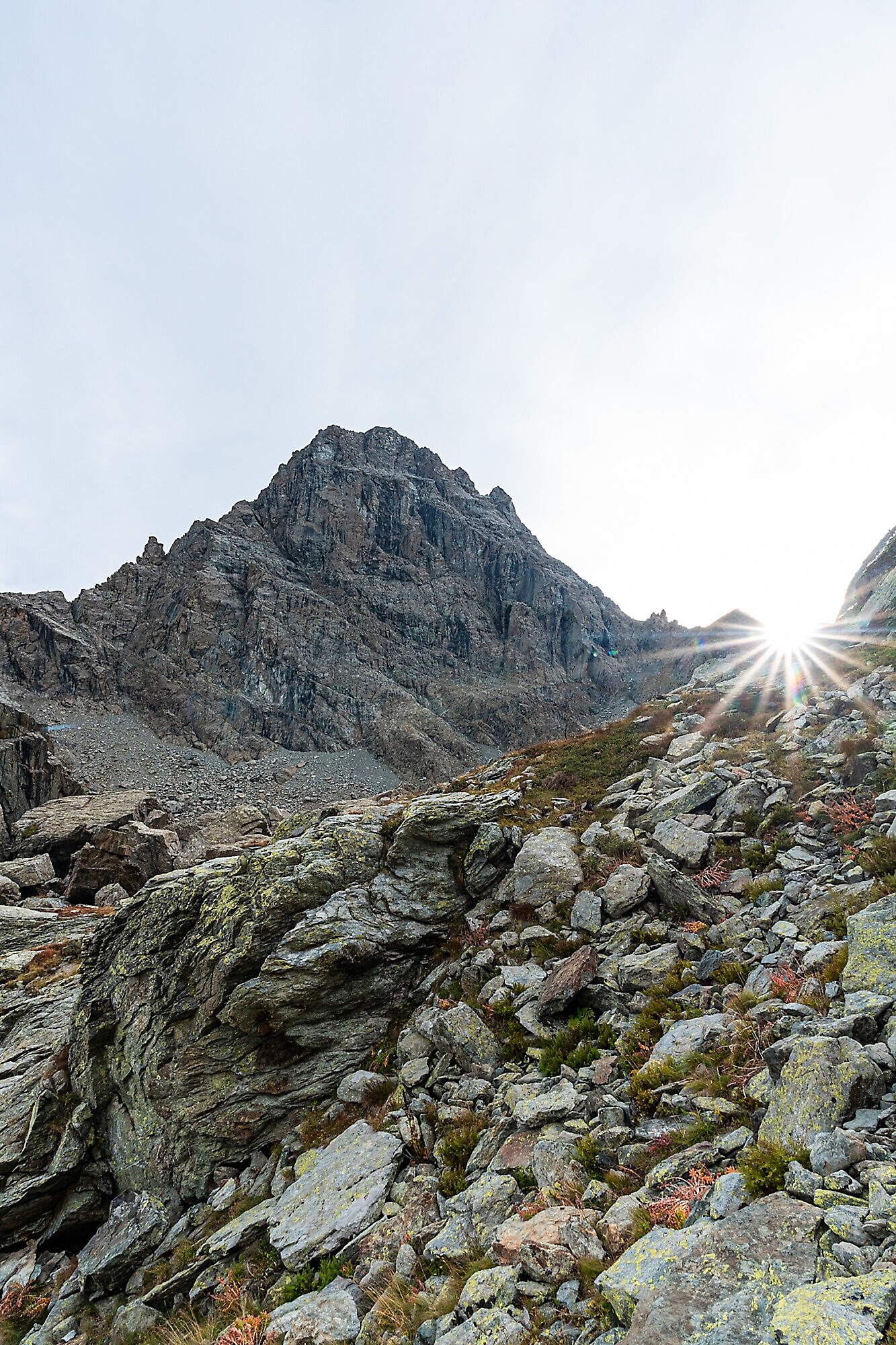
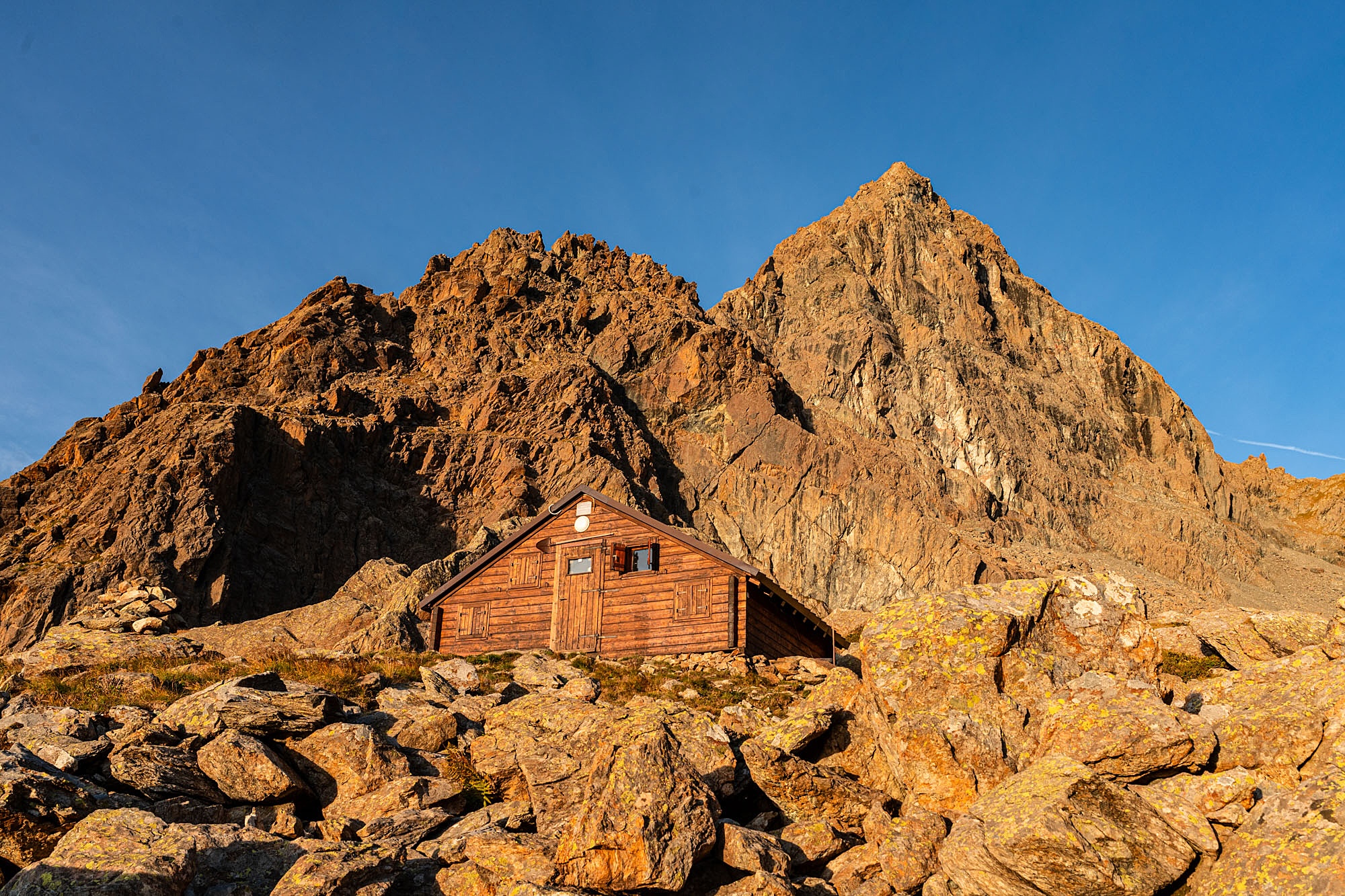
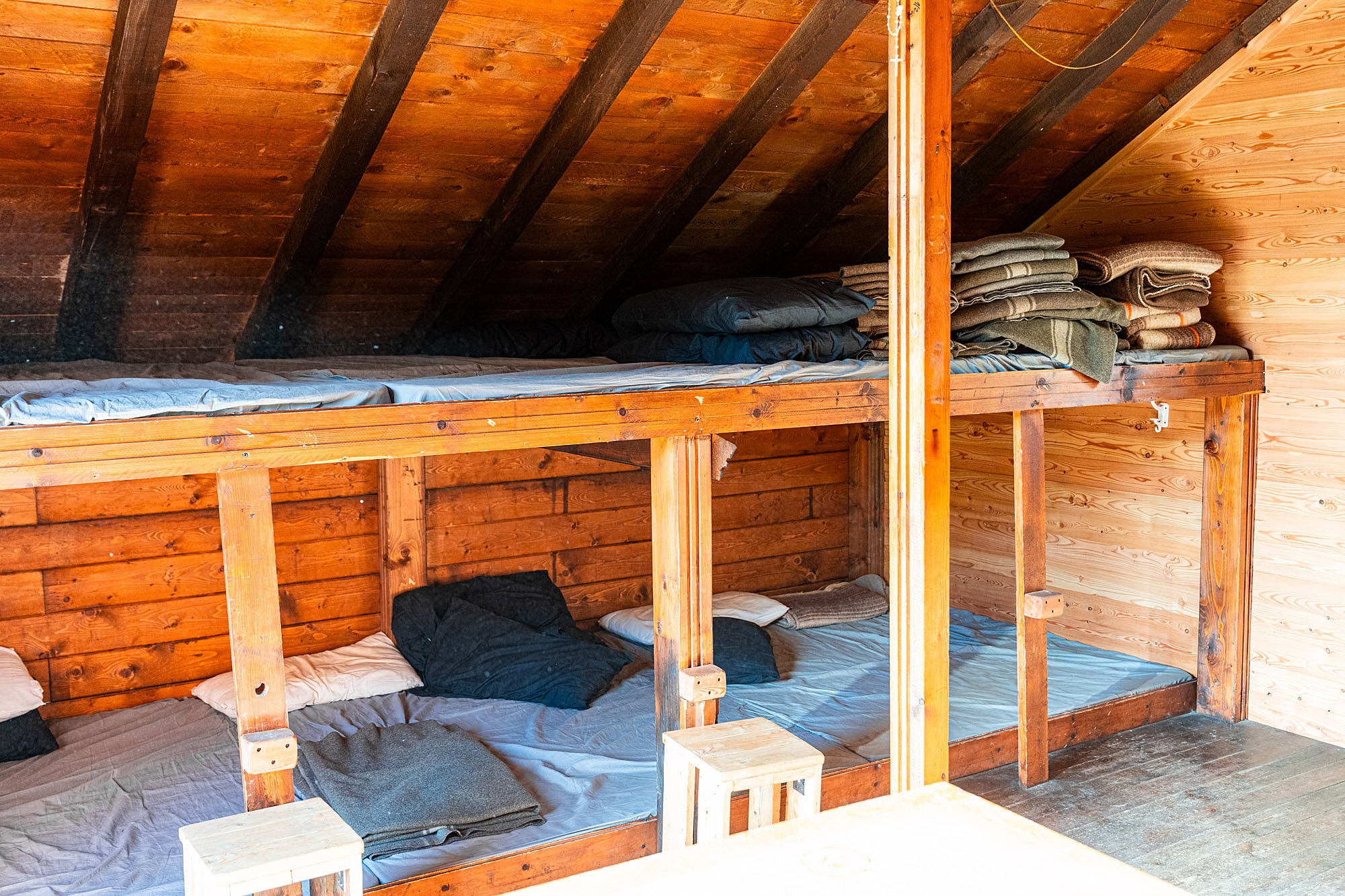
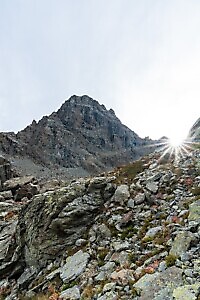
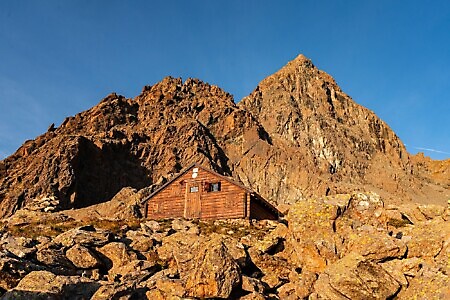
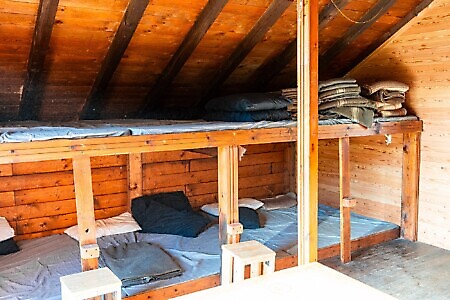
From the pass, which offers a stunning view over the upper Vallone di Sea, cross over into Val d’Ala. A steep descent quickly brings the Bivacco Bruno Molino (2,279 m) into sight—a basic, unmanaged wooden shelter, always open and equipped with mattresses and blankets. The bivouac is an excellent stop for those wishing to stay at high altitude and witness the sunrise under the imposing face of Uja di Mondrone (ensure you carry sufficient food and water).
Alternatively, to reach Balme for an overnight stay in an inn, continue along trail 233, which descends steeply towards the hamlet of Molette, eventually merging with the GTA (Great Alpine Traverse). Follow the GTA from Molette to reach Balme, the endpoint of this challenging but fascinating stage.
VARIANT
Should Passo dell’Ometto still be covered in snow, an alternative is to use the GTA route that starts from Migliere and climbs to Colle di Trione. From the pass, descend into Val d’Ala, joining the path from Passo dell’Ometto just above the village of Molera, and continue to Balme. If choosing this variant, it is advisable to stay overnight in Migliere or Pialpetta during Stage 3, avoiding the climb to Forno Alpi Graie.
Report a problem
Did you encounter a problem on this itinerary? Let us know and help us keep all routes safe and accessible for everyone.
Submit report 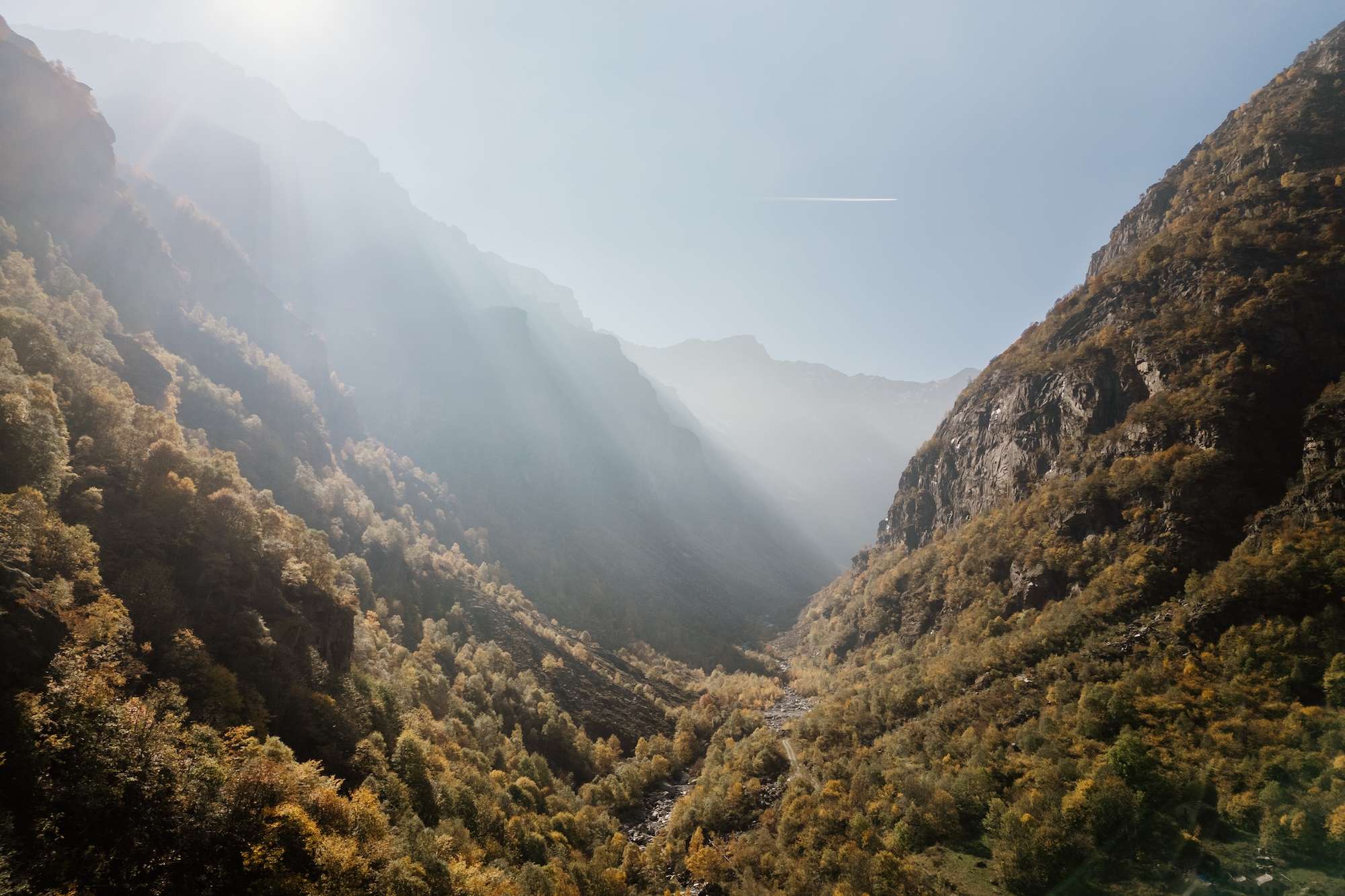
Nearby
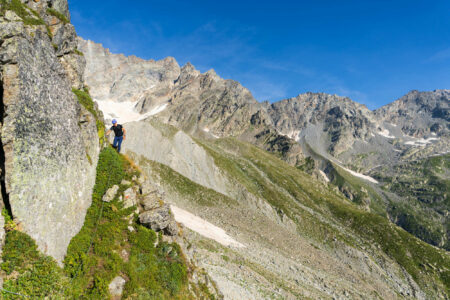
Daviso Refuge to Sea Valley Traverse via Passo delle Lose
GroscavalloA splendid traverse linking the Gura and Sea side valleys via the formidable Passo delle Lose. The itinerary crosses very wild terrain where strong navigation skills and proper equipment are essential, and it should only be attempted in settled weather. A spectacular route, technically and physically demanding, even if the…
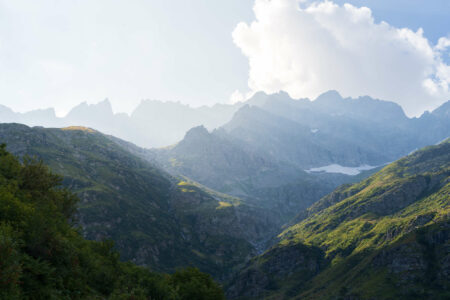
Paolo Daviso Refuge
GroscavalloThe Daviso Refuge, set in a slightly off-centre position high in the Gura valley, offers breathtaking views over the upper Lanzo Grande Valley and, above all, the majestic wall of peaks that surrounds it. These imposing mountains rise well above 3,000 metres, and generations of "modern" mountaineers have cut their…
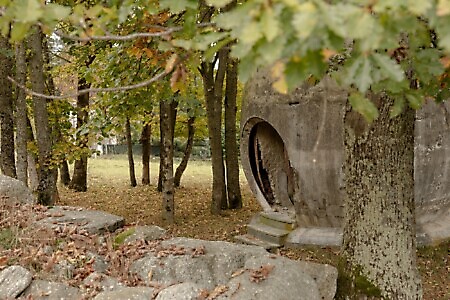
Egg-Shaped Dovecote
Strada Provinciale 33, 22, frazione Richiardi (Groscavallo)Past the houses of the hamlet of Richiardi, you can admire the curious monument commonly known as the “Pastrone Egg”....
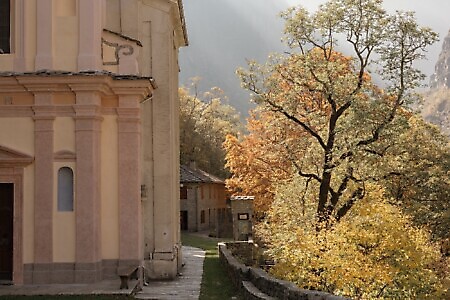
Sanctuary of Our Lady of Loreto
Forno Alpi Graie (Groscavallo)The Sanctuary is located in Forno Alpi Graie, a hamlet of Groscavallo, at an altitude of 1340 meters. The original...
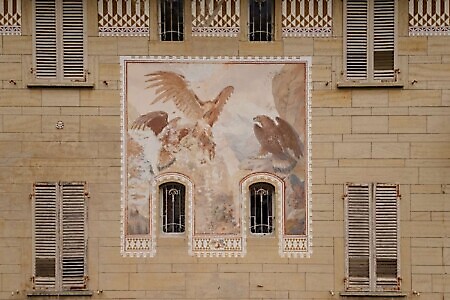
Villa Pastrone
Via Vittorio Alfieri 4, Richiardi (Groscavallo)The historic residence of director Giovanni Pastrone, a pioneer of Italian silent cinema, the villa is a treasure chest telling...