
Overview
A splendid traverse linking the Gura and Sea side valleys via the formidable Passo delle Lose. The itinerary crosses very wild terrain where strong navigation skills and proper equipment are essential, and it should only be attempted in settled weather. A spectacular route, technically and physically demanding, even if the modest stats don't suggest it.
Starting point
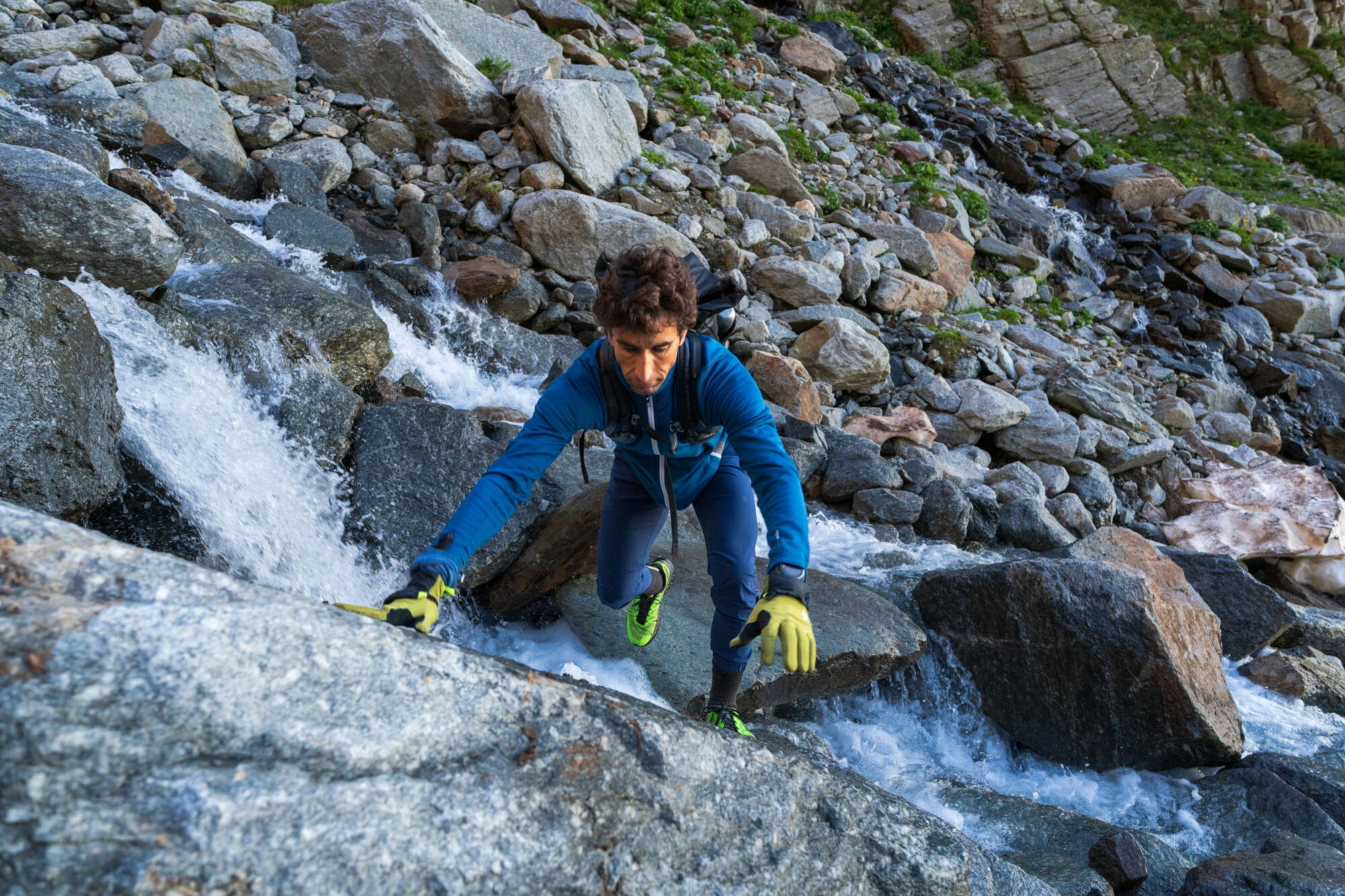
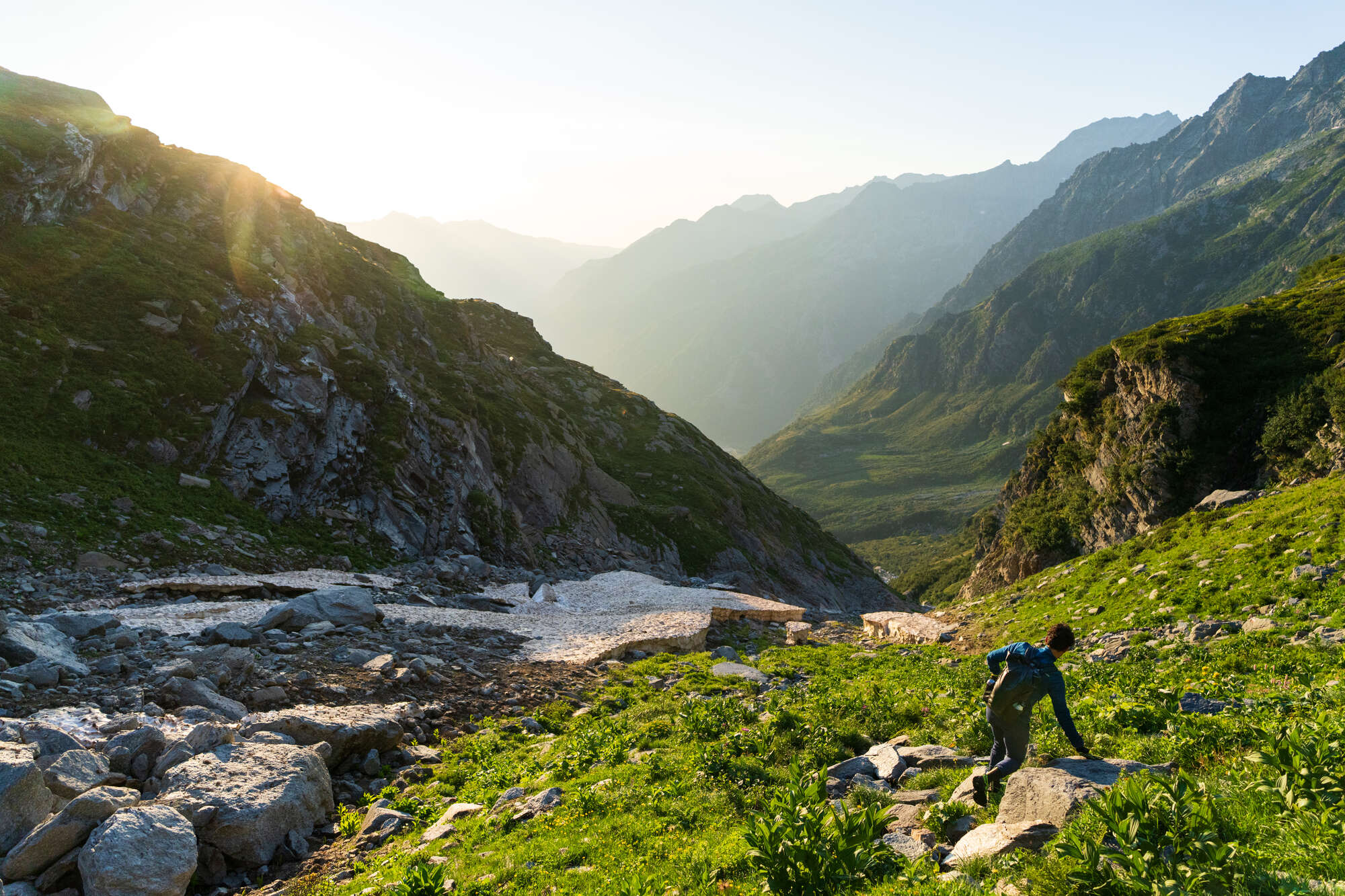
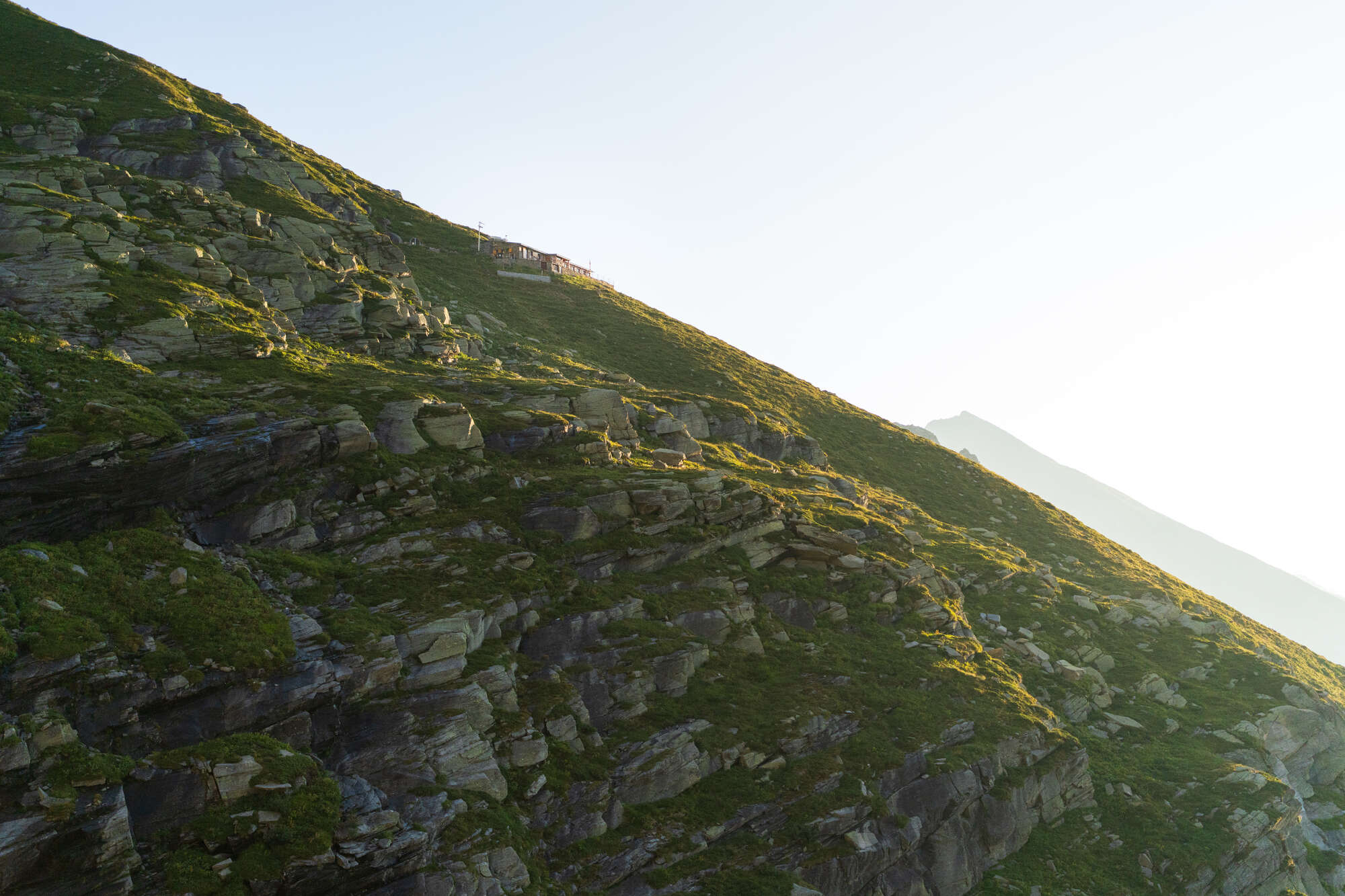
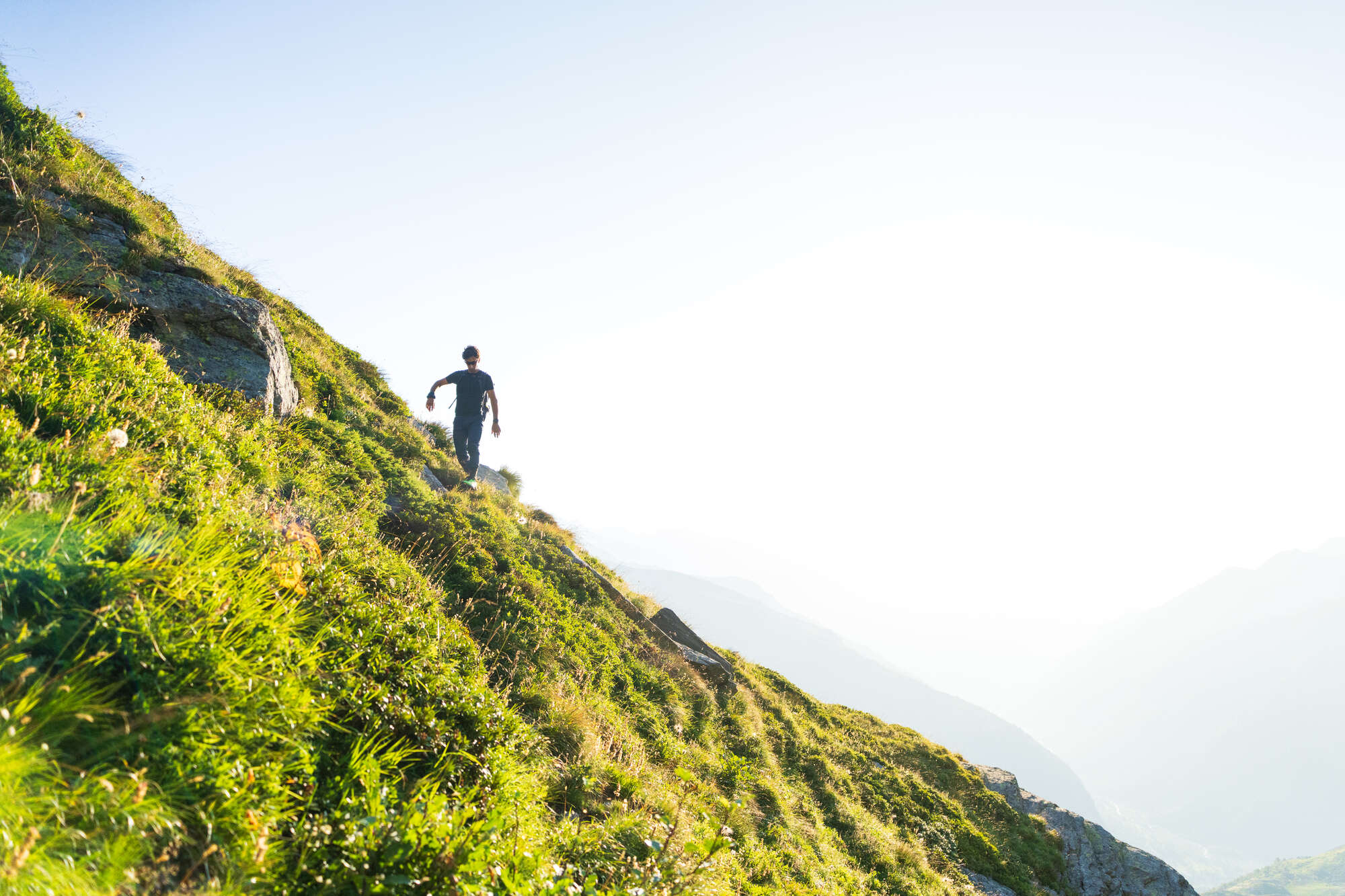
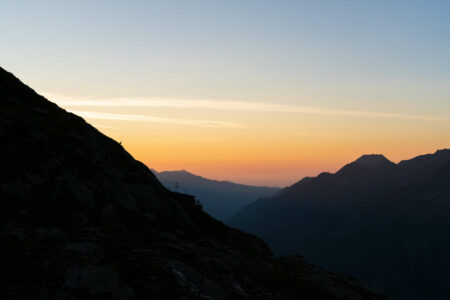
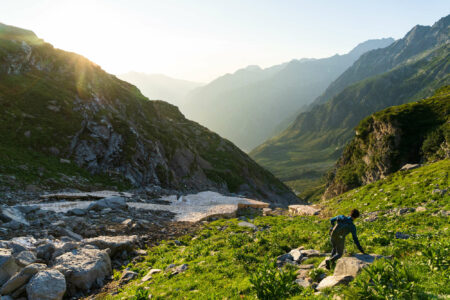
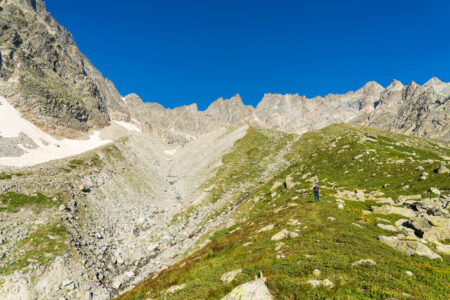
DirectionsFollow the balcony path from Daviso Refuge (2,280 m) from east to west. After passing the toilets, take the path heading west (white-red waymarks). A few metres on, leave it and descend left down a steep grassy slope (note: no waymarks in this section). A short way below, some waymark blazes reappear. On a descending traverse, head towards the large debris-filled gully carved by meltwater from the Martellot Glacier (a snowfield persists here until late summer and may require crampons).
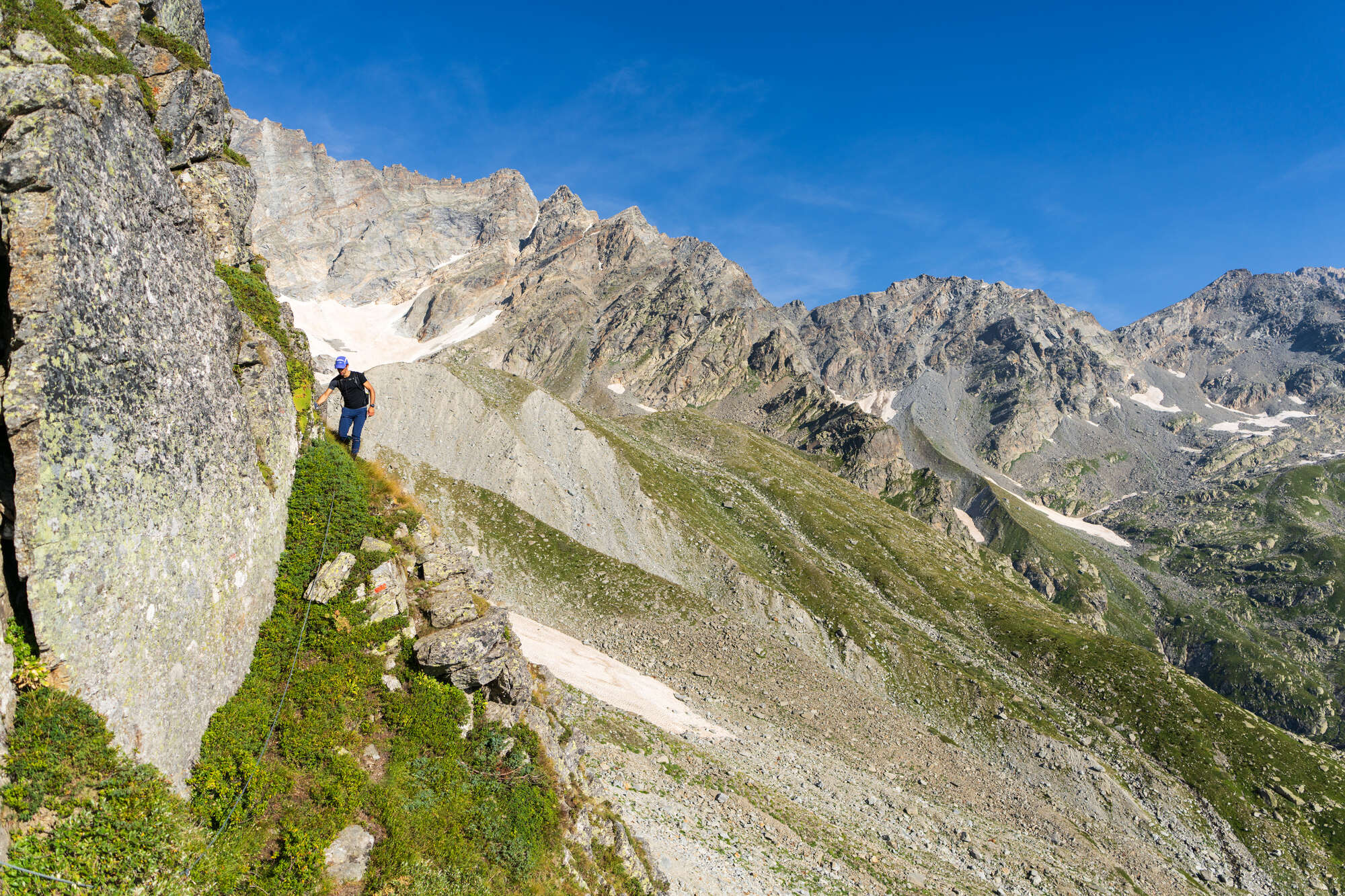
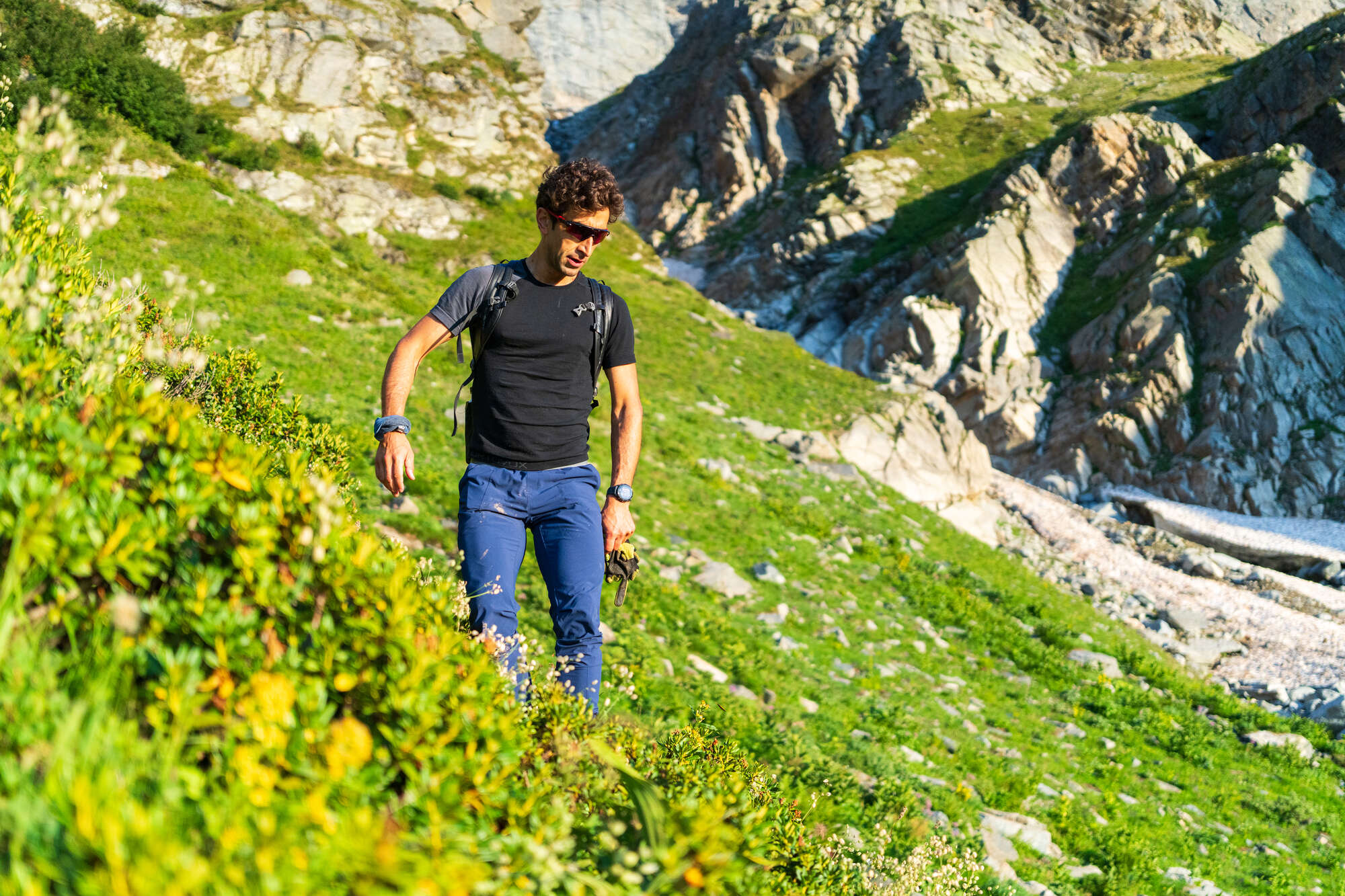
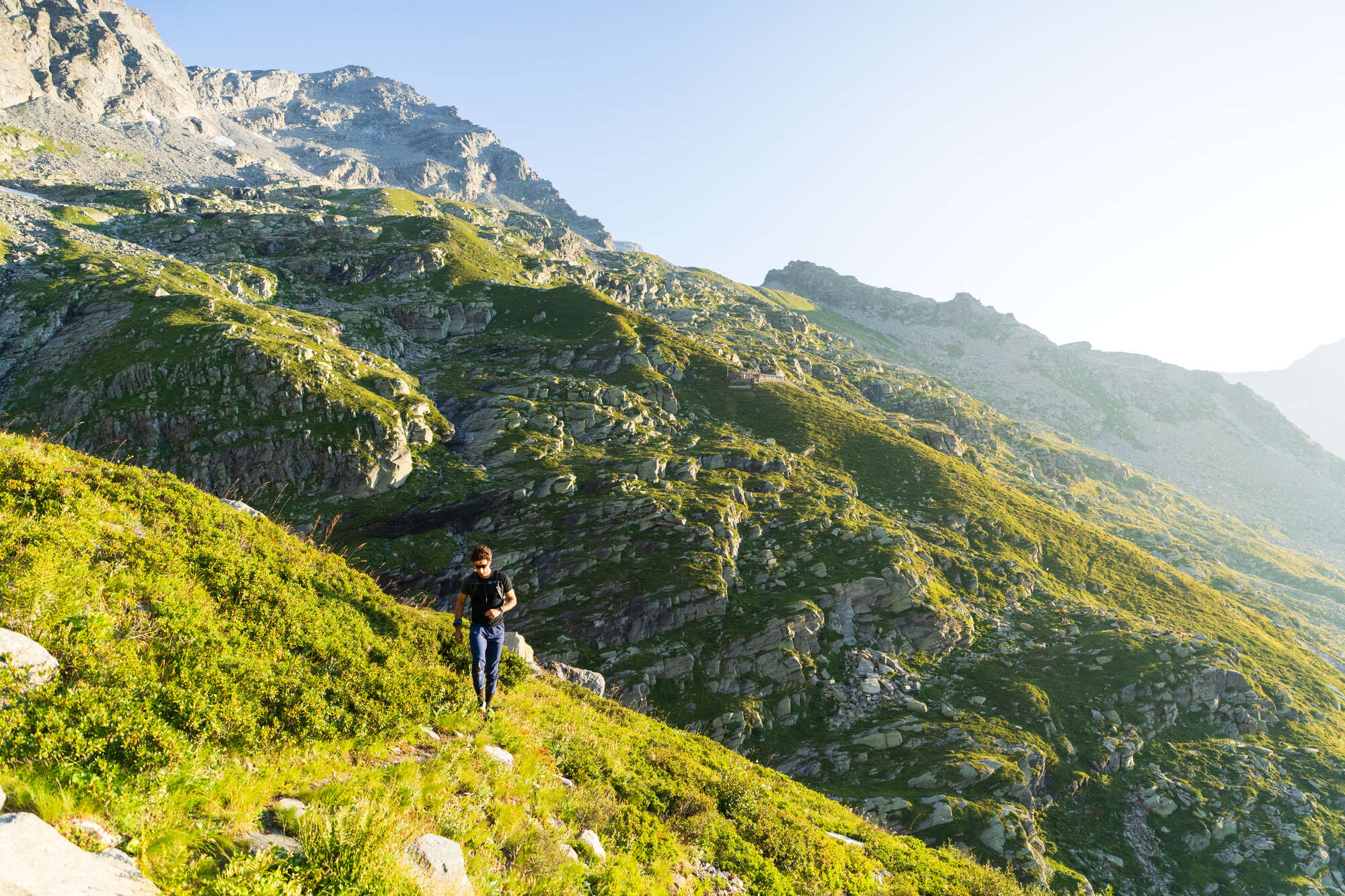
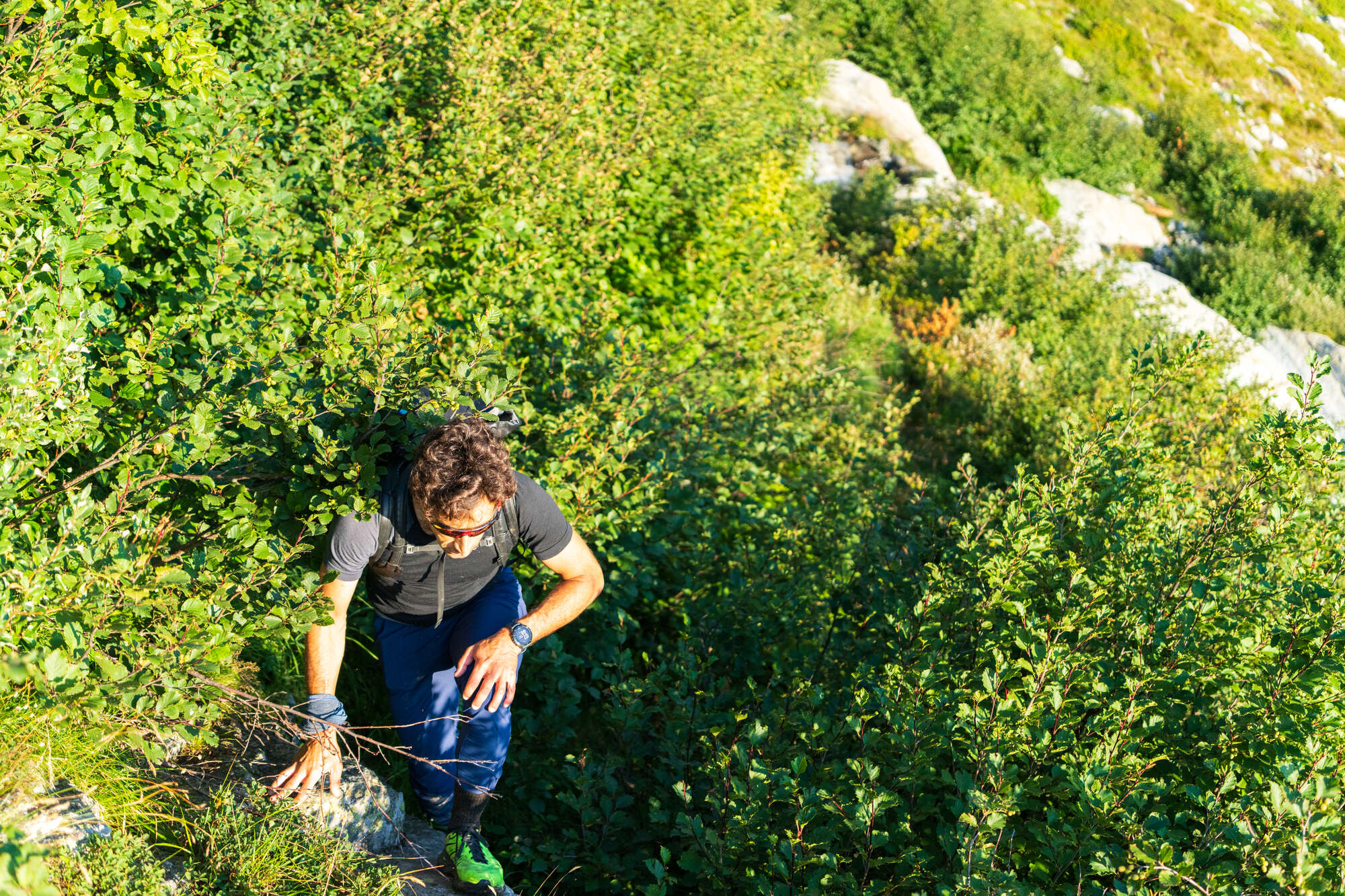
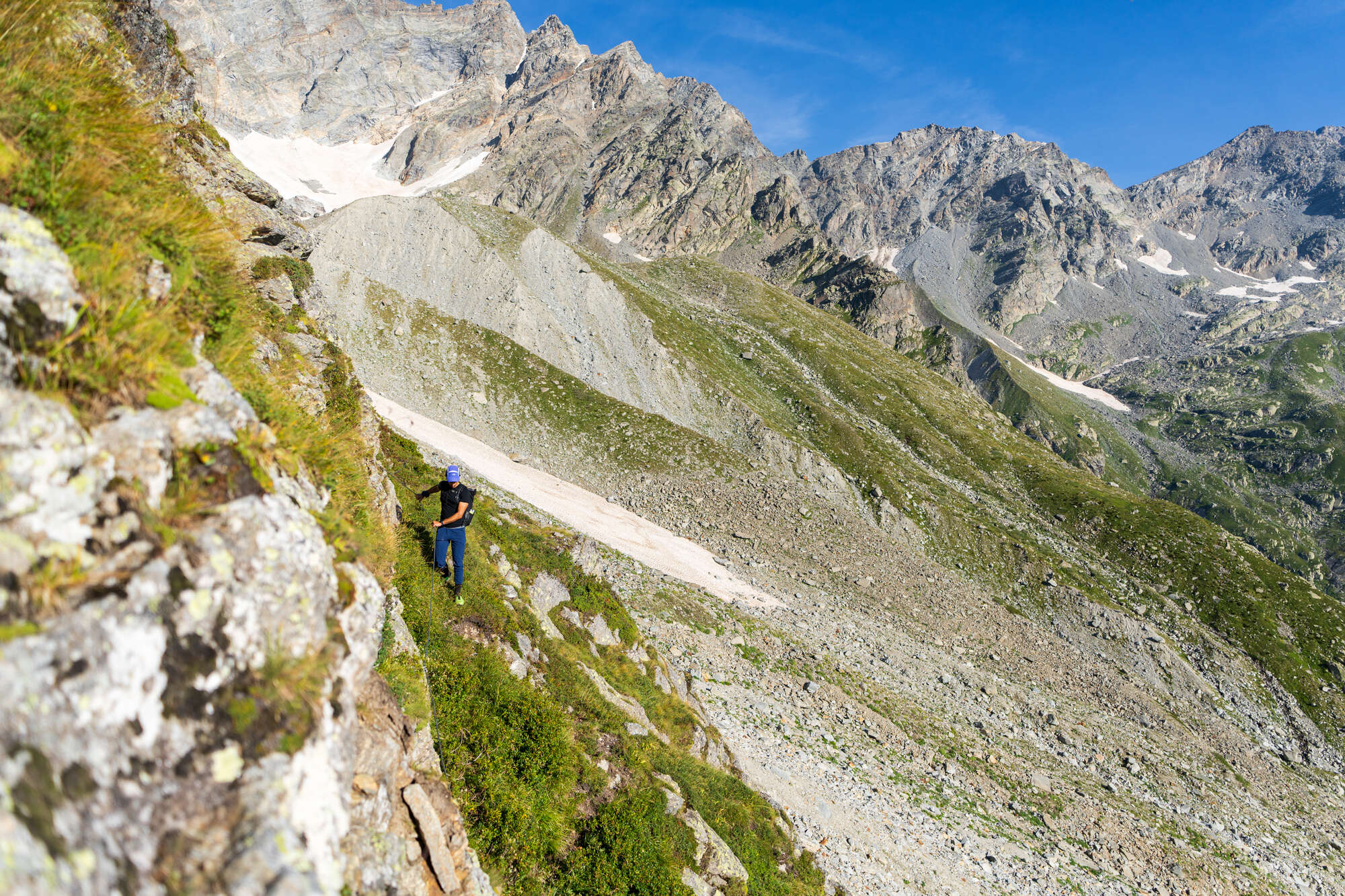
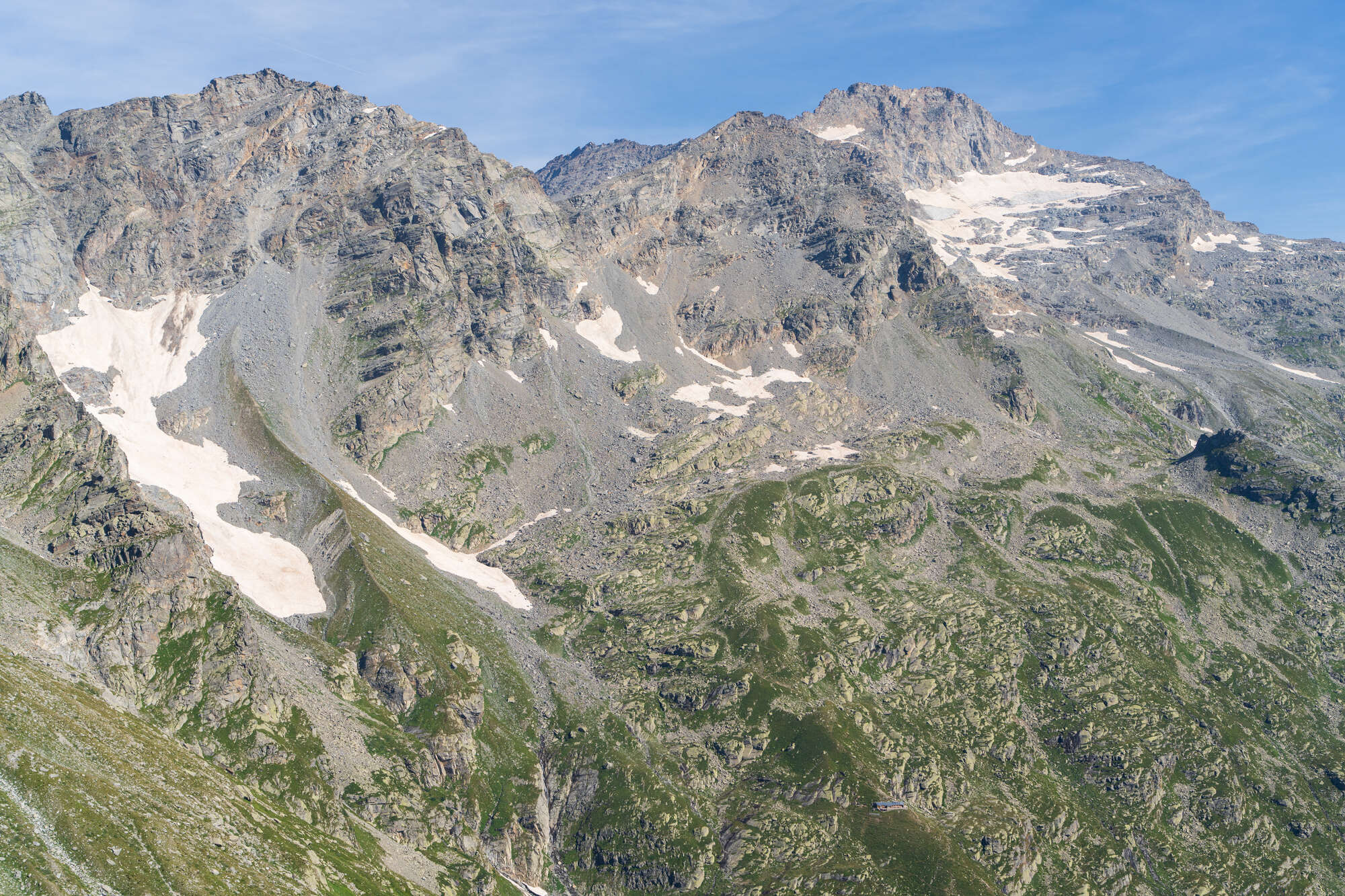
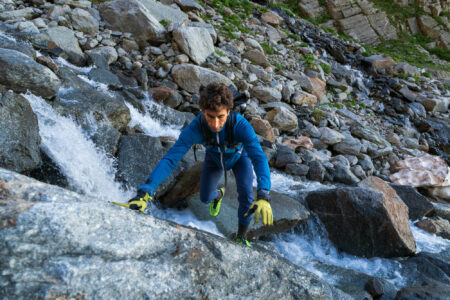
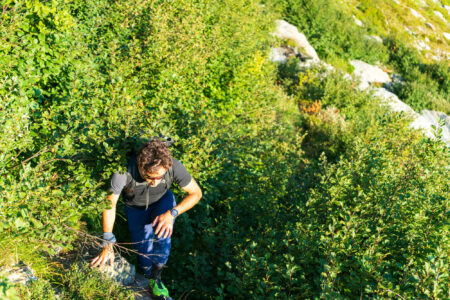
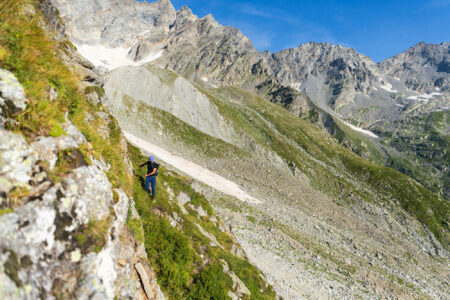
Cross the gully with care, then continue on the opposite side along a contouring path that is not always obvious, partly overgrown and slightly exposed, offering superb views across to the slopes below Daviso Refuge.
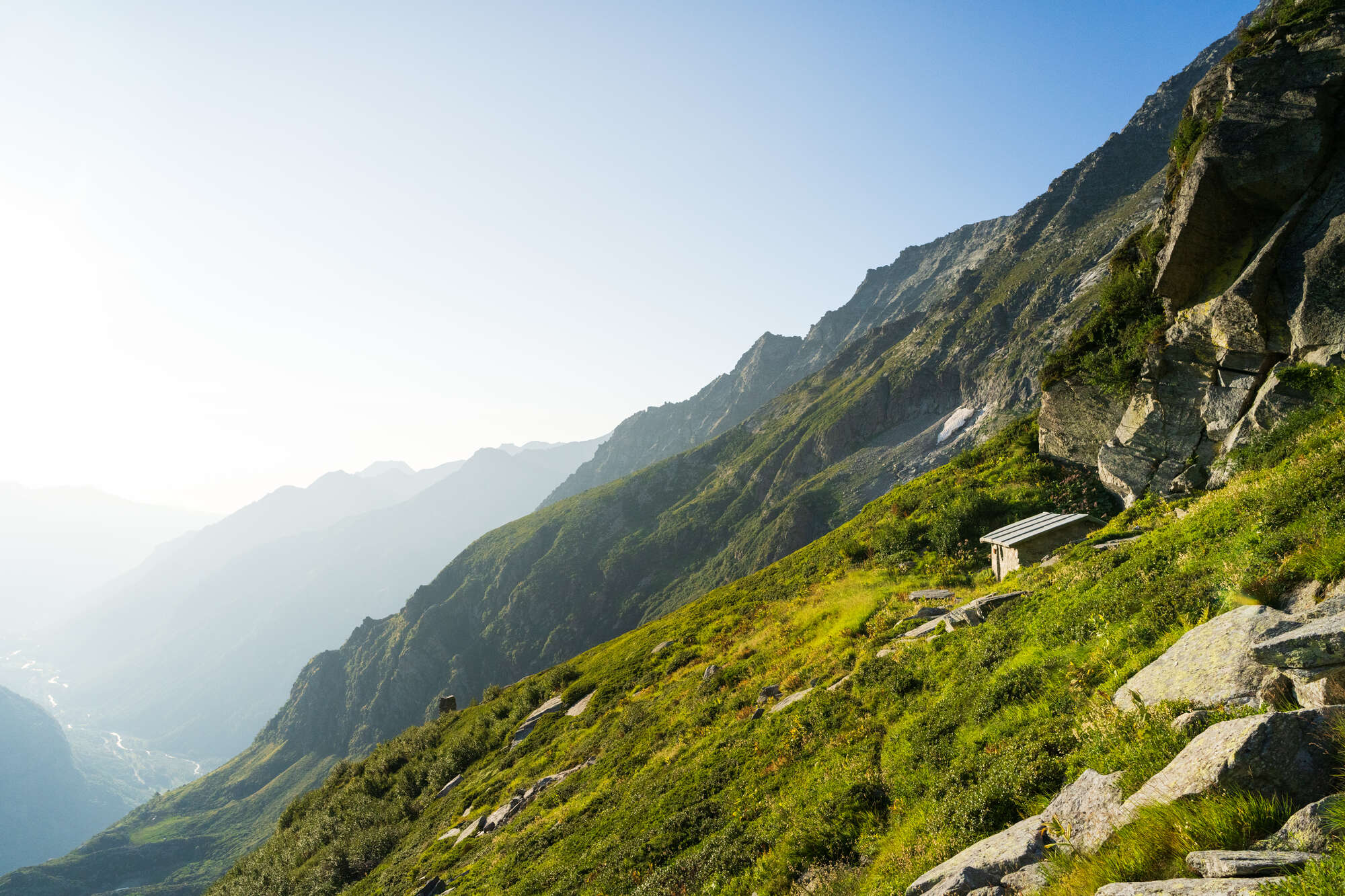
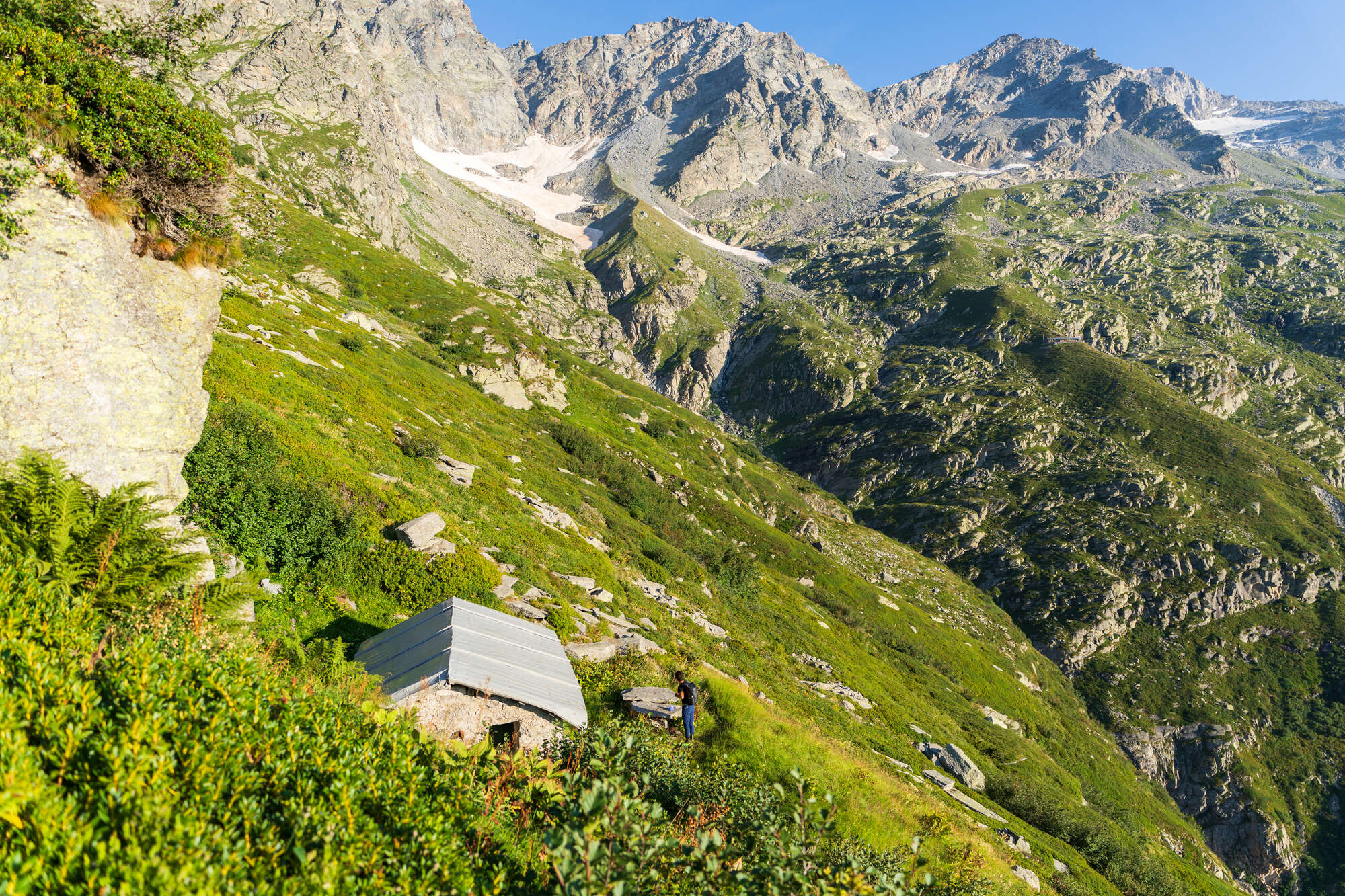
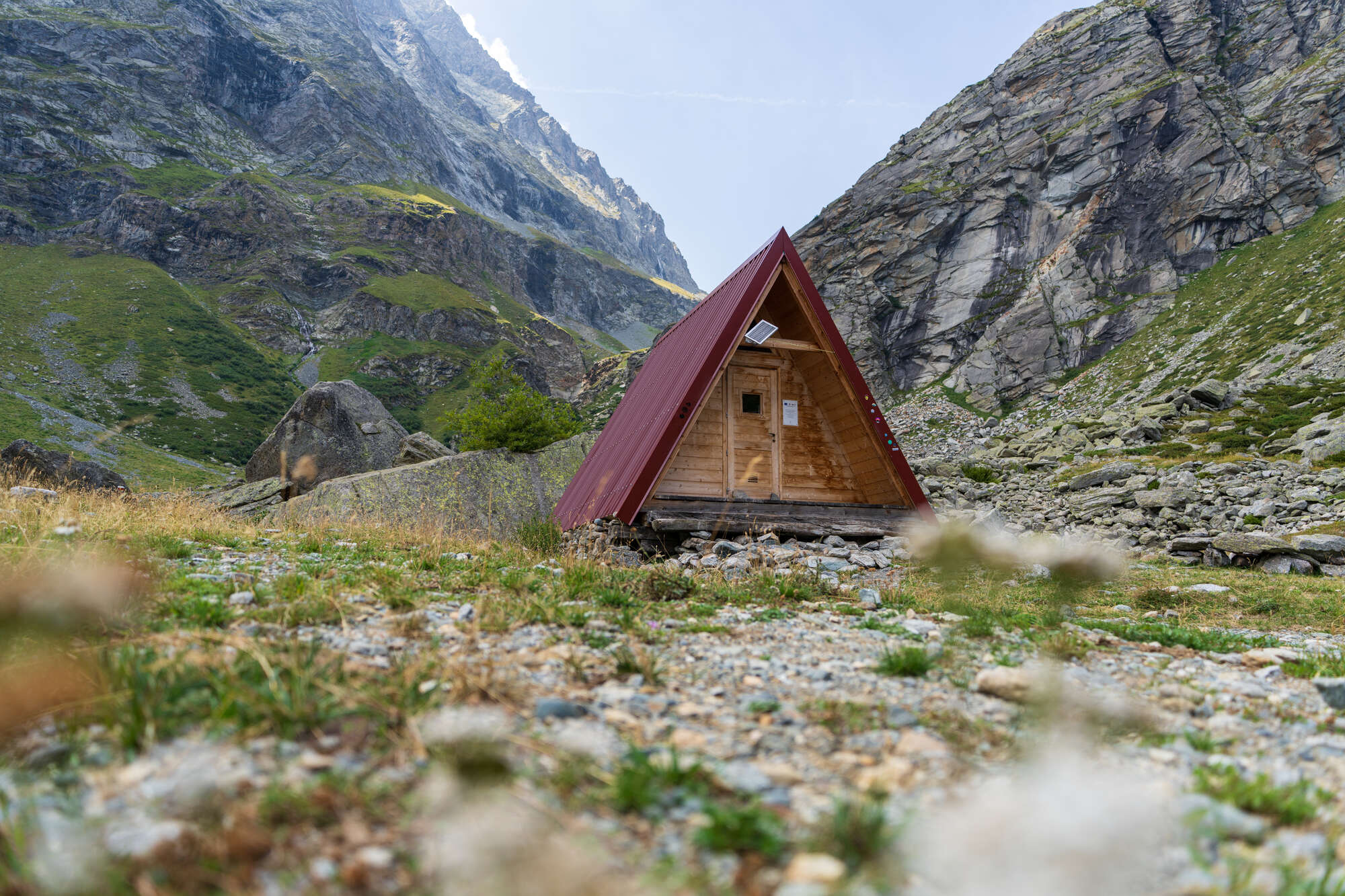
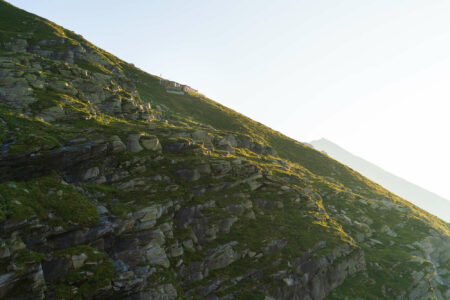
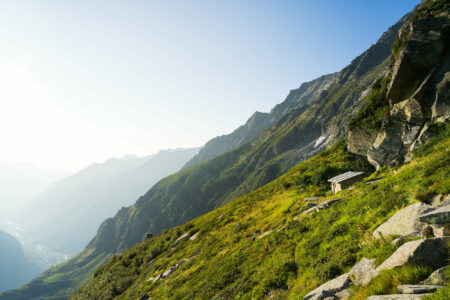
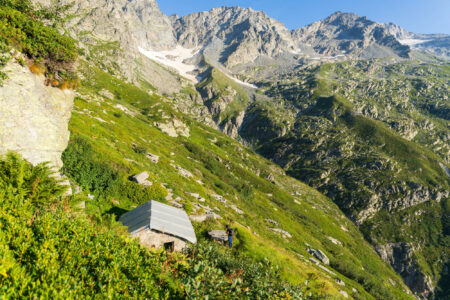
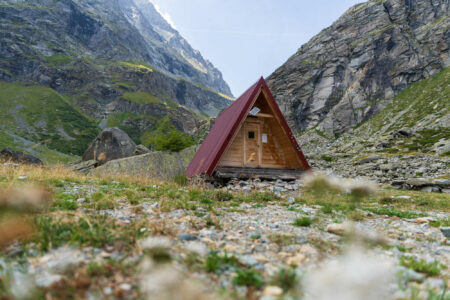
After a long stretch, crossing several tributaries, you reach the Ferreri-Rivero Refuge (2,211 m). Despite the name, this is not a staffed refuge but a basic bivouac shelter. A path arrives here from the valley below and can be used as an escape route, though it is steep and equipped with chains in places.
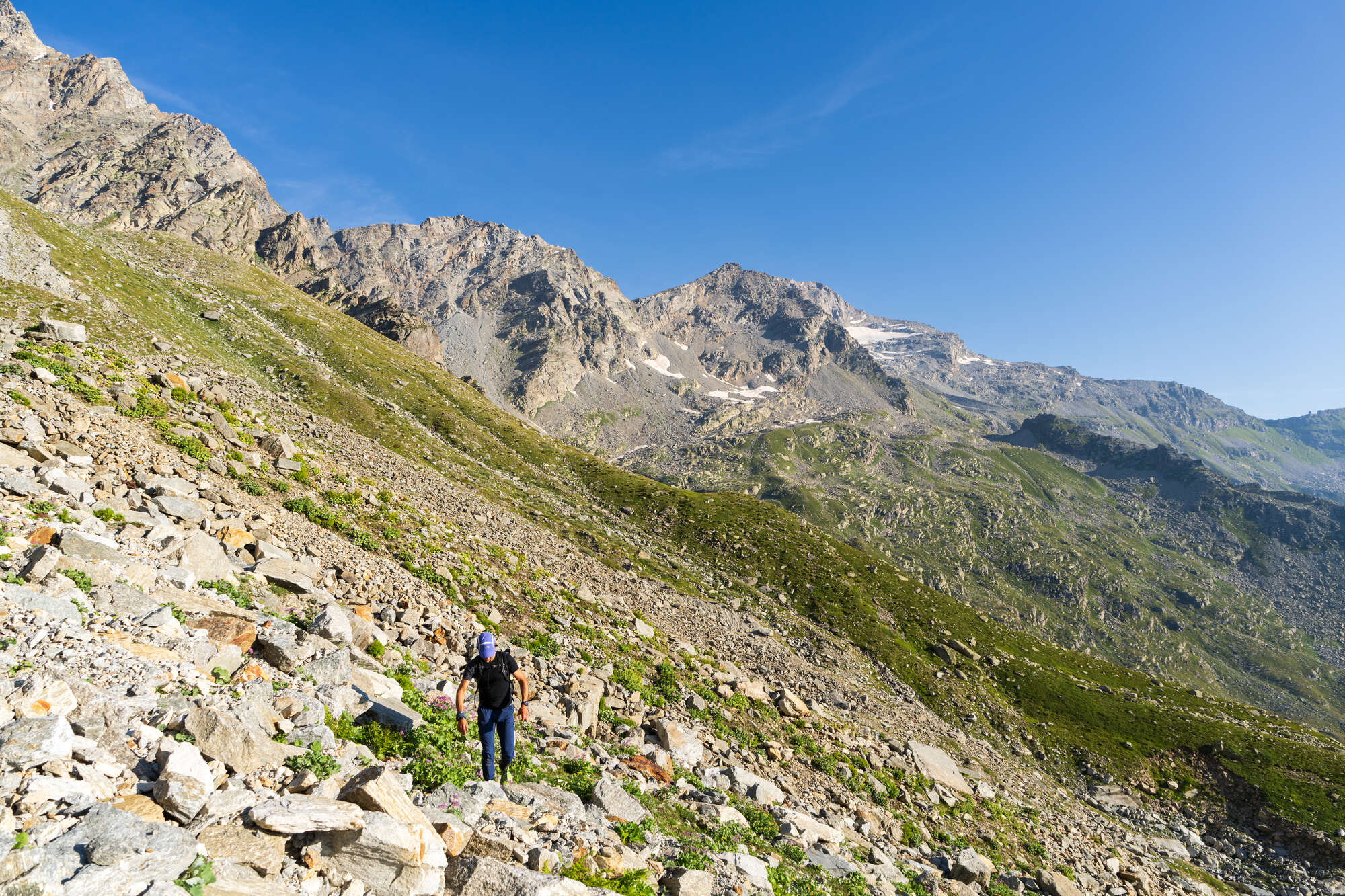
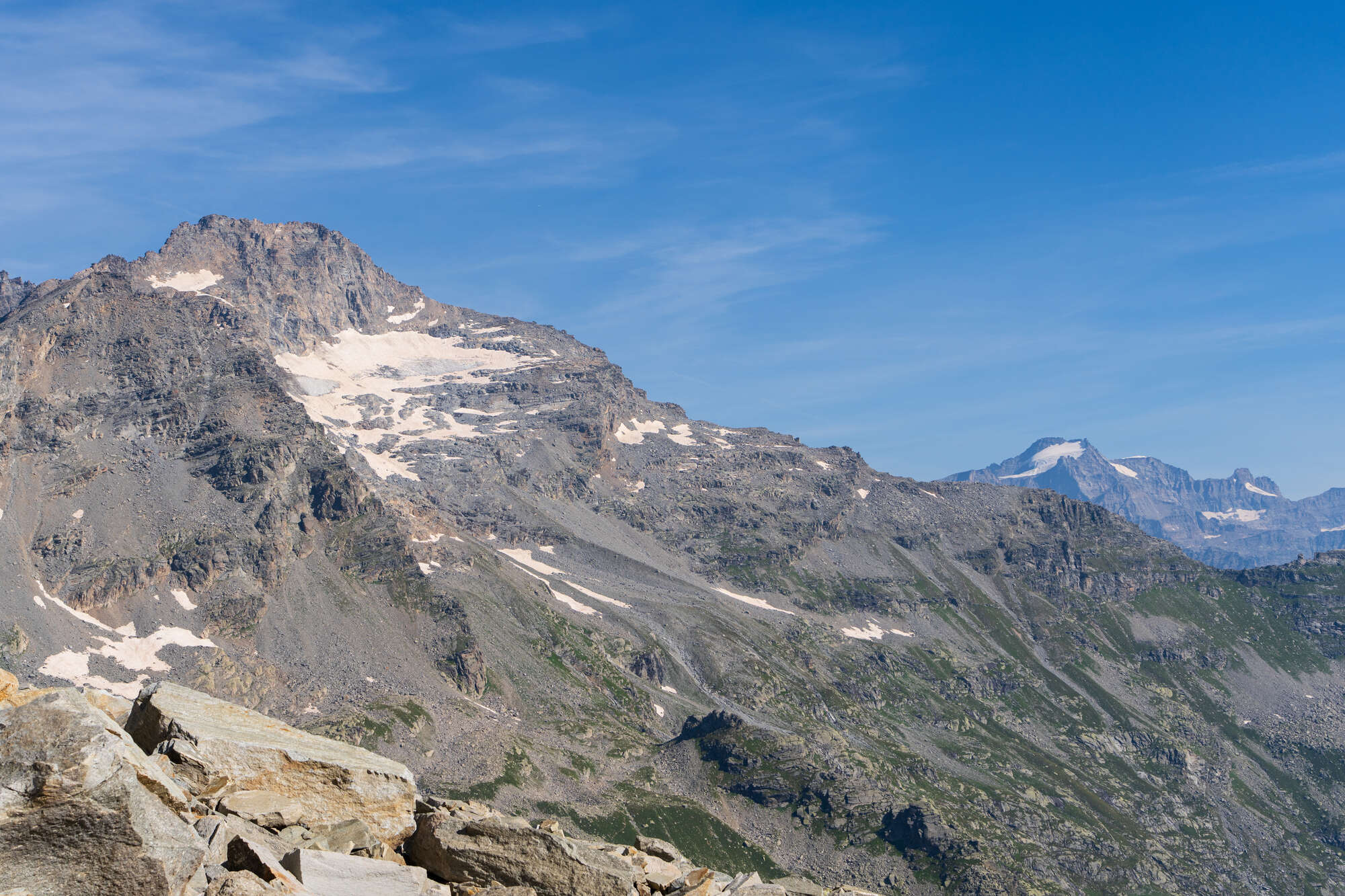
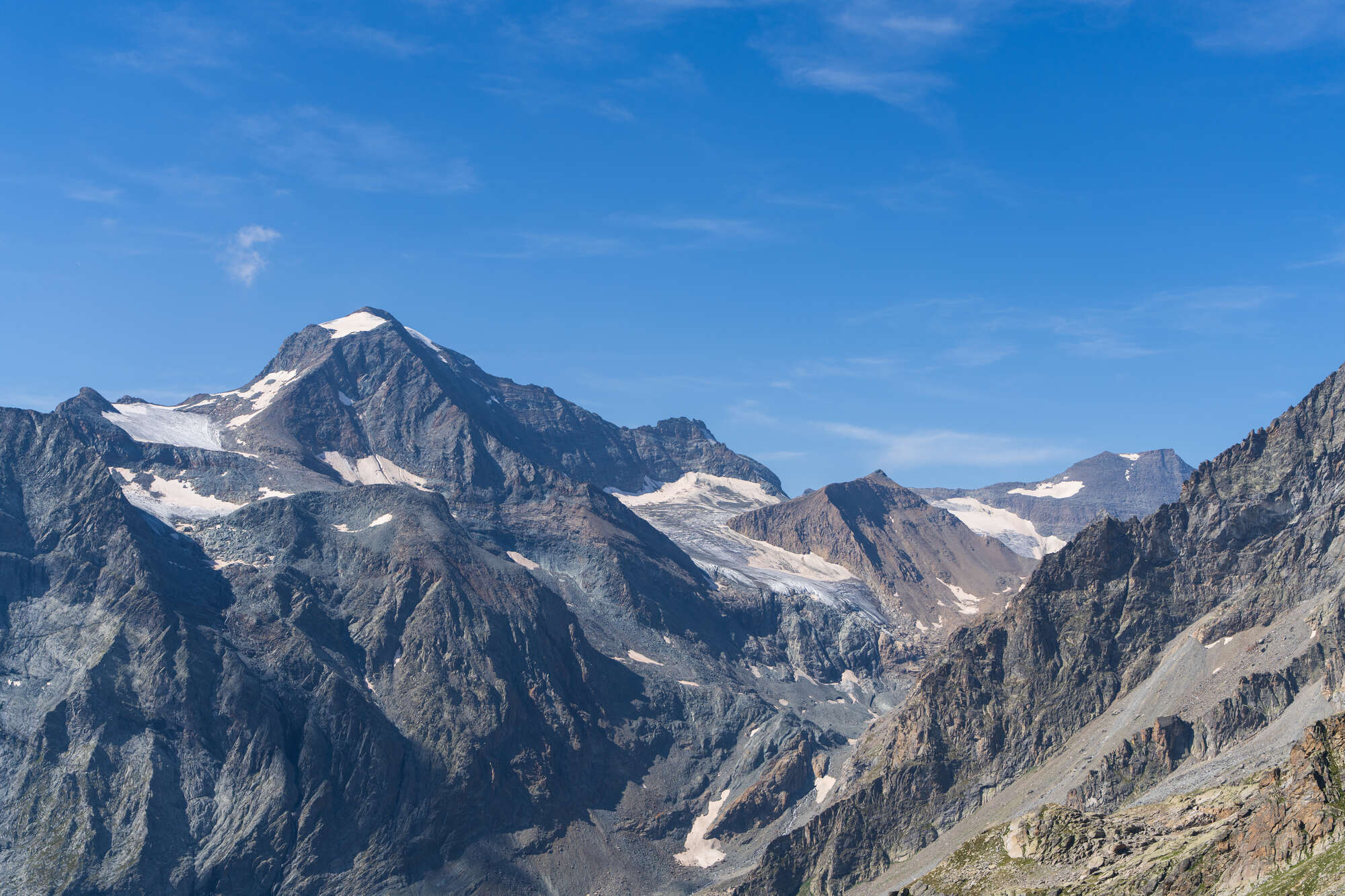
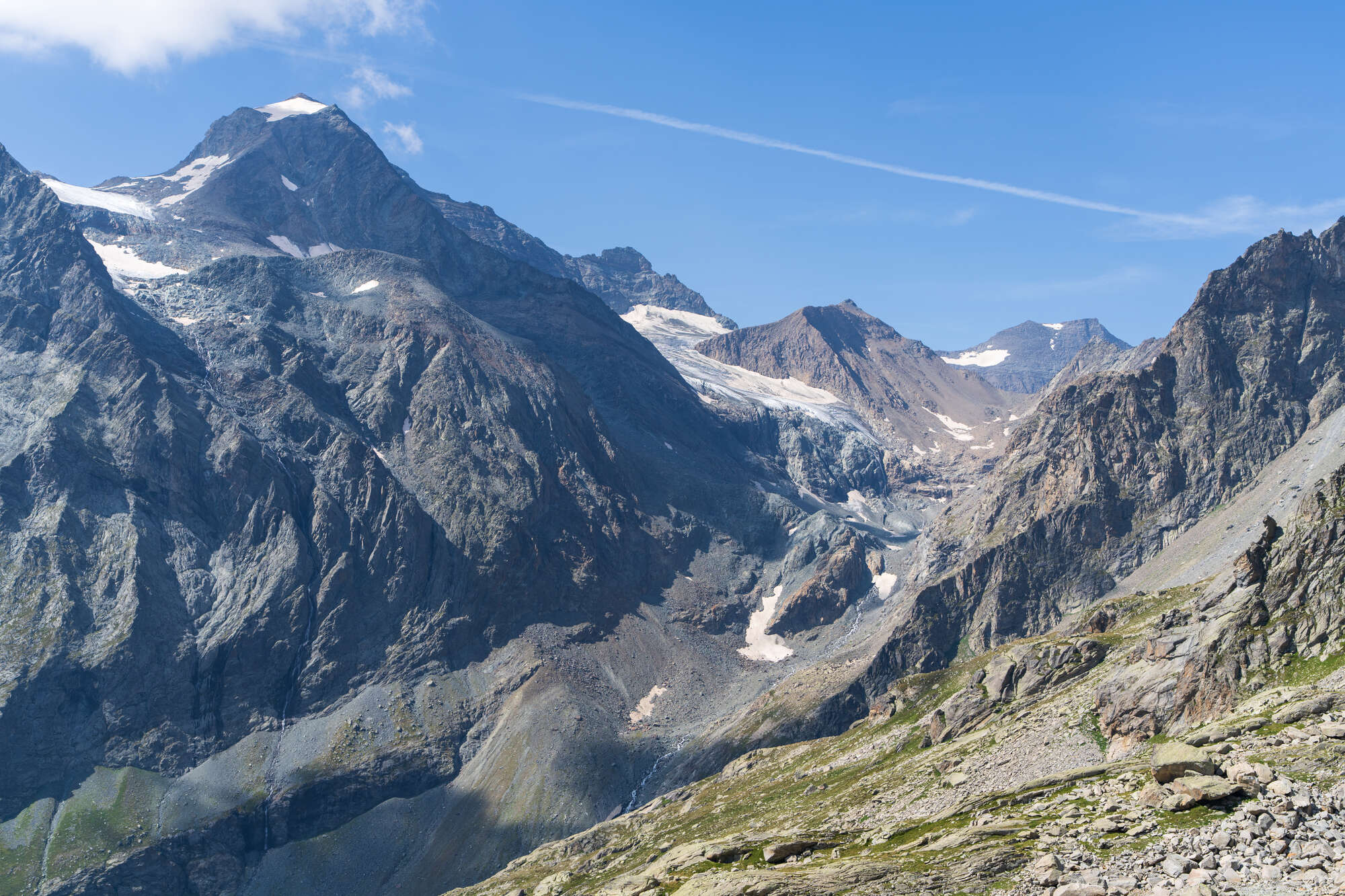
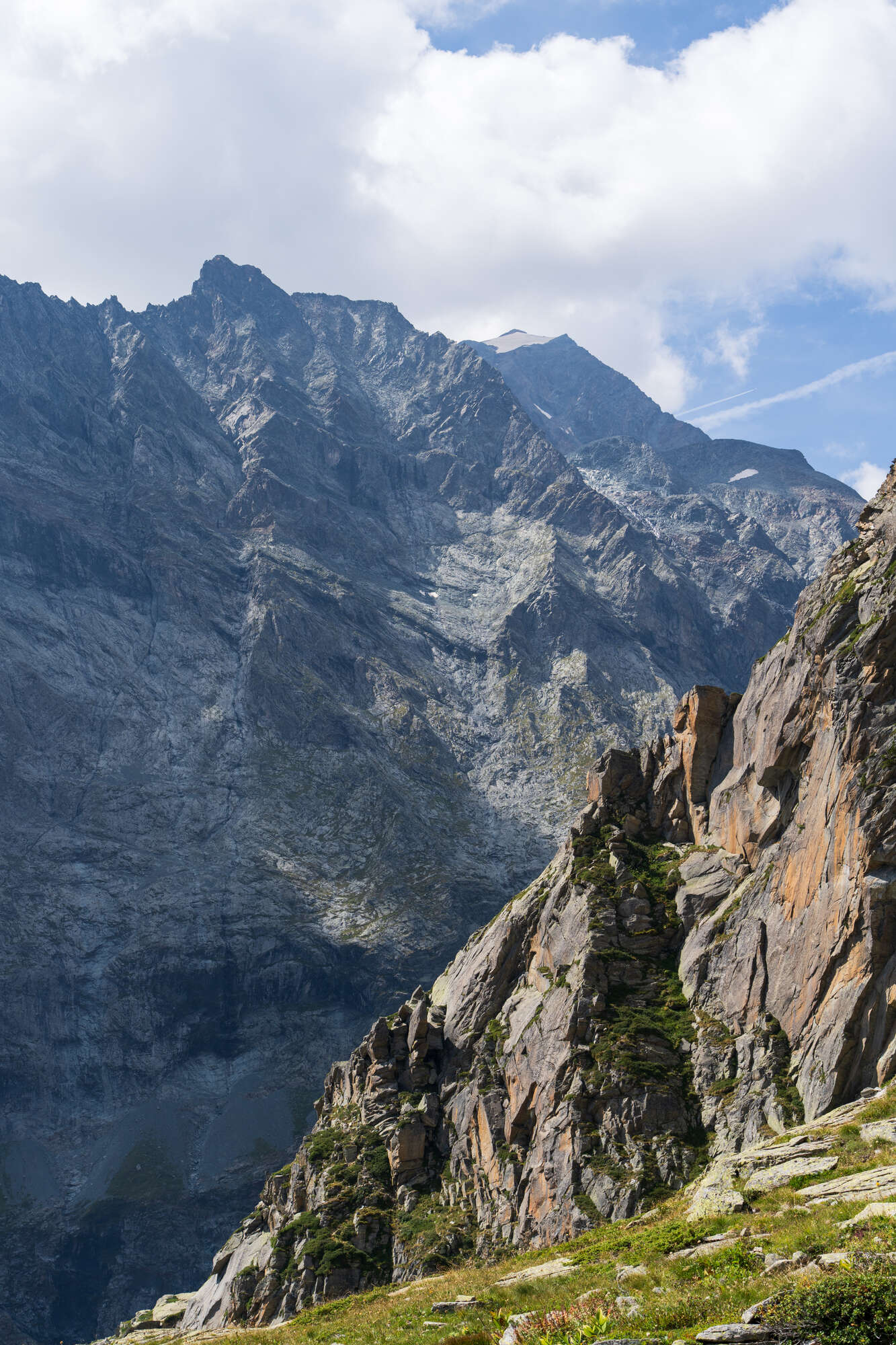
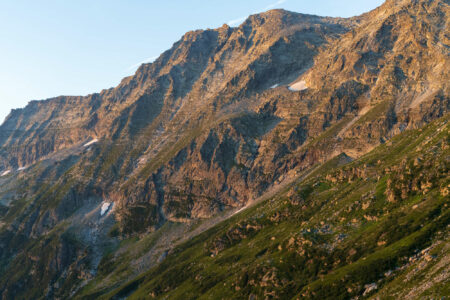
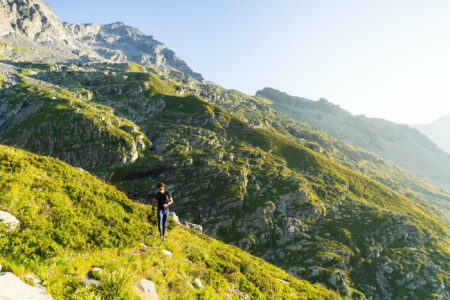
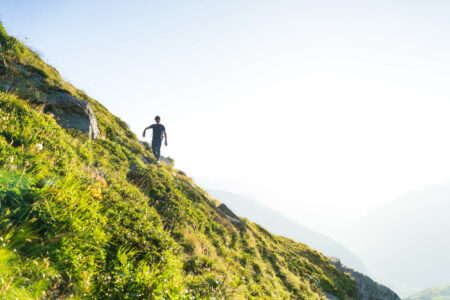
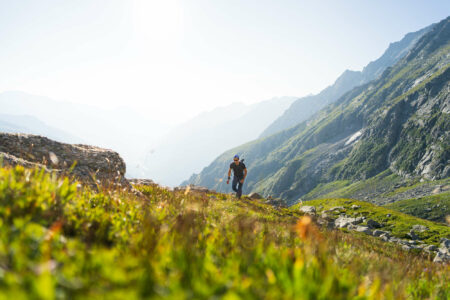
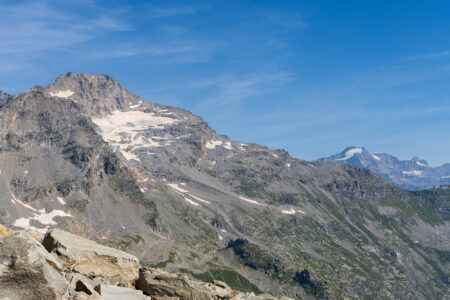
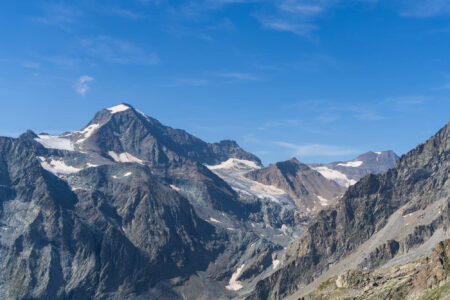
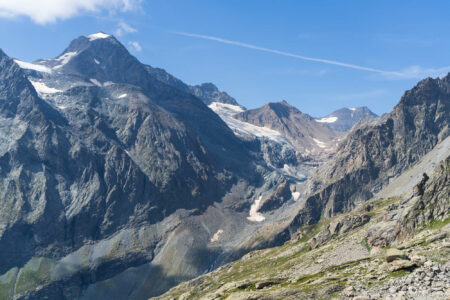
Continue uphill, heading south on the path, which is fairly clear despite sparse waymarks, as it follows a traversing line. On reaching a grassy ridge spur, the path turns right to climb it. This is a simply magnificent spot: a sweeping amphitheatre holding the Mulinet Glacier, split into its south and north basins. The path heads towards the former Rivero bivouac, destroyed by avalanches on several occasions, which is why it was permanently abandoned and its name added to the existing Ferreri Refuge in honour of the magistrate and mountaineer Michele Rivero.
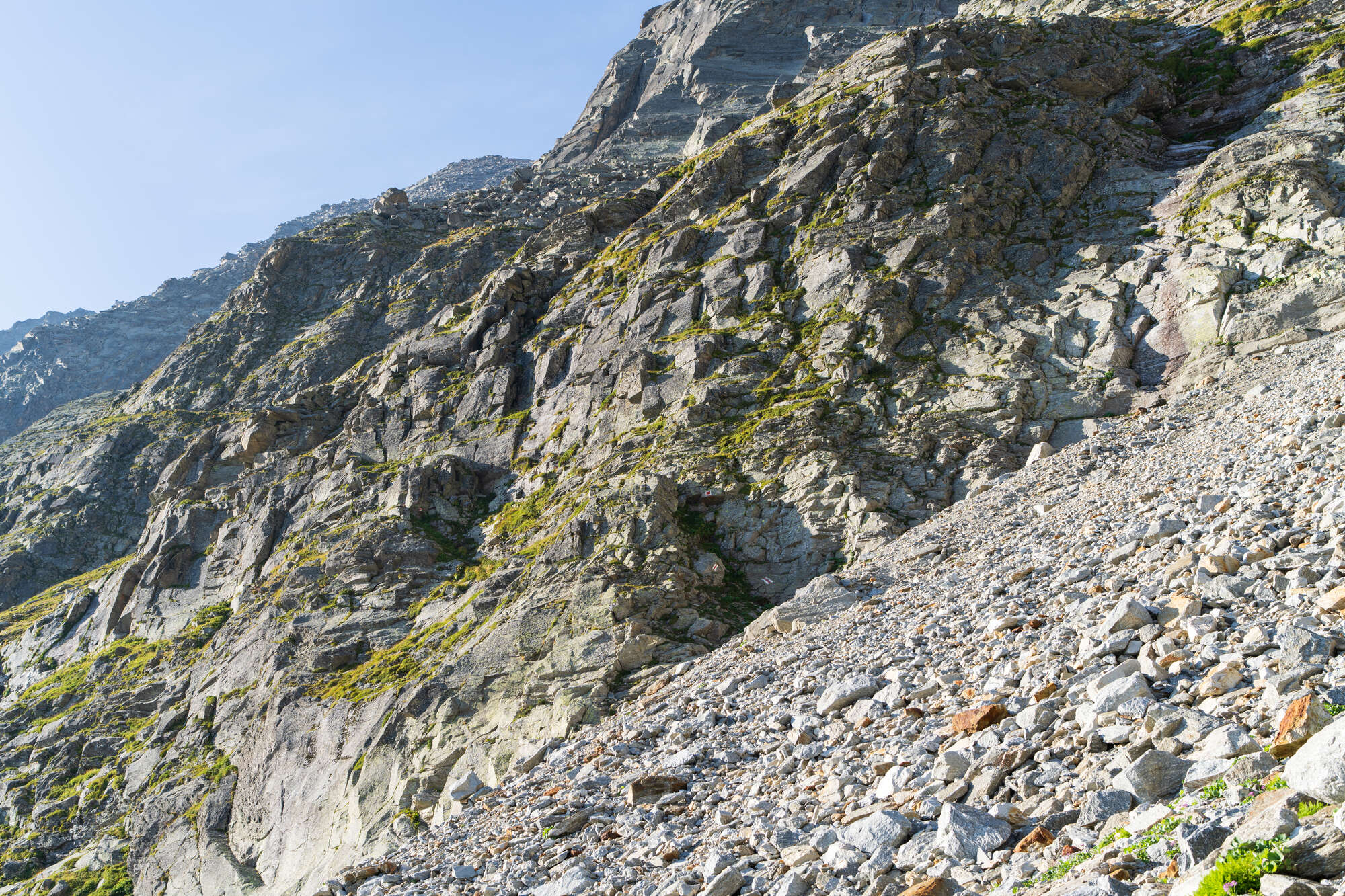
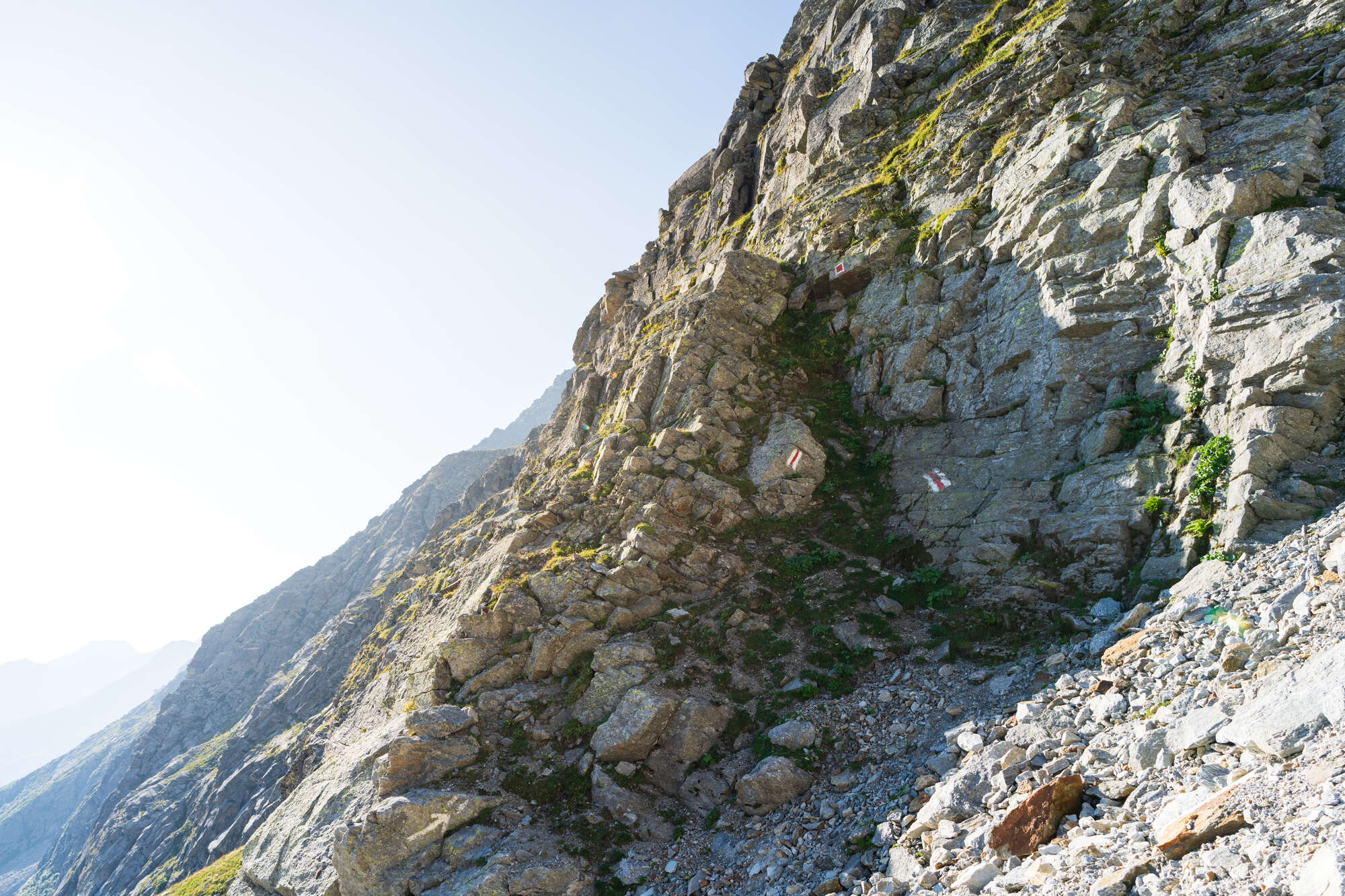
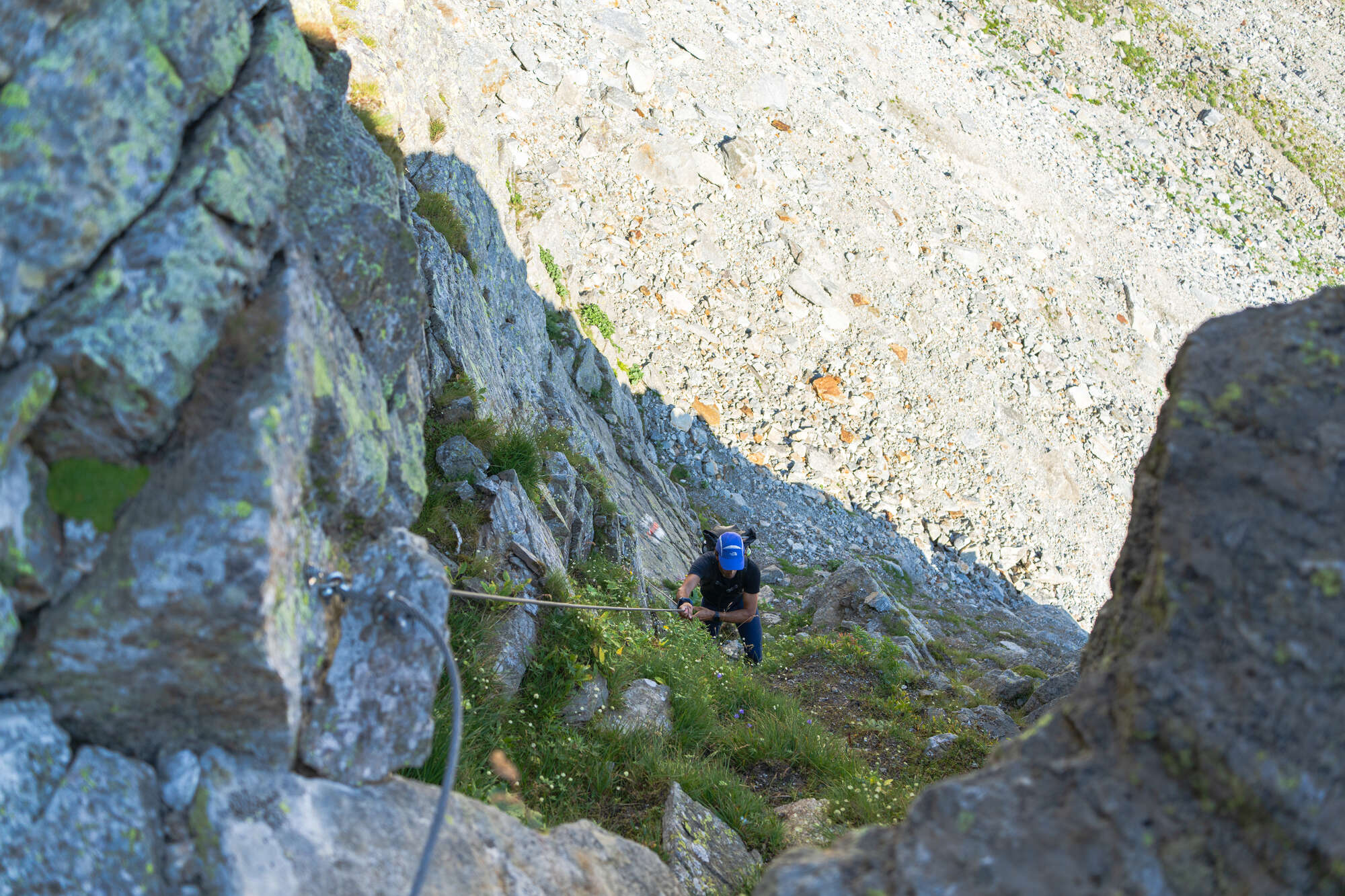
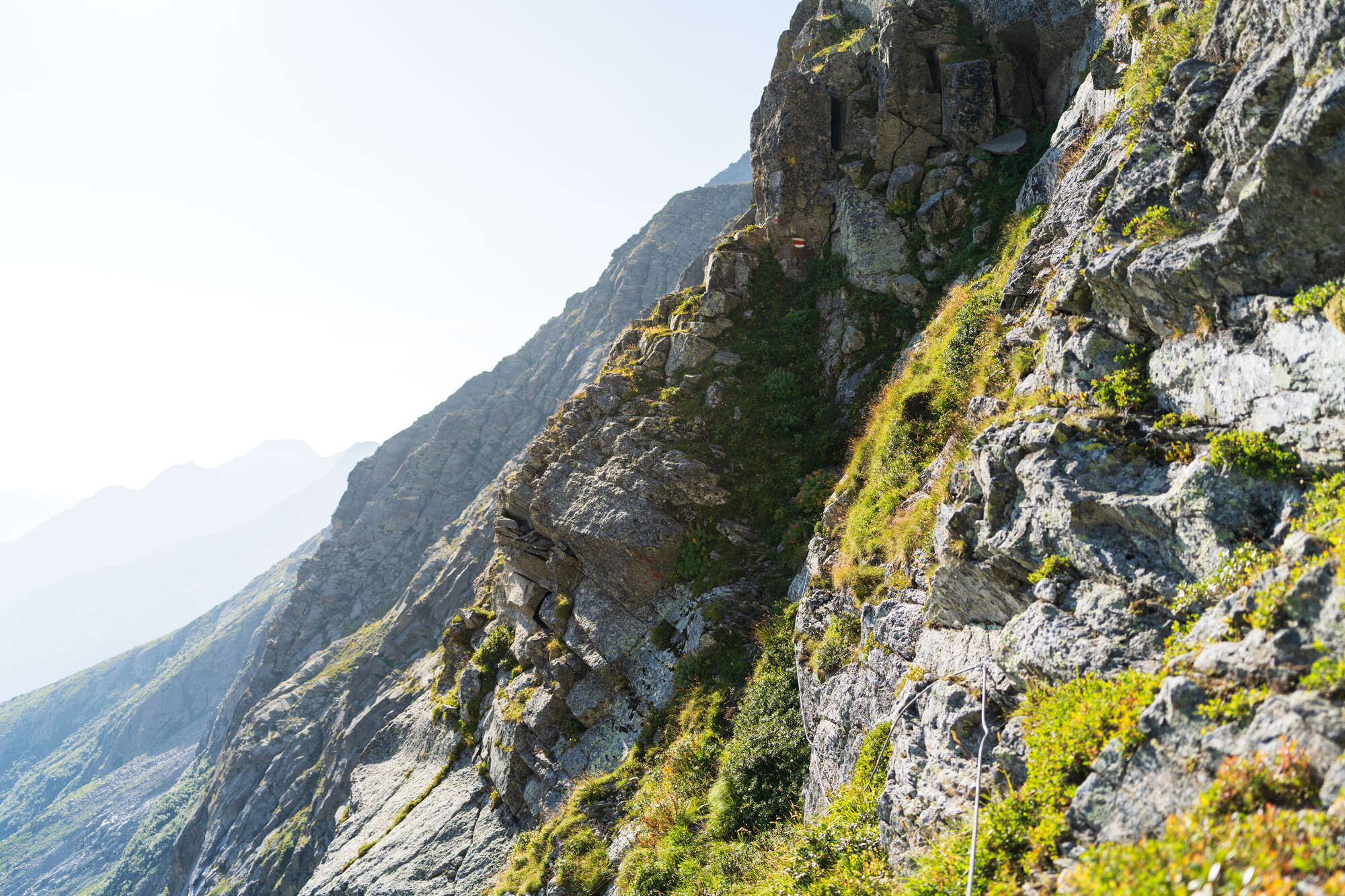
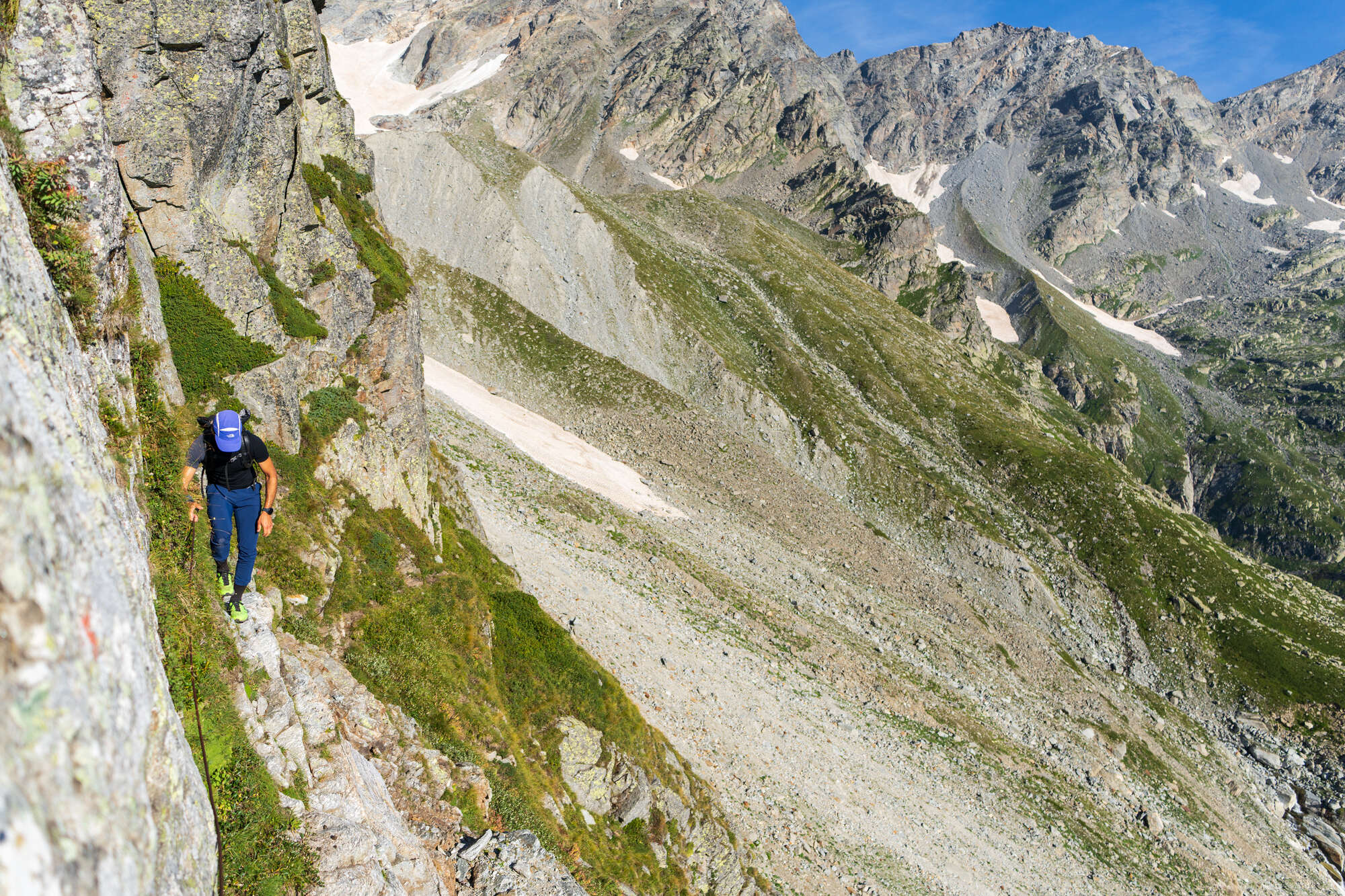
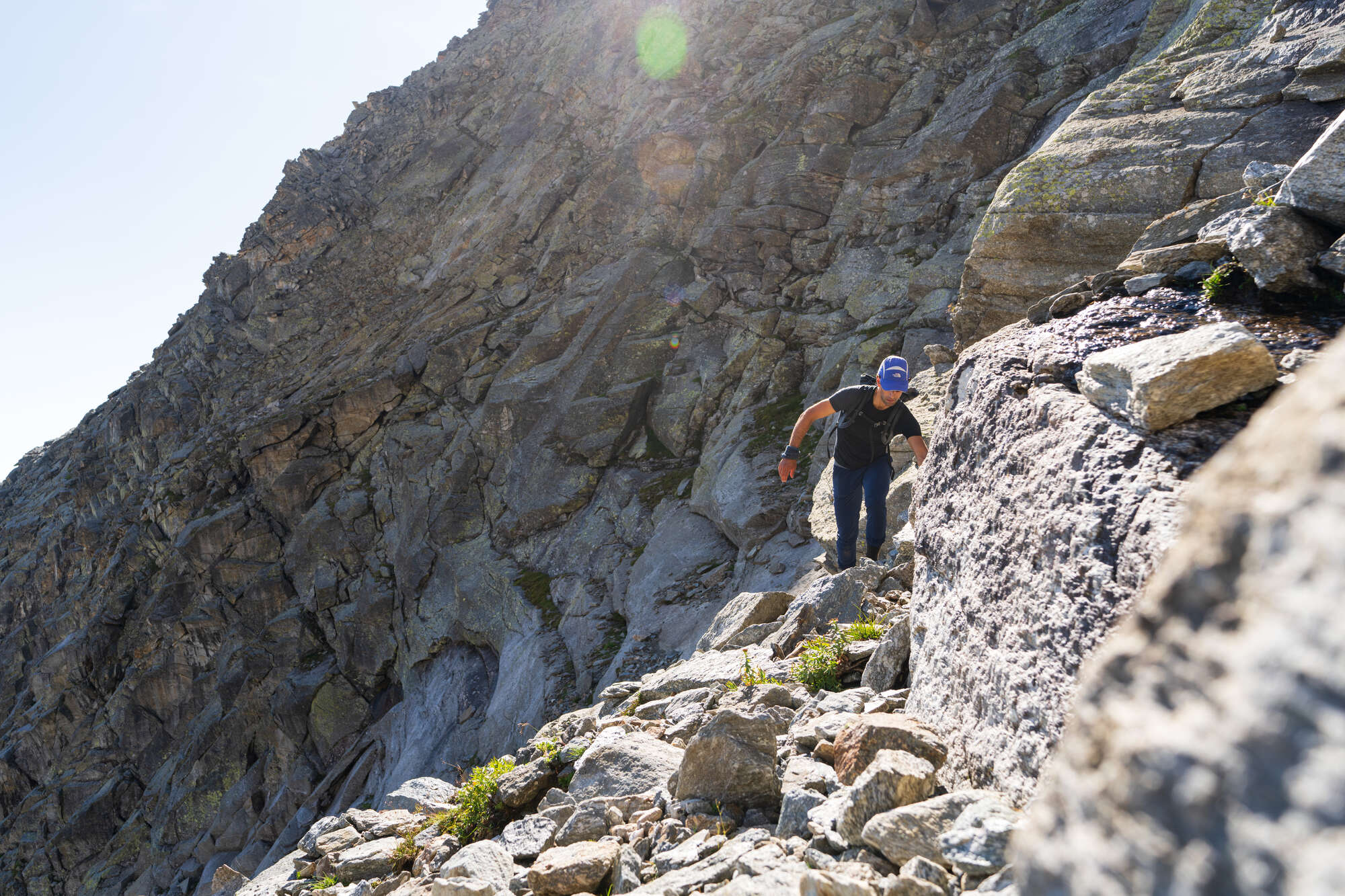
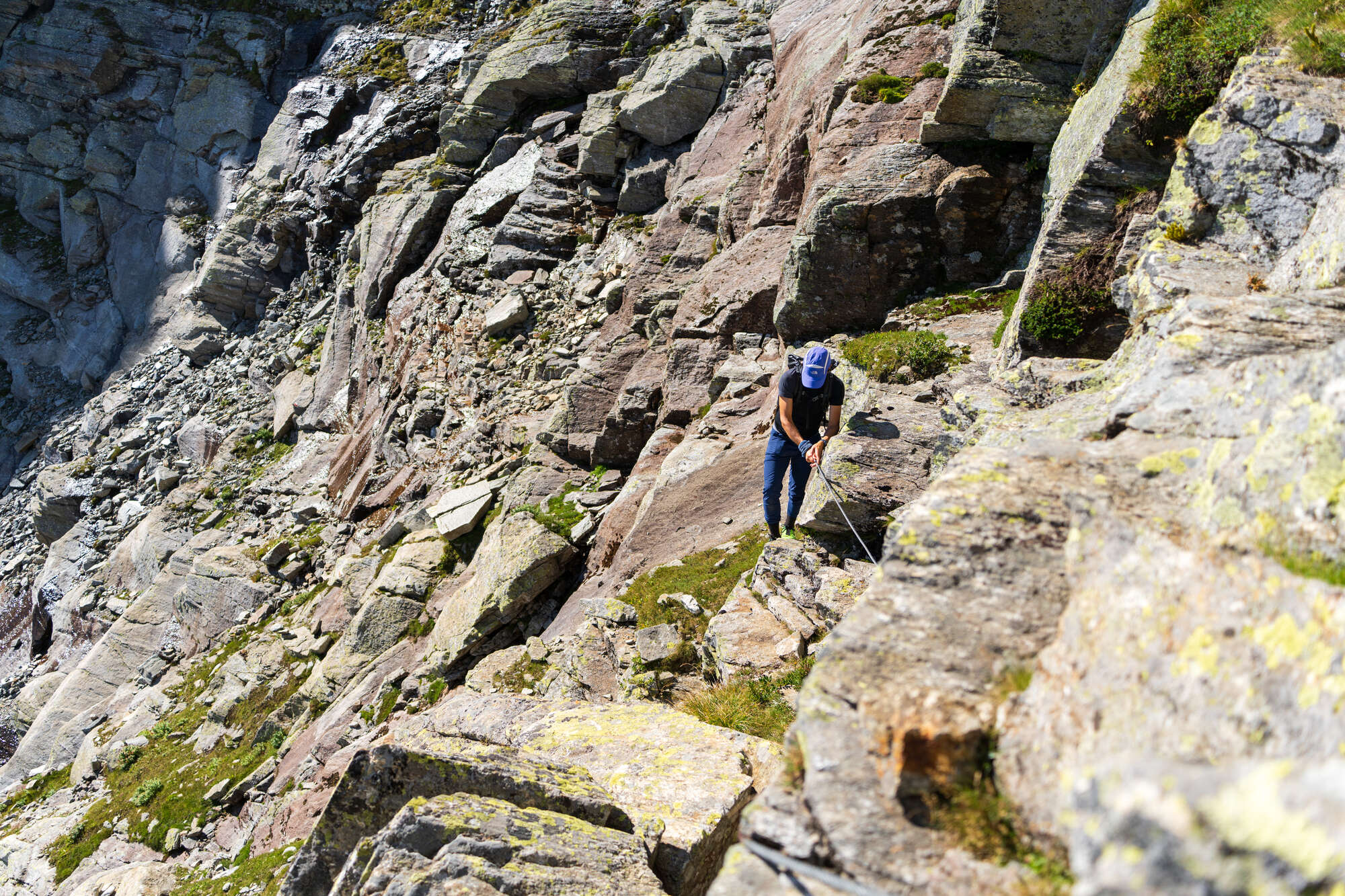
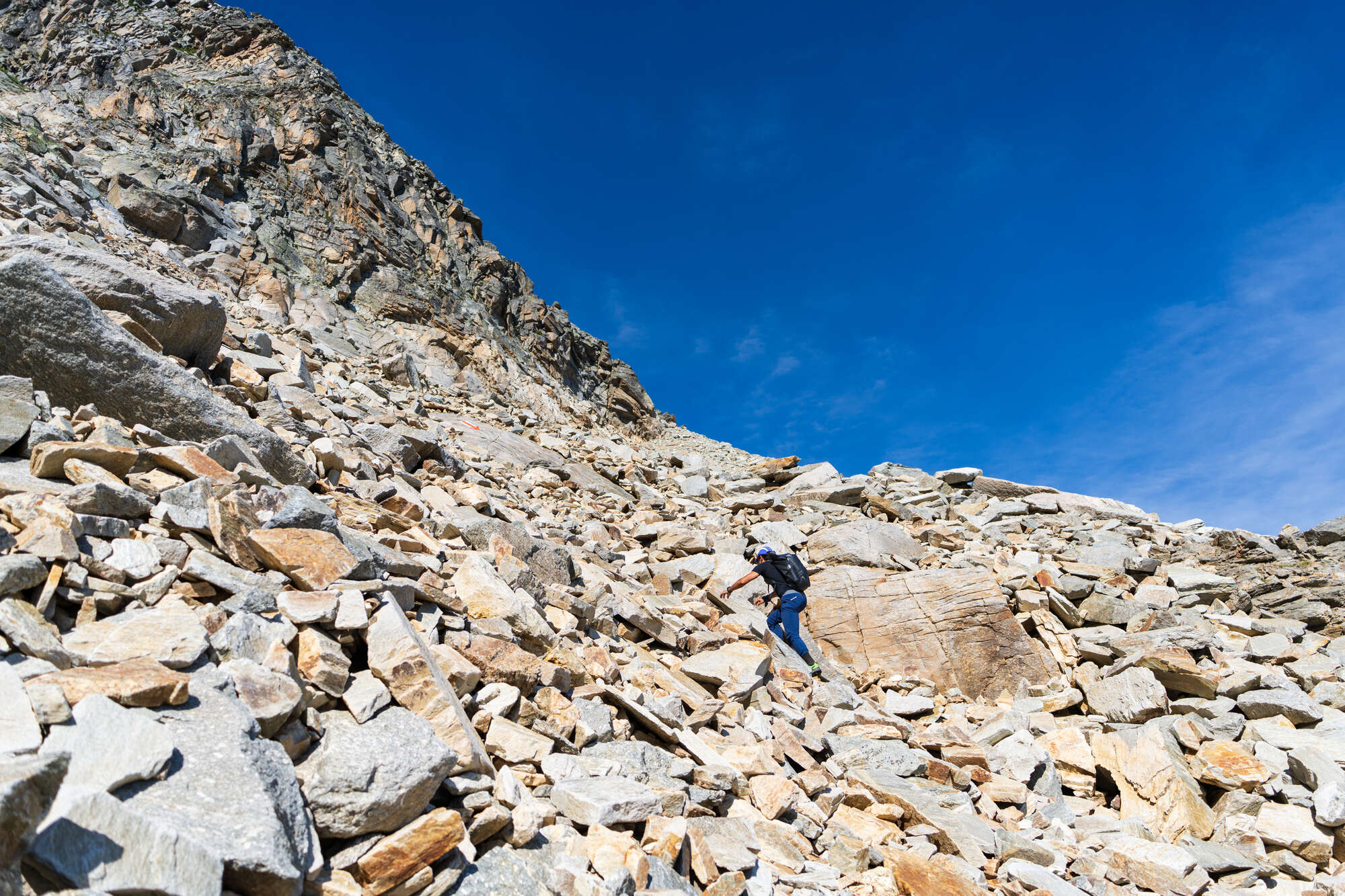
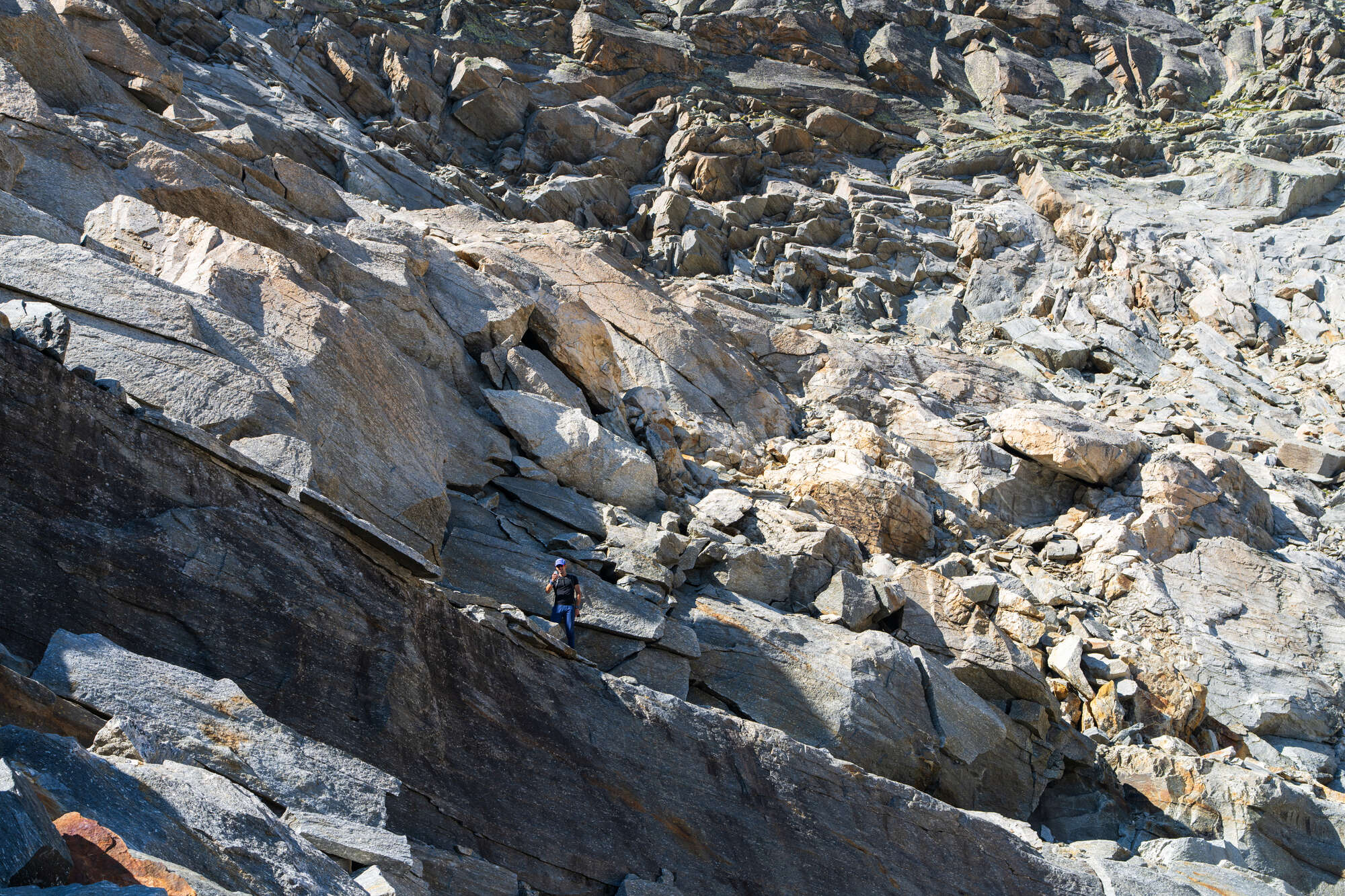
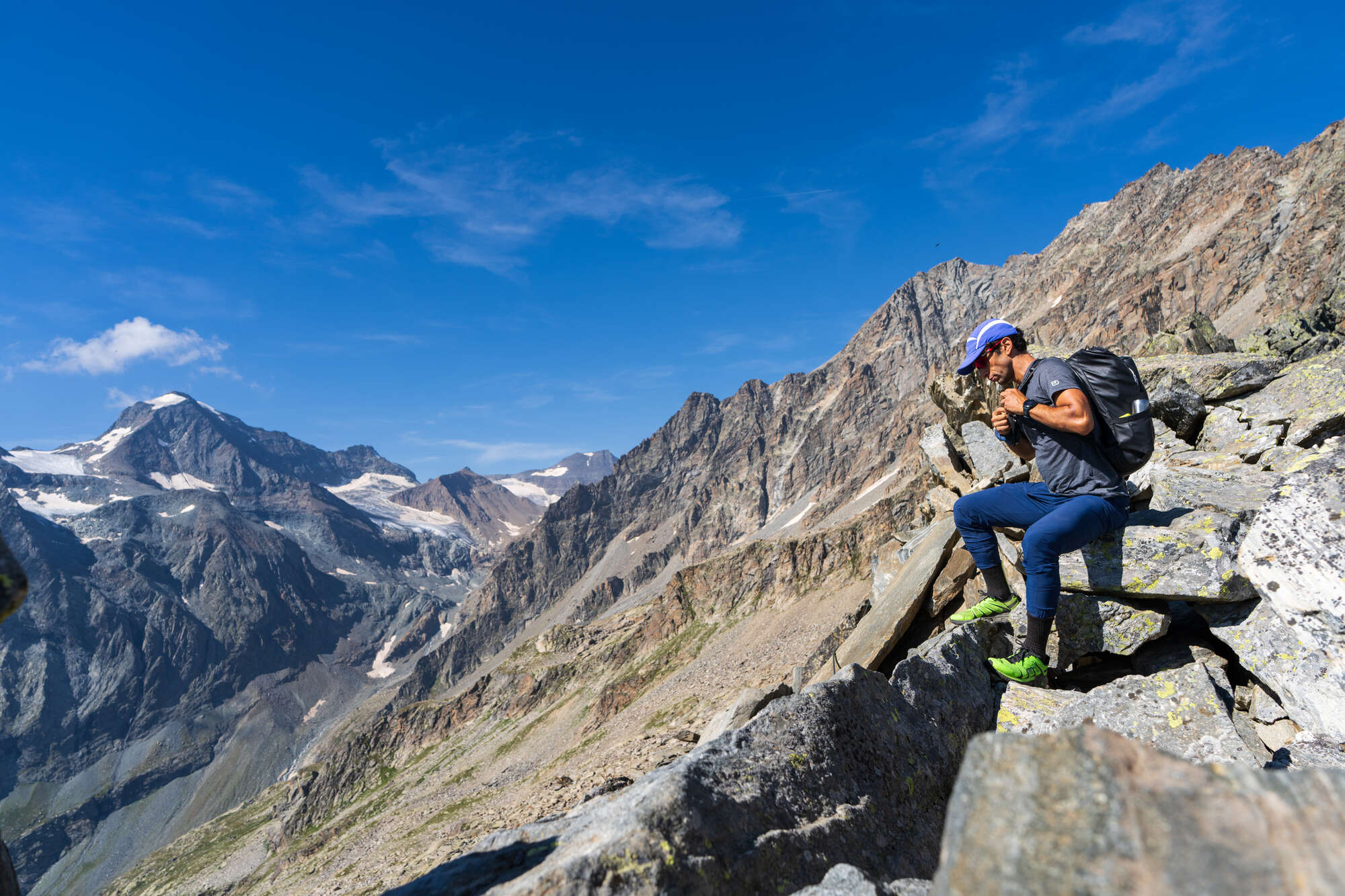
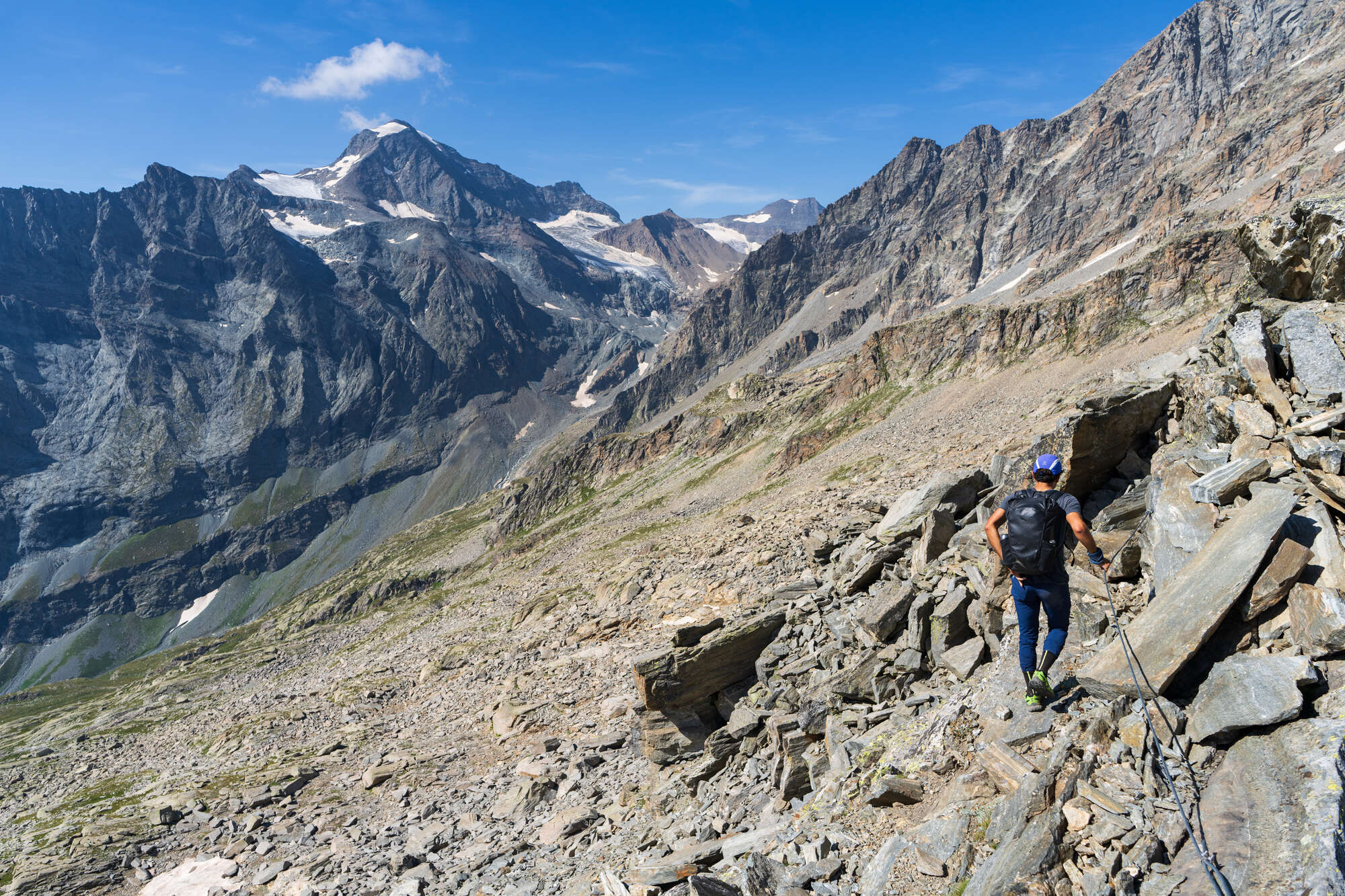
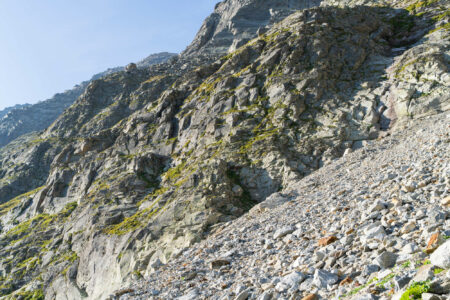
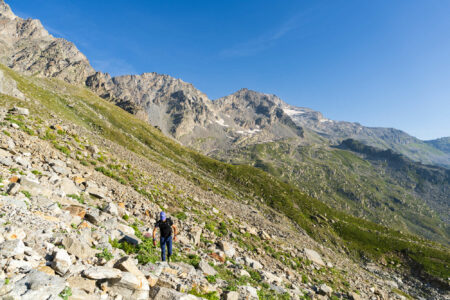
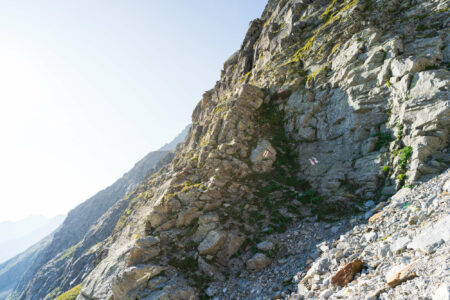
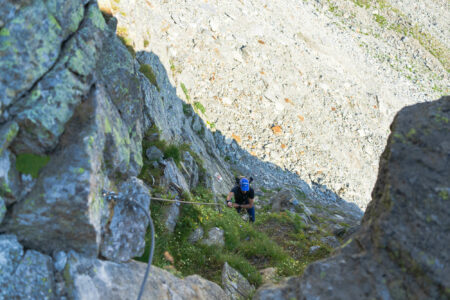
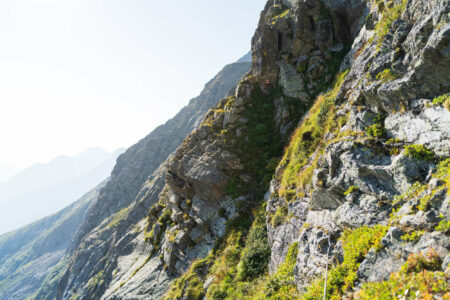
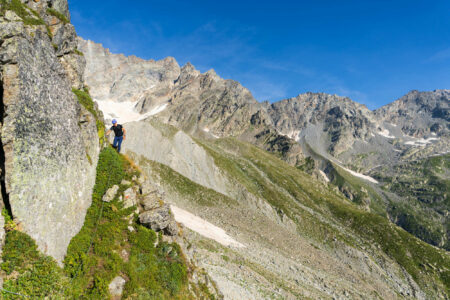
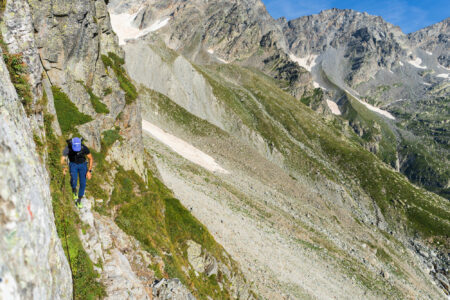
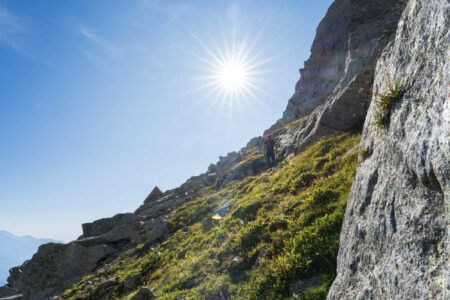
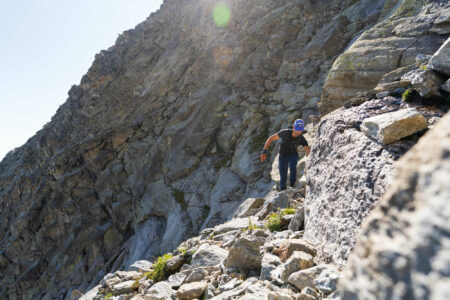
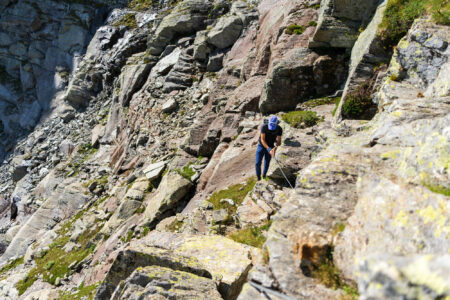
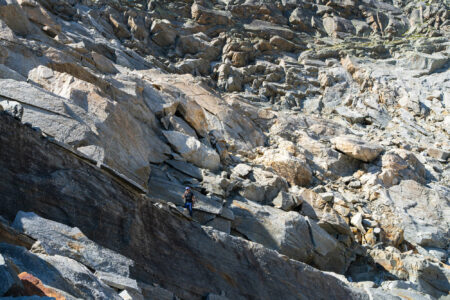
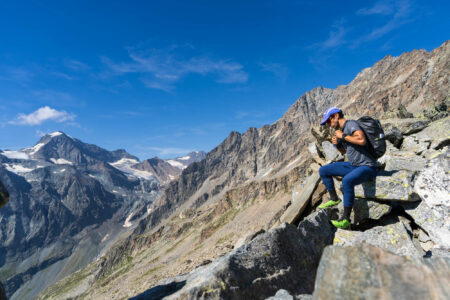
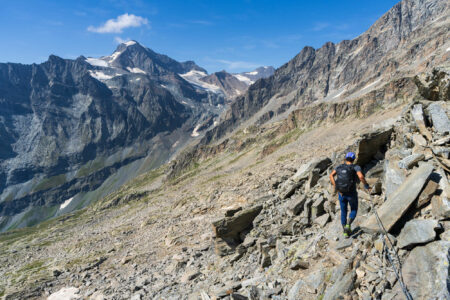
At around 2,300 m, leave the path and turn left, heading off-trail with no waymarks, descending into the deep, debris-filled gully of the Bramafan Brook. Cross the gully and scramble up the loose opposite side as best you can. Using a line of large white-red blazes painted on the rocky outcrops as a reference, pick your way across the tiring boulder field to the start of the equipped section: a steep grassy ramp fitted with a steel cable. At this point, it is advisable to put on a helmet, harness, and double lanyard, as you need to negotiate a series of narrow, highly exposed ledges that cut across the rock face with various ups and downs. Although they are almost entirely cable-equipped, it is best to check the condition of the cable before fully trusting it.
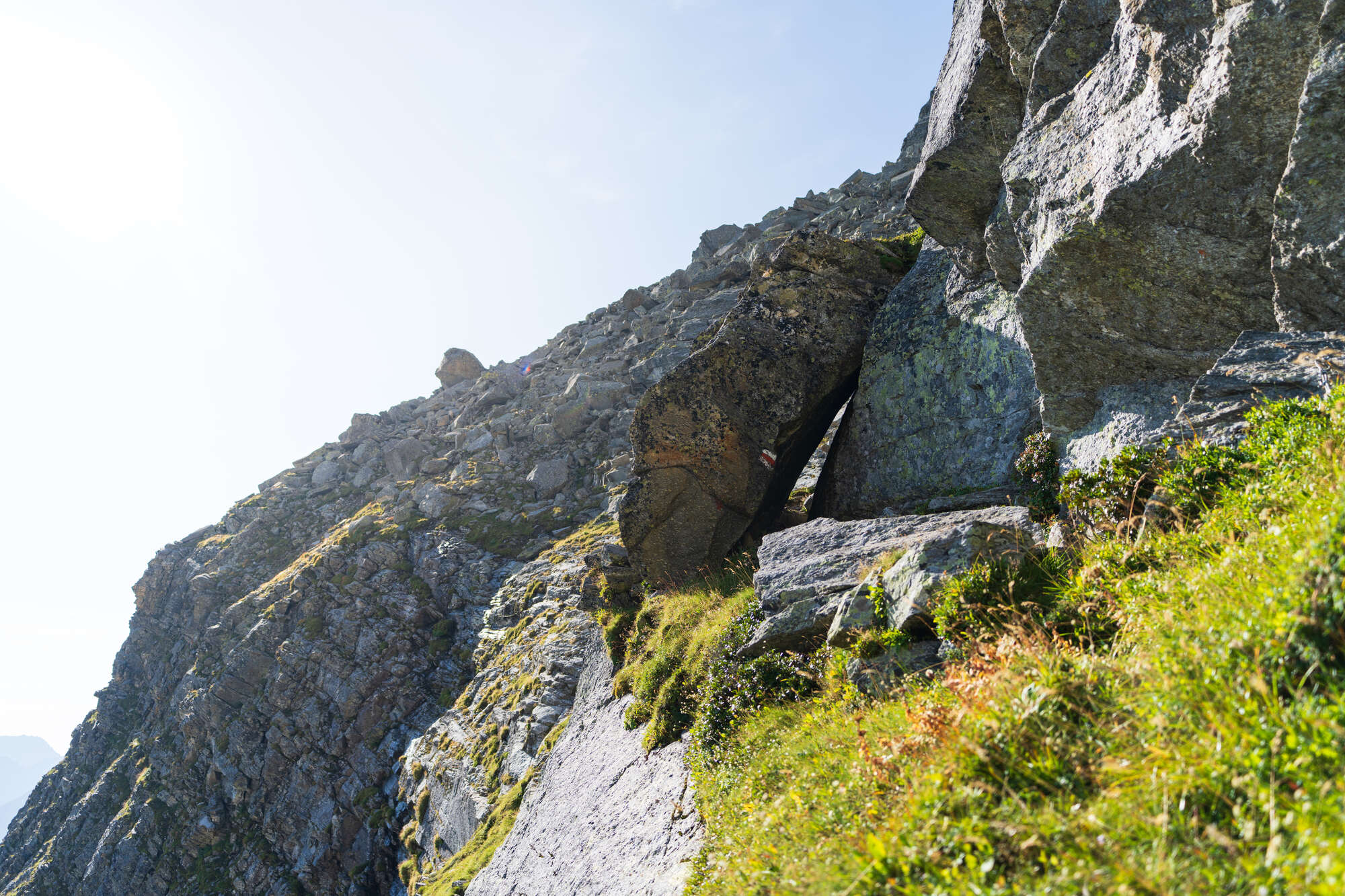
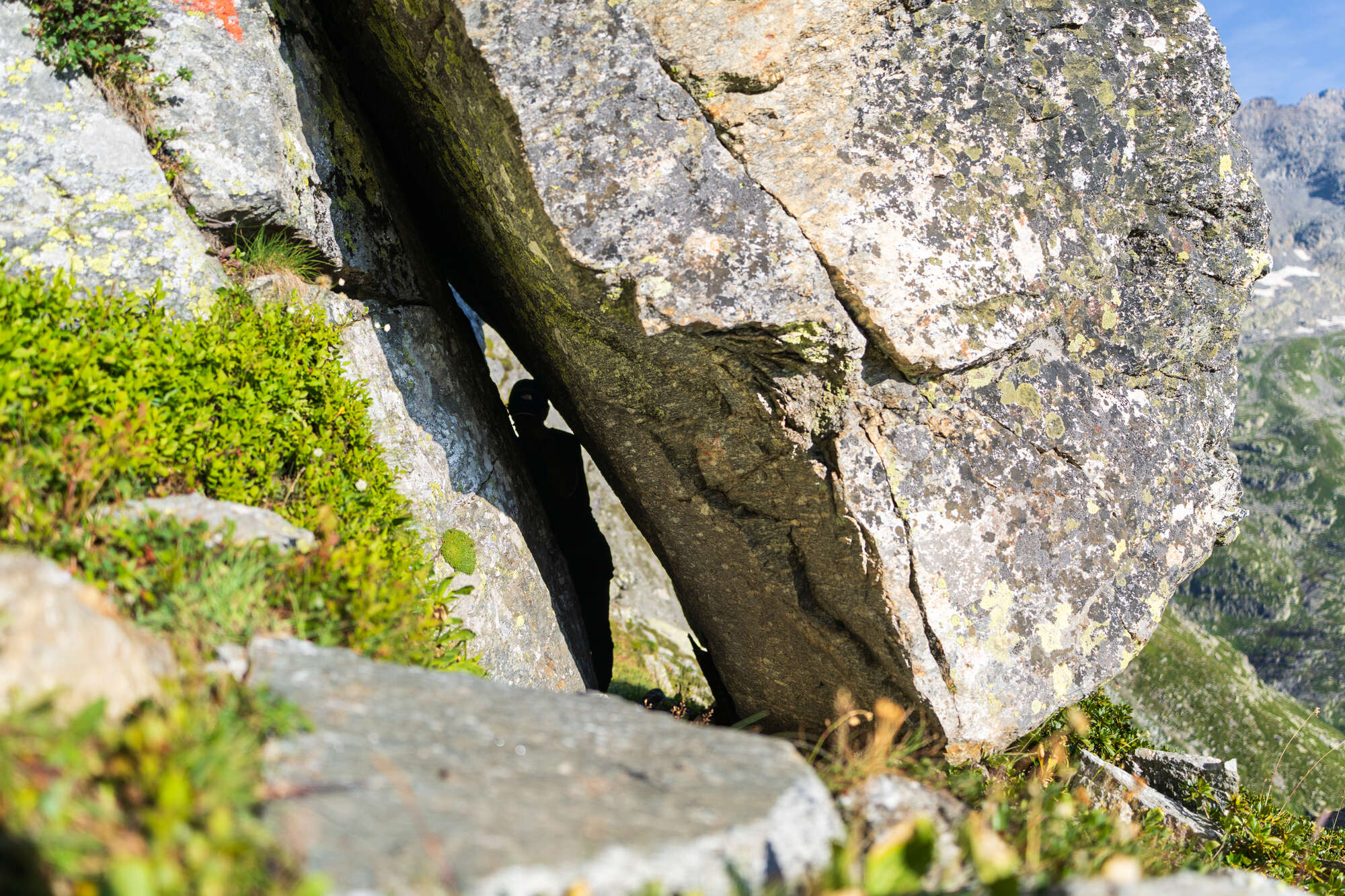
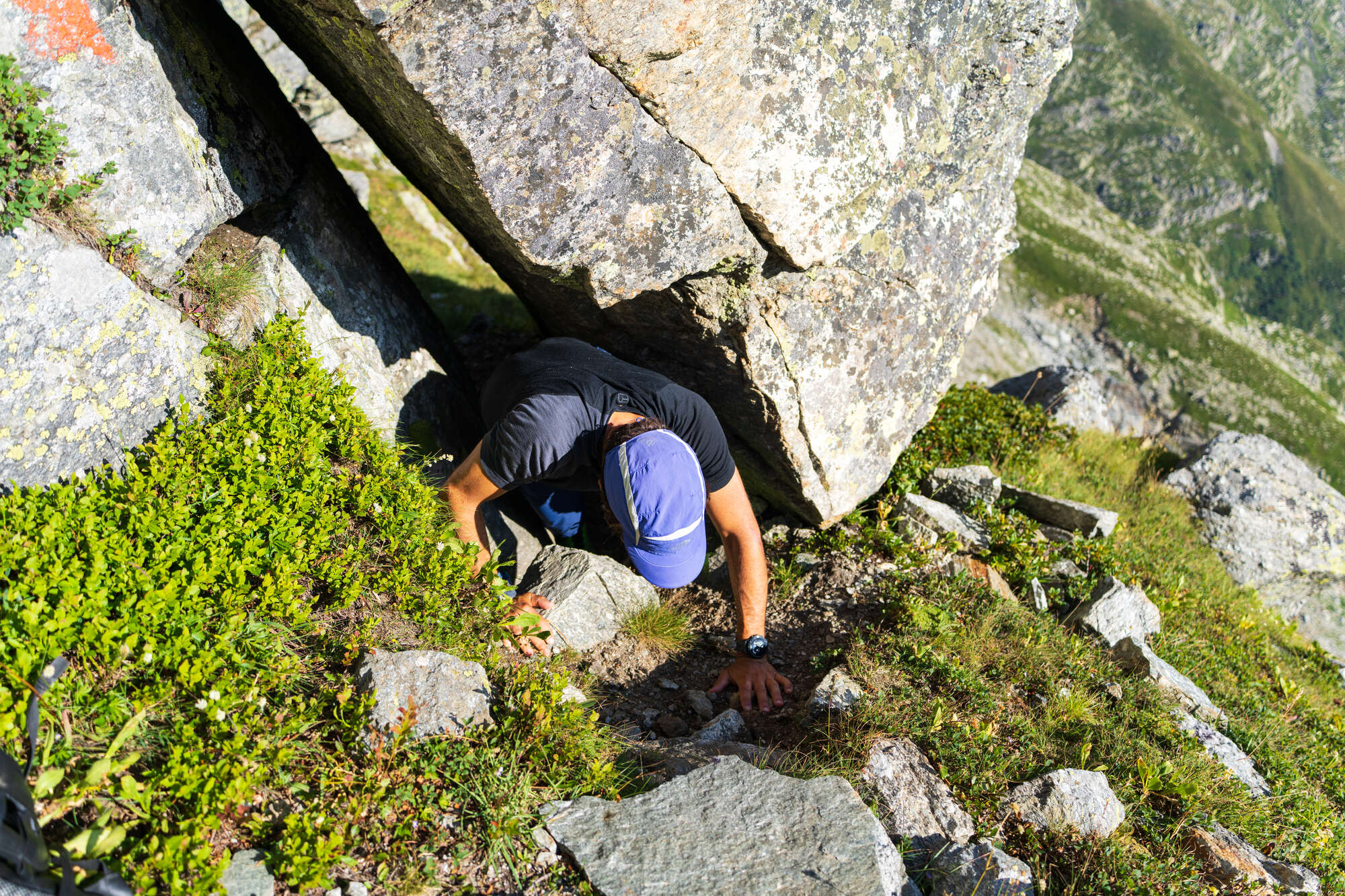
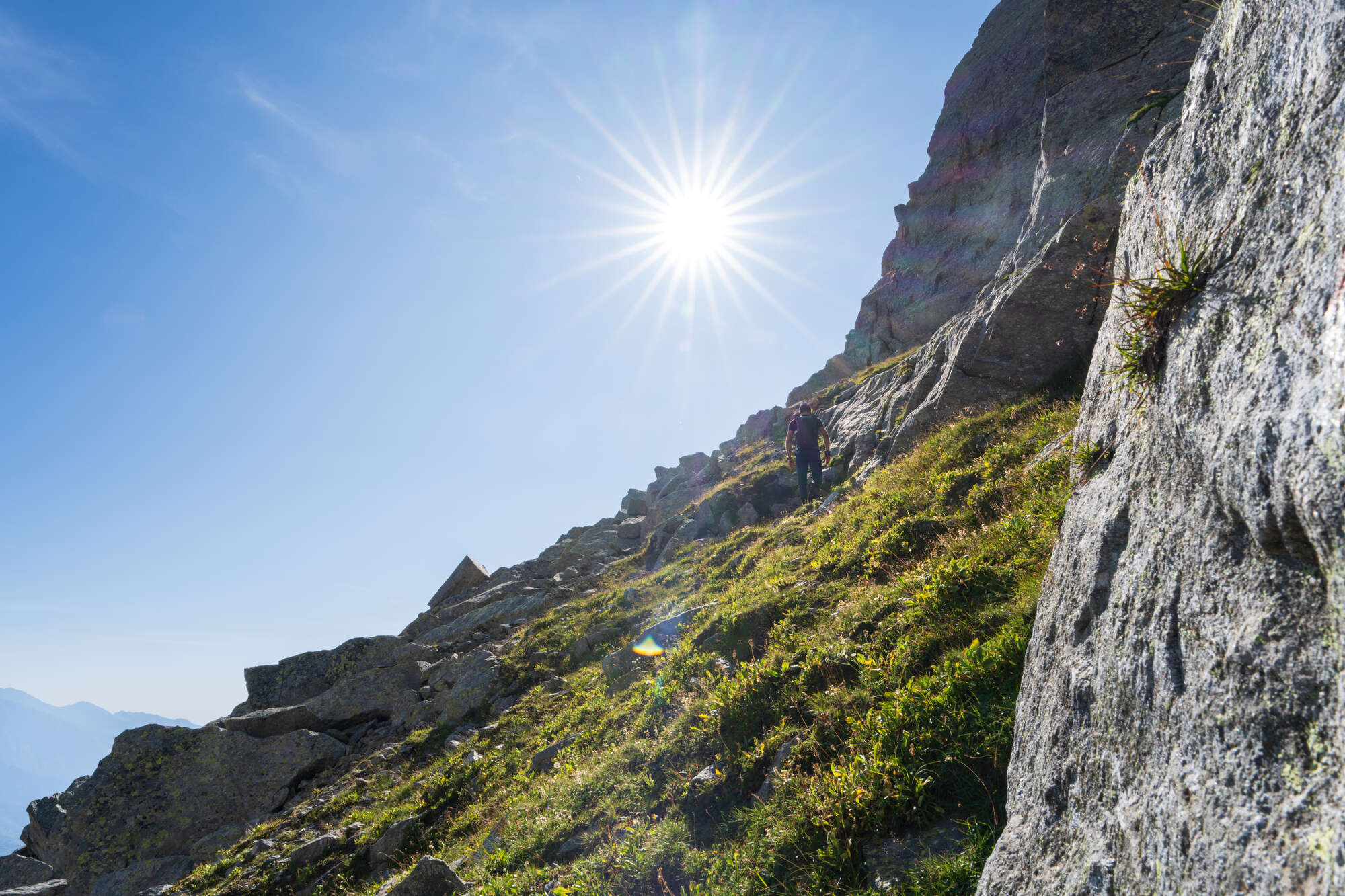
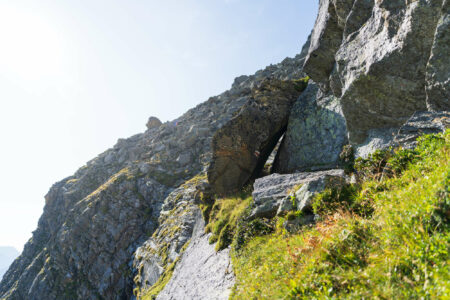
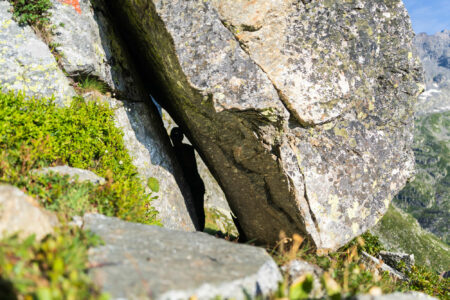
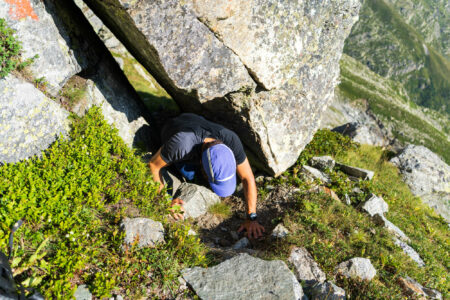
At the end of the ledges, the route turns right and climbs a very steep slope (with occasional waymarks), first over rocky ground and then on grass, to the top, where a short, cable-equipped section leads left. Shortly after, you need to pass through a distinctive wedged boulder that forms a narrow gap you must squeeze through after removing your rucksack (being out of shape is not an option here!).
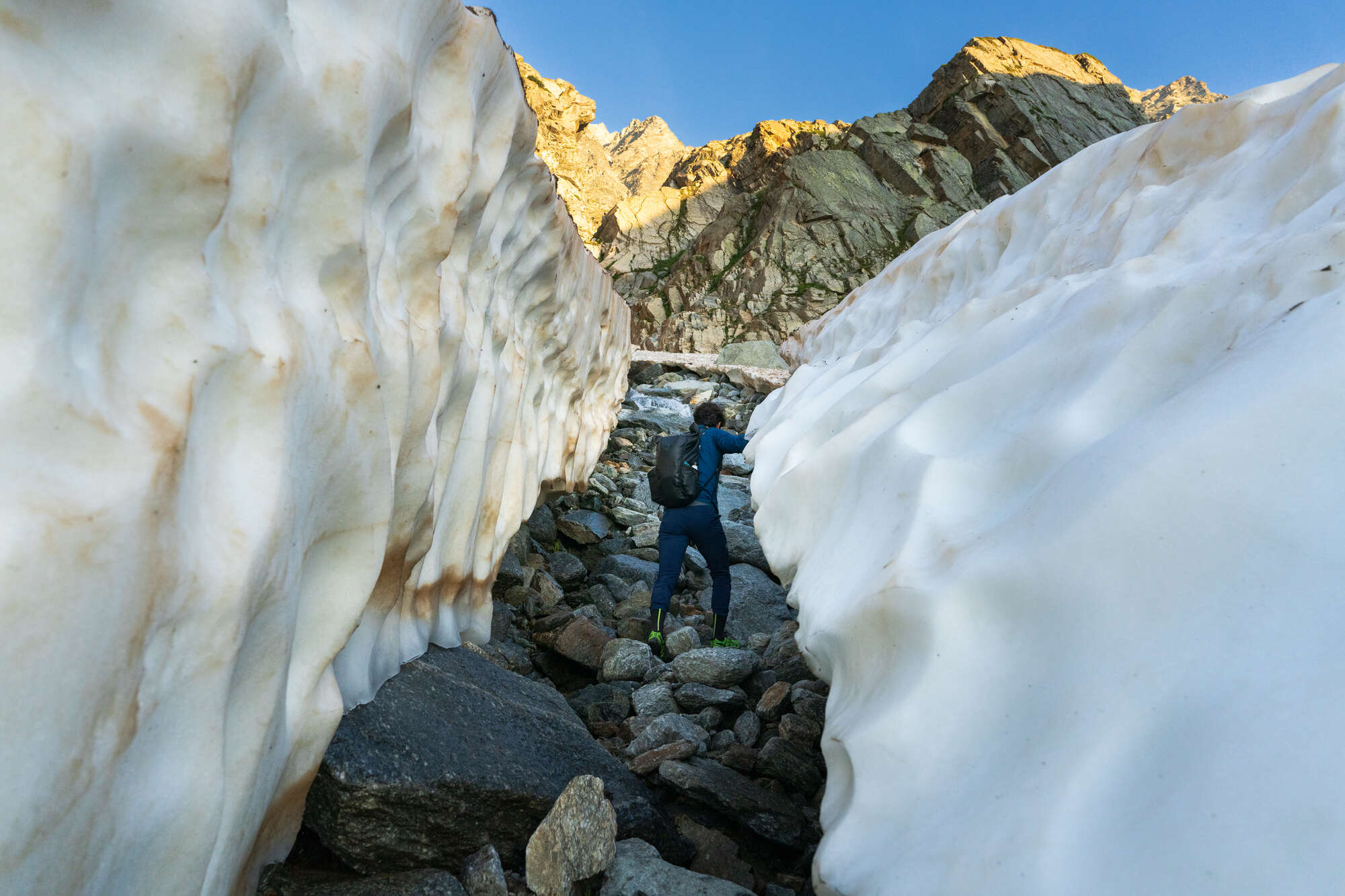
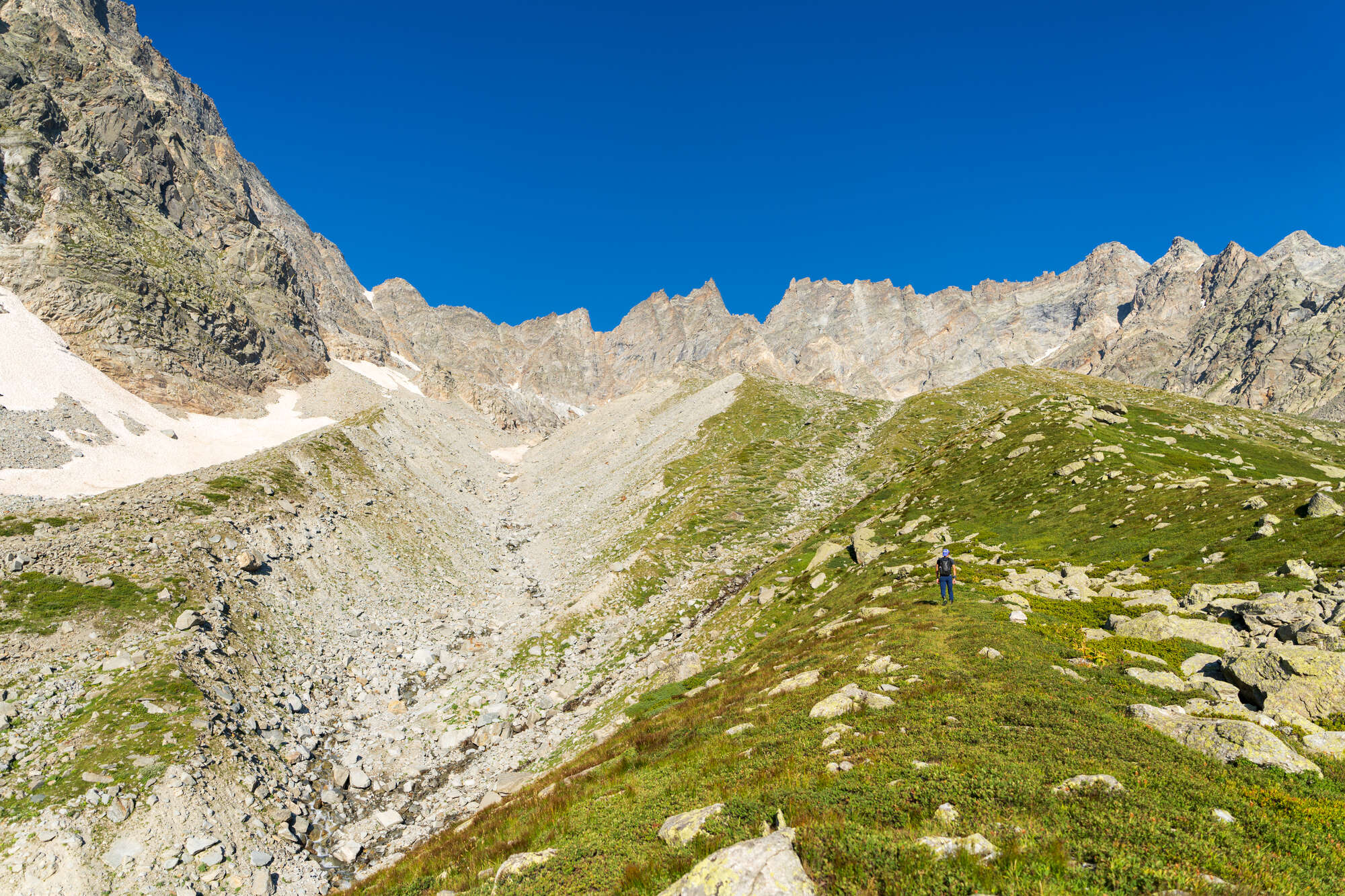
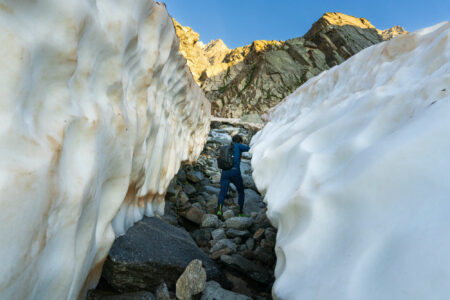
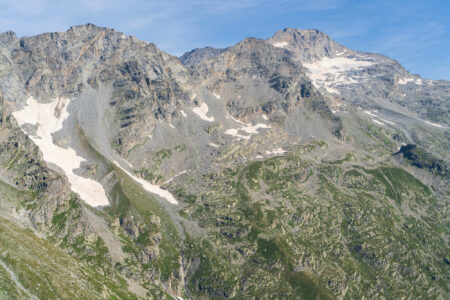
Soon after, the route crosses hollows hemmed in by looming rock walls, drops about thirty metres, and rounds a ridge spur. On reaching a debris-filled gully, skirt a large hanging snowfield on the left, usually present even in late summer (crampons and an ice axe may be needed early in the season).
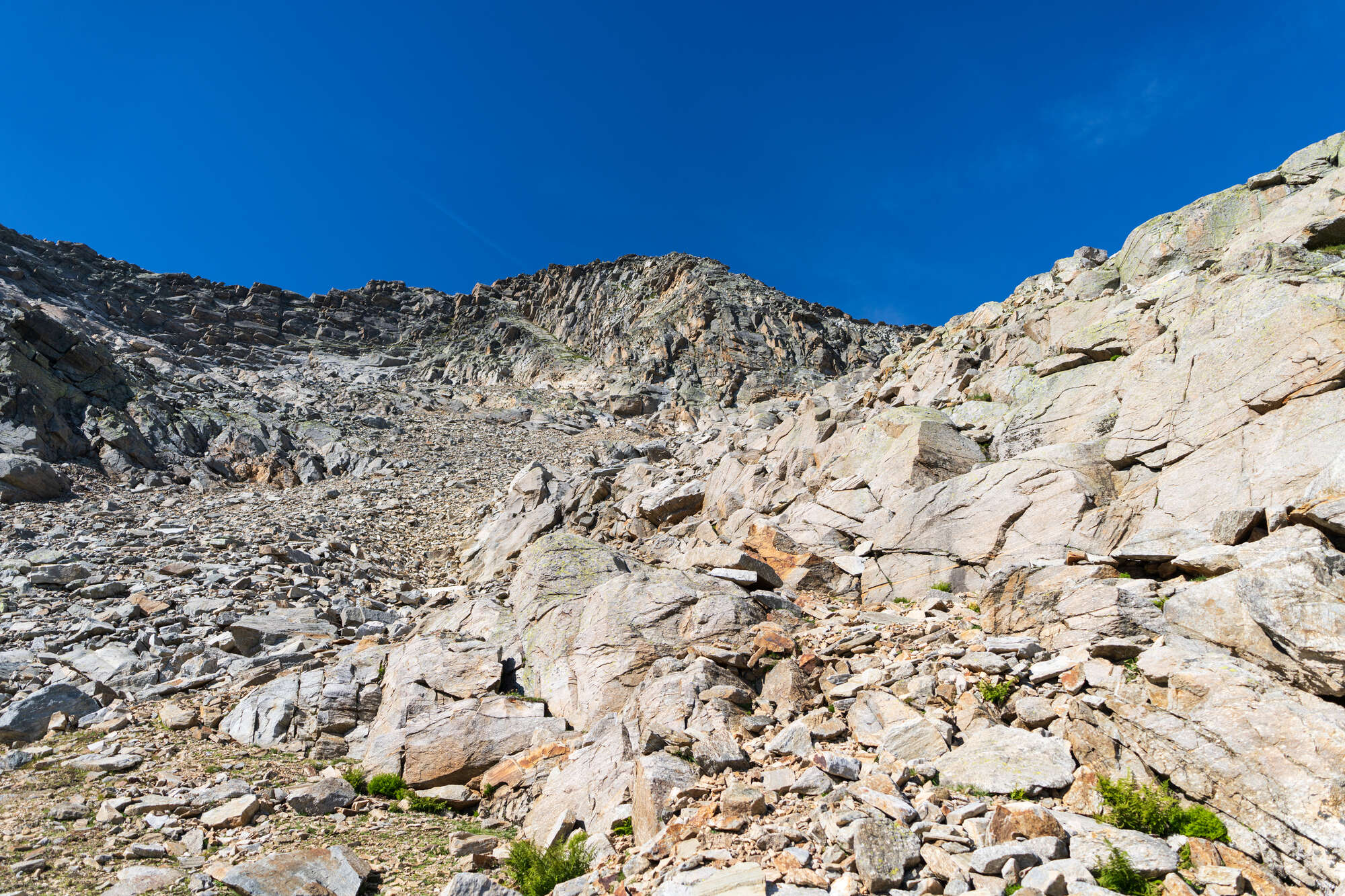
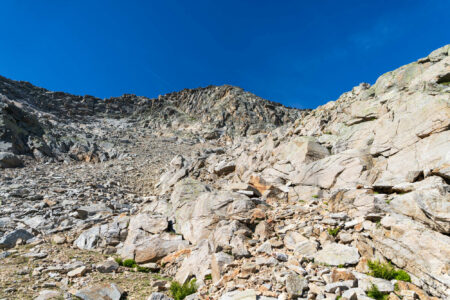
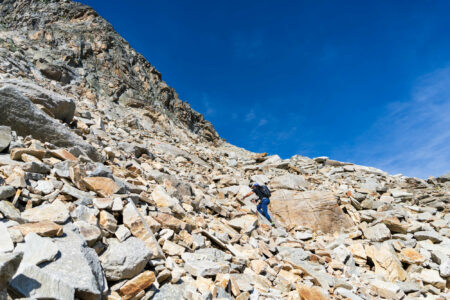
Continue up the unstable debris gully until you reach its central section of smoothed rocky steps. Some passages, though not particularly exposed, require the use of hands (Grade I), and two short sections are equipped with safety cables.
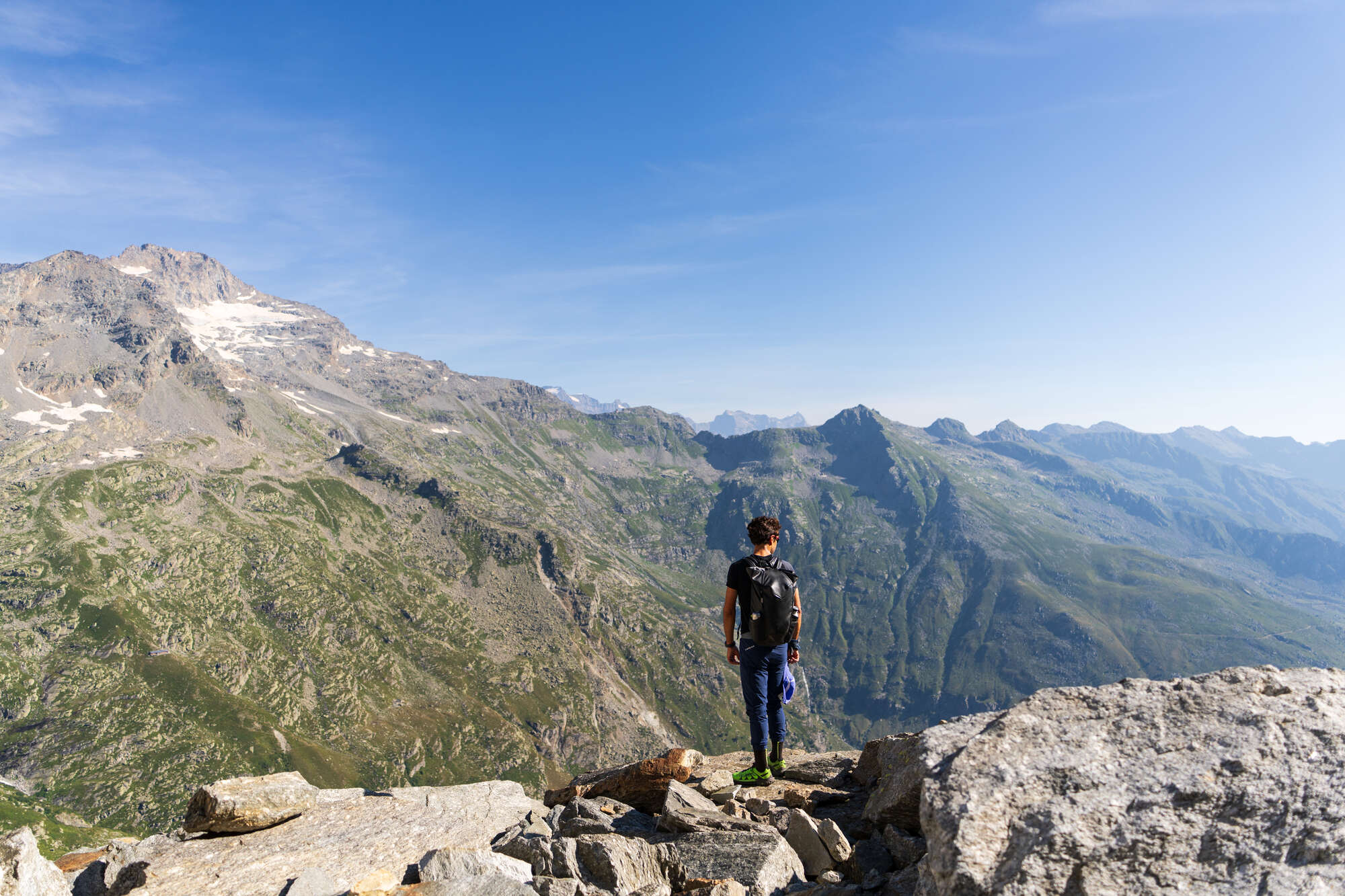
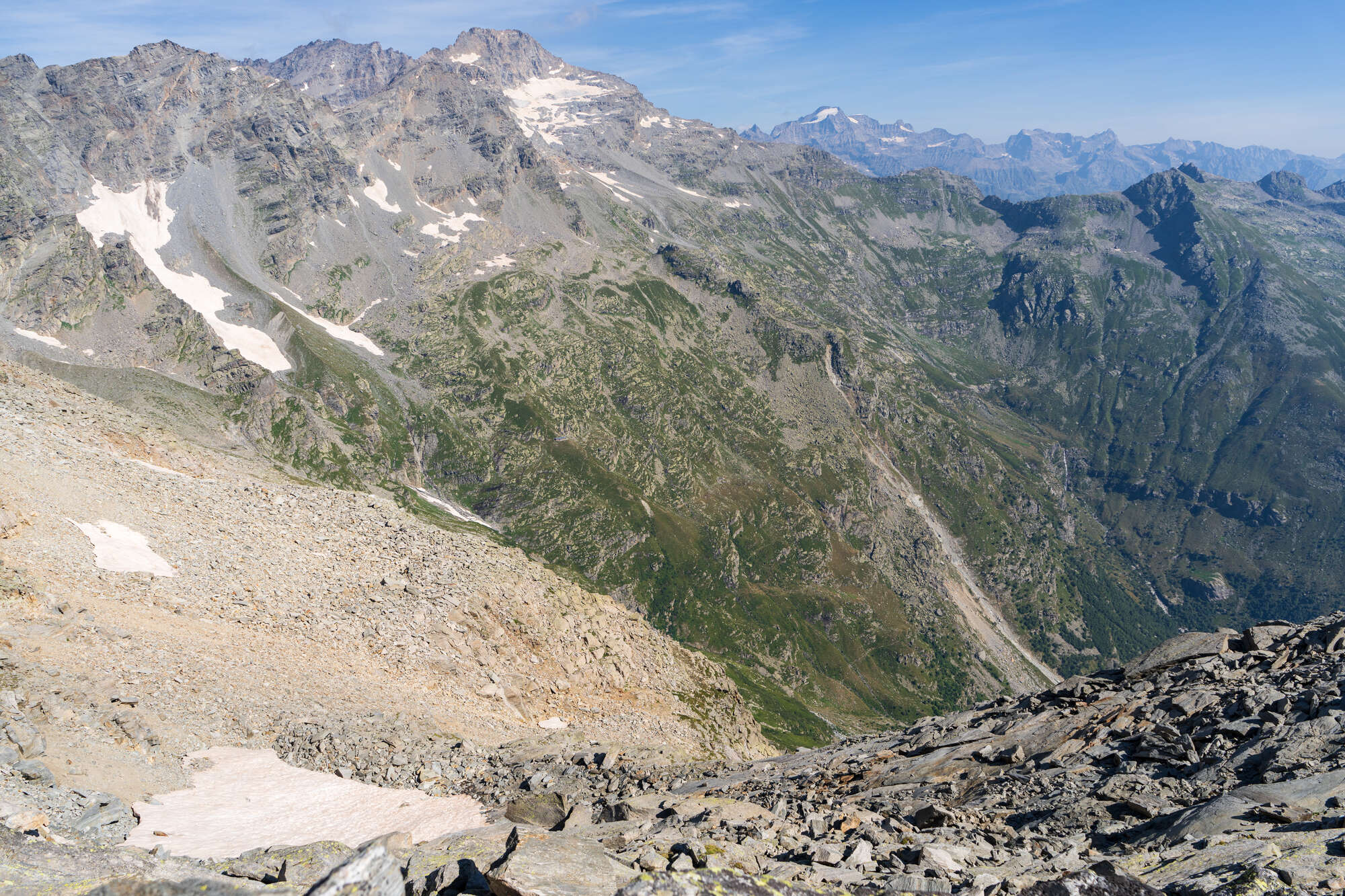
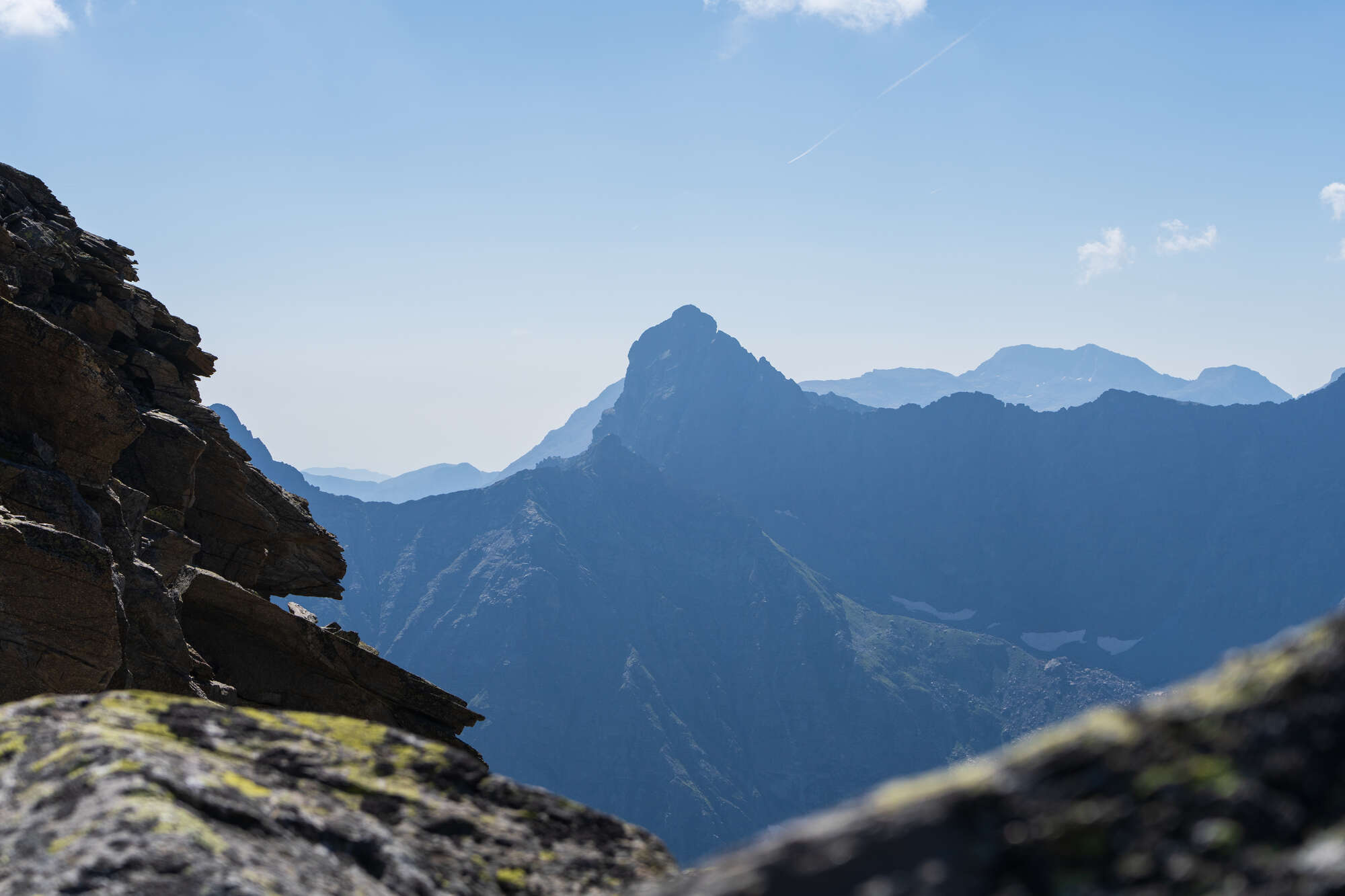
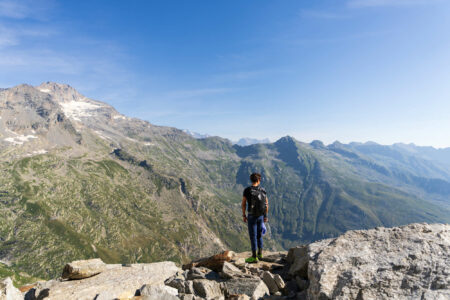
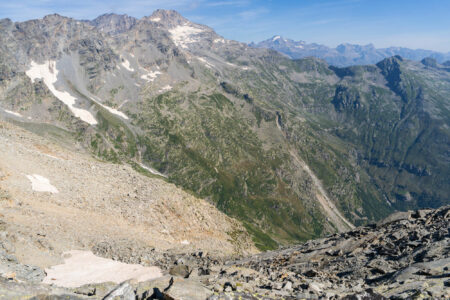
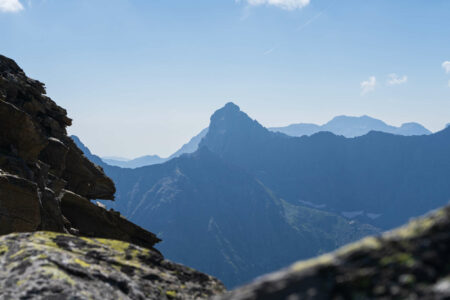
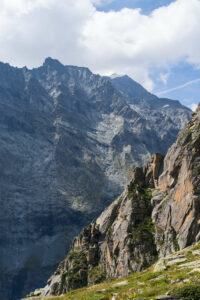
On reaching the severe upper amphitheatre, climb through the centre, then bear left where the waymarks peter out. After skirting another hanging snowfield, pick your way upward by sight over stacked boulders and tilted slabs with excellent grip, finally emerging onto the forbidding Passo delle Lose (2,870 m). From this vantage point, the views are spectacular: to the south-west towards Uja di Ciamarella and to the north towards Levanna, with Gran Paradiso visible to the right.
After a short, exposed, cable-equipped traverse, descend decisively through enormous stacked boulders, following waymark blazes and the occasional cairn. Gradually, the ground becomes less steep, forming a series of natural terraces linked by steep grassy slopes. The correct line is not obvious, however, as waymarks are scarce and the few cairns are easy to lose.
Descend gradually towards the plateau of Gias Piatou (2,200 m), where you will find the foundations of the old Guido Rey Refuge. On reaching the path that climbs back up the Sea Valley, turn left and descend to a narrow passage where you will find the so-called Napoleon’s Staircase, a stone stairway enclosed on both sides by rock walls, followed by a walkway of flat stone slabs with a handrail cable that allows you to cross an exposed gully.
The path continues downhill with steep zigzags before reaching the broad plateau of Gias Nuovo (1,893 m), where there is a bivouac shelter. The municipality of Groscavallo, which owns the building, has never given it an official name, so it is sometimes referred to as Bivacco Gias Nuovo and at other times as Bivacco Aquilotto.
Head down the wide track as it crosses the large, gently undulating plateau. It narrows abruptly to a small path descending towards the buildings of Alpe di Sea (1,791 m), set against a huge rock outcrop that splits the valley in two.
A battered footbridge crosses the Stura di Sea torrent. A short way beyond, ignore a fork to the right towards Passo dell’Ometto. The path continues along the bank of the rushing torrent, which drops away and then draws close again. Further down, you reach the two large buildings of Balma Massiet (1,500 m), which conceal fine architectural features.
After crossing the streambed, a footbridge takes you permanently to the left-hand side of the valley, at the foot of rock walls laced with numerous climbing routes. Along this stretch, you will come across the “pensieri tra le rocce” (thoughts among the rocks), panels displaying mountain-themed quotes from writers, philosophers, and mountaineers.
The long descent continues through shadowy sections enclosed by high rock walls, then the path widens into a track leading down towards Forno Alpi Graie. On joining a broader unsurfaced road, turn left and soon reach the bridge over the Gura torrent, where this magnificent and demanding traverse ends.
Text by Valerio Dutto of Cuneotrekking.comReport a problem
Did you encounter a problem on this itinerary? Let us know and help us keep all routes safe and accessible for everyone.
Submit report
Nearby
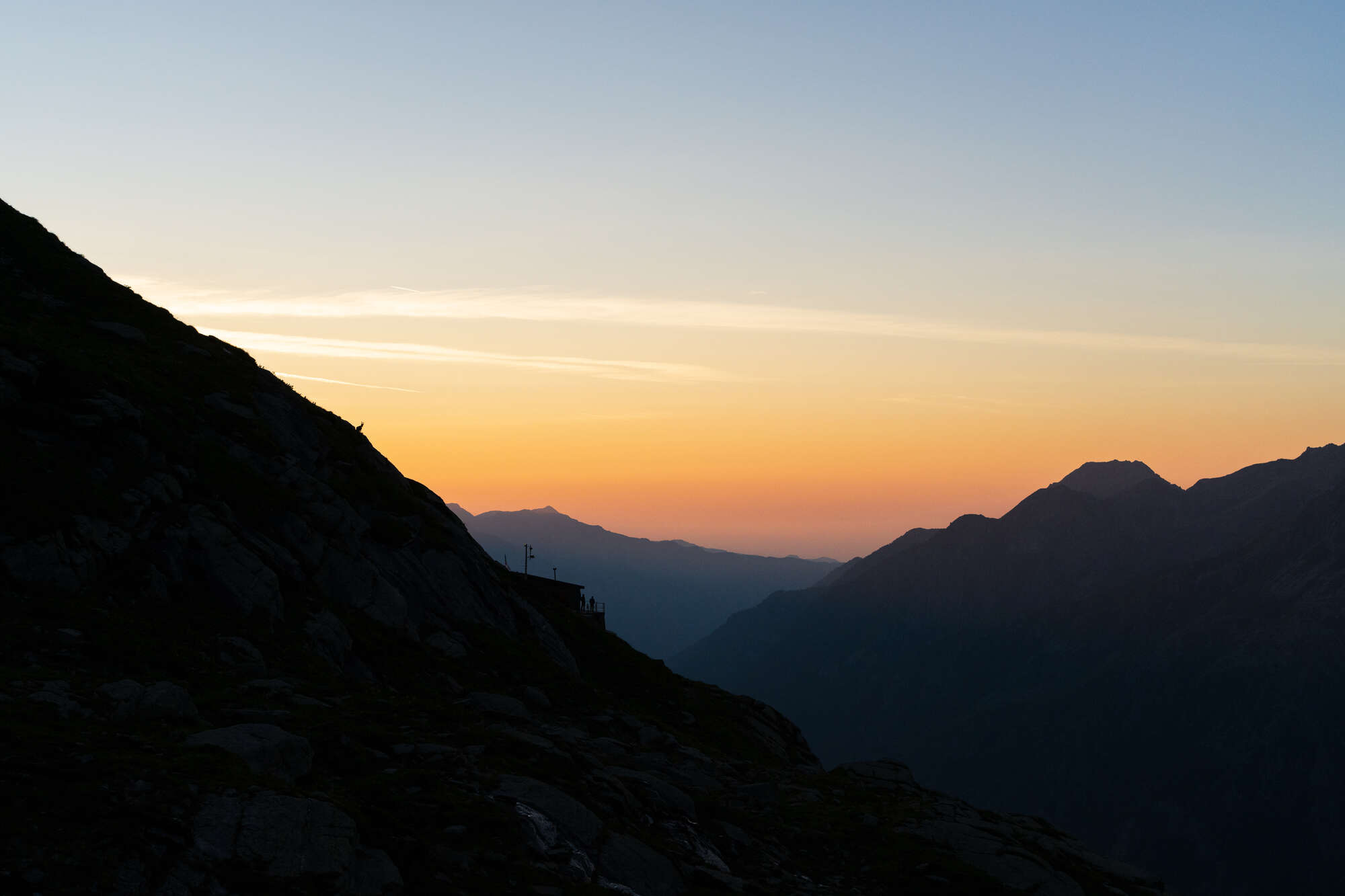
Paolo Daviso Refuge
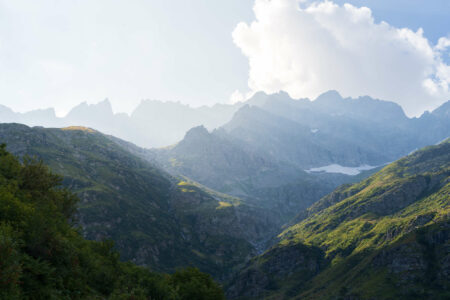
GroscavalloThe Daviso Refuge, set in a slightly off-centre position high in the Gura valley, offers breathtaking views over the upper Lanzo Grande Valley and, above all, the majestic wall of peaks that surrounds it. These imposing mountains rise well above 3,000 metres, and generations of "modern" mountaineers have cut their…
Egg-Shaped Dovecote
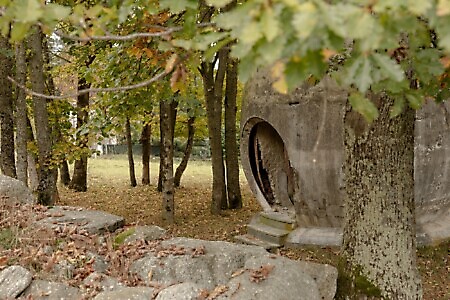
Strada Provinciale 33, 22, frazione Richiardi (Groscavallo)Past the houses of the hamlet of Richiardi, you can admire the curious monument commonly known as the “Pastrone Egg”....