
More than just a building, it stands as a symbol of resilience. Having endured the upheavals of the past century, the Routchàss still holds the charm of its origins, from its narrow defensive entrances to the biblical scenes painted for a record-breaking marriage. It was within its sturdy walls that the Castagnero family helped establish the community of Balme as we recognise it today.
Site overview
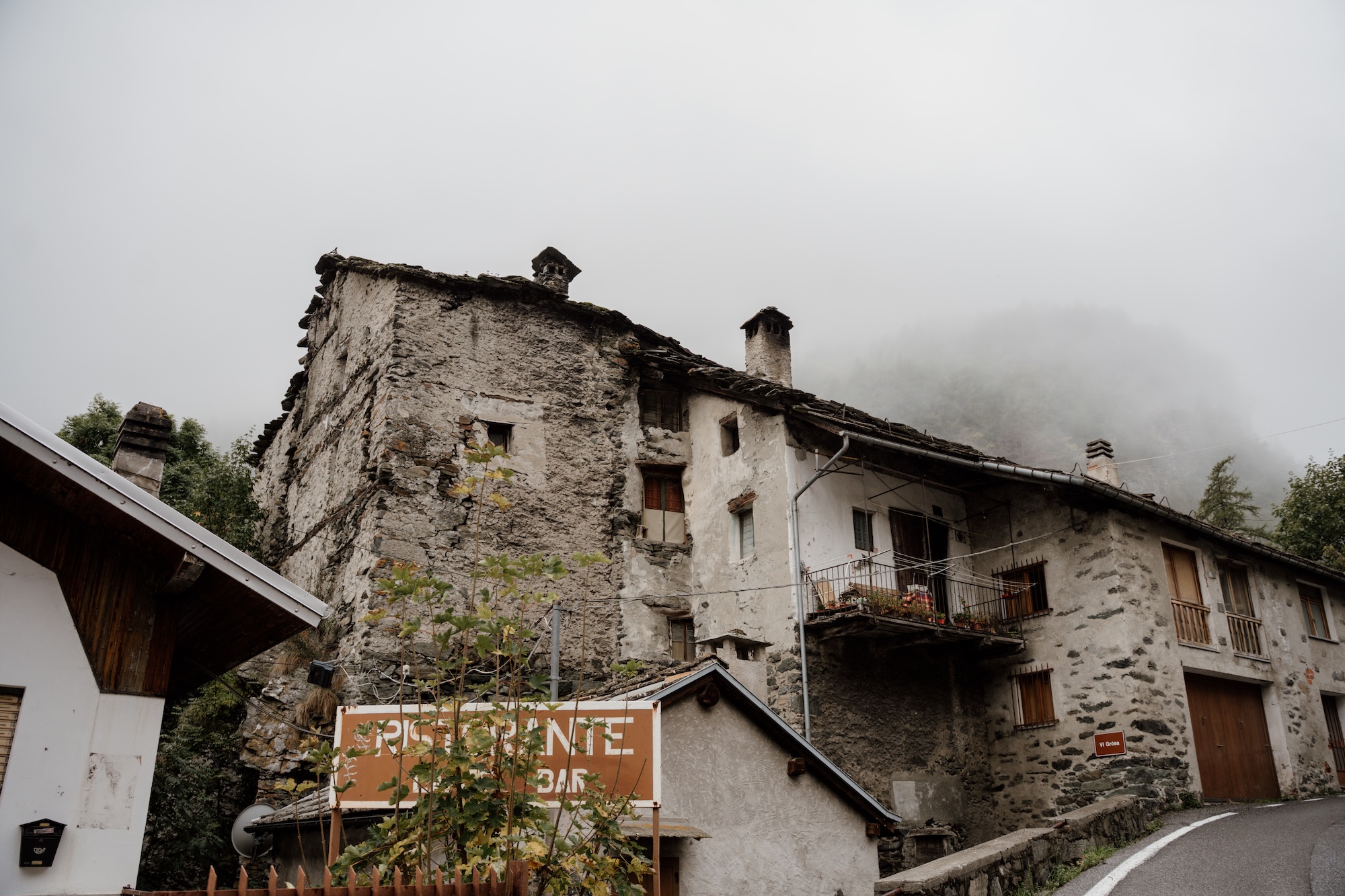
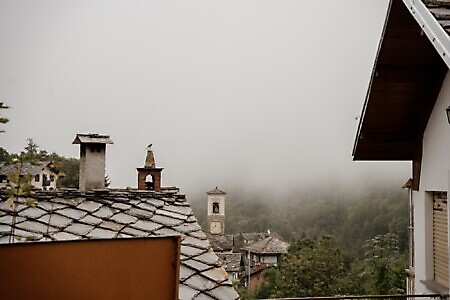
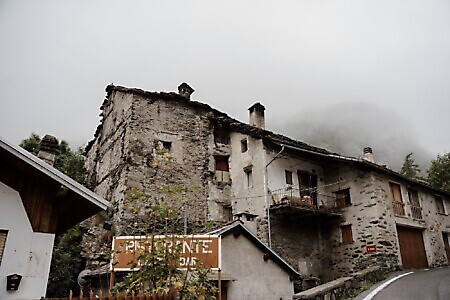
In 1909, work commenced on the Turin aqueduct, and the old centre of Balme was demolished to make way for the provincial road to Pian della Mussa. The oven, the wash house, and two ancient chapels were destroyed, but fortunately the fortified house of Routchàss was preserved. For over four hundred years, it has dominated the valley from the rocky outcrop after which it is named.
The building features a defensive design, evident in its small openings and a single narrow, low entrance. This entrance leads to a rugged stone staircase and then to a lengthy corridor, from which many rooms branch off, formerly used as a stable and living space. Surrounding the area are additional staircases, underground passages, and cellars, some of which are partly carved out of the rock.
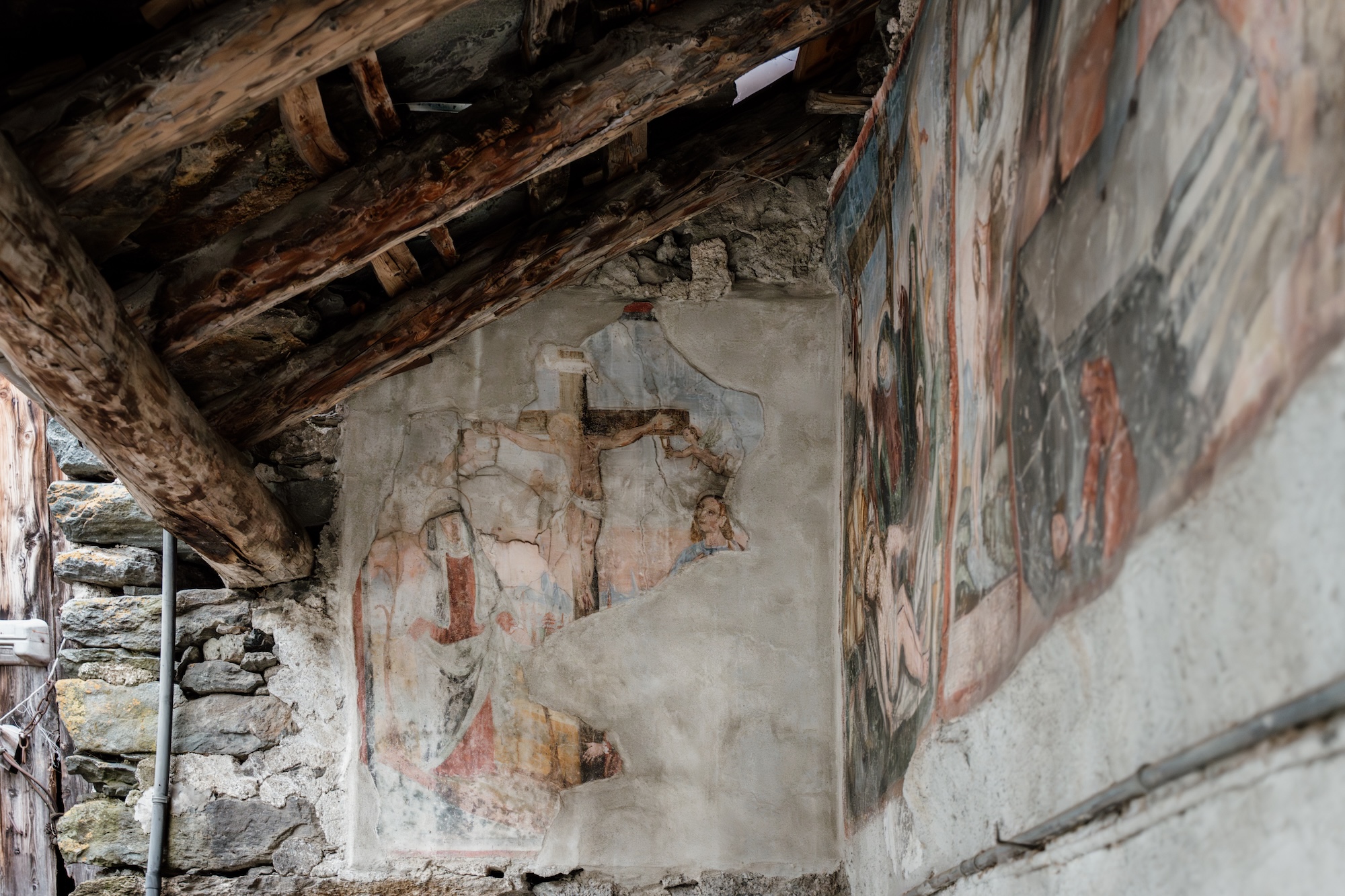
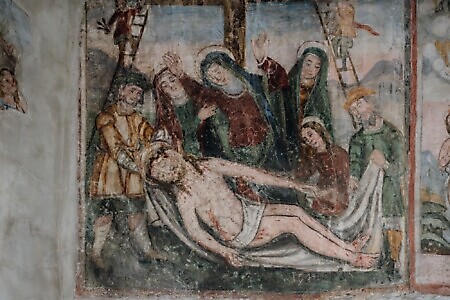
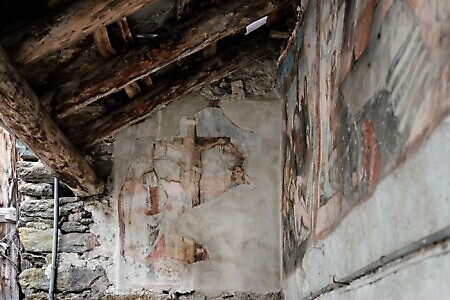
On the opposite side, which is inaccessible from below and faces the sun, the Routchàss opens into covered loggias that overlook the deep gorge where the torrent flows after the waterfall’s great leap. On the upper floor, a large granary stored fodder for livestock throughout the long winter. A massive roof, supported by giant-diameter beams and covered with unusually thick stone slabs, spans the entire structure. In the past, before road demolitions, it provided access to the fountain, oven, washhouse, and chapel without ever needing to step outside. This was especially valuable given the heavy snowfalls that periodically envelop the village of Balme. On the building’s exterior walls, 17th-century frescoes commissioned by Gian Castagnero can be seen.
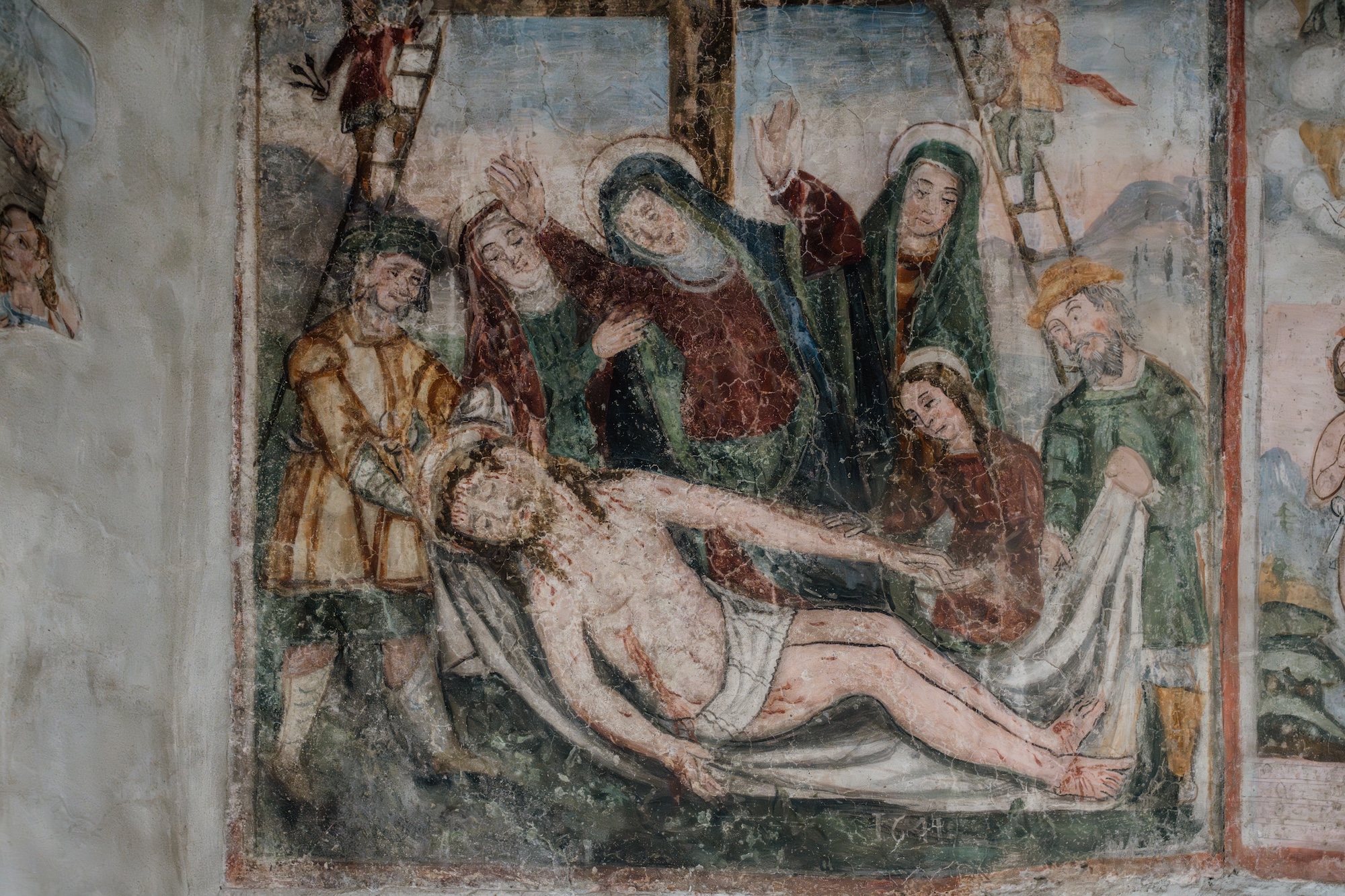
The frescoes, some of which are obscured by plaster, depict scenes from the lives of the Baptist, including the Baptism of Jesus and the Feast of King Herod. They were created to celebrate Gioanino’s marriage to Anna Genoa of Ala. The wedding took place in 1601 at the Routchàss, with a dispensation from the Bishop because the bride was already present and seriously ill.
Thanks to this precedent, Gian Castagnero secured the autonomy of both the municipality (1610) and the parish (1612) of Balme, which had previously been dependent on Ala di Stura. The bride’s illness cannot have been very serious, however, since the marriage produced a veritable legion of children and grandchildren who quickly absorbed all the other families in Balme, to the point that today all the people of Balme are, in one way or another, descendants of Gian Castagnero, and many still bear his name.
How to visit the site
From the main road on Via Capoluogo, past the Chapel of Sant'Urbano, turn left into the village centre, following the signs for the Ruciàs fresco.
You might also like
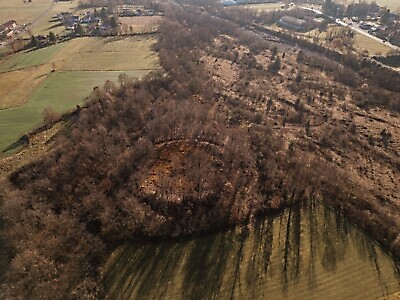
Airal Circle
Frazione Brione, Località “Airal/Buttiberghe” (Val della Torre)The structure is circular, roughly 60 m in diameter, and situated on flat land near where the Casternone and Codano...
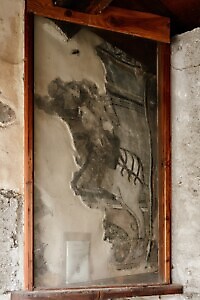
Chapel of the Shroud, or Chapel of Christ Pantocrator
Rivòt di Luis detto anche Via Margutta (Balme)The lanes branching through the old centre of Balme are called quintàness if flat and rivòt if uphill. Narrow and...
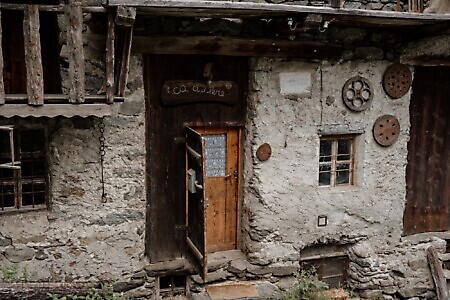
Cornetti Historic Centre
Frazione Cornetti (Balme)Cornetti di Balme (Li Cournàt) is among the highest permanently inhabited settlements in the Lanzo Valleys, sitting at 1,446 metres....
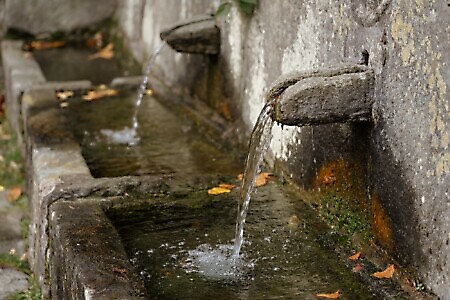
Fountain at Pessinea, Old Wash House, and Sanctuary of the Madonna della Consolata
Frazione Pessinea (Viù)This hamlet is the last in the town of Viù. It remains largely unchanged, maintaining the traditional pedestrian lanes that...
Prehistoric Altar of Bogone
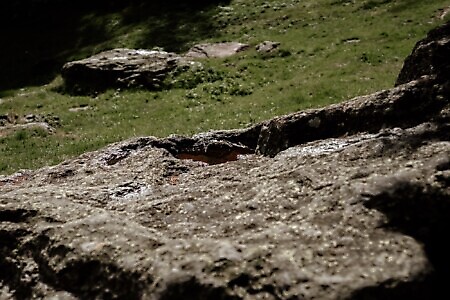
Bogone (Balme)The small hamlet of Bogone was inhabited mainly in spring and autumn, serving as a stopping point during the Alpine...