Chapel of the Shroud, or Chapel of Christ Pantocrator
An Alpine labyrinth among the quintàness and rivòt of Balme.
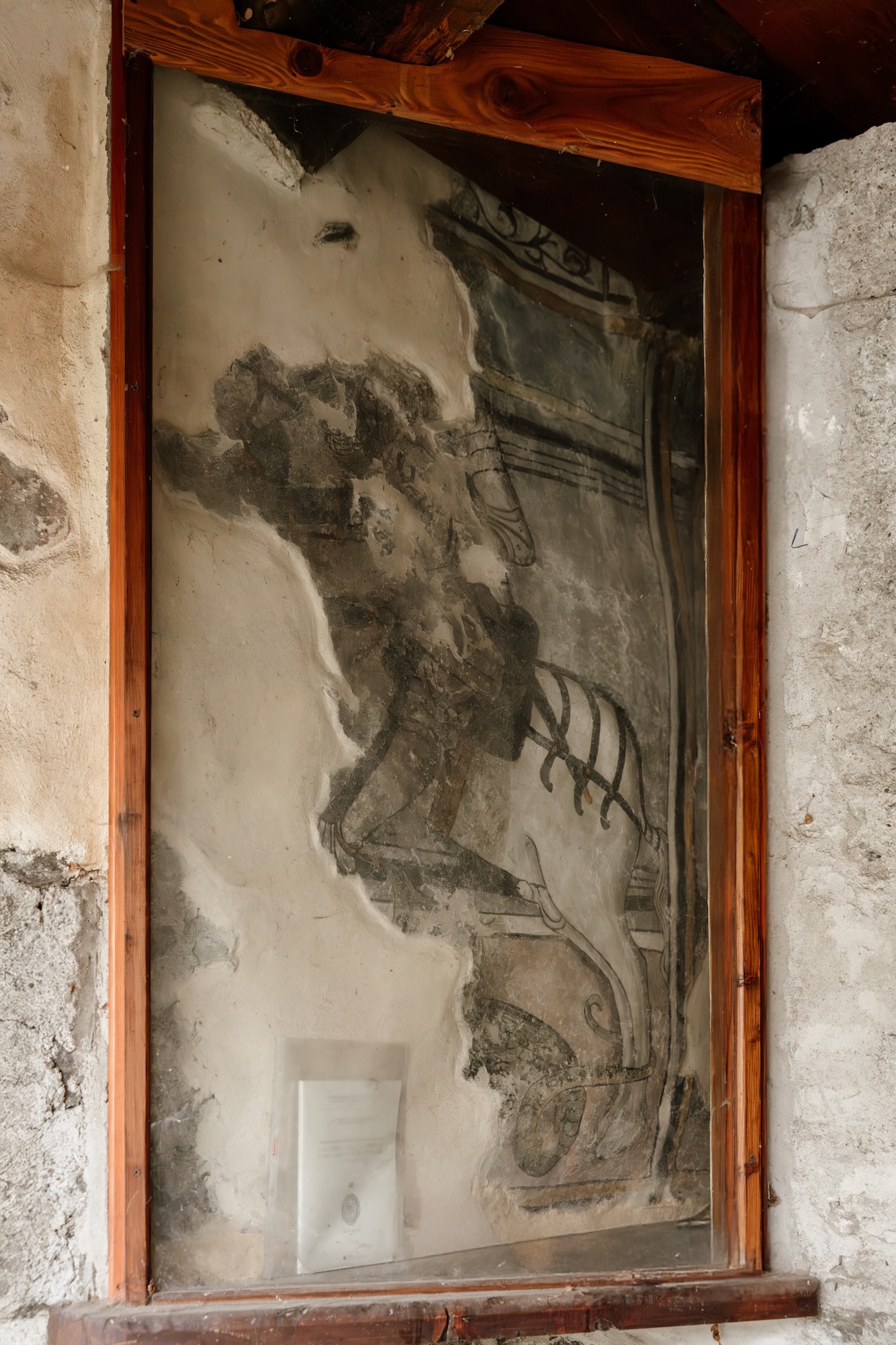

Hidden among centuries-old arches and overhanging roofs lies the oldest dwelling in the village, once a chapel and guardian of sacred frescoes, linked to a history of transformations and the passage of the Holy Shroud through the high Alpine valleys.
Site overview
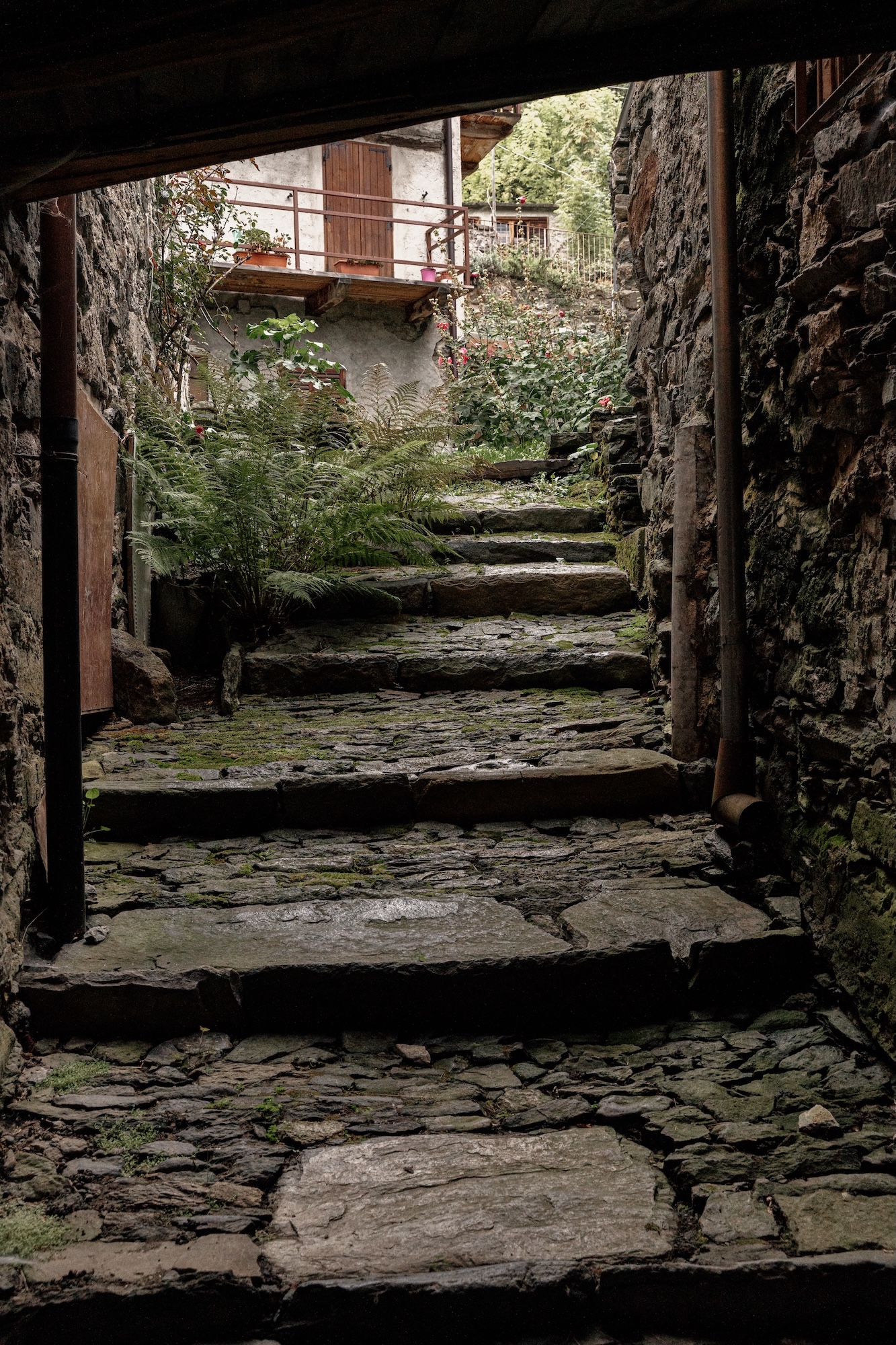
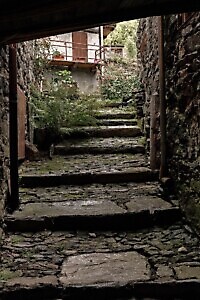
The lanes branching through the old centre of Balme are called quintàness if flat and rivòt if uphill. Narrow and winding, they offer protection from wind and blizzards, while the wide overhanging roofs allow passage even in heavy snowfall.
The building facing the street, with a distinctive arch, is traditionally considered the oldest house in the village, probably predating the 15th century. It originally housed the village’s oldest chapel and still preserves traces of frescoes depicting Christ Pantocrator and several saints, including St John the Baptist, St Peter, and St Sebastian. Access was originally from the uphill side.
After the construction of the fortified house of Routchàss in the 16th century, the chapel was extended and the entrance was opened on the downhill side, with the addition of the arch. Subsequently, in 1612, the parish was established, and in the following years the first parish church was built further down the valley, while the chapel was deconsecrated and converted into a stable and cellar.
It is believed that the Holy Shroud was housed in this early place of worship during its transfer from Chambéry to Turin in 1535.
Based on frescoes preserved in Bessans (a Savoyard village bordering Balme) and on the exterior wall of the Chapel of Voragno di Ceres, leading scholars have proposed that the relic passed over the high mountain passes linking the Haute Maurienne with the Ala Valley. At a time of grave crisis for the Duchy of Savoy, the choice of a route through the most remote valleys, traditionally the most loyal to the Catholic Church and the ruling dynasty, would have been prompted by the need to avoid threats posed by the Waldensians and the Calvinists.
How to visit the site
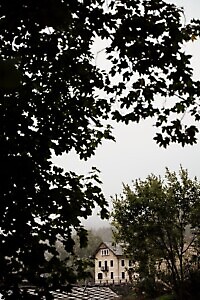
The chapel is just a few metres from the main road in Balme, Via Capoluogo, opposite the Ruciàs fortified house. Signs to the chapel are on Via Margutta (Rivòt di Luis).
You might also like
Airal Circle
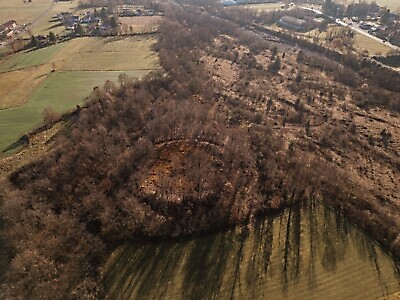
Frazione Brione, Località “Airal/Buttiberghe” (Val della Torre)The structure is circular, roughly 60 m in diameter, and situated on flat land near where the Casternone and Codano...
Cornetti Historic Centre
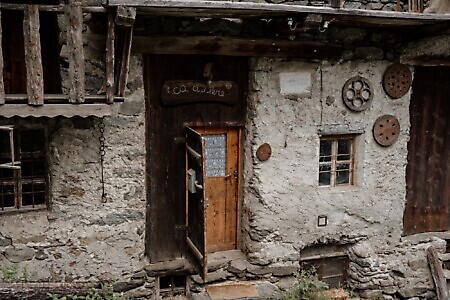
Frazione Cornetti (Balme)Cornetti di Balme (Li Cournàt) is among the highest permanently inhabited settlements in the Lanzo Valleys, sitting at 1,446 metres....
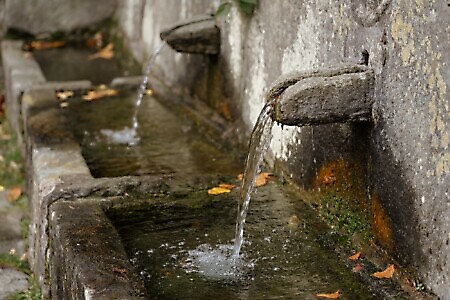
Fountain at Pessinea, Old Wash House, and Sanctuary of the Madonna della Consolata
Frazione Pessinea (Viù)This hamlet is the last in the town of Viù. It remains largely unchanged, maintaining the traditional pedestrian lanes that...
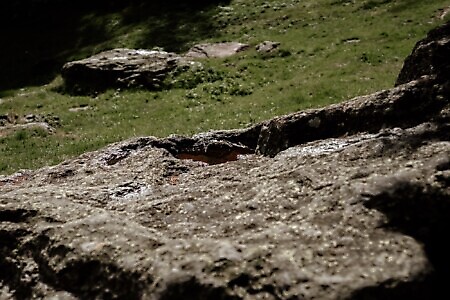
Prehistoric Altar of Bogone
Bogone (Balme)The small hamlet of Bogone was inhabited mainly in spring and autumn, serving as a stopping point during the Alpine...
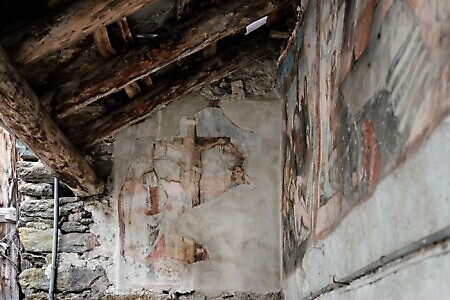
Rucias Fortified House with 17th-Century Fresco
Via Capoluogo, 40 Balme (TO) (Balme)In 1909, work commenced on the Turin aqueduct, and the old centre of Balme was demolished to make way for...