16th-Century Fresco by Oldrado Perini
A 16th-century fresco that tells a story of faith and history on the village walls.
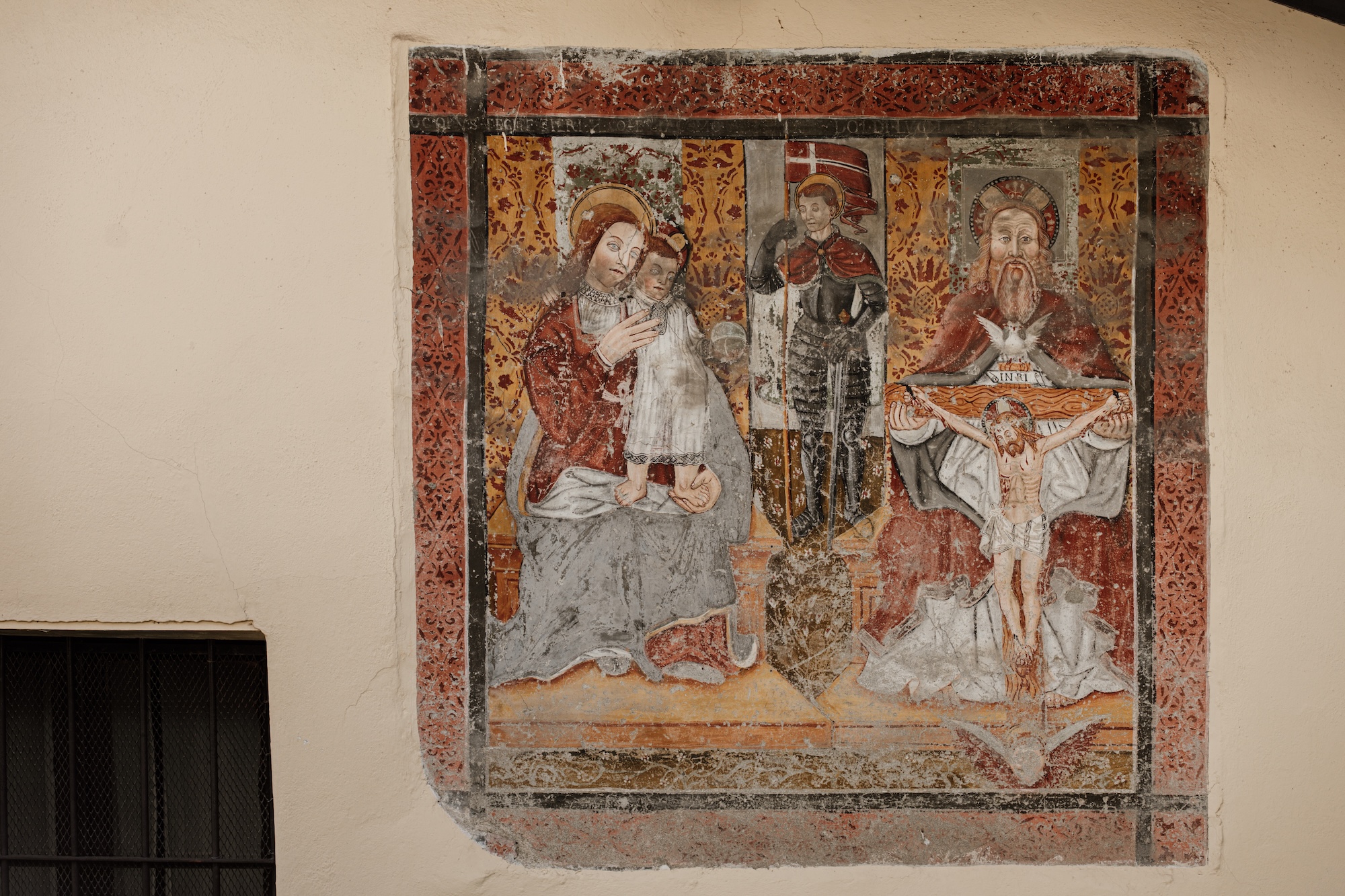

Painted in 1577 by Oldrado Perini, the fresco is a striking example of Renaissance art and devotion. The scene and its rich detail transform the building into a small open-air treasure trove, offering visitors a fascinating glimpse into local spirituality and history that remains remarkably legible despite the passage of time.
Site overview
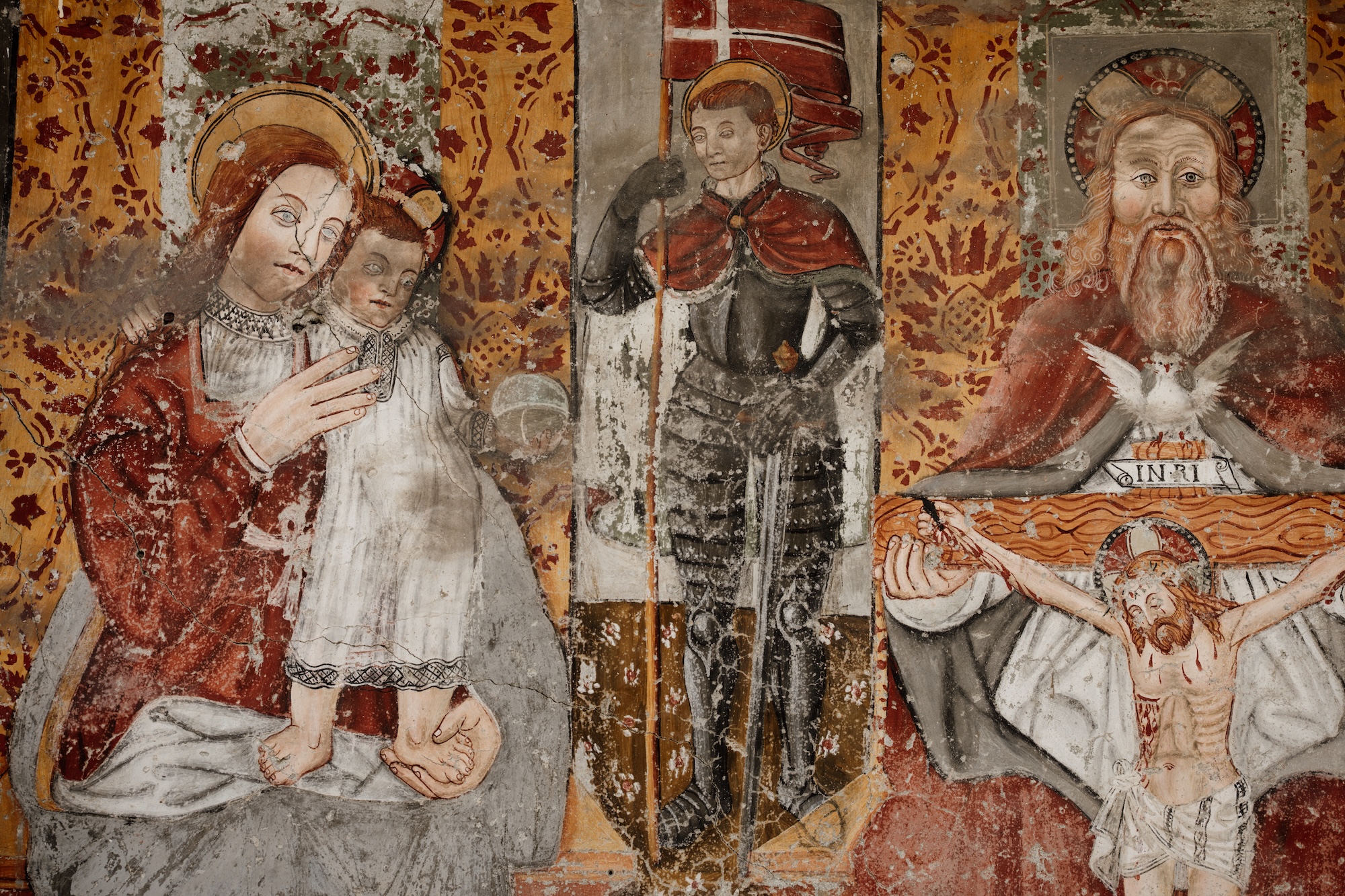
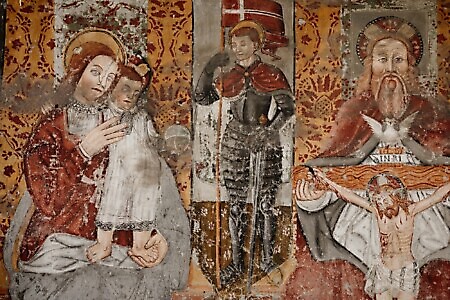
A fresco by Oldrado Perini from 1577 is on the outside wall of a private house. The roughly square painting, 175 cm per side, shows a sacred scene framed by four black bars intersecting at right angles. These bars are subtly highlighted to create a faint relief effect and are bordered outside by a decorative pattern resembling red damask. It is possible that this pattern was once enclosed by another set of four black bars.
In this scene, five figures are depicted. On the left, the Madonna is seated on a wooden throne, with the Christ Child standing upright on her lap. The Virgin Mary, wearing a red tunic and a blue mantle that are now nearly faded, supports her Son’s chest with one hand and gently holds his small foot with the other.
The Christ Child, dressed in a small white pleated tunic with lace trim, steadies himself with one hand on his Mother’s shoulder while holding the universe’s globe in the other. To the right of the fresco, the Eternal Father sits on a wooden throne, wrapped in a full red robe, symmetrically supporting the cross where Christ is crucified, topped by the Holy Spirit dove. Instead of the traditional Golgotha skull, the cross is anchored on a heavily weathered cherub affected by the elements.
Behind the Trinity, there is another piece of tapestry similar to the first, with red leaves on an ochre background and a central band of red leaves on a green background. It also includes an additional grey panel where the hieratic face of God is visible within a cruciform nimbus.
Both thrones sit on a flower-filled meadow that extends to the horizon. At the centre of the fresco is Saint Maurice, dressed in armour with a sword and a standard bearing a cross. The inner lining of his mantle has nearly faded away, but overall, the fresco remains quite well preserved.
The horizontal bar at the top of the fresco bears the inscription: Hoc opus fecit fieri il co.le Giacomo Genoa a li doi di luglio 1577 (this work was commissioned by the Commendable Giacomo Genoa on 2 July 1577).
How to visit the site
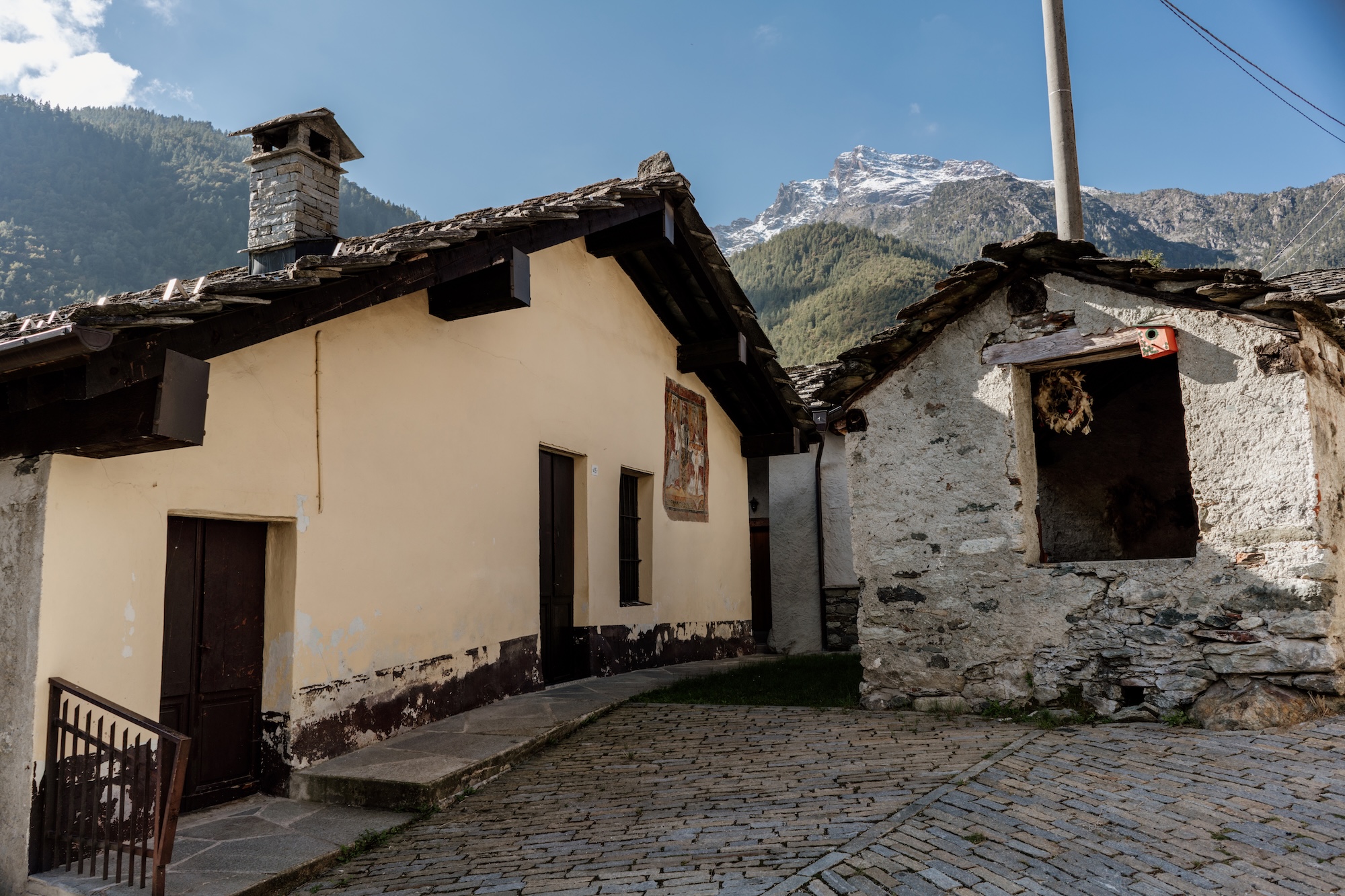
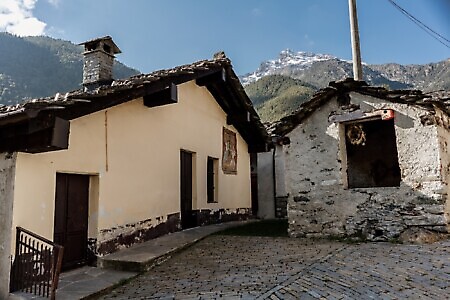
The fresco is accessible through Itinerary 2, Villar Hamlet. To find it, enter Villar hamlet, and it is located behind an old wash house at number 45.
You might also like
Chapel of San Biagio
Strada Provinciale 26 dell'Amiantifera (Balangero)The origins of the chapel are somewhat unclear. It is quite probable that it originally served as a watchtower to...

Chapel of San Giulio
Frazione Forno (Lemie)The Chapel of San Giulio is located in Forno, Lemie. Its name likely reflects the Valsesian roots of many locals...
Chapel of San Rocco
Piazza San Rocco, Monastero di Cafasse (Cafasse)The precise construction date is unknown, but written records indicate it was built in 1687 and likely constructed to fulfil...
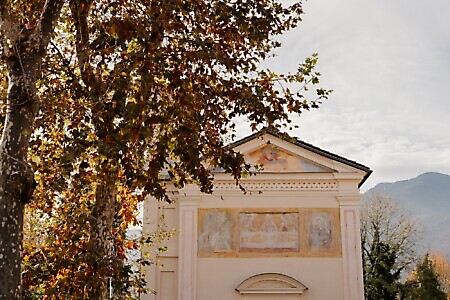
Chapel of Sant’Anna
Via Roma 37 (Fiano)The building stands in isolation, with its façade facing east. The chapel is used for services on the feast of...
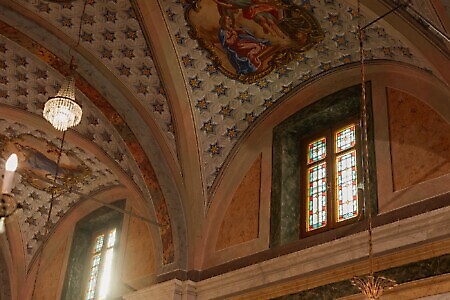
Chapel of Santa Maria della Stella (Truc di Miolà)
Borgata Truc di Miolà (La Cassa)The chapel features a rectangular layout divided into three bays. Its gabled façade is fully plastered and displays corner pilasters...
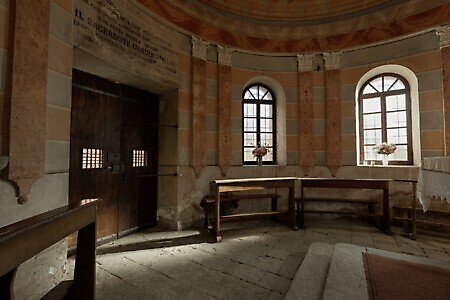
Chapel of the Blessed Virgin of Graces
Coassolo Torinese (Coassolo Torinese)According to tradition, on the rocky outcrop above the Tesso plain, where the steep path linking Coassolo and Monastero runs,...
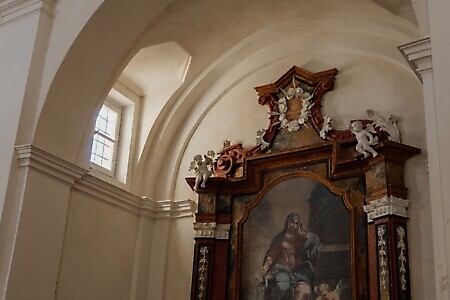
Chapel of the Holy Cross
Piazza della Chiesa, 4 (Corio)The building is open on three sides, with the north side adjacent to a private residence. Its façade faces northeast....
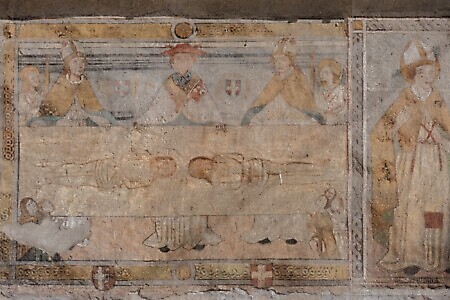
Chapel of the Holy Shroud at Voragno
Strada Provinciale 1 delle Valli di Lanzo, 64 (Ceres)In the Chapel of Saints Sebastian and Lawrence, several 16th-century frescoes depicting the Holy Shroud testify to its secret journey...
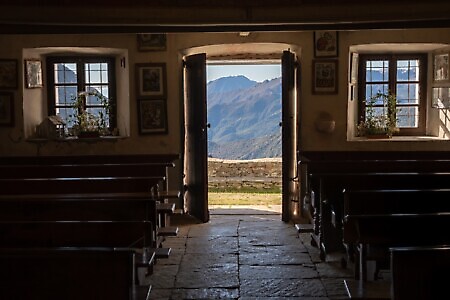
Chapel of the Madonna del Carmine at Ciavanis
Cappella della Madonna del Carmine al Ciavanis (Chialamberto)Dedicated to the Madonna del Carmine, the chapel stands at 1,874 m above sea level on a grassy terrace above...
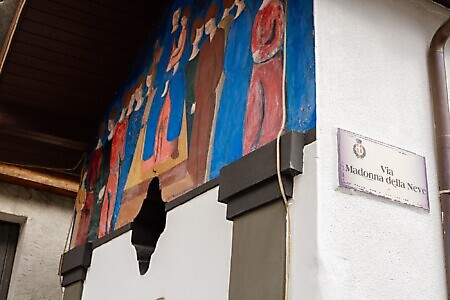
Chapel of the Madonna della Neve
Piazza Schiari (Viù)The Chapel of the Madonna della Neve, located at the village’s centre, serves as the focal point of Pascheretto, one...
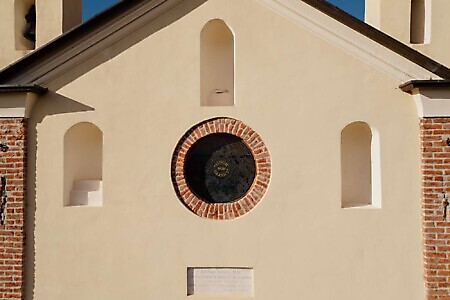
Church of Maria Ausiliatrice
Frazione Santa Maria (Givoletto)The chapel has a single-hall rectangular plan, covered by a pitched timber ceiling with exposed trusses. The chapel’s interior features...
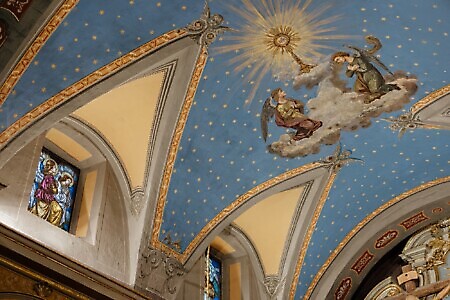
Church of Saints Peter and Paul
Via della Chiesa (Cantoira)In Foieri, visitors can explore the Saints Peter and Paul parish complex, which uniquely combines two churches, one Romanesque and...
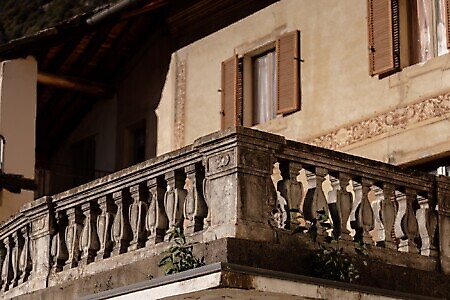
Church of Saints Philip and James, and Bell Tower
Piazza Fratelli Chiariglione (Chialamberto)The building is located in the centre of town, along the provincial road, positioned above a wide podium on the...
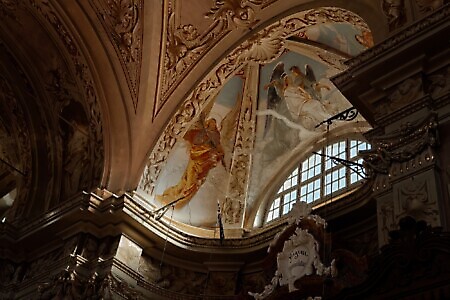
Church of San Genesio Martire
Piazza della Chiesa 2 (Corio)The church features a rectangular single nave divided into three bays with groined barrel vaults, ending in a semicircular apse...
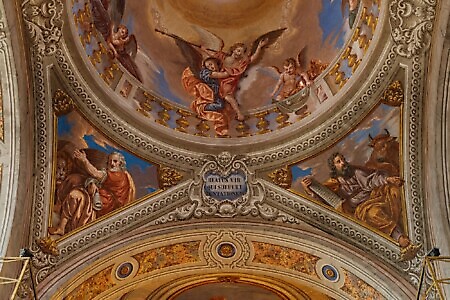
Church of San Giacomo at Gisola
Frazione Gisola, 28 (Pessinetto)The Parish Church of Gisola, dedicated to the Apostle St James the Great, is believed to be the oldest in...
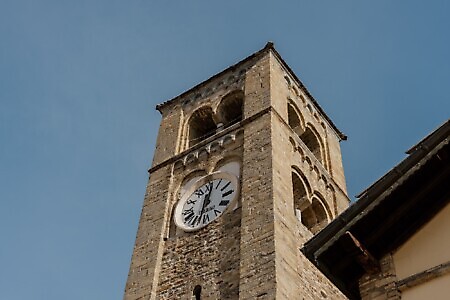
Church of Sant’Anastasia and Romanesque Bell Tower
Monastero di Lanzo (Monastero di Lanzo)The church’s origins stretch back to the 12th century when Benedictine monks, likely alongside a chapel, built the Romanesque bell...
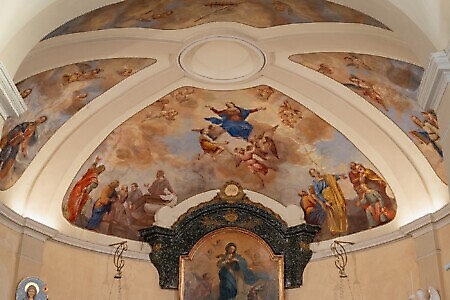
Church of Sant’Egidio
Borgata Chiesa 3 (Rubiana)The Parish Church of Sant’Egidio, located in the Piano district, was reconstructed in 1607 by expanding the original 16th-century structure,...
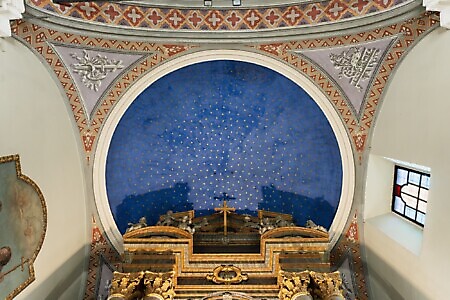
Church of Santa Croce
Via Roma s.n.c. (Lanzo Torinese)The church, originally located outside the town, was dedicated to the Holy Apostles James and Philip. Since the early 14th...
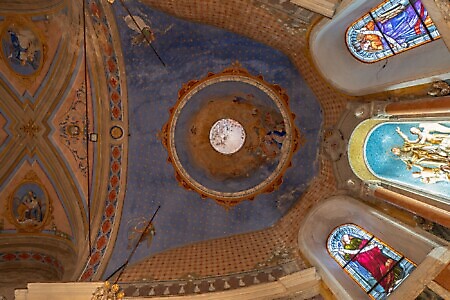
Church of Santa Maria del Borgo
Via San Giovanni Bosco, 29 (Lanzo Torinese)Always dedicated to the Madonna, albeit under different names, the church is situated halfway along the old Contrada del Borgo...
Church of the Madonna della Neve
Givoletto (Givoletto)The Chapel of the Madonna della Neve was built in 1855 on Monte Sap (at 1,215 m above sea level)....
Parish Church of San Giacomo Maggiore
Via Chiesa, Balangero (TO) (Balangero)The Baroque parish church of San Giacomo, set in an elevated position overlooking the village, has become the symbol of...
Parish Church of San Nicola and Santa Marta
Via Don Giocondo Cabodi, 5 (Varisella)The parish church, dedicated to San Nicola, while Santa Marta is the patron saint of the village, can claim very...
Parish Church of San Nicolao
Piazza Capoluogo, 197 (Coassolo Torinese)The church is situated on an old cemetery that also included part of what is now the square. The existing...
Parish Church of San Pietro in Vincoli
Piazza Albert 11 (Lanzo Torinese)The origins of the parish church of Lanzo are believed to be very ancient. In 1545, Gian Giacomo Medici, Lord...
Parish Church of San Secondo Martire and the Remains of Maria Orsola Bussone
Piazza San Secondo (Vallo Torinese)The parish church, designed in the Baroque style, is dedicated to the patron saint San Secondo. Inside, it features a...